To protect seedlings from spring frost without panic heating, focus on natural barriers like straw or leaf covers, and use cloches or cold frames for extra warmth. Mulch around plants to insulate roots and create microclimates by positioning your garden near walls or windbreaks. Watering in the evening can help retain warmth, and evaluating if frost-tolerant plants can endure cold snaps saves energy. Keep exploring these tips to guarantee your seedlings stay safe all season.
Key Takeaways
- Use natural covers like straw mats, leaf cloches, or bedsheets to insulate seedlings without relying on heating.
- Implement soil mulching with organic materials to retain warmth and protect roots during cold nights.
- Water seedlings in the late afternoon to create a thermal buffer, leveraging water’s heat retention properties.
- Enhance microclimates by positioning plants near walls, fences, or reflective surfaces to increase sunlight and warmth.
- Monitor overnight temperatures closely and act early with coverings or natural methods, avoiding the need for panic heating.
How Frost Affects Young Seedlings

Young seedlings are especially vulnerable to frost because their tender tissues can easily freeze, causing immediate damage or death. When frost strikes, it can weaken their cell structure, making them more susceptible to plant disease as the damaged tissue becomes an entry point for pathogens. Additionally, frost can impair root function, leading to nutrient deficiency, which hampers growth and recovery. Because seedlings are still developing, their defenses are limited, so even a light frost can have lasting effects. Protecting them from freezing temperatures helps prevent these issues, ensuring healthy development. Proper frost management keeps seedlings resilient, reducing the risk of disease and nutrient shortages that could stunt their growth or kill them altogether. Understanding frost damage is essential for effective protection strategies.
When to Time Frost Protection Measures
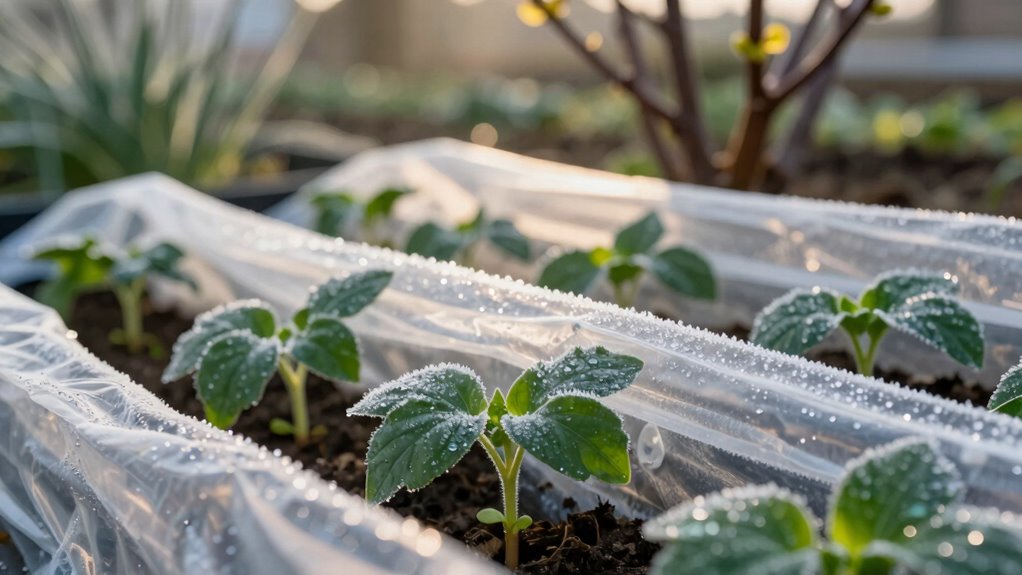
You need to monitor frost alerts closely to determine the right time for protection measures. Checking overnight temperatures regularly helps you catch frost threats early. Acting promptly when temperatures drop below critical levels can save your seedlings from damage. Additionally, understanding frost warning signs can help you better anticipate and prepare for sudden temperature drops.
Frost Alert Timing
Timing is crucial when it comes to frost protection; acting too early or too late can jeopardize your plants. Pay attention to local frost alerts and weather forecasts, as these provide critical timing cues. A frost delay occurs when temperatures dip below freezing overnight, but only for a short period—timing your protection efforts during this window maximizes seedling resilience. If you act too early, you risk unnecessary effort; too late, and frost may already damage your seedlings. Keep an eye on temperature drops forecasted for late night or early morning hours. By understanding when frost is most likely to occur, you can better coordinate your protective measures and avoid panic. Accurate timing ensures your seedlings stay safe without wasting resources or causing undue stress. Being aware of local weather patterns helps you anticipate frost events more accurately and plan your actions accordingly.
Overnight Temperature Checks
Monitoring overnight temperatures is essential for effective frost protection. You should check temperatures regularly, especially when soil moisture levels are high, since moist soil can cool plants faster. Keep an eye on wind speed as well; strong winds can cause temperature fluctuations and increase frost risk. Use a reliable thermometer placed close to your seedlings, ideally at plant canopy level, to get accurate readings. When temperatures drop near or below freezing, it’s time to act quickly. Record the lowest temperatures overnight to identify patterns. Early detection allows you to implement protective measures like covers or sprinklers before frost causes damage. Staying vigilant ensures you can respond promptly, minimizing stress on your seedlings and safeguarding your garden’s spring growth. Regularly assessing air quality can also help you understand environmental conditions that impact frost formation.
Cover Seedlings With Simple, Natural Protectors
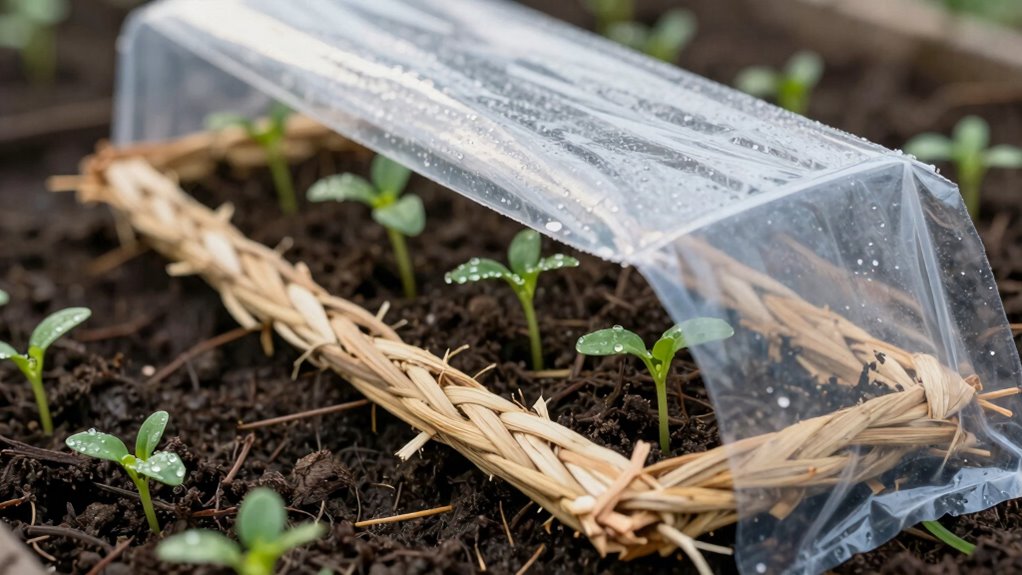
Covering seedlings with simple, natural protectors is an effective way to shield them from unexpected spring frosts. These biodegradable covers trap natural insulation, helping keep warmth close to your plants. You can use materials like straw mats, leaf cloches, or even old bedsheets. Visualize your seedlings beneath a cozy layer of protection, like this:
| Seedling Type | Natural Cover | Effect |
|---|---|---|
| Tomato | Straw mat | Retains heat |
| Lettuce | Leaf cloche | Blocks wind |
| Pepper | Old bedsheet | Insulates from cold |
| Basil | Burlap sack | Prevents frost damage |
| Carrot | Cardboard box | Creates a warm bubble |
These simple, natural options provide effective insulation without harming your environment, ensuring your seedlings survive chilly nights. Proper insulation techniques help maximize frost protection and improve seedling survival rates.
Using Mulches to Insulate Your Seedlings
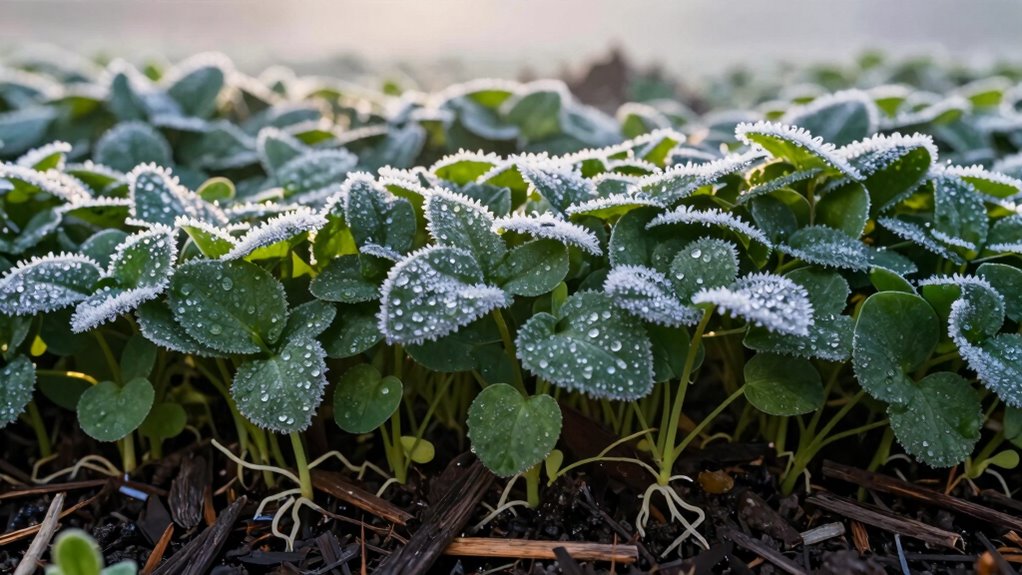
After protecting seedlings with natural covers, adding mulch can further improve their chances of surviving cold nights. Mulch provides excellent soil insulation, helping retain warmth around the roots and preventing rapid temperature drops. To maximize its benefits, apply mulch layering evenly around your seedlings, ensuring good contact with the soil. Organic mulches like straw, shredded leaves, or wood chips are ideal because they break down over time, enriching the soil. Avoid piling mulch directly against stems to prevent moisture buildup and rot. Consistent mulch layering creates a buffer zone, reducing frost risk and maintaining more stable soil temperatures. Understanding device and network security vulnerabilities can help you choose the best mulch materials and application techniques for your garden. This simple step enhances seedling resilience, giving them a better chance to grow strong despite early spring cold spells.
Creating Microclimates by Strategic Plant Placement

You can create microclimates by positioning your plants near existing structures or natural windbreaks, which help shield them from cold winds. Placing your sensitive plants where they receive maximum sun exposure also boosts their warmth and resilience. By strategically choosing these spots, you enhance your garden’s ability to withstand late frosts. Additionally, understanding Gold IRA Markets can help you explore investment options to secure your financial future during unpredictable conditions.
Use Existing Structures
Utilizing existing structures such as walls, fences, and buildings can effectively create microclimates that protect plants from frost. Position your seedlings close to these structures to benefit from their thermal mass, which absorbs heat during the day and releases it at night. This natural warmth can prevent frost damage. Additionally, before planting, perform soil testing to ensure ideal conditions, and consider applying compost tea to boost plant resilience. These structures can also shield seedlings from cold winds, reducing stress. Remember, strategic placement maximizes existing resources, minimizing the need for panic heating. By understanding microclimates, you sharply increase your seedlings’ chances of surviving early spring frosts and developing strong roots. Proper planning and leveraging your environment make all the difference. Incorporating reliable ventilation considerations can also improve air circulation and further protect against frost damage.
Plant Near Windbreaks
Plantting your seedlings near windbreaks can substantially reduce frost risk by creating a protective microclimate. Windbreaks planting shields your plants from cold gusts and helps retain heat, especially at night. By strategically placing seedlings close to these barriers, you maximize microclimate creation, keeping temperatures slightly warmer around your plants. Use the table below to understand how windbreaks influence your garden:
| Windbreak Type | Benefits |
|---|---|
| Live barriers (trees, shrubs) | Provide wind reduction and additional insulation |
| Man-made barriers (fences, walls) | Reflect and block cold air, creating a warmer zone |
Incorporate windbreaks into your planting plan to protect seedlings during frost-prone periods effectively. Understanding microclimates can help you optimize your garden’s resilience against cold weather.
Optimize Sun Exposure
Strategic plant placement near natural or artificial structures can markedly enhance sun exposure, creating warmer microclimates that protect your seedlings from frost. By focusing on sunlight optimization, you can maximize the heat received during cold nights. Proper shade management ensures that your seedlings get enough sun without overheating during the day. Position plants against south-facing walls or fences to absorb and retain heat. Use taller plants or structures to shield seedlings from cold northern winds while still allowing sunlight in. Consider the angle of the sun throughout the day to position your plants for maximum warmth. Incorporating best modern toilet practices like reflective surfaces can also help bounce sunlight onto seedlings. Combine shade management with windbreaks for added frost protection. Regularly monitor and adjust plant positions as seasons change.
Protecting Seedlings With Cold Frames and Cloches

Have you ever faced a sudden cold snap that threatened your tender seedlings? Cold frames and cloches are great tools to shield your plants from frost. They create a microclimate, trapping heat and protecting against unexpected chills. To maximize their effectiveness, practice seedling hardening now by gradually exposing your plants to outdoor conditions. Choose frost resistant varieties for added resilience. Use the table below to select the right cover:
| Cover Type | Best Use | Material |
|---|---|---|
| Cold Frame | Larger seedlings, extended season | Wood, plastic |
| Cloche | Young seedlings, overnight cover | Glass, plastic |
| Mini Cloche | Small pots, individual plants | Plastic domes |
| Tunnel | Multiple seedlings, early spring | Plastic or fabric |
Proper protection guarantees your seedlings survive frost without panic heating.
Using Water as a Natural Buffer Against Frost

When frost threatens your garden, using water as a natural buffer can be an effective way to safeguard your plants. By applying proper watering techniques, you create a layer of water that absorbs and slowly releases heat, acting as a natural insulator. This process helps prevent rapid temperature drops around your seedlings. To maximize protection, water in the late afternoon or early evening before the coldest hours. Keep in mind that saturated soil retains heat longer, providing ongoing warmth. Remember, consistent watering not only supports plant health but also offers a simple frost defense.
Watering in the evening creates a thermal buffer that protects plants from frost damage.
- Watering techniques ensure even heat distribution around plants
- Applying water creates a thermal buffer, increasing natural insulation
- Proper timing and volume enhance frost resistance and safeguard seedlings
When to Skip Heating Your Seedlings
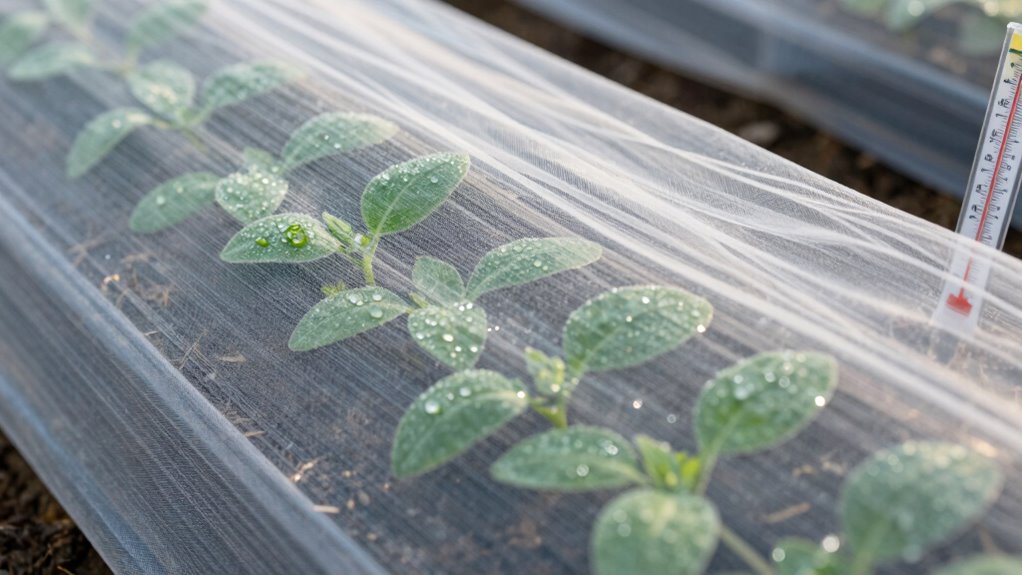
If outdoor temperatures stay above freezing consistently during the coldest parts of the night, you can usually skip heating your seedlings. Young seedlings with high frost tolerance and strong seedling resilience can withstand brief cold snaps without extra protection. Monitor the forecast carefully; if frost is unlikely, heating might be unnecessary. Overheating can stress seedlings and hinder growth, so only intervene when conditions threaten their survival. Recognize which plants are more vulnerable and require protection, while hardy varieties can handle lower temperatures. Trust your observations and understanding of your seedlings’ frost tolerance. When conditions are stable and temperatures remain above freezing, you save energy and reduce potential stress for your plants by skipping heating.
Preparing Your Garden for Unexpected Cold Spells
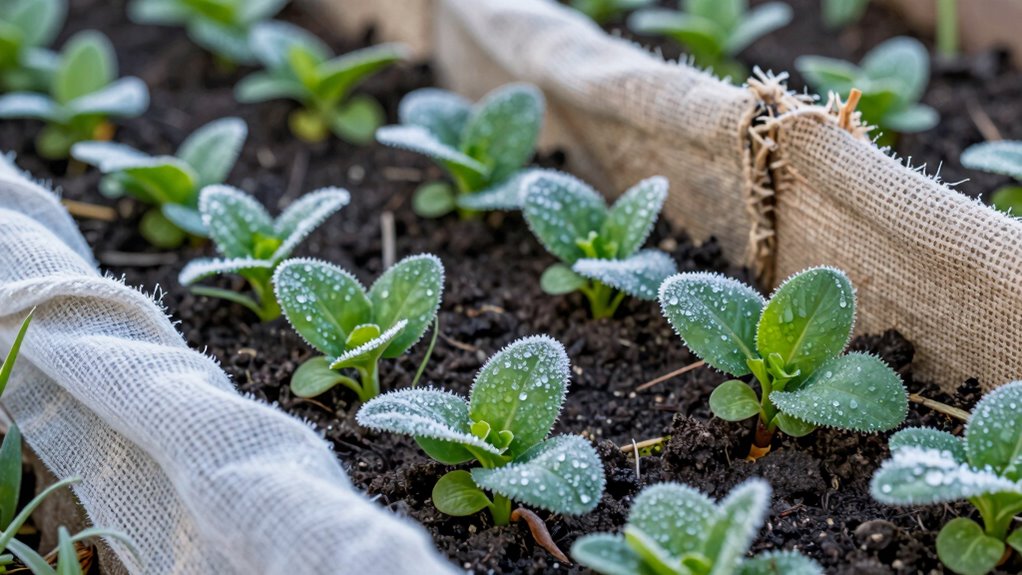
Even after you determine when to skip heating your seedlings, unexpected cold spells can still catch you off guard. To prepare, start with soil testing to ensure your soil’s pH and nutrients support healthy growth despite temperature drops. Proper compost preparation also strengthens your garden’s resilience, providing insulation and nutrients for seedlings. Keep a close eye on weather forecasts and have emergency covers ready, like row covers or blankets, to shield plants when cold snaps hit. Additionally, consider planting hardy varieties that withstand unexpected frosts better.
- Regularly test soil to identify deficiencies before stress hits
- Prepare compost that retains heat and adds essential nutrients
- Have protective gear on hand to respond swiftly to sudden cold spells
Frequently Asked Questions
How Can I Identify Early Signs of Frost Damage on Seedlings?
You’ll notice frost damage symptoms on your seedlings as darkened, wilted, or blackened leaves, often starting at the tips and edges. Keep an eye out for coloring changes and drooping, which show seedling vulnerability to cold. Acting quickly is key — if you see these signs, protect your seedlings immediately by covering them or moving them to a warmer spot. Early detection helps minimize long-term damage.
Are There Specific Plant Varieties More Resistant to Cold?
Sure, some plant varieties are so cold-tolerant they practically wear thermal underwear. Look for frost-resistant plants and cold-tolerant varieties if you want to avoid shivering seedlings. These hardy options brave the chill better, making your gardening life easier. Choosing these frost-resistant plants means fewer alarms and panic, giving you peace of mind during unexpected frosts. Embrace the tough, and let your garden thrive, even when Jack Frost pays a visit.
What Are Eco-Friendly Alternatives to Traditional Frost Protection Methods?
You can use eco-friendly alternatives like compost mulching and windbreak barriers to protect your seedlings from frost. Compost mulching insulates roots, maintaining warmth and moisture, while windbreak barriers reduce cold wind exposure, preventing temperature drops. Both methods are sustainable, inexpensive, and effective. Combine them for ideal protection, ensuring your seedlings stay warm enough to thrive without resorting to energy-intensive heating methods.
How Can I Monitor Weather Changes to Optimize Frost Protection Timing?
You can monitor weather changes effectively by using weather apps that provide real-time forecasts and alerts for frost risks. Keep an eye on soil temperature, as it’s a vital indicator of when frost might occur. Regularly check these updates, especially during unpredictable spring nights, so you can time your frost protection measures precisely. This proactive approach helps you guard your seedlings without unnecessary panic or overuse of resources.
Can Indoor Heating Harm Seedlings if Used Improperly?
You might think indoor heating is a quick fix, but if used improperly, it can harm your seedlings. Excessive heat can dry out or scorch delicate stems and roots, risking seedling safety. To avoid this, keep temperatures moderate, use a thermometer, and maintain good airflow. This way, you protect your seedlings without risking damage, ensuring they grow strong and healthy through unpredictable spring nights.
Conclusion
By understanding how frost impacts your seedlings and choosing natural, effective protection methods, you can confidently shield your garden without panic heating. Planning ahead and using simple strategies like mulching or creating microclimates makes a big difference. Remember, isn’t it more rewarding to nurture your plants with care rather than rely on energy-consuming solutions? With a little preparation and patience, your seedlings will thrive through unexpected cold spells, proving that smart, natural protection is always worth the effort.