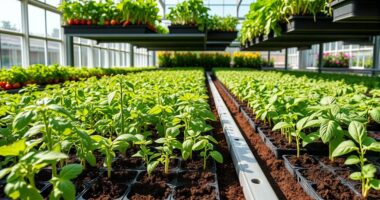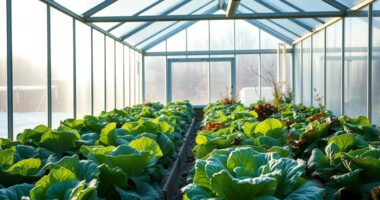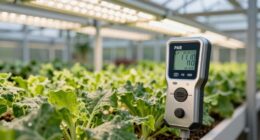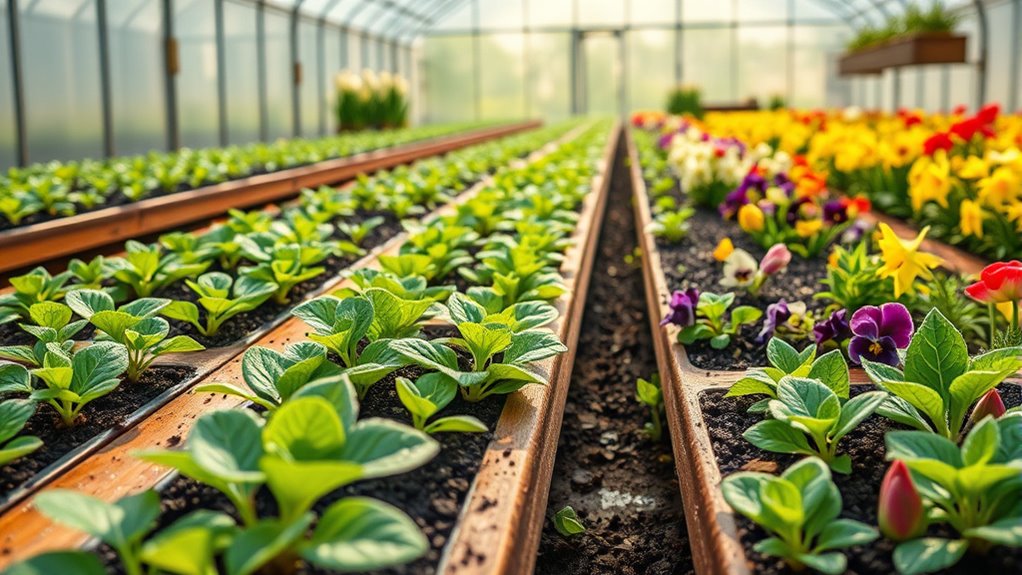

To succeed with spring greenhouse gardening, start by testing and amending your soil for ideal nutrients and drainage. Control environmental conditions by providing sufficient light, maintaining stable temperatures, and regulating humidity to promote healthy seedlings, flowers, and early vegetables. Protect plants from pests and diseases with screens, proper airflow, and organic treatments. Consistent watering and early monitoring help prevent problems. Keep these practices in mind, and you’ll discover more tips for thriving greenhouse growth ahead.
Key Takeaways
- Prepare soil with organic amendments and pH adjustments to support healthy seedlings and early plant growth.
- Maintain consistent temperature (65-75°F) and adequate light (12-16 hours daily) for optimal germination and flowering.
- Use insect screens, shade cloths, and proper ventilation to protect plants from pests and overheating.
- Water evenly to keep soil moist but not waterlogged, preventing damping-off and fungal diseases.
- Regularly monitor for pests and diseases, removing affected foliage and applying organic treatments promptly.
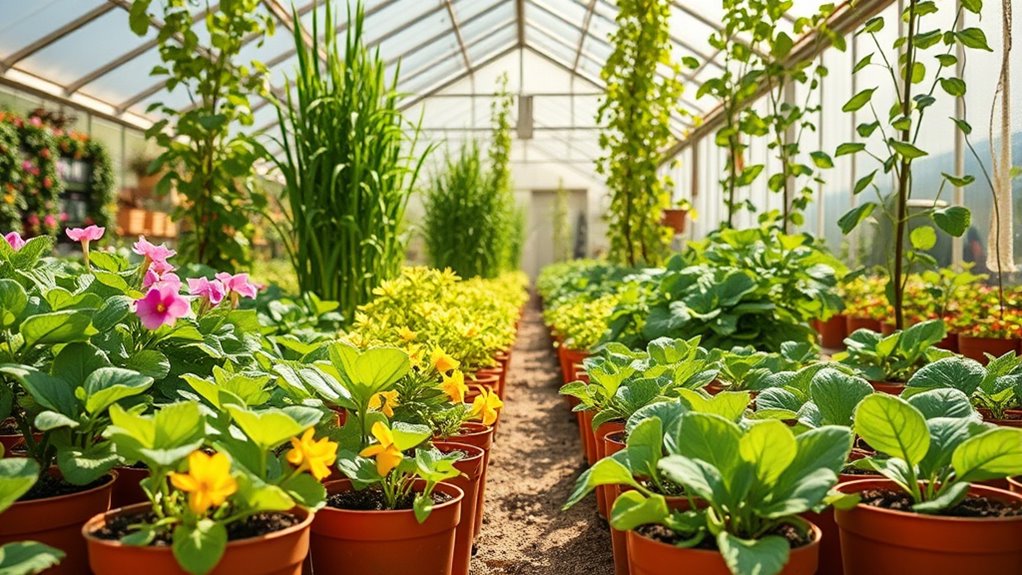
Spring is the perfect time to start greenhouse gardening, as it allows you to extend your growing season and protect delicate plants from unpredictable weather. As you prepare to plant seedlings, flowers, and early vegetables, focusing on proper seasonal soil preparation becomes essential. Begin by testing your soil’s pH and nutrient levels to ensure it’s ready for the plants you intend to grow. If the soil is too acidic or alkaline, amend it with lime or sulfur accordingly. Incorporate organic matter like compost or well-rotted manure to improve soil structure, enhance drainage, and supply vital nutrients. This foundation helps seedlings establish quickly and thrive in the controlled environment of your greenhouse.
Once your soil is prepared, it’s time to contemplate plant protection strategies. Greenhouses offer a unique advantage by shielding plants from harsh weather, but you still need to implement measures to prevent pests, diseases, and temperature fluctuations. Use insect screens on vents and openings to keep out pests like aphids or whiteflies, and consider installing shade cloths or venting systems to prevent overheating during warmer days. If you notice signs of fungal diseases, improve airflow with proper spacing and prune affected leaves to minimize the spread. Mulching around plants can also help regulate soil moisture and temperature, protecting roots from sudden temperature swings.
As you sow your seeds or transplant seedlings into the greenhouse, pay attention to light and temperature conditions. Most seedlings thrive with about 12-16 hours of light daily, so supplement with grow lights if natural sunlight is insufficient. Maintain temperatures ideal for growth—usually around 65-75°F during the day and slightly cooler at night—by opening vents or using heaters when necessary. Consistent monitoring ensures that your plants aren’t stressed by abrupt temperature changes, which can make them more susceptible to pests and diseases.
Watering is another critical aspect of plant protection strategies. Keep the soil evenly moist but not waterlogged, as overly wet soil can promote fungal growth. Using a watering schedule that aligns with your greenhouse’s humidity levels helps prevent issues like damping-off in seedlings. Additionally, regularly inspect plants for early signs of pests or disease, removing affected foliage promptly and applying organic treatments as needed. This proactive approach minimizes the risk of larger infestations and keeps your greenhouse environment healthy.
Frequently Asked Questions
How Do I Prevent Pests in My Greenhouse During Spring?
To prevent pests in your greenhouse during spring, you should implement effective pest control methods and maintain good greenhouse sanitation. Regularly inspect plants for signs of pests, remove any infested foliage, and use natural predators or organic treatments when needed. Keep the greenhouse clean by disinfecting surfaces and tools, and ensure proper airflow to reduce humidity. These steps create an environment less inviting to pests, helping your plants stay healthy.
What Temperature Should My Greenhouse Be for Optimal Seed Germination?
Imagine your seeds as tiny dreams waiting to sprout. You should keep your greenhouse at around 65-75°F for ideal germination. Proper soil preparation and choosing the right seeds set the stage for success. Maintain steady warmth, avoid sudden temperature drops, and guarantee good airflow. When conditions are just right, your seedlings will thrive, transforming your greenhouse into a vibrant oasis of growth and promise.
How Often Should I Water Seedlings in a Greenhouse?
For a healthy watering schedule, you should check your seedlings daily to maintain proper seedling moisture. Water them when the topsoil feels dry to the touch, ensuring they aren’t overwatered, which can cause root rot. Keep the soil consistently moist but not waterlogged. Adjust your watering frequency based on temperature and humidity levels in your greenhouse, aiming for even moisture to promote strong, healthy growth.
Can I Grow Tropical Plants in a Spring Greenhouse?
Imagine your greenhouse as a tropical rainforest, alive with vibrant colors and lush greenery. Yes, you can grow tropical plants there! Focus on tropical plant care by maintaining high humidity and consistent warmth. Proper greenhouse humidity management is key to mimicking their natural environment. Keep temperatures steady, and you’ll create a thriving oasis for your tropical plants, bringing a touch of the tropics right into your home garden.
What Are the Best Lighting Options for Spring Greenhouse Seedlings?
For ideal seedling growth, you should consider the best lighting options for your greenhouse seedlings. Use full-spectrum LED grow lights or fluorescent lights designed for plant growth, as they provide the right balance of light intensity and spectrum. Position lights about 2-4 inches above seedlings, and keep them on 12-16 hours daily. These lighting options promote healthy development, ensuring your seedlings thrive during early spring.
Conclusion
As you step into your greenhouse, sunlight dances on vibrant seedlings and blooming flowers, filling the space with warmth and life. The sweet scent of early veggies mingles with fresh earth, promising a bountiful season ahead. Feel the gentle breeze through the glass as your garden awakens, a proof to your care and patience. With each seedling nurtured, you’re creating a lush, colorful haven that will flourish under your watchful eye.