Before your first 95°F day, it’s vital to prepare your evaporative cooler. Start by inspecting and cleaning water filters, pads, and vents to guarantee proper airflow. Check the water pump and fan for any issues, replacing worn or damaged parts. Adjust settings for peak performance and open windows or doors for cross-ventilation. Regular maintenance now will keep your cooler running smoothly all summer—stay tuned to learn more detailed steps for top cooling performance.
Key Takeaways
- Inspect and clean cooling pads, water filters, and vents to ensure optimal airflow and cooling efficiency.
- Drain and refill the water system with fresh, clean water to prevent mineral buildup and mold growth.
- Test water pumps and fans for proper operation, listening for unusual noises and checking for clogs or damage.
- Adjust water levels and fan speeds for consistent evaporation and effective cooling before peak heat days.
- Schedule seasonal maintenance, including cleaning filters and inspecting for leaks, to prepare the system for high temperatures.
Prepare Your Evaporative Cooler for Summer: Inspection and Cleaning
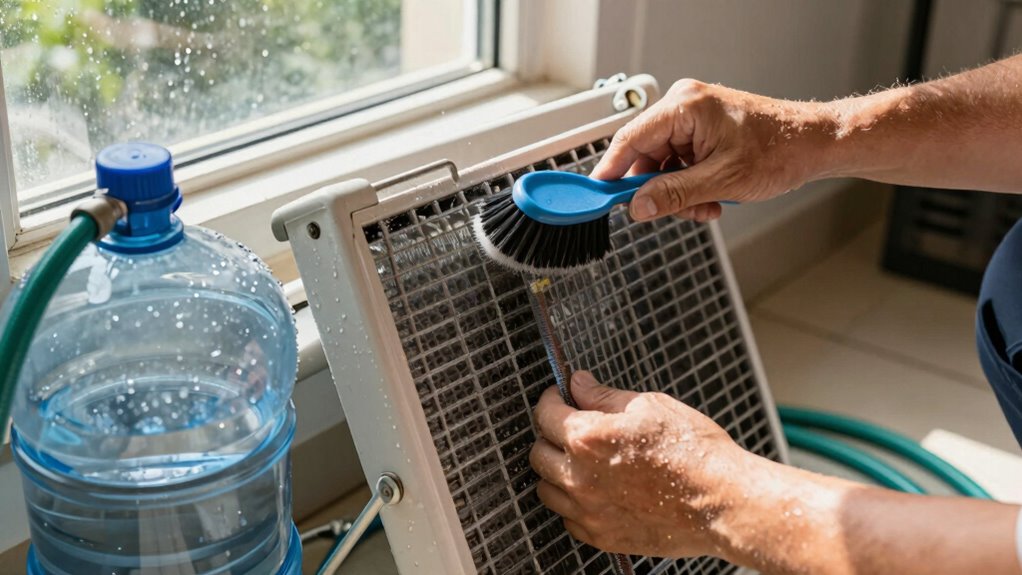
Before you start using your evaporative cooler this summer, it’s essential to inspect and clean it thoroughly. First, check the water quality; stagnant or dirty water can hinder efficiency and cause unpleasant odors. Drain and refill the unit with fresh, clean water to ensure peak performance. Next, focus on airflow optimization by removing dust, debris, or mineral buildup from the cooling pads and vents. Clean the water tray and surrounding components to prevent mold and bacteria growth. Proper airflow allows your cooler to operate efficiently and cool your space effectively. Additionally, adjusting the color temperature can improve visual comfort and efficiency during operation. Regular inspection and cleaning not only improve water quality but also ensure smooth airflow, maximizing comfort during those hot days. Taking these steps prepares your cooler for a reliable, energy-efficient season ahead.
Check and Replace Water Filters and Pads for Peak Efficiency
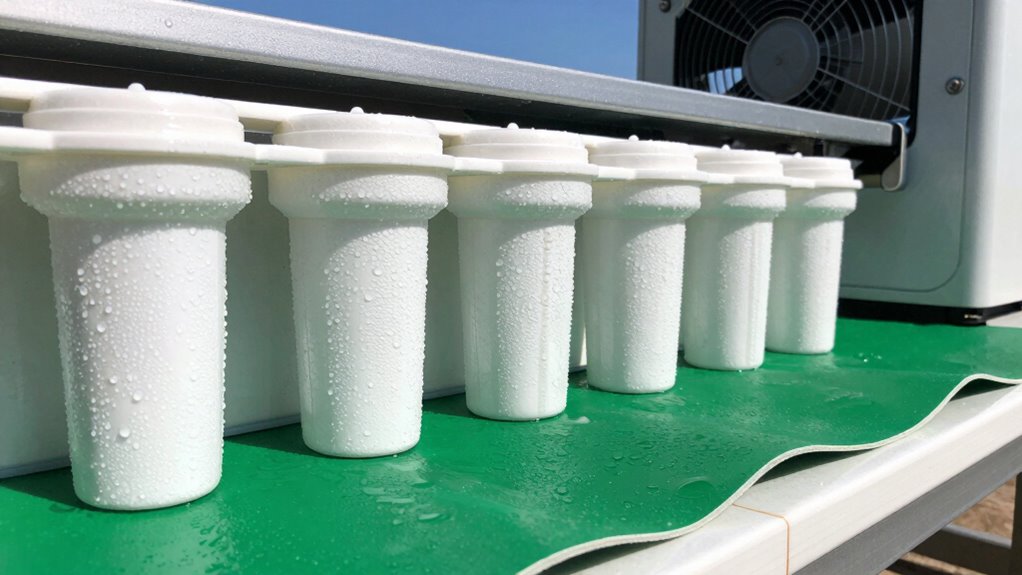
To guarantee your evaporative cooler operates at peak efficiency, it’s essential to regularly check and replace the water filters and cooling pads. Proper filter replacement prevents dirt buildup that hampers airflow, while pad inspection ensures best evaporation. Here’s what you should do:
Regularly inspect and replace water filters and cooling pads for optimal evaporative cooler performance.
- Remove and inspect the water filter for dirt or mold; replace if necessary.
- Check the cooling pads for signs of wear, discoloration, or mineral buildup.
- Replace pads that are cracked, broken, or excessively worn to maintain cooling performance.
- Clean or replace filters and pads before the hot weather hits to maximize efficiency.
- Additionally, ensure your energy-efficient cloud servers are optimized to support your cooling system, reducing overall energy consumption during peak temperatures.
Regular filter replacement and pad inspection help your cooler run smoothly, saving energy and prolonging its lifespan.
Test the Water Pump and Fan : How to Troubleshoot Common Issues
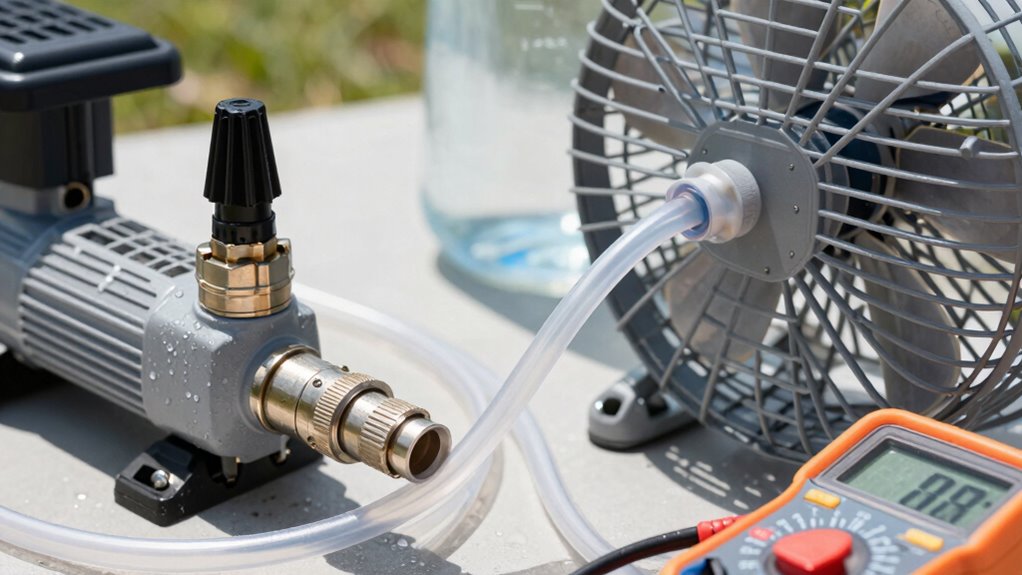
If your evaporative cooler isn’t producing sufficient airflow or the water pump isn’t running smoothly, it’s time to test the pump and fan. Begin by inspecting the water pump for pump troubleshooting issues—listen for unusual noises, ensure it’s powered correctly, and check for clogs or leaks. If the pump isn’t cycling on or water isn’t flowing properly, it may need cleaning or replacement. Next, examine the fan for common fan issues: verify it’s spinning freely, remove any debris, and ensure the blades aren’t damaged. If the fan isn’t turning or runs intermittently, check the motor connections or consider replacing faulty parts. Proper testing helps identify whether the problem lies with the pump, fan, or electrical connections, ensuring your cooler operates efficiently before hot weather hits. Additionally, consulting equipment safety guidelines can prevent potential hazards during inspection and maintenance.
Adjust Settings and Ensure Proper Ventilation for Optimal Cooling
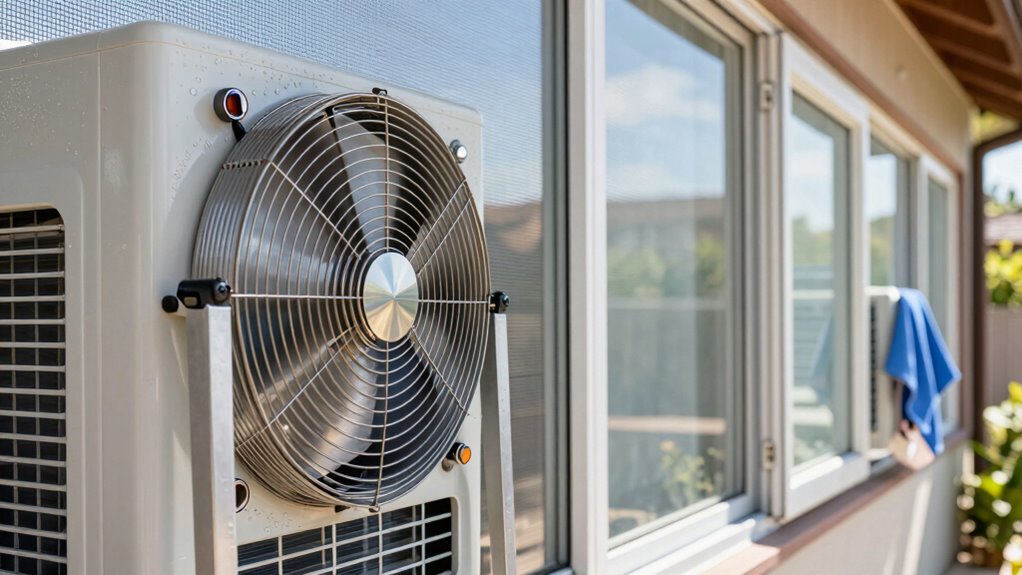
Adjusting your evaporative cooler’s settings and guaranteeing proper ventilation are key steps for ideal performance. Proper ventilation optimization allows fresh air to flow in and hot air out, maximizing cooling efficiency. To do this effectively, consider these control settings:
- Set the fan speed to medium or high for better airflow.
- Adjust the water level to ensure consistent evaporation.
- Use the damper controls to balance intake and exhaust vents.
- Keep doors and windows strategically open to promote cross-ventilation.
- Regularly inspect and clean filters and vents to maintain cooling efficiency.
Schedule Regular Maintenance to Keep Your Cooler Running Smoothly All Summer

Regular maintenance is essential to keep your evaporative cooler operating efficiently throughout the summer. Following a seasonal checklist guarantees you don’t overlook key tasks like cleaning filters, inspecting water pads, and checking for leaks. Regular upkeep helps maintain energy efficiency by preventing strain on the motor and reducing unnecessary power consumption. Schedule routine inspections early in the season and before the hottest days hit. This keeps your cooler running smoothly and extends its lifespan. Don’t forget to clear debris from vents and verify water flow. Staying proactive with maintenance also saves you money by minimizing repairs and lowering energy bills. Additionally, monitoring filter indicators if available can help you identify when filters need attention. Consistent attention to your cooler’s needs ensures ideal cooling performance all summer long, keeping your home comfortable and your energy costs in check.
Frequently Asked Questions
How Do I Winterize My Evaporative Cooler for the Off-Season?
To winterize your evaporative cooler, start with off-season maintenance by turning off the power and draining water from the unit. Clean or replace filters, remove and store pads in a dry place, and cover the cooler with a weatherproof cover. Follow winterization tips like sealing vents and inspecting for damage. Proper winterization guarantees your cooler stays in good shape for next season and prevents damage from freezing temperatures.
What Safety Precautions Should I Take During Installation?
If you want to avoid turning your install into a shocking experience, prioritize installation safety and electrical precautions. Wear insulated gloves, turn off power before wiring, and double-check connections. Skipping these steps might not just fry your cooler but could also fry you! Stay alert, follow manufacturer instructions, and don’t rush — a little caution now saves a lot of pain later. Safety first, or be prepared for sparks and regret.
Can I Upgrade to a More Energy-Efficient Model?
Yes, you can upgrade to a more energy-efficient model. Upgrading improves energy efficiency, saving you money on utility bills and reducing environmental impact. Before you choose a new model, research the latest energy-efficient options, compare their features, and verify compatibility with your current setup. Consulting with a professional can help you select the best upgrade for your cooling needs, making your system more effective and eco-friendly.
How Do I Prevent Mineral Buildup in the Water System?
To prevent mineral buildup and maintain water quality, regularly clean your evap cooling system and use mineral-free or softened water. Check and replace filters as needed, and consider adding a water treatment solution that reduces mineral deposits. Keep an eye on water levels and quality, and flush the system periodically to remove any accumulated mineral deposits. Doing these steps guarantees efficient cooling and extends your system’s lifespan.
What Are Signs of Potential Electrical Issues in the Cooler?
Like a silent warning in a storm, watch for flickering lights or circuit breaker trips, which signal electrical wiring issues. If your cooler’s motor runs unusually hot or makes strange noises, it hints at potential circuit overloads. Repeatedly resetting breakers or inconsistent operation indicates your system may have wiring problems. Address these signs promptly to prevent breakdowns or electrical fires, ensuring your cooler keeps running smoothly through the heat.
Conclusion
As summer’s fiery breath approaches, think of your evaporative cooler as a loyal partner ready to embrace the heat. With a little prep, you’re planting seeds for a cool oasis amid the scorching desert. Keep it clean, tuned, and well-ventilated—like a well-oiled machine—and it’ll breathe life into your space all season long. When the first 95°F day strikes, you’ll be standing under a invigorating rainstorm you’ve carefully crafted, not caught unprepared in the sun’s relentless blaze.