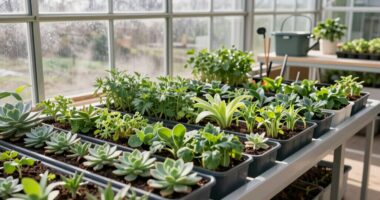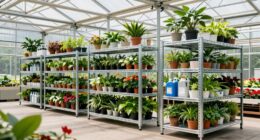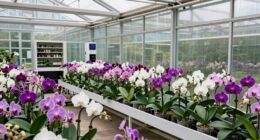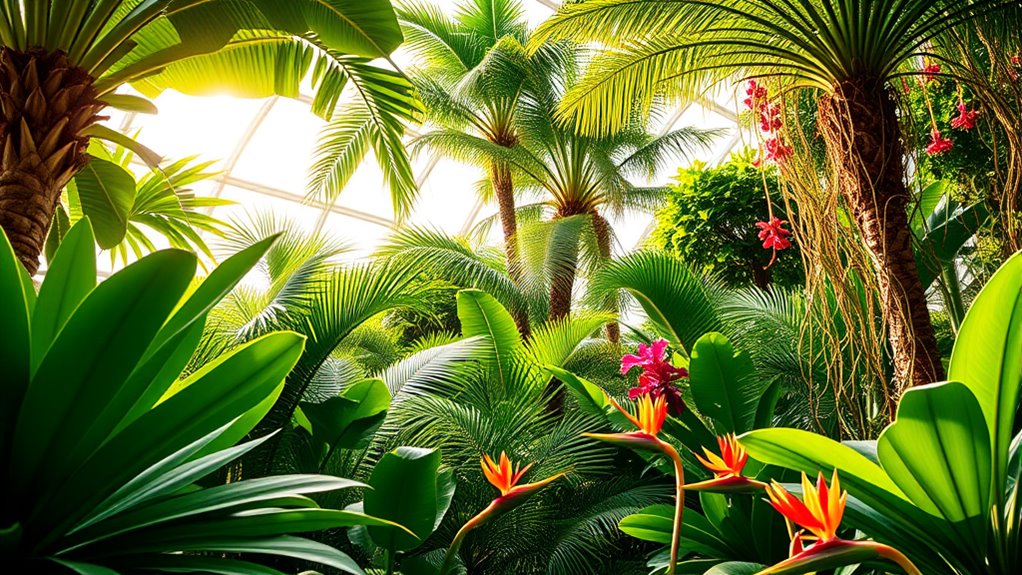
In summer, creating a tropical greenhouse is about maintaining high humidity levels of 60-80%, controlling pests, and choosing exotic plants like orchids, bromeliads, and ferns that thrive in warm, moist conditions. Use humidifiers, misting, and proper air circulation to keep plants happy, and regularly inspect for pests like aphids or mites. Getting these elements right helps your tropical oasis flourish; keep exploring to discover even more lush plant options.
Key Takeaways
- Choose exotic tropical plants like orchids, bromeliads, and ferns that thrive in high humidity and warm temperatures.
- Maintain indoor humidity levels between 60% and 80% using humidifiers or water trays during summer.
- Incorporate HEPA filtration to improve air quality and reduce stressors for sensitive tropical species.
- Regularly inspect for pests such as spider mites and aphids, and use organic treatments to keep plants healthy.
- Ensure proper ventilation and avoid overwatering to prevent fungal issues and promote lush, vibrant growth.
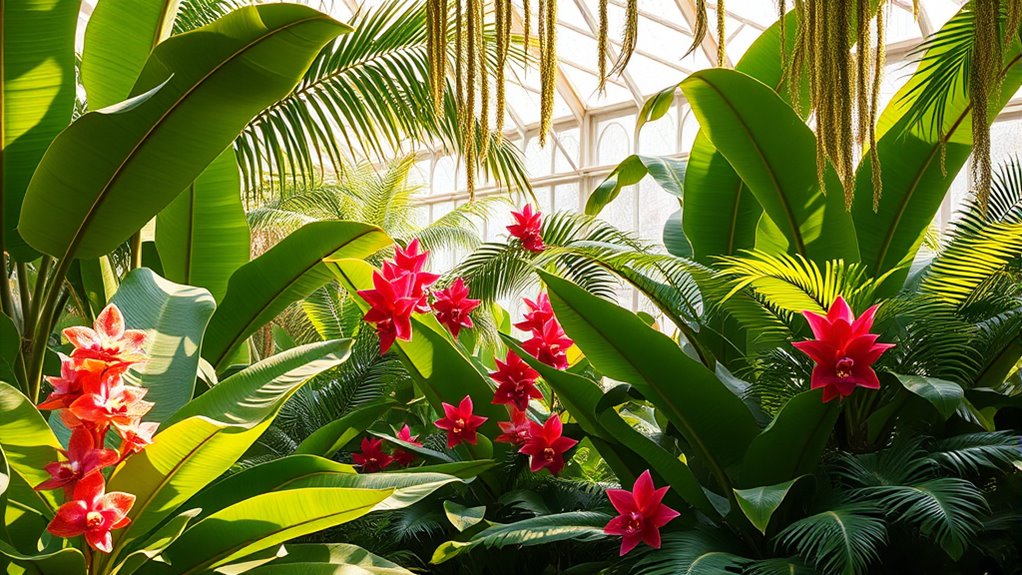
Have you ever dreamed of cultivating lush, vibrant tropical plants regardless of your climate? If so, creating a tropical greenhouse during summer can turn that dream into reality. A key to success is understanding how to maintain the right indoor humidity, which is essential for these exotic plants to thrive. Tropical plants naturally flourish in environments with high humidity, often between 60% and 80%. In your greenhouse, you can achieve this by using humidifiers, misting systems, or even placing water trays near your plants. Proper humidity levels help prevent leaf browning and promote healthy growth. Keep an eye on your hygrometer to monitor indoor humidity, adjusting your methods as needed. This will guarantee your plants stay lively and lush, even if the outdoor air is dry or hot. Using HEPA filtration can also improve air quality by capturing allergens and pollutants that might otherwise stress your plants. Pest management is another crucial aspect of tropical greenhouse gardening. Tropical plants are susceptible to pests like spider mites, aphids, and scale insects, which can quickly damage or weaken your plants if left unchecked. Regular inspection is your first line of defense; look for signs like discolored leaves, sticky residue, or tiny insects. When you spot pests, act swiftly by removing affected leaves or applying organic insecticidal soap or neem oil. Creating a clean, well-ventilated environment helps reduce pest populations and discourages their spread. Avoid overwatering, as excess moisture can attract pests and promote fungal issues. Quarantining new plants before introducing them to your greenhouse also minimizes the risk of bringing in pests. Consistent pest management not only keeps your plants healthy but also preserves the exotic beauty you’re cultivating. During summer, maintaining high indoor humidity and managing pests go hand-in-hand in creating an ideal environment for your tropical plants. If you ignore humidity levels, your plants might suffer from dry, crispy leaves or slowed growth. Conversely, neglecting pest control can lead to infestations that stunt your plants or cause irreversible damage. By routinely monitoring and adjusting humidity, you create a hospitable home for your exotic plants. Simultaneously, practicing vigilant pest management ensures the health and vitality of your greenhouse. Both aspects require ongoing attention but pay off with lush, thriving plants that look like they belong in a tropical paradise. With the right techniques, your summer greenhouse can become a lush oasis, giving you the satisfaction of cultivating tropical beauty all year round.
Frequently Asked Questions
What Are the Best Tropical Plants for Beginners?
If you’re new to tropical gardening, start with easy plants like pothos, snake plants, or peace lilies. These thrive with simple plant propagation and don’t need complex soil enrichment. Keep the soil consistently moist, and guarantee your plants get bright, indirect light. Regular watering and occasional fertilization help them grow strong. These hardy varieties make perfect beginner choices, so don’t hesitate to experiment and enjoy your lush, exotic indoor garden.
How Often Should I Water Tropical Greenhouse Plants?
You should water your tropical greenhouse plants regularly, balancing your watering schedule with their needs. Check the soil moisture every few days, ensuring it stays lightly moist but not soggy. Maintain humidity control by misting plants or using a humidifier, especially during hot summer days. By adjusting your watering routine and humidity levels, you’ll keep your exotic plants healthy, vibrant, and thriving throughout the season.
What Temperature Range Is Ideal for Tropical Plants?
You should keep tropical plants in temperatures between 65-85°F, ensuring humidity levels stay high to mimic their natural environment. Maintain consistent warmth, avoiding sudden drops, and provide ample sunlight—ideally 4-6 hours of bright, indirect light daily. This balance supports healthy growth, prevents stress, and keeps your exotic plants thriving. Adjust temperature and humidity based on your specific plants’ needs for ideal results.
How Do I Control Pests in a Tropical Greenhouse?
Oh, the thrill of battling pests in your tropical paradise! You’ll want to use biological pest control to keep those critters at bay naturally. Introduce beneficial insects like ladybugs or predatory mites, and apply natural repellents such as neem oil or garlic spray. Regular inspection and maintaining cleanliness also help. So, arm yourself with eco-friendly tactics, and your exotic plants will thank you by thriving beautifully.
Can Tropical Plants Survive Winter Outdoors?
Tropical plants generally won’t survive outdoor winter without protection because they need warmth and humidity. You can help them through winter by providing outdoor winter protection, such as mulching or covering them with frost cloths. Some tropical plants enter dormancy during cold months, so understanding their dormancy needs helps you decide whether to bring them inside or protect them outside. With proper care, some may tolerate outdoor winters in milder climates.
Conclusion
Now that you’ve explored tropical greenhouse gardening, remember that patience and passion are key to nurturing exotic plants. Summer’s warmth offers the perfect opportunity to experiment and enjoy these vibrant additions. As the saying goes, “A journey of a thousand miles begins with a single step.” So, immerse yourself, embrace the process, and let your love for tropical plants grow. With time and care, your greenhouse will become a lush paradise you can be proud of.