
TL;DR

Get garden gear delivered free with Prime
- Fast, free delivery on millions of items
- Prime Video, Amazon Music and more included
- Member-only deals all year
A Homes & Gardens report advises gardeners to prioritize tropical houseplants and other tender plants before frost, moving them indoors when nighttime temperatures approach 50°F. For plants that cannot be moved, breathable frost cloth, cloches or sheets can offer protection; some bulbs and tubers are normally lifted only after the first frost.
A Homes & Gardens report advises gardeners to move tender houseplants and tropical plants indoors before nighttime temperatures approach 50°F, and to cover plants that must remain outside when frost is forecast. The guidance matters because cold-sensitive plants may suffer damage well before a hard freeze, while some other garden plants are meant to be lifted only after the first frost.
The report puts houseplants that spent summer outdoors near the top of the priority list, alongside tender plants that can be brought inside for winter. Examples include pelargoniums, coleus, begonias, bromeliads, Boston ferns, pothos, succulents and cacti. Tropical plants such as banana trees, tree ferns, aeonium, plumeria and bird of paradise may also need to be moved indoors or otherwise protected, depending on their size and growing conditions.
Michael Jesiolowski, Plant Clinic manager at The Morton Arboretum, recommends returning summered-out houseplants indoors a few weeks before a possible frost, when temperatures begin dipping near 50°F. He also advises checking plants for insects and treating them with insecticidal soap or neem oil before bringing them inside. The report says tropical houseplants can suffer cold damage below 50°F; that is a general warning, not a precise threshold for every species.
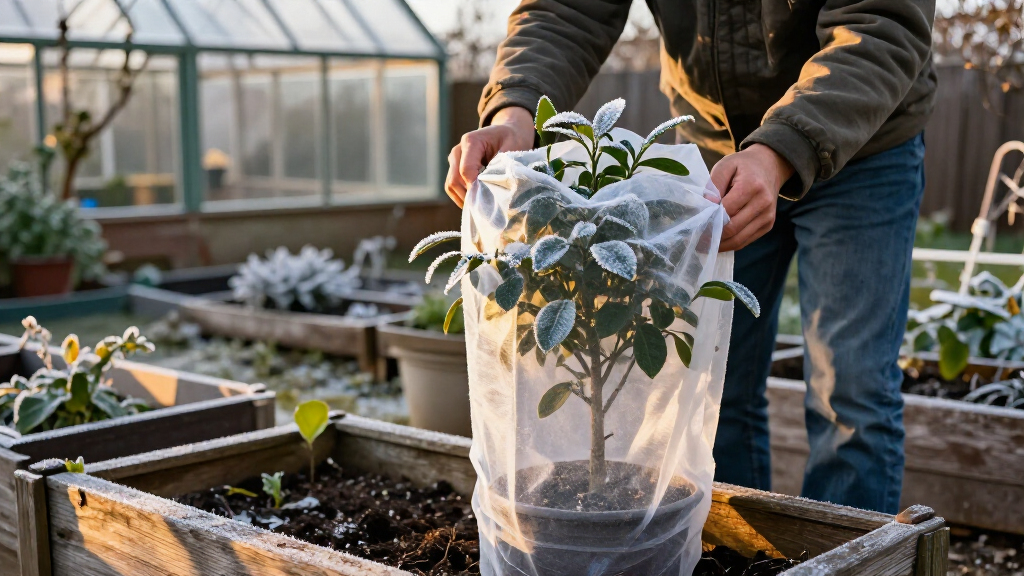
For plants that cannot be moved, the report identifies frost cloth, cloches or breathable fabric as practical coverings. Rebecca McLeod, a gardening content creator and Digz Gardening ambassador, says frost cloth is preferable, while sheets or another breathable fabric can also be used. These measures are intended to reduce exposure to frost; the report does not guarantee that they will prevent damage in every condition.
Protecting Plants Before Cold Sets In
The timing can determine whether tender plants survive the season. The report says particularly delicate plants may be damaged as temperatures fall and can be killed at 32°F, while tropical houseplants may be vulnerable at warmer temperatures. Gardeners who wait for frost itself may miss the chance to move plants that need indoor winter conditions.
Prioritizing plants also helps when time or indoor space is limited. Mirela Bajic, senior garden designer at House Designer, says that with only ten minutes before a frost, she would focus on pelargoniums, tender salvias and young citrus, which she says can be badly affected by even a light frost. Her advice is expert guidance reported by the publication, not a guarantee that these are the most vulnerable plants in every garden.
The recommendations distinguish between plants to move early and those with a different seasonal schedule. Dahlias, cannas, gladioli, elephant’s ear and caladium are among plants that may be lifted and stored, but the report says to wait until after the first frost before doing so. That distinction can help gardeners avoid treating all frost-sensitive plants the same way.
As an affiliate, we earn on qualifying purchases.
Fall Frost Timing and Plant Choices
The source report says the first frosty nights in USDA zones 5–8 typically occur in October and early November. The timing varies by location and year, and an early cold snap can arrive before the usual seasonal window. The report consequently recommends watching local forecasts and preparing plants ahead of predicted frost rather than relying only on the calendar.
Its central distinction is between plants that should be taken indoors before temperatures near 50°F and plants that can remain outside with suitable protection or be lifted later. Some succulents and cacti may tolerate short periods below 50°F, according to the report, but it recommends moving houseplants sooner rather than taking that risk. Species, exposure and local conditions affect how a plant responds, so the temperature guidance should be treated as a practical warning rather than a universal hardiness rule.
“If I only had ten minutes before a frost, tender plants come first. Pelargoniums, tender salvias, young citrus, a light frost can wreck these outright, not just knock a few leaves off.”
— Mirela Bajic, senior garden designer at House Designer
Local Forecasts and Plant-Specific Risks
The report does not identify a single frost date for all gardens, and its October-to-early-November timing applies generally to zones 5–8 rather than every region. Local forecasts are the relevant guide, especially because early cold snaps can occur. It also does not provide species-by-species temperature limits for every plant listed, or specify how much protection a covering will provide during a particular frost.
Whether a plant can be moved indoors depends on its size, condition and available space. The source offers general gardening guidance rather than a site-specific assessment. Gardeners should check requirements for their particular plant and local conditions, and follow product-label directions for any insecticidal soap or neem oil used before bringing plants inside.
Prepare Before Frost Is Forecast
Gardeners can check nighttime forecasts, identify summered-out houseplants and plan where to move them before temperatures near 50°F arrive. The report recommends inspecting plants for insects before bringing them indoors, then keeping breathable covers available for tender plants that must stay outside. Move what can be moved and cover exposed plants when frost is predicted.
For dahlias and the other plants the report names for winter lifting and storage, the advised next step is different: wait until after the first frost before lifting them. The report gives no specific date for a follow-up or local frost forecast, so gardeners will need to use updated weather information for their area.
Key Questions
Which plants should I move indoors first?
Prioritize tropical houseplants and tender plants that spent summer outdoors, including pelargoniums, coleus, begonias, bromeliads, Boston ferns and pothos. The report recommends moving them indoors as nighttime temperatures approach 50°F, before frost is expected.
When should summer houseplants come inside?
Michael Jesiolowski of The Morton Arboretum advises bringing them in a few weeks before a potential frost, when temperatures begin dipping near 50°F. Local weather and the needs of each plant can affect the timing.
What can I use to cover plants left outdoors?
The report lists frost cloth, cloches and breathable fabric such as a sheet. These are options for reducing frost exposure, but the source does not promise they will prevent damage in every weather condition.
Should dahlias be lifted before the first frost?
The report says to wait until after the first frost before lifting and storing dahlias, cannas, gladioli, elephant’s ear and caladium. That timing differs from the advice for tender houseplants, which should be moved indoors beforehand.
What should I check before bringing plants inside?
Inspect plants for insects before moving them indoors. Jesiolowski recommends treating pests with insecticidal soap or neem oil; follow the product label for directions and precautions.
Source: rss
Columbus Day / Indigenous Peoples' Day Picks
long weekend sales
As an affiliate, we earn on qualifying purchases.