To plan your seasonal calendar for year-round greenhouse gardening, focus on selecting crops suited for continuous growth, like greens, herbs, and root vegetables. Use climate control, supplemental lighting, and stagger plantings to extend seasons and guarantee steady harvests. Regular pest management and environment adjustments help maintain healthy plants all year. With careful planning and smart scheduling, you’ll maximize your greenhouse’s potential. Keep exploring how to fine-tune each season for the best results.
Key Takeaways
- Select crops suited for indoor growth and plan planting schedules aligned with each season.
- Utilize supplemental lighting and climate control to extend growing seasons and optimize plant development.
- Stagger planting and harvesting times to ensure continuous harvests throughout the year.
- Incorporate pest management strategies seasonally to maintain healthy greenhouse environments.
- Adjust crop choices and environmental settings based on seasonal variations for maximum productivity.
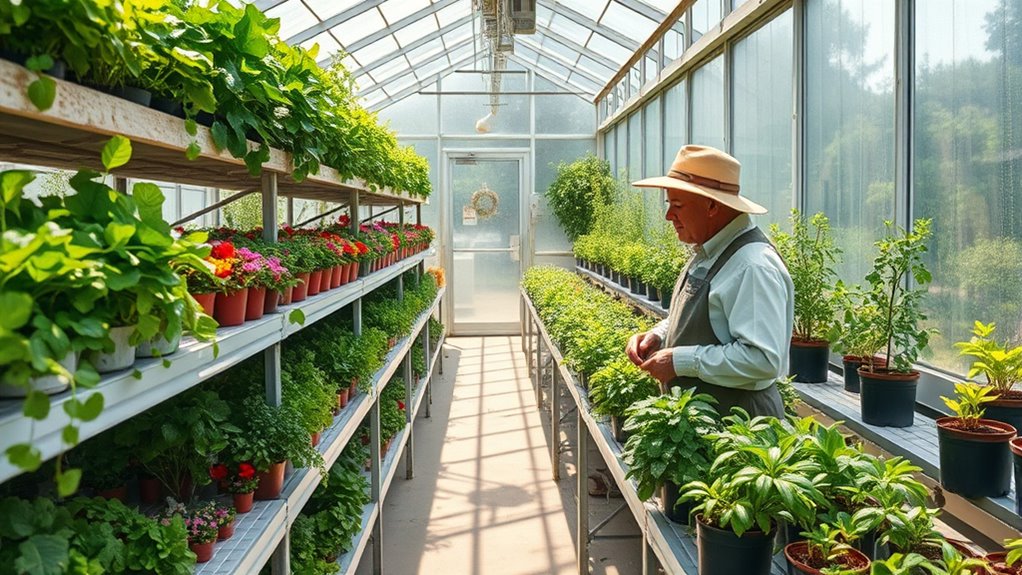
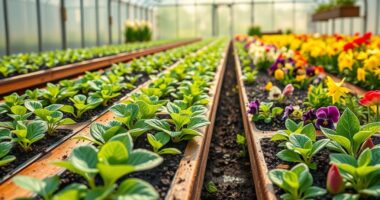
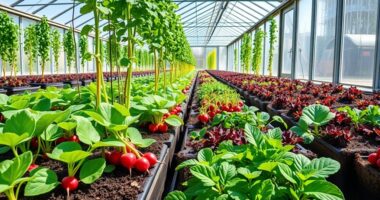
Have you ever wondered how to enjoy fresh produce and vibrant flowers all year long? The secret lies in mastering year-round greenhouse gardening, where careful planning and understanding of seasonal cycles make it possible. One of the most effective ways to maximize your greenhouse’s productivity is by implementing hydroponic techniques. These soilless systems allow you to grow a wide variety of crops indoors, regardless of outside weather conditions. Hydroponic setups can be tailored to your space, whether you’re using nutrient film techniques, deep water culture, or drip systems, making sure your plants receive optimal nutrients and oxygen. This not only accelerates growth but also gives you control over environmental factors, leading to continuous harvests.
However, maintaining a healthy greenhouse isn’t just about choosing the right growing methods. Pest management plays an essential role in year-round gardening success. Unlike outdoor gardens, greenhouses can get overwhelmed by pests if you’re not vigilant. The key is to adopt integrated pest management (IPM) strategies that combine biological controls, cultural practices, and minimal chemical use. Regular inspections are necessary—by catching pests early, you prevent infestations from spreading and causing damage. Introducing beneficial insects like ladybugs or predatory mites can keep pest populations in check naturally. Additionally, maintaining cleanliness and proper ventilation reduces humidity levels that pests thrive on, making your greenhouse less inviting for unwanted visitors.
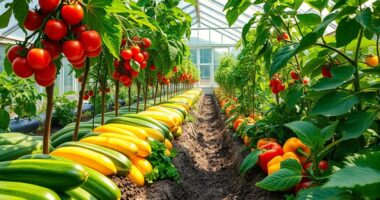
Planning your seasonal calendar is fundamental to make sure continuous production. You’ll need to select crops suited for indoor growth and adapt your planting schedule for each season. For example, greens like lettuce and spinach grow quickly and can be harvested multiple times during the year. In colder months, you might focus on root vegetables or herbs that thrive indoors with supplemental lighting. Conversely, summer months can be ideal for flowering plants and fruiting crops. Using grow lights and climate control systems helps extend growing seasons, making it easier to stagger plantings and harvests.
Frequently Asked Questions
How Do I Prevent Pests in a Year-Round Greenhouse?
To prevent pests in your greenhouse year-round, you should implement natural pest control methods like introducing beneficial insects and using organic sprays. Keep your space clean and monitor plants regularly for early signs of pests. Crop diversification helps break pest cycles, reducing infestations. Additionally, guarantee proper ventilation and avoid overwatering, which can attract pests. These steps create a healthier environment and keep pests at bay effectively.
What Are the Best Energy Sources for Winter Heating?
Think of your greenhouse as a cozy nest that needs warm energy to thrive. Solar heating is your sun-powered solution, capturing daylight to warm your space efficiently. Geothermal energy taps into the earth’s natural heat, providing a steady, eco-friendly warmth even in winter. Both options are sustainable and cost-effective, helping you maintain a stable environment without relying heavily on fossil fuels. Consider your climate and budget to choose the best fit.
How Can I Automate Watering and Climate Control Systems?
You can automate watering and climate control systems by installing drip irrigation connected to a timer and using climate sensors. These sensors monitor temperature, humidity, and soil moisture, sending real-time data to your control system. Then, you can set your drip irrigation to water precisely when needed, and climate controls to adjust heating or ventilation automatically, ensuring ideal conditions without constant manual intervention.
What Are Common Crop Rotation Strategies for Greenhouse Planning?
Think of your greenhouse as a well-choreographed dance; crop rotation keeps the rhythm steady. You should rotate crops based on their impact on soil health, switching legumes to fix nitrogen, then leafy greens to utilize residual nutrients. Practice crop succession by planting fast-growing vegetables after harvest to maintain soil robustness and prevent pests. This strategy maintains soil fertility, reduces disease buildup, and ensures a steady supply of fresh produce year-round.
How Do I Manage Humidity Levels Year-Round?
To manage humidity levels year-round, you should regularly monitor humidity control systems and adjust vents or dehumidifiers accordingly. Proper airflow helps prevent excess moisture, reducing mold prevention risks. Keep an eye on temperature and ventilation, especially during humid months, to maintain ideal conditions. Consistent humidity management ensures healthy plant growth and protects your greenhouse from mold and other moisture-related issues.
Conclusion
By thoughtfully planning your seasonal calendar, you set the stage for continuous growth and abundance within your greenhouse sanctuary. Embracing this steady rhythm allows you to gracefully navigate the ebb and flow of nature’s subtle cues, turning what might seem like fleeting moments into a harmonious symphony of harvests. With patience and careful attention, you’ll cultivate not just plants, but a resilient, thriving oasis that flourishes beneath your attentive care throughout the year.