To calibrate thermostats and sensors in your greenhouse, start by comparing their readings with a trusted reference device like a calibrated thermometer or hygrometer placed nearby. Adjust the sensors according to the manufacturer’s instructions until their readings match the reference. Regular calibration helps maintain accurate temperature, humidity, and soil moisture levels, ensuring ideal plant health. Keep learning how proper calibration can improve your greenhouse’s environment and crop yields as you continue exploring this essential process.
Key Takeaways
- Use a calibrated reference thermometer and hygrometer to compare with greenhouse sensors for accurate readings.
- Follow manufacturer instructions to adjust sensors or thermostats until their readings match reference devices.
- Regularly verify sensor calibration, especially after system maintenance or significant environmental changes.
- Perform soil moisture calibration by testing soil with a manual method and adjusting sensor settings accordingly.
- Document calibration results and schedule periodic checks to ensure consistent environmental control and plant health.
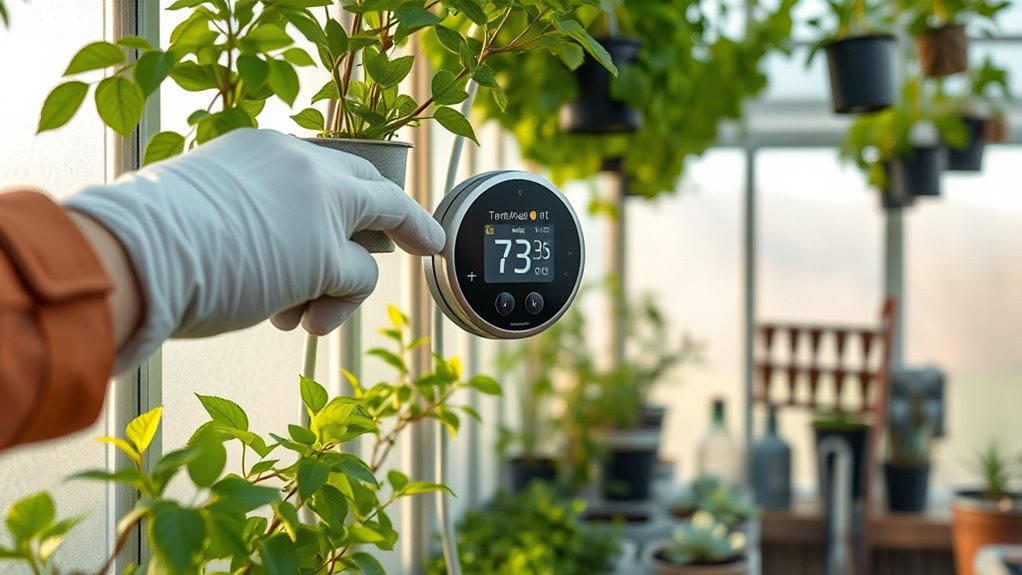
Calibrating thermostats and sensors is essential to guarantee your heating and cooling systems operate accurately and efficiently. When working in your greenhouse, precise temperature regulation is crucial for healthy plant growth, and that begins with ensuring your sensors are correctly calibrated. Proper calibration helps maintain optimal humidity control and soil moisture levels, which are vital for your plants’ development. If your sensors are off, you might unknowingly overheat or underheat, causing stress to your plants and potentially leading to poor yields or disease. Similarly, inaccurate humidity readings can result in excessive moisture or dryness, affecting plant health and increasing the risk of mold or pests.
Start by checking your thermostat and sensor readings against a reliable reference. Use a calibrated thermometer and hygrometer as your benchmarks. Place these reference instruments in your greenhouse, ideally near your sensors, and compare their readings. If your sensors show different values, it’s time to adjust. Most modern thermostats and sensors have calibration options—consult the user manual for specific instructions. Adjust the sensor until its readings match your reference device closely. This step ensures your system responds accurately to temperature changes, which in turn supports consistent humidity control and soil moisture management. Additionally, understanding the contrast ratio of your sensors and projectors can help you optimize your environment for better plant health.
In addition to temperature calibration, pay attention to soil moisture sensors. These devices gauge the water content in your soil, informing your irrigation schedule. If soil moisture sensors are inaccurate, you might overwater or underwater your plants, leading to stressed roots and poor growth. To calibrate soil moisture sensors, you can perform a simple test: take a soil sample and determine its moisture content through a laboratory or manual method, then compare it with the sensor reading. If there’s a discrepancy, recalibrate the sensor according to the manufacturer’s instructions, often involving setting a baseline or adjusting the sensor’s output. Regular calibration of both temperature and soil moisture sensors ensures your greenhouse environment stays within ideal ranges.
Frequently Asked Questions
How Often Should I Recalibrate My Greenhouse Sensors?
You should recalibrate your greenhouse sensors at least once every three to six months, depending on sensor drift and environmental conditions. Regular calibration guarantees precise readings, preventing issues caused by sensor drift over time. If you notice inconsistent data or environmental changes, recalibrate sooner. Proper calibration frequency helps maintain ideal climate control, protecting your plants and maximizing growth. Keep a schedule to ensure your sensors stay dependable and accurate.
What Tools Are Necessary for Accurate Calibration?
You’ll need a reliable calibration tool like a handheld calibrator or a reference thermometer to guarantee accurate sensor maintenance. Calibration techniques involve comparing your sensors’ readings against these standards and adjusting accordingly. Use a clean, stable environment for calibration to avoid errors. Regularly check calibration tools for accuracy too. This process helps maintain precise temperature and humidity readings, ensuring your greenhouse’s conditions stay ideal for healthy plant growth.
Can Faulty Wiring Affect Sensor Calibration Accuracy?
Faulty wiring can definitely affect sensor calibration accuracy. If your sensor wiring is loose, damaged, or improperly connected, it may send incorrect signals, leading to inaccurate readings. This can cause your thermostat or sensor to misjudge temperature or humidity levels, affecting your greenhouse environment. Always check and secure your sensor wiring before calibration to guarantee precise measurements and ideal plant growth conditions.
How Do Outdoor Temperature Fluctuations Impact Calibration?
Outdoor temperature fluctuations can throw your sensor calibration into chaos, like a wild roller coaster ride. These changes cause sensor drift, making readings less accurate over time. You’ll need to adjust your calibration intervals more frequently to keep your greenhouse climate precise. Regularly monitoring and recalibrating ensures your sensors stay reliable despite outdoor weather swings. Don’t let temperature shifts sabotage your plant growth—stay proactive with timely calibration!
Are There Digital Calibration Options for Modern Thermostats?
Yes, modern thermostats often offer digital calibration options that enhance thermostat accuracy. You can access these settings through the device’s menu, making precise adjustments easy without specialized tools. Digital calibration helps guarantee your greenhouse maintains ideal temperatures, even when outdoor fluctuations occur. Regularly calibrating your thermostat digitally keeps your system reliable, saves energy, and promotes healthier plant growth by maintaining consistent environmental conditions.
Conclusion
By regularly calibrating your greenhouse thermostats and sensors, you guarantee ideal plant growth and energy efficiency. For example, a greenhouse grower in Oregon noticed better crop yields after adjusting their sensors, preventing overheating during hot days. Just like them, take the time to check and calibrate your equipment—small steps lead to big results. Stay consistent, and you’ll create a stable environment that promotes healthy plants and saves you money all season long.