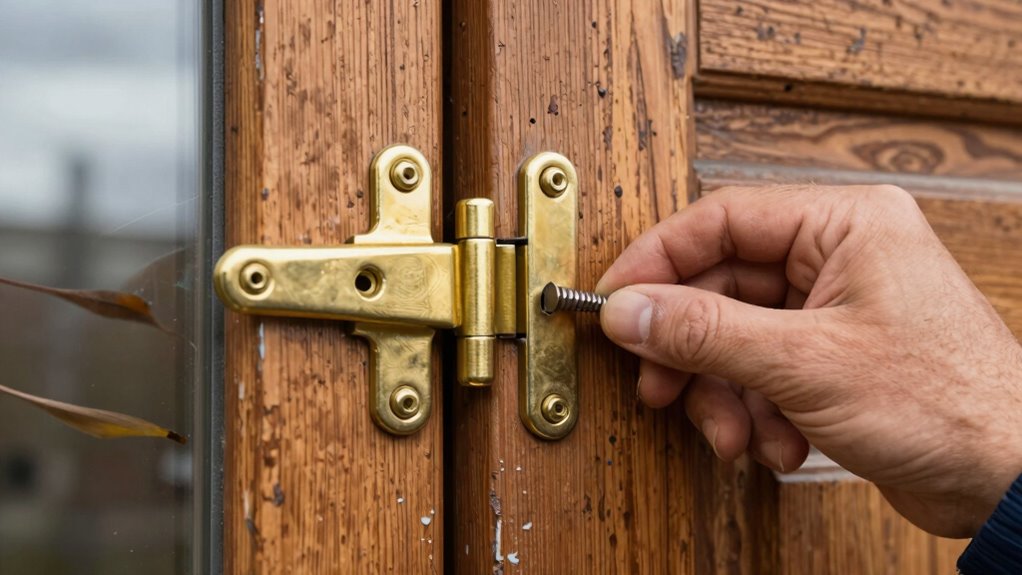

To protect your door in high winds, regularly check and tighten hinges and latches to prevent damage. Lubricate them with silicone or graphite to keep operation smooth and rust-free. Reinforce the frame with heavy-duty screws and metal braces for added strength. By maintaining and upgrading these components, you’ll reduce the risk of warping or failure during storms. Keep your door storm-ready with these simple tune-ups and discover even more tips to enhance its durability.
Get ready for Prime Big Deal Days — try Prime free
Exclusive member deals on October 6–7, plus fast free delivery. Cancel anytime.
As an affiliate, we earn on qualifying purchases.
Key Takeaways
- Regularly inspect and tighten hinges and latch screws to prevent loosening under high wind stress.
- Replace damaged or rusted hinges and hardware promptly to maintain door integrity.
- Lubricate hinges and latches with weather-resistant lubricants to ensure smooth operation and reduce wear.
- Reinforce the door frame with steel plates and heavy-duty screws secured into wall studs for added stability.
- Conduct routine maintenance before storm seasons to identify and fix vulnerabilities that could compromise door strength.
As an affiliate, we earn on qualifying purchases.
Why High Winds Threaten Your Door’s Integrity
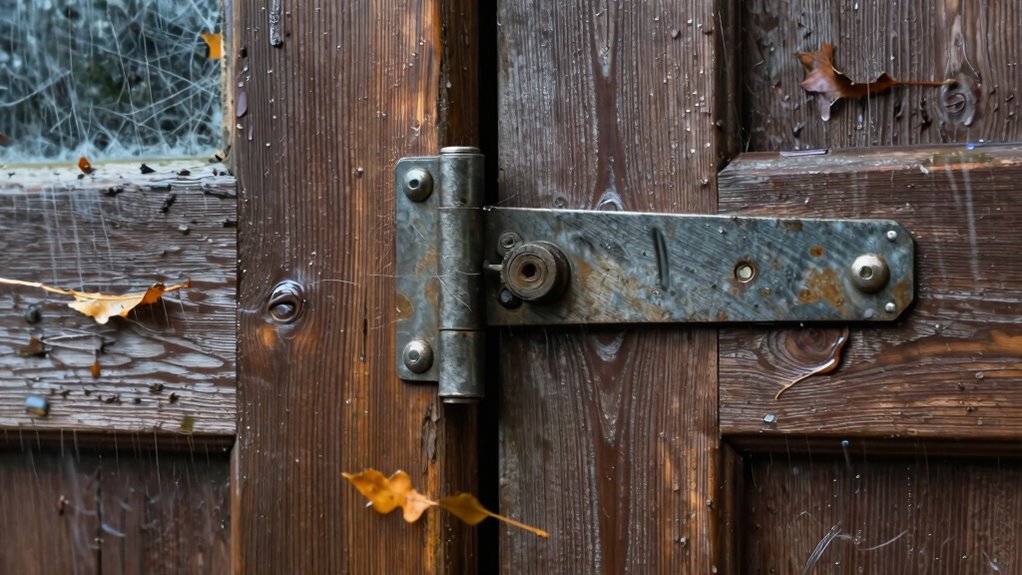
High winds can put a serious strain on your door’s hinges and latch, especially if they’re already worn or loose. When wind gusts hit, they create force that pushes and pulls your door, testing its door frame strength. If your frame isn’t sturdy, it can warp or crack, weakening the overall structure. Additionally, weak latch security makes it easier for the door to be forced open or damaged during storms. Over time, this repeated stress can cause misalignment, loosened hinges, and compromised latch mechanisms. Ensuring your door components are in good condition is a key safety step that helps your door withstand high winds, maintaining safety and preventing costly repairs. Regularly inspecting and tightening hinges and latches can prevent damage before storms arrive, especially if you incorporate proper maintenance techniques to prolong the lifespan of your door hardware. Moreover, understanding door hardware durability can guide you in selecting more resilient components for storm-prone areas. Incorporating corrosion-resistant materials can further enhance your door’s ability to endure harsh weather conditions over time.
How to Check Your Door Hinges and Latches for Damage
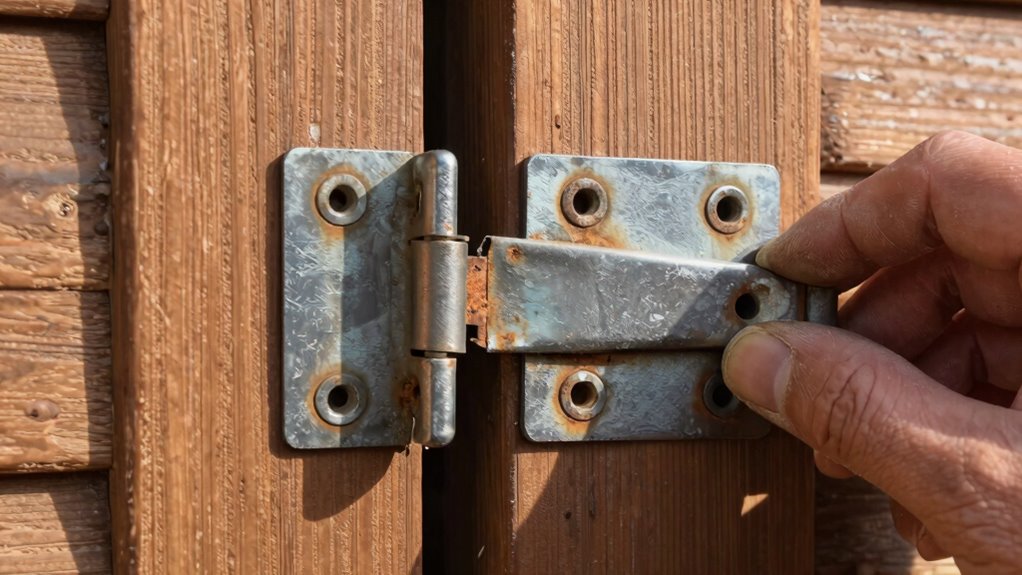
To guarantee your door remains secure during storms, it’s essential to regularly inspect the hinges and latches for signs of damage. Start with a thorough door hinge inspection, checking for looseness, rust, or warping. Tighten any loose screws and replace damaged hinges immediately. During your latch condition check, ensure the latch smoothly engages without resistance or sticking. Look for signs of wear, corrosion, or misalignment. If the latch isn’t catching properly, it might need adjustment or replacement. Also, examine the strike plate for proper alignment and secure attachment. Keep everything well-lubricated to prevent rust and ensure smooth operation. Regularly performing these checks helps spot potential issues early, maintaining your door’s strength against high winds. Implementing energy-efficient cloud server solutions can also support home security systems that monitor door integrity remotely, providing an added layer of home safety and peace of mind. Additionally, considering support breakfast options like cozy accommodations with high-protein breakfasts can offer comfort and relaxation after maintenance work. Employing proper maintenance techniques can extend the lifespan of your door hardware and improve overall safety, ensuring your home remains protected during adverse weather conditions.
Signs Your Door Needs Maintenance Before a Storm
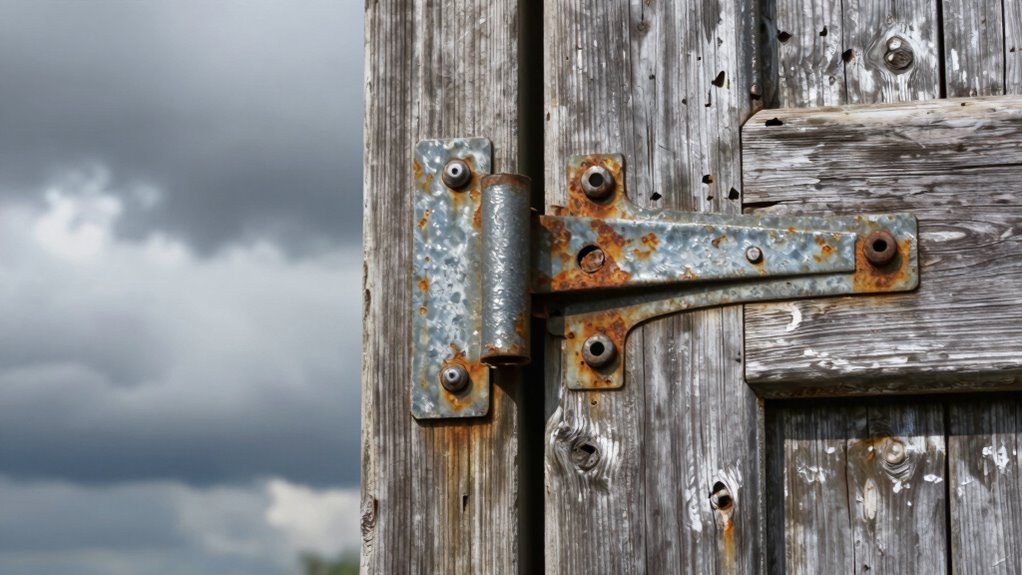
Wondering if your door is ready for a storm? Look closely at its condition. If your door’s paint touch-up is chipped or faded, it could compromise the protective seal, making it more vulnerable to wind and rain. Check your door decoration—loose or damaged hardware can be a sign that the hinges or latch need attention. Warped or swollen wood indicates moisture damage, which weakens the door’s stability. Also, test the latch; if it doesn’t latch securely or feels loose, it won’t withstand high winds. These signs show your door needs maintenance before a storm hits. Addressing small issues now helps prevent more extensive damage later, ensuring your door remains sturdy when the weather turns fierce. Proper door maintenance is essential for ensuring your door can withstand high winds and storm conditions. Wave and wind can exert significant pressure on your door, so ensuring it is properly maintained is crucial for storm readiness. Regular inspections and timely repairs can prevent damage and keep your door secure during severe weather events. Additionally, door hardware that is outdated or loose should be replaced promptly to maintain overall stability. Ensuring your door has proper weatherproofing can further enhance its resilience against stormy weather.
How to Properly Lubricate Door Hinges and Latches for Storm Resistance
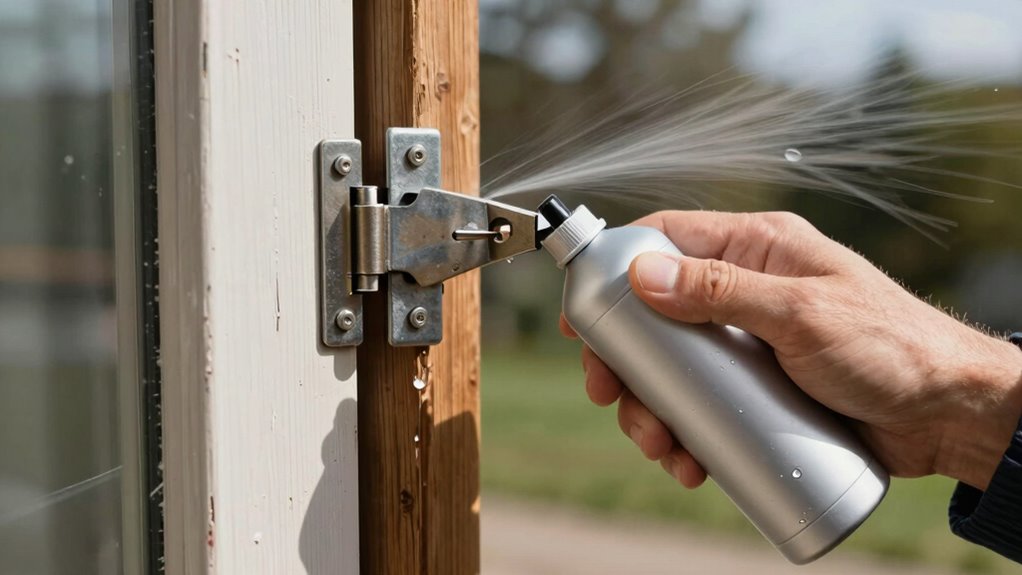
To guarantee your door hinges and latches withstand storms, you need to use the right lubricant type. Apply it during mild weather conditions when the parts are dry and accessible. Remember to perform regular maintenance checks to keep everything functioning smoothly before bad weather hits. Incorporating proper lubrication techniques into your routine can help ensure your door remains secure and functional during high winds. Additionally, understanding smart maintenance practices can extend the lifespan of your door components and improve their resilience against harsh weather conditions. Using the correct application methods ensures the lubricant penetrates effectively and prevents buildup that might hinder movement.
Choose Proper Lubricant Type
Choosing the right lubricant is essential for ensuring your door hinges and latches resist storm damage. Using the proper type prevents rust, reduces wear, and keeps everything functioning smoothly. Here are three tips to select the best lubricant:
- Opt for a silicone-based or graphite lubricant for door hinge and latch lubrication, as these resist moisture and won’t gum up over time.
- Avoid WD-40 or oil-based products that can attract dirt or cause buildup, reducing effectiveness during storms.
- Check the label to ensure it’s suitable for outdoor use and provides long-lasting protection in high-wind conditions.
- Regular maintenance with the correct lubricant can prevent corrosion and rust, extending the lifespan of your door components. Proper lubrication also helps maintain the storm resistance of your entryway, especially during severe weather events.
Using the correct lubricant type guarantees your door’s hinge-and-latch system stays resilient, ensuring easy operation and excellent storm resistance.
Apply During Mild Conditions
When is the best time to lubricate your door hinges and latches? During mild weather, ideally when temperatures are stable and humidity is low. Avoid lubricating during extreme cold, heat, or rain, as these conditions can affect how the lubricant sets and might cause moisture issues. Before applying lubricant, check that your doorbell wiring is secure and weather stripping is intact to prevent drafts. Proper weather stripping ensures your door seals tightly, reducing wind impact. Lubricate hinges and latches evenly, ensuring smooth operation. This prevents rust and sticking, especially before storm season. Applying lubricant during calm weather helps it penetrate properly, providing lasting protection when high winds hit. Staying ahead with regular maintenance can also prevent rust and corrosion, further extending the lifespan of your door hardware. Regular inspection and proper door hardware maintenance are essential to keep your door resilient against harsh weather. Using the right lubrication techniques can make a significant difference in performance and longevity. Additionally, selecting the appropriate paint sprayer tips can enhance application quality when painting or sealing exterior surfaces. Stay proactive by scheduling tune-ups during mild conditions for maximum performance.
Regular Maintenance Checks
Regular maintenance checks make certain your door hinges and latches stay in top condition, especially before storm season. Proper door hinge maintenance ensures smooth operation and prevents failure during high winds. Start with these steps:
- Use latch inspection techniques to check for looseness or stiffness, tightening screws or replacing damaged parts.
- Apply a suitable lubricant, like silicone spray, to door hinges and latches to reduce friction and prevent rust.
- Test the latch’s engagement, ensuring it snaps securely and holds firmly under pressure.
Choosing the Best Lubricant for Your Door Maintenance
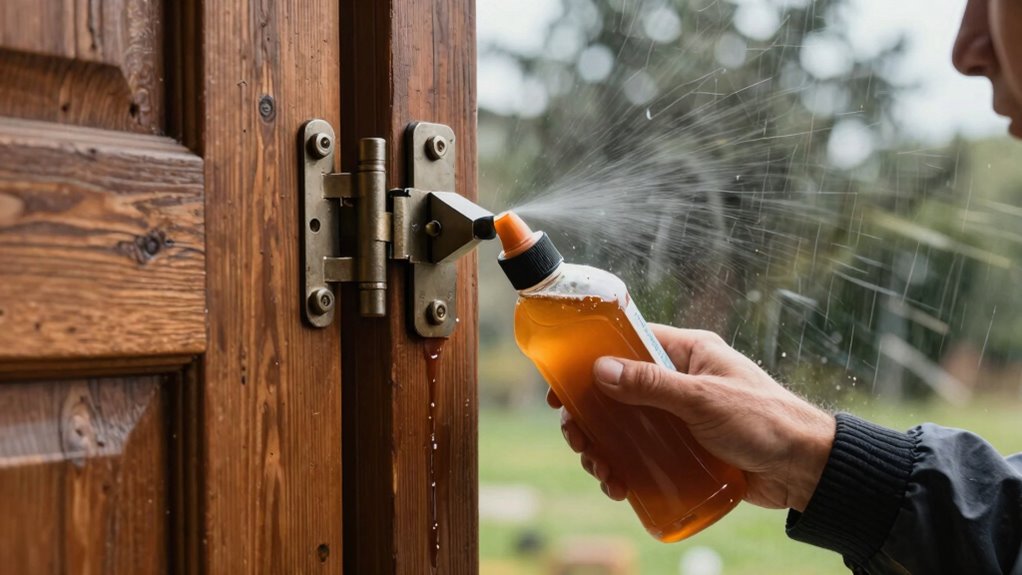
Selecting the right lubricant is essential for ensuring your door operates smoothly and quietly. For door hinge lubrication, choose a lightweight, penetrative oil such as silicone spray or graphite powder. These lubricants penetrate deep into hinges without attracting dirt or dust, reducing squeaks and sticking. When it comes to latch maintenance tips, avoid thick grease or oil that can cause buildup or attract debris. Instead, opt for a dry lubricant for the latch mechanism to keep it moving freely. Proper lubrication prevents rust and corrosion, especially in high-wind conditions. Regularly applying the correct lubricant guarantees your door remains functional and extends its lifespan. Remember, proper door hinge lubrication and latch maintenance tips are key to avoiding issues before they escalate.
Easy Ways to Reinforce Your Door for Stormy Weather

To protect your door during storms, start by reinforcing the door frame to prevent shifting. Make sure your hinges are secured tightly to avoid sagging, and consider installing wind-resistant locks for added stability. These simple steps can make a big difference in keeping your home safe during harsh weather.
Reinforce Door Frame
When stormy weather threatens, reinforcing your door frame is a vital step to prevent it from giving way. Proper door frame reinforcement ensures your stormproofing techniques hold strong against high winds. Here are key methods to secure your door frame:
- Install steel plates or braces along the sides of the frame to add structural support.
- Use longer, heavy-duty screws to anchor the frame securely into wall studs, not just drywall.
- Apply reinforcing strips or metal angles at the corners to distribute stress evenly.
These simple steps enhance your door’s stability, making it more resilient during storms. Reinforcing your door frame is a smart, proactive way to protect your home and avoid costly damages when nature releases its fury.
Secure Hinges Properly
Securing your hinges properly is a straightforward yet essential step to reinforce your door against stormy weather. Start by checking hinge alignment; misaligned hinges can weaken your door’s resistance. Tighten loose screws and replace any damaged hinges. Also, guarantee the latch is properly adjusted to fit snugly into the strike plate, preventing wind from forcing the door open. Proper hinge placement keeps the door aligned and minimizes stress on the frame. Use the following table to guide your adjustments:
| Task | Tip |
|---|---|
| Check hinge alignment | Ensure hinges are straight and flush |
| Tighten hinge screws | Use a screwdriver for firm grip |
| Adjust latch fit | Make sure latch and strike plate align |
These steps help keep your door secure during high winds.
Install Wind-Resistant Locks
Installing wind-resistant locks is one of the most effective ways to strengthen your door against severe storms. These locks use storm proof hardware designed to withstand high winds and prevent forced entry. To reinforce your door:
- Choose locks made from durable, wind resistant materials to ensure longevity during storms.
- Install heavy-duty deadbolts or multi-point locking systems that lock securely at multiple points along the door frame.
- Replace standard hardware with storm proof hardware that’s specifically engineered for high-wind conditions, adding an extra layer of protection.
Create a Maintenance Schedule to Keep Your Doors Wind-Resistant Year-Round
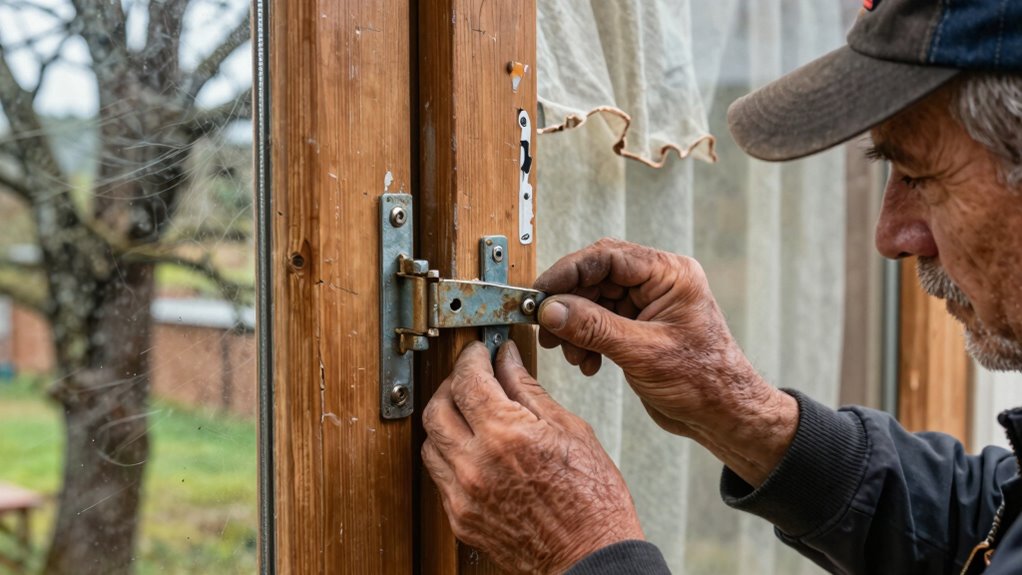
Maintaining a regular schedule for inspecting and servicing your doors is essential to keeping them wind-resistant all year long. Start by checking your door material, ensuring it remains sturdy against high winds. Regularly inspect weatherproofing accessories like seals and gaskets, replacing or tightening them as needed to prevent drafts and water infiltration. Schedule biannual inspections to identify any signs of wear or damage early. Lubricate hinges and latches to keep them functioning smoothly, especially before storm seasons. Keep an eye on the alignment of your door; a well-aligned door reduces wind strain. By establishing and sticking to this routine, you ensure your door stays secure, weather-tight, and capable of withstanding high winds throughout the year.
Frequently Asked Questions
Can Regular Hinge Maintenance Prevent Door Damage in High Winds?
Yes, regular hinge maintenance can prevent door damage in high winds. You should regularly lubricate hinges to keep them moving smoothly and prevent rust, which can cause sticking or squeaking. Additionally, adjusting the latch ensures it properly aligns with the strike plate, reducing the risk of the door being forced open or damaged during storms. Consistent hinge lubrication and latch adjustments make your door more resilient against strong winds.
How Often Should I Inspect Door Hinges Before Storm Season?
Did you know that poorly maintained hinges can fail in strong winds, causing costly damage? You should inspect your door hinges at least twice a year before storm season. During inspections, consider hardware upgrades and weatherproofing techniques to reinforce your door’s resilience. Regular checks guarantee your hinges are lubricated and tight, preventing wind-related damage. Staying proactive reduces the risk of sudden door failure during storms, saving you time and money.
Are There Specific Hinge Types More Resistant to Wind Damage?
Yes, some hinge types offer better wind resistance. Hinges made from durable materials like stainless steel or brass are more resistant to corrosion and damage. Additionally, a sturdy latch design with reinforced mounting points provides extra stability during high winds. You should consider upgrading to these hinge types if your area experiences frequent storms, as they can help prevent door damage and guarantee your door stays secure during severe weather.
What Are the Costs Associated With Hinge and Latch Tune-Ups?
You’ll find hinge and latch tune-ups cost around $50 to $150, depending on your door’s complexity and labor rates. Think of it as a small investment that shields your home from costly repairs down the road. Regular maintenance, about once a year, keeps everything moving smoothly, preventing wear and tear. Comparing costs now saves you from surprise expenses later, turning a simple tune-up into a smart, protective move.
Can DIY Maintenance Effectively Protect My Door From Severe Weather?
Yes, DIY maintenance can effectively safeguard your door during severe weather. You can apply weatherproofing techniques like sealing gaps and adding stormproof door sweeps, which help keep out wind and rain. Security enhancements, such as reinforcing hinges and latches, prevent damage and forced entry. Regularly checking and maintaining these components ensures your door remains sturdy and resilient, giving you peace of mind during storms.
Conclusion
Don’t wait for the wind to give your door a rude awakening. Stay ahead with a simple hinge-and-latch tune-up, and you’ll dodge the drama of door disasters. Because who doesn’t want a door that’s more wind-proof than a bunker? Just a little maintenance now keeps the storm’s chaos outside where it belongs—away from your peace of mind. So, tighten, lubricate, and reinforce—your door’s new best friends for high winds.
Flea & tick season Picks
flea and tick prevention
As an affiliate, we earn on qualifying purchases.