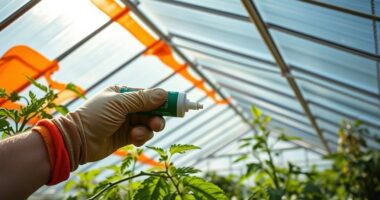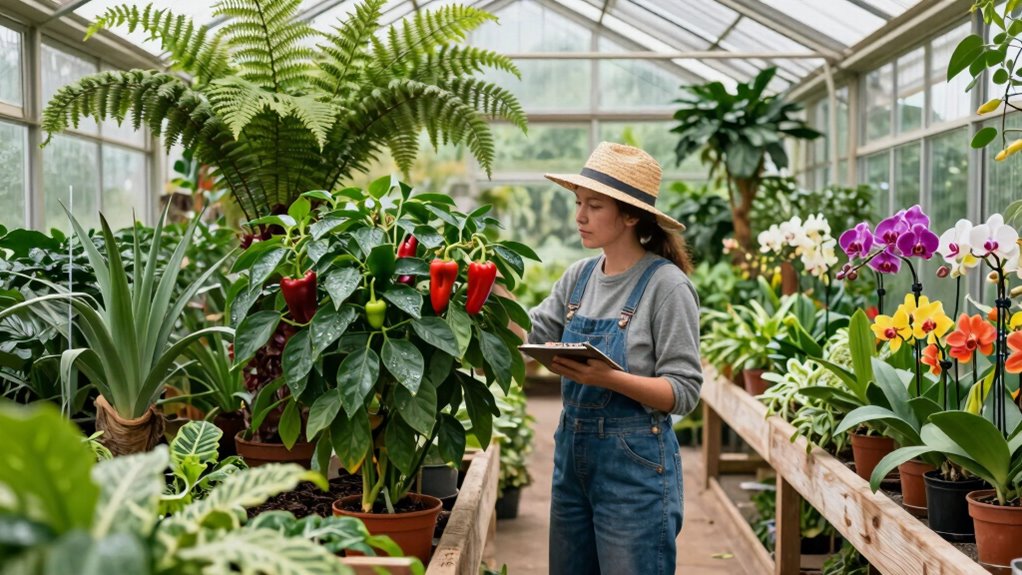
To keep your greenhouse in top shape, adopt a “Walk and Notice” routine. As you walk through, actively observe plant health, signs of pests, disease, and environmental conditions like humidity and airflow. Regular inspections help catch issues early, saving you time and resources. Recording your findings and adjusting conditions as needed guarantees healthier plants and a resilient environment. Keep exploring to discover more tips on mastering this effective routine.

Get garden gear delivered free — and shop member deals
- Fast, free delivery on millions of items
- Access to Prime Big Deal Days deals on October 6–7
- Prime Video, Amazon Music and more included
Key Takeaways
- Regular walks enable early detection of plant health issues, pests, and environmental imbalances.
- Focused visual inspections identify subtle changes and signs of pests or diseases before escalation.
- Monitoring environmental factors like humidity and airflow helps prevent pest outbreaks and disease development.
- Keeping detailed notes on plant conditions and pest activity improves management strategies.
- Consistent routine fosters proactive care, maintaining healthy, resilient greenhouse conditions.

Maintaining a healthy greenhouse requires more than just routine watering and fertilizing; it also involves regular observation to catch issues early. This is where your “Walk and Notice” routine becomes essential. As you walk through your greenhouse, you actively observe plant health, looking for signs of stress, disease, or pest problems. By staying attentive, you can identify subtle changes before they escalate, saving time and resources in the long run.
Regular greenhouse walks help catch issues early, saving time and resources through proactive plant health monitoring.
Pay close attention to the leaves, stems, and overall growth of your plants. Look for discolored or wilted leaves, which can indicate water issues, nutrient deficiencies, or disease. Also, check for spots, mold, or unusual growth patterns that might signal pest or pathogen presence. Regularly inspecting your plants helps you understand their normal appearance, making it easier to detect abnormalities early. This proactive approach is crucial for maintaining excellent plant health, ensuring your greenhouse thrives.
Pest management is a critical component of your routine. As you walk, keep an eye out for pests such as aphids, whiteflies, spider mites, or any other unwelcome visitors. Notice any signs of pest activity like webbing, sticky residue, or gnawed leaves. Early detection allows you to implement targeted control measures before infestations spread and cause significant damage. You might also observe natural pest predators or beneficial insects, which can be helpful indicators of ecological balance within your greenhouse.
Your routine shouldn’t be rushed; take the time to examine each section thoroughly. Check the underside of leaves and around the base of plants, where pests often hide. Keep notes on what you observe, including plant symptoms and pest activity, so you can track patterns over time. This record-keeping enhances your pest management strategy, helping you decide when and how to intervene most effectively. Additionally, understanding the importance of climate control can aid in preventing pest outbreaks and disease development, making your routine even more effective. Proper climate management can also influence the overall environment, contributing to healthier plants and reduced pest issues.
Additionally, use your walk as an opportunity to evaluate environmental factors like humidity, temperature, and airflow, as these influence plant health and pest development. Proper airflow and humidity levels can reduce pest problems and disease outbreaks, so adjusting your environment accordingly is part of your ongoing care. Recognizing the role of environmental conditions in pest management can help you create a more resilient greenhouse environment.
In essence, your “Walk and Notice” routine is a simple yet powerful tool for maintaining a healthy greenhouse. It keeps you connected with your plants, sharpens your observation skills, and helps you stay ahead of potential issues related to plant health and pest management. Regular walks ensure you’re not just reacting to problems but actively preventing them, creating a thriving, resilient greenhouse environment.
As an affiliate, we earn on qualifying purchases.
Frequently Asked Questions
How Often Should I Perform the “Walk and Notice” Routine?
You should perform the “walk and notice” routine at least once daily to maintain pest control and plant health. Regular inspections help you catch issues early, such as pests or diseases, before they spread. During your walk, look for signs of stress or damage. This consistent effort keeps your greenhouse healthy, allowing you to address problems promptly and guarantee ideal growth conditions for your plants.
What Tools Are Best for Inspecting Greenhouse Conditions?
You should use a soil moisture meter to monitor moisture levels and a flashlight or magnifying glass for pest control. A digital thermometer helps check temperature, ensuring ideal conditions. Regularly inspecting with these tools allows you to spot issues early, like dry soil or pests, so you can act quickly. By integrating these tools into your routine, you’ll maintain healthy greenhouse conditions and prevent problems before they escalate.
How Do I Document Issues Found During Inspections?
You record issues by maintaining clear, detailed records during your inspections, ensuring consistency in your record keeping. Use a dedicated notebook, digital app, or spreadsheet to log problems like pests, disease signs, or equipment malfunctions. Track issues systematically by noting the date, location, description, and severity. This organized approach helps you monitor recurring problems, prioritize repairs, and evaluate the effectiveness of your solutions, keeping your greenhouse in ideal shape.
Can This Routine Help Prevent Pest Infestations?
Yes, this routine can help prevent pest infestations. By regularly conducting your “Walk and Notice,” you actively engage in pest identification early on, spotting issues before they escalate. You can also observe signs of pests that might indicate the need for biological control methods. Consistent monitoring allows you to act swiftly, reducing the risk of widespread infestations and maintaining a healthy greenhouse environment.
Is the “Walk and Notice” Routine Suitable for All Greenhouse Types?
Yes, the “walk and notice” routine suits all greenhouse types. It helps you monitor plant health closely, catching signs of pests or diseases early. Regularly walking through your greenhouse allows you to spot issues before they escalate, making pest prevention more effective. No matter the greenhouse size or crop, this routine keeps you engaged and proactive, ensuring your plants stay healthy and pest-free.
Conclusion
Next time you walk through your greenhouse, remember that paying close attention isn’t just about spotting problems—it’s about fostering growth. Sometimes, a small observation can prevent a big issue, much like how noticing a single sprout can lead to a thriving garden. By making this routine a habit, you create a space where everything can flourish naturally. In noticing the little things, you nurture the potential for something truly remarkable to bloom.
Fall Picks
fall essentials
As an affiliate, we earn on qualifying purchases.