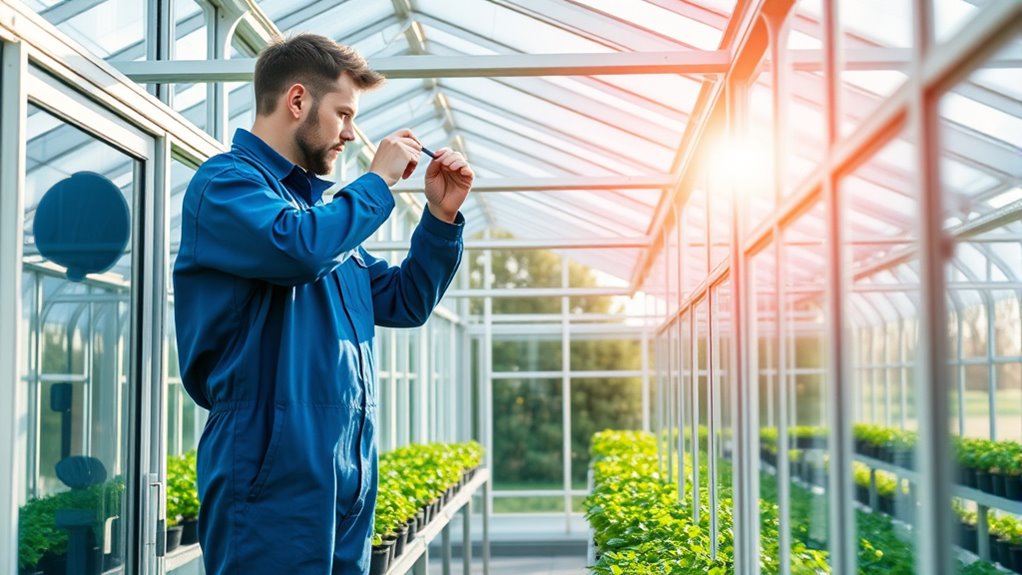
To keep your greenhouse in top shape, regularly inspect and clean ventilation systems to guarantee proper airflow and stable temperature and humidity levels. Maintain a pest-free environment by controlling pests proactively using natural predators, traps, and cleanliness. Monitoring environmental conditions like humidity and temperature helps prevent issues and promotes healthy plant growth. Consistent maintenance of these elements, combined with vigilant pest management, creates a thriving greenhouse. Continue exploring these strategies to master effective upkeep and maximize your greenhouse’s potential.
Key Takeaways
- Regularly inspect and clean vents, fans, and filters to ensure optimal airflow and ventilation system efficiency.
- Maintain proper humidity and temperature levels through environmental controls to prevent pest issues and promote healthy plant growth.
- Routinely check for damage or clogs in the structure, including framing and glazing, to ensure durability and safety.
- Implement pest management strategies, such as monitoring with traps and introducing beneficial insects, to protect plant health.
- Conduct consistent maintenance checks and record-keeping to identify issues early and keep the greenhouse in top operational condition.

Maintaining a healthy greenhouse requires regular attention and proactive care. One of the most critical aspects of this is ensuring your ventilation systems are functioning properly. Proper airflow helps regulate temperature, humidity, and CO2 levels, creating an ideal environment for your plants to thrive. Regularly inspect fans, vents, and exhaust systems to make sure they aren’t clogged or damaged. Clean vents and filters to prevent dust buildup that could hinder airflow. If you notice inconsistent temperature or humidity levels, it’s a sign that your ventilation system might need repairs or upgrades. Installing automated vent openers can also help maintain consistent conditions without manual intervention, saving you time and effort.
Another key component of greenhouse maintenance is pest control. Pests can quickly devastate your crops if left unchecked, so it’s essential to implement a thorough strategy. Start by routinely inspecting your plants for signs of infestation—look for chewed leaves, sticky residue, or discolored spots. Using integrated pest management (IPM) techniques, you can target pests early before they spread. Introduce beneficial insects like ladybugs or predatory mites that naturally keep pest populations down, reducing the need for chemical treatments. Keep your greenhouse clean by removing fallen leaves, debris, and dead plant material, which serve as breeding grounds for pests. Quarantine new plants before introducing them to your main growing area to prevent bringing in unwanted visitors. Additionally, maintaining proper humidity and temperature levels can make your greenhouse less hospitable to pests, as many are sensitive to environmental changes. Proper environmental conditions also play a role in supporting healthy plant growth and reducing pest susceptibility.
Consistent monitoring is vital. Use sticky traps to catch flying pests and identify what’s present. Applying organic or chemical controls should be done carefully and only when necessary, following the manufacturer’s instructions to avoid harming your plants or beneficial insects. Keep detailed records of pest activity and treatments to identify patterns and adjust your strategies accordingly. Prevention is always better than cure, so focus on creating an environment that’s less attractive to pests and easier to manage. Regularly checking your ventilation systems and pest control measures ensures your greenhouse remains a healthy, productive space. When these systems are well-maintained, they work together to create stable conditions that support vigorous plant growth and minimize disease and pest issues. Remember, proactive care today prevents costly problems tomorrow, keeping your greenhouse in top shape all season long.

Amico 12" Shutter Exhaust Fan, Thermostat,1400 Sq.Ft,25W DC Motor, 1282 CFM
- High Airflow Capacity: 1282 CFM for large spaces
- Wide Coverage Area: Suitable for up to 1600 sq.ft.
- Fast Air Refresh: Clears a 2-car garage in 3 minutes
As an affiliate, we earn on qualifying purchases.
As an affiliate, we earn on qualifying purchases.
Frequently Asked Questions
How Often Should I Inspect My Greenhouse for Damages?
You should inspect your greenhouse for damages at least once a month to guarantee ventilation maintenance and structural integrity. Regular checks help catch issues early, like broken vents, leaks, or damaged supports. After severe weather or storms, do a thorough inspection immediately. Consistent maintenance keeps your greenhouse safe and functional, preventing costly repairs and ensuring your plants thrive in a stable environment.
What Are the Best Methods to Prevent Pest Infestations?
To prevent pest infestations, you should regularly monitor your greenhouse and keep it clean. Use biological controls like beneficial insects to naturally manage pests, and select pest-resistant plants to reduce vulnerability. Keep doors and vents sealed, and remove any debris or diseased plants promptly. Combining these methods creates a healthy environment that discourages pests, helping you maintain a thriving greenhouse with minimal chemical intervention.
How Can I Improve Energy Efficiency in My Greenhouse?
While sunlight fuels growth, overcast days can drain your energy efficiency. To maximize solar optimization, install reflective surfaces and choose high-efficiency glazing. Combine this with insulation techniques like thermal curtains and sealing gaps to retain heat. These measures reduce energy waste and lower costs, ensuring your greenhouse stays warm in winter and cool in summer. By balancing light and insulation, you create an environment that’s both productive and energy-smart.
What Are Eco-Friendly Cleaning Options for Greenhouse Surfaces?
You can use eco-friendly cleaning options like biodegradable cleaners and natural disinfectants to maintain your greenhouse surfaces clean. These products are effective without harming the environment or your plants. Simply apply biodegradable cleaners for routine cleaning and opt for natural disinfectants, such as vinegar or tea tree oil, to sanitize. This approach ensures your greenhouse stays healthy and sustainable while reducing chemical use.
How Do I Prepare My Greenhouse for Seasonal Changes?
You should start by adjusting your climate control strategies to suit seasonal changes, ensuring proper ventilation and heating or cooling as needed. Prepare for seasonal planting by selecting appropriate crops and checking soil health. Clean and inspect your greenhouse structure, sealing any leaks. Implement shading or insulation to regulate temperature. These steps help your greenhouse adapt smoothly, promoting healthy plant growth and protecting your investment through effective seasonal preparation.
Conclusion
Regular greenhouse maintenance keeps your structure thriving. For example, imagine a hobby gardener who routinely checks for leaks and repairs vents—her plants flourish, and she avoids costly repairs. By staying proactive, you guarantee ideal growing conditions and extend your greenhouse’s lifespan. Remember, consistent care isn’t just about preventing issues; it’s about creating a reliable environment where your plants can truly thrive. Keep up with maintenance, and your greenhouse will serve you well for years to come.