When tackling mold, stay calm and evaluate its severity. Small spots on non-porous surfaces can often be cleaned safely with proper gear and cleaning solutions, but avoid overreacting to tiny, isolated patches—these may be harmless or easy to ignore. If the mold covers porous materials or has spread extensively, it’s best to replace those items and seek professional help. To learn more about safe cleanup strategies and when to replace or ignore mold, keep exploring the details.
Key Takeaways
- Assess mold severity: small, isolated spots on non-porous surfaces may be safe to clean or ignore.
- Use protective gear and proper cleaning tools for safe removal of manageable mold.
- Replace porous items like drywall and carpets if heavily contaminated; cleaning may spread spores.
- Control moisture sources and maintain indoor humidity below 60% to prevent mold growth.
- Seek professional help for large infestations or if unsure about safe cleaning or replacement decisions.
Is Your Mold Problem Minor or Serious? When to Call a Pro

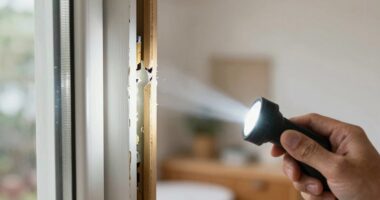
Determining whether your mold problem is minor or serious is crucial to deciding how to handle it. Start with a thorough mold inspection to assess the extent of the growth. If the mold is confined to a small area, like a patch on a bathroom wall, you might manage mold cleanup yourself with proper precautions. However, if mold covers large surfaces or has penetrated materials, it’s time to consider professional mold remediation. Serious infestations often require specialized tools and expertise to ensure all spores are removed safely. Ignoring the severity can lead to health issues and structural damage. Proper assessment helps you avoid unnecessary risks and ensures your home’s safety and cleanliness. Recognizing the severity of mold growth early can prevent long-term problems and health risks. When in doubt, consulting a mold specialist is the best move.
How to Tell Which Materials Can Be Cleaned and Which to Replace

You need to determine whether materials can be cleaned or must be replaced after a mold issue. Porous items like drywall often need replacing, while non-porous surfaces such as glass or metal can usually be cleaned thoroughly. Evaluating structural materials helps you decide if they’re salvageable or should be replaced to ensure safe, lasting results. Considering water chemistry and humidity control can also prevent future mold growth and improve overall remediation effectiveness.
Porous Material Contamination
Porous materials pose a unique challenge when it comes to mold contamination because their structure allows spores and moisture to penetrate deeply. This makes mold absorption difficult to fully eradicate through cleaning alone. If mold has infiltrated porous materials like drywall, carpets, or ceiling tiles, cleaning may not be effective or safe. These materials tend to trap mold spores, creating a persistent problem even after surface cleaning. In most cases, it’s best to replace porous items affected by mold, especially if the contamination is extensive. If you’re uncertain, consider testing or consulting a professional. Remember, trying to clean deeply contaminated porous materials can spread spores and worsen the problem. When in doubt, replacing porous materials is often the safest and most effective choice. Using specialized cleaning methods can sometimes help decontaminate porous materials, but often replacement remains the most reliable solution.
Non-Porous Surface Cleanup
When dealing with mold on non-porous surfaces, it’s generally easier to clean and remove spores effectively. Non-porous surfaces, like glass, metal, and plastic, don’t absorb moisture or mold, making them suitable for thorough cleaning protocols. To determine if a material can be cleaned or needs replacing, inspect for deep cracks, pitting, or deterioration—these signs indicate damage that cleaning alone won’t fix. Use a combination of soap and water or a mild disinfectant to wipe down surfaces, ensuring you wear gloves and proper ventilation. If mold persists despite cleaning, consider replacing the item to prevent future growth. Always follow proper cleaning protocols, and remember that non-porous surfaces typically respond well to routine mold removal efforts. Regularly air purification can also help prevent mold buildup in the first place by reducing excess moisture and airborne spores.
Structural Material Assessment
Determining whether a structural material can be cleaned or must be replaced hinges on its condition and level of damage. Assess the material’s integrity, looking for signs of deterioration, warping, or crumbling. Building codes often specify the minimum standards for material durability, guiding your decision. If the material is solid and shows minimal damage, cleaning with appropriate disinfectants may suffice. However, if the material is compromised, porous, or extensively damaged, replacement is necessary to prevent mold recurrence. Keep in mind that some materials, like drywall or certain wood types, are more prone to mold retention and may not withstand cleaning. Always consider the material’s durability and compliance with local building codes to ensure safety and long-term effectiveness. Additionally, understanding the reliable, well-researched guidelines can help you make informed choices about proper cleanup and replacement.
How to Safely Clean Small Mold Areas Yourself

To clean small mold areas safely, you need the right supplies like gloves, a mask, and cleaning solutions. Using proper techniques, such as scrubbing gently and avoiding mixing chemicals, helps prevent spreading spores. When you follow these steps, you can effectively remove mold without risking your health. Additionally, understanding color accuracy in your cleaning approach can help ensure that you assess and address mold issues accurately and effectively.
Proper Cleaning Supplies
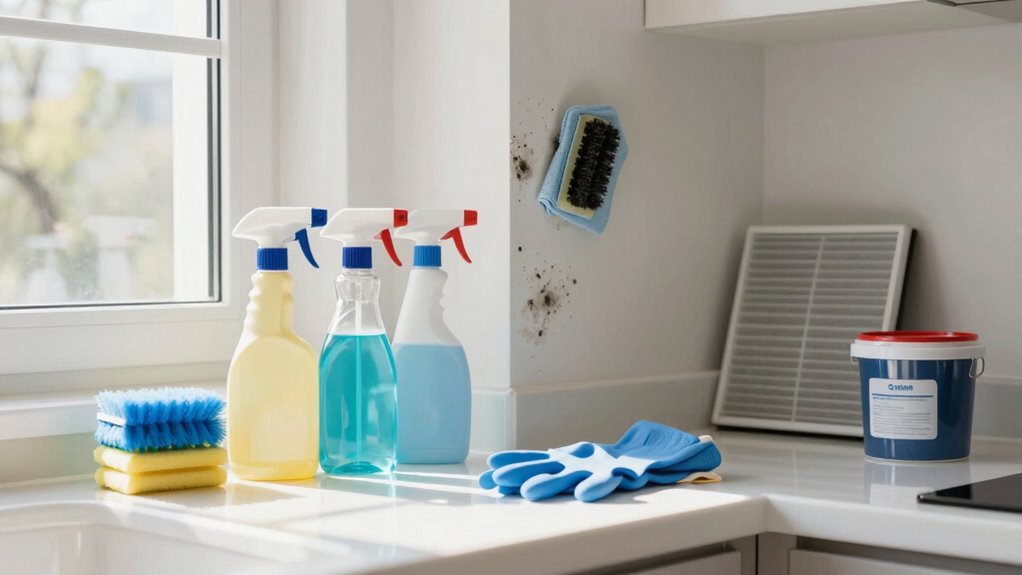
For safely cleaning small mold areas, having the right supplies on hand is vital. You’ll need effective cleaning equipment like scrub brushes, microfiber cloths, and spray bottles. Make sure to use mold resistant supplies, such as cleaning solutions specifically designed to kill mold or a mixture of water and mild detergent. Avoid harsh chemicals that can cause health issues or damage surfaces. Gloves and a mask are also essential to protect your skin and respiratory system during cleanup. Keep a dedicated set of tools to prevent cross-contamination. Storing these supplies in a sealed container ensures they remain effective and ready when needed. With the proper cleaning equipment and mold resistant supplies, you’re prepared to tackle small mold problems safely and efficiently.
Safe Cleaning Techniques
When cleaning small mold areas, following proper techniques helps guarantee your safety and the effectiveness of the process. Wear gloves, a mask, and eye protection to prevent mold spores from contacting your skin or inhaling airborne particles. Use appropriate cleaning agents like a mixture of detergent and water or a commercial mold cleaner designed for household use. Apply the solution directly to the affected surface and scrub gently to remove mold. Avoid using bleach on porous materials, as it may not fully eliminate mold spores and can cause damage. Make certain good ventilation during cleaning to disperse airborne mold spores safely. After cleaning, thoroughly dry the area to prevent mold from returning. Always dispose of contaminated materials properly to minimize future mold growth. For optimal results, consider cleaning equipment that is designed to safely remove mold and prevent spores from spreading further.
Which Moldy Items Should You Toss to Prevent Spreading

If mold has taken hold on certain items, tossing them is the best way to prevent spores from spreading throughout your home. Moldy porous items like ceiling tiles, carpeting, and fabric furniture often become contaminated, making cleaning ineffective. These contaminated items can release mold spores into the air, increasing the risk of mold spreading to other areas. If you notice mold on paper products, cardboard boxes, or soft furnishings, it’s safest to discard them. Keep in mind, mold can penetrate porous surfaces deeply, so cleaning won’t fully eliminate the threat. By removing these contaminated items promptly, you reduce the chance of mold spores dispersing further and causing more damage or health issues. When in doubt, it’s better to toss than to risk spreading mold throughout your home.
When to Ignore Small Mold Spots and Why Not Everything Is a Threat
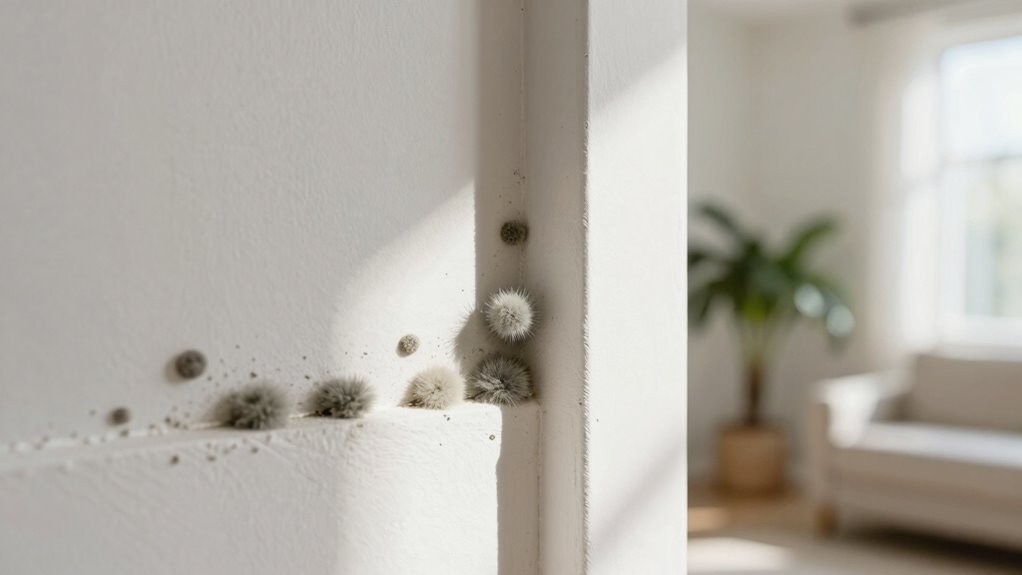
Not every mold spot warrants immediate panic or extensive cleanup. Small, isolated mold patches on non-porous surfaces, especially if less than a quarter-sized, often don’t *considerably* impact your air quality or mold health. These tiny spots are usually harmless and can be cleaned with simple wiping or scrubbing. Overreacting to minor mold growth can cause unnecessary stress and expense. Keep in mind, mold is more concerning when it spreads or appears in humid environments that affect air quality. If you’re confident in your cleaning methods and the mold remains localized, it’s safe to ignore small spots. However, always monitor for new growth, and consult a professional if mold expands or if you’re sensitive to mold-related health issues. Recognizing free floating mold spores can help determine when a more thorough cleanup or professional intervention might be necessary.
Tools and Products You Need for Mold Cleanup

To effectively tackle mold cleanup, you’ll need a set of essential tools and products designed to remove mold safely and thoroughly. These include protective gear like gloves and masks to prevent inhalation of spores, sturdy scrub brushes, and spray bottles for applying cleaning solutions. You should also invest in mold resistant products to help inhibit future growth and consider ventilation strategies, such as fans or open windows, to improve air circulation and dry out affected areas quickly. Incorporating proper ventilation strategies can significantly enhance drying times and prevent mold recurrence. Using these tools and products ensures a safer, more effective cleanup process while reducing the risk of mold returning.
How to Prevent Mold From Coming Back
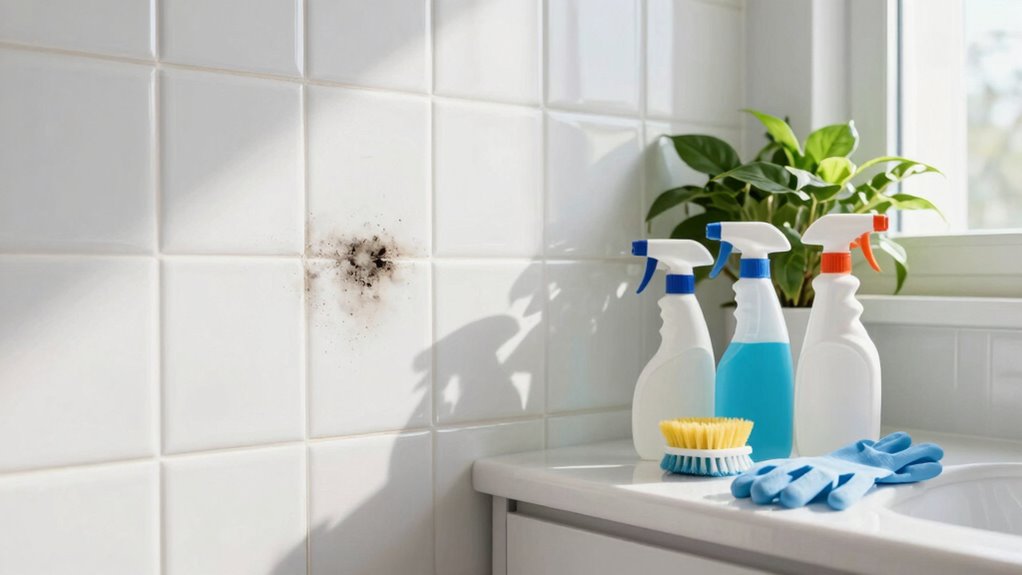
Preventing mold from returning requires proactive measures to control moisture and improve airflow. Start by fixing leaks and sealing cracks to prevent water intrusion. Use dehumidifiers and exhaust fans in high-humidity areas like bathrooms and basements to maintain low moisture levels. Regularly inspect areas prone to mold and address any signs of dampness immediately. Ensure proper ventilation to promote airflow, which helps dry out excess moisture quickly. Keep indoor humidity below 60%, ideally around 30-50%, through moisture control techniques. Clean and dry any spills or standing water promptly. By maintaining a dry environment and managing moisture effectively, you reduce mold prevention risks and create an inhospitable space for mold growth to return. Additionally, understanding filtration systems can help improve indoor air quality and reduce mold spores circulating in your home.
Tips for Staying Calm and Making Smart Mold Cleanup Decisions

When you discover mold, staying calm is essential to making smart cleanup decisions. Panicking can lead to rushed actions that worsen the problem. Focus on appraising the situation through a thorough mold inspection and identifying moisture sources. Remember, controlling moisture is key to preventing mold from spreading further. Take deep breaths and plan your next steps carefully. Keep these tips in mind:
- Pause to evaluate the extent of the mold growth
- Conduct a mold inspection to understand the severity
- Prioritize moisture control to stop mold from returning
- Avoid rushing into cleaning; gather necessary supplies first
- Know when to seek professional help for large infestations
Remaining calm helps you stay focused, ensuring you make effective, safe choices for your home.
Frequently Asked Questions
Can Mold Cause Health Issues Even if It Looks Small?
Yes, mold growth can cause health issues even if it looks small. Small mold detection signs often mean hidden or spreading mold that releases spores into the air. These spores can trigger allergies, asthma, or other respiratory problems. Don’t ignore tiny mold spots; they may seem harmless but can impact your health over time. Always address mold growth promptly, even if it appears minor, to protect your lung health and overall well-being.
Are There DIY Methods Safe for All Types of Mold?
DIY safety depends on mold types. For common, small surface mold, you can use gloves, masks, and soap or vinegar. However, for toxic or black mold, avoid DIY methods altogether, as improper cleanup can spread spores and pose health risks. Always identify mold types properly before attempting cleanup. If unsure, it’s safer to consult professionals to guarantee safe removal and prevent health issues.
How Long Does Mold Remediation Typically Take?
Mold removal usually takes anywhere from a few days to a week, depending on the extent of the contamination. During the remediation timeline, you’ll need to identify all affected areas, thoroughly clean or replace damaged materials, and make certain of proper drying. Be patient and thorough, as rushing can lead to recurring mold problems. If the mold is extensive, hiring professionals can speed up the process and ensure complete remediation.
Can Mold Problems Reoccur After Cleaning?
Yes, mold problems can reoccur after cleaning if you don’t regulate moisture and mold spores. Even after thorough cleaning, if you leave behind excess humidity or hidden mold spores, the issue can come back. To prevent this, guarantee proper moisture control, fix leaks promptly, and keep areas dry. Regular inspections and maintaining low humidity levels help keep mold at bay and prevent future growth.
Is It Necessary to Wear Protective Gear During Cleanup?
Yes, you should wear protective gear during mold cleanup to guarantee safety. Protective gear, like gloves, masks, and goggles, helps prevent mold spores from contacting your skin, eyes, or being inhaled. Always follow safety precautions to minimize health risks. Proper gear not only protects you but also makes the cleanup process safer and more effective. Don’t skip these important steps—your health depends on it.
Conclusion
Remember, staying calm and informed helps you handle mold issues confidently. For example, if you spot a small patch in your bathroom, you can clean it safely if you follow the right steps. But if mold spreads behind walls or covers large areas, calling a pro is smarter. By knowing what to clean, replace, or ignore, you protect your home and health without panic—making mold cleanup manageable and effective.