You’ll want to watch for signs like brittleness, cloudiness, or small cracks on your greenhouse plastic, which indicate UV damage and aging. Keep an eye out for tears, holes, or weak spots that pests can exploit, especially if moisture or mold is visible. If the plastic feels fragile or shows discoloration, it’s time to think about replacing it. Staying alert to these indicators helps maintain a healthy environment—continue exploring for more expert tips.

Get garden gear delivered free with Prime
- Fast, free delivery on millions of items
- Prime Video, Amazon Music and more included
- Member-only deals all year
Key Takeaways
- Look for signs of UV degradation such as cloudiness, cracks, or brittleness in the plastic.
- Check for tears, holes, or weak spots that could allow pests or moisture infiltration.
- Monitor for discoloration, mold, or mold growth indicating moisture buildup or mold issues.
- Assess the plastic’s age; older material is more prone to damage and should be inspected more frequently.
- Perform routine inspections to identify early signs of damage and replace plastic before significant deterioration.
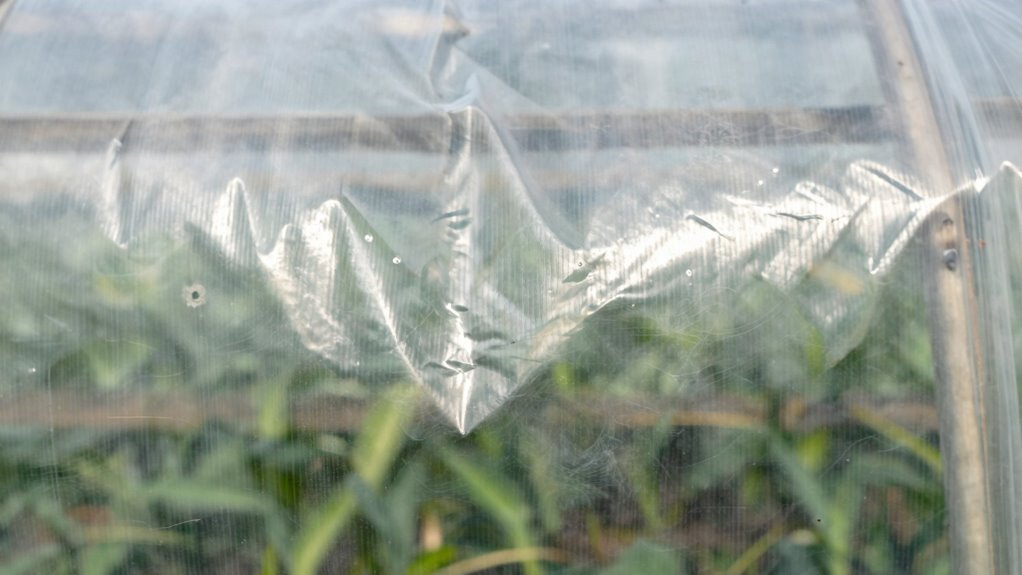
Have you ever wondered how to keep your greenhouse plastic in top shape so it lasts longer and performs better? Regularly inspecting your plastic cover is key to maintaining a healthy environment for your plants. Over time, the material can show signs of wear that indicate it needs some extra care. One of the first issues to watch for is UV degradation. Exposure to sunlight causes the plastic to weaken, become brittle, and lose its transparency. If you notice the plastic turning cloudy, developing small cracks, or becoming more brittle to the touch, it’s a clear sign that it’s been compromised. UV degradation not only reduces the light transmission into your greenhouse but also shortens the lifespan of the plastic, so addressing it early helps you get the most out of your cover. Additionally, environmental factors like moisture and pests can accelerate deterioration, making regular inspections even more crucial. Recognizing early signs of damage can also help you prevent further deterioration and extend the lifespan of your plastic. Regular maintenance can also spot issues related to plastic aging, which is essential for planning timely replacements. Beyond UV damage, another essential aspect to monitor is pest prevention. Damaged or old plastic can develop tears, holes, or weak spots that pests can exploit to enter your greenhouse. If you see any tears or gaps in the plastic, pests like insects or rodents might find an easy entry, putting your plants at risk. Keeping an eye on these signs helps you prevent infestations before they become a serious problem. Regularly inspecting for holes or thinning spots allows you to patch or replace the plastic before pests can establish a foothold. It’s also helpful to understand the effects of environmental exposure, which can accelerate plastic deterioration and compromise your greenhouse’s integrity. You should also pay attention to any discoloration or mold growth, which can be signs that your plastic has retained too much moisture or has become a breeding ground for fungi. This can compromise the integrity of the cover and impact the overall health of your plants. If you notice these issues, it’s time for maintenance or replacement to guarantee your greenhouse remains a controlled, pest-free environment. Moreover, understanding the lifespan of greenhouse plastic can help you plan replacements proactively and avoid unexpected failures. Finally, consider the age of your plastic. Even if it looks fine on the surface, most plastics have a limited lifespan. If your plastic has been in use for several years, it’s more vulnerable to UV damage and tears. Replacing it proactively can save you money in the long run by preventing more extensive damage and pest problems. In short, staying vigilant and conducting routine inspections will help you catch these signs early, guaranteeing your greenhouse plastic remains effective, durable, and protective for your plants.
As an affiliate, we earn on qualifying purchases.
Frequently Asked Questions
Can I Repair Damaged Greenhouse Plastic Instead of Replacing It?
Yes, you can repair damaged greenhouse plastic instead of replacing it completely. Plastic repair involves patching small tears or holes with specialized tape or sealants, which can extend its lifespan. However, for extensive damage, replacement options might be better for best insulation and durability. Assess the damage carefully; minor tears are repairable, but large or multiple damages often justify replacing the plastic for long-term efficiency.
How Often Should I Inspect Greenhouse Plastic for Damage?
You should inspect your greenhouse plastic at least once every month to guarantee plastic longevity. Regular inspections help you catch damage early, like tears or holes, which can compromise your plants’ growth. After storms or strong winds, do a quick check too. By maintaining a consistent inspection frequency, you prevent minor issues from turning into major repairs, keeping your greenhouse environment ideal and extending the lifespan of your plastic cover.
What Are Signs of UV Degradation in Greenhouse Plastic?
A stitch in time saves nine, so spotting UV degradation early is essential. Signs of UV damage in your greenhouse plastic include a cloudy or hazy appearance, brittleness, and cracks or tears that develop faster than usual. These indicate plastic deterioration caused by prolonged UV exposure. Regular inspections help you catch these signs early, ensuring you replace or repair the plastic before it affects your plants’ growth and overall greenhouse durability.
Does Climate Affect How Frequently I Need to Maintain the Plastic?
Climate impact definitely influences how often you need to maintain your greenhouse plastic. In harsher climates with extreme temperatures, high winds, or intense sunlight, maintenance frequency should increase to prevent damage. Conversely, milder conditions mean less frequent checks. Regularly inspect for tears, UV degradation, or dirt buildup, especially after storms or heatwaves. Adjusting your maintenance schedule based on your climate ensures your greenhouse stays effective and protected year-round.
Are There Specific Tools Recommended for Cleaning Greenhouse Plastic?
For cleaning greenhouse plastic, you should use soft cloths or squeegees to avoid scratches. Gentle cleaning techniques involve using a mild soap solution and water, avoiding harsh chemicals. Tool recommendations include a long-handled squeegee for large panels and a soft brush for stubborn dirt. Regularly inspecting your plastic and using the right tools will help maintain clarity and maximize light transmission, ensuring your greenhouse stays productive.
Conclusion
To keep your greenhouse thriving, regularly check your plastic for tears, cloudiness, or sagging. Don’t wait until plants suffer—think of your plastic like the skin of your greenhouse. If it’s dull or damaged, it’s time for repairs or replacements. Imagine bright, healthy plants thriving under a pristine, transparent cover—keeping your greenhouse in top shape means your garden stays lush and productive all season long. Stay attentive, and your plants will thank you.
Fall yard work Picks
leaf blowers
As an affiliate, we earn on qualifying purchases.