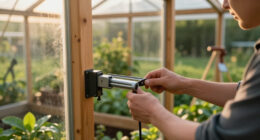
By regularly inspecting your greenhouse for pests, keeping vents and fans clean, and ensuring your ventilation system is well-maintained, you prevent costly issues down the line. Using organic pest control methods and early pest identification helps protect plant health without chemicals. Routine checks and maintenance guard against mold, temperature swings, and equipment breakdowns. Staying on top of small tasks now keeps your greenhouse investments safe and thriving—continue to explore how these simple jobs make a big difference.

Get garden gear delivered free — and shop member deals
- Fast, free delivery on millions of items
- Access to Prime Big Deal Days deals on October 6–7
- Prime Video, Amazon Music and more included
Key Takeaways
- Regularly inspect and clean vents and fans to prevent dust buildup and ensure optimal airflow.
- Conduct routine pest inspections and apply targeted, eco-friendly controls early to avoid major infestations.
- Calibrate and maintain ventilation systems to regulate humidity and temperature, protecting plant health.
- Perform timely repairs on equipment to prevent environmental issues like mold, mildew, and temperature fluctuations.
- Implement consistent monitoring and proactive maintenance to reduce costly repairs and extend greenhouse lifespan.

Maintaining your greenhouse doesn’t have to involve major repairs; small, routine tasks can considerably protect your investment. One of the most effective ways to do this is by staying on top of pest control. Pests like aphids, whiteflies, and spider mites can quickly damage your plants and compromise your entire operation. Regularly inspect your plants for signs of infestation, and don’t wait until you notice widespread damage. Use targeted, environmentally friendly pest control methods, like introducing beneficial insects or applying organic sprays. Keeping pests under control not only preserves your plants’ health but also prevents the need for costly chemical treatments down the line. Consistent monitoring and early intervention make a significant difference in maintaining a healthy, productive greenhouse. Additionally, incorporating knowledge about pest identification can help you quickly recognize and address specific pest problems before they escalate.
Equally important is maintaining proper ventilation systems. Good airflow is essential for regulating temperature and humidity, both of which affect plant growth and disease prevention. Over time, vents and fans can become clogged with dust or debris, reducing their effectiveness. Make it a habit to check and clean your ventilation equipment regularly. This simple task guarantees that fresh air circulates properly, preventing issues like mold, mildew, and fungal infections. Proper ventilation also helps control humidity levels, which is critical for preventing pests and diseases. If your greenhouse has automated ventilation systems, confirm they’re functioning correctly and calibrate them as needed. Upgrading or repairing these systems when necessary not only improves plant health but also extends the lifespan of your equipment. Neglecting ventilation maintenance can lead to temperature fluctuations and stagnant air, creating an environment that pests and diseases thrive in. Regular maintenance of ventilation systems ensures optimal airflow and healthier plant growth. Additionally, understanding greenhouse environment management can help optimize these systems for peak performance. Taking proactive steps in system calibration can further enhance the effectiveness of your ventilation setup.
greenhouse pest control organic sprays
As an affiliate, we earn on qualifying purchases.
As an affiliate, we earn on qualifying purchases.
Frequently Asked Questions
How Often Should Greenhouse Fans Be Inspected and Maintained?
You should inspect your greenhouse fans at least once a month. During each check, focus on the fan motor for any unusual noise or overheating, and perform blade inspection to make sure there’s no debris or damage. Regular maintenance helps prevent motor failure and keeps airflow ideal. By staying on top of these small tasks, you protect your larger greenhouse investments and promote a healthy growing environment.
What Are Signs of Structural Damage in a Greenhouse?
You notice a sudden shift in the greenhouse structure—doors sticking or walls leaning—signs of hidden trouble. Check the greenhouse foundation for cracks or uneven settling, which often signals deeper issues. Look closely at structural reinforcement points; rusted joints or sagging beams indicate damage. Addressing these early signs prevents costly repairs later, ensuring your greenhouse remains sturdy and productive. Stay vigilant to keep your investment safe and thriving.
Which Tools Are Essential for Small Greenhouse Repairs?
You’ll need essential tools like a screwdriver, pliers, and a wrench for small greenhouse repairs. Don’t forget to have a drill for fixing or replacing panels. Keep a moisture meter for irrigation system maintenance and a soil testing kit to monitor soil health. These tools help you quickly address issues, ensuring your greenhouse remains efficient and protected from bigger problems down the line.
How Can I Prevent Pest Entry Through Small Gaps?
Think of your greenhouse as a fortress, and pests as sneaky invaders trying to breach your walls. To prevent pest entry through small gaps, you need sturdy pest barriers and diligent gap sealing. Carefully inspect and seal every tiny hole with weatherproof sealants or mesh, creating an impenetrable shield. This proactive step keeps pests out, safeguarding your plants and investment, ensuring your greenhouse remains a thriving, pest-free oasis.
What Is the Best Way to Clean Greenhouse Glazing Surfaces?
To clean greenhouse glazing surfaces effectively, use gentle cleaning techniques like soft brushes or cloths with mild soap and water. Avoid harsh chemicals that could damage the glazing protection. Regular cleaning prevents dirt buildup, maintaining ideal light transmission and plant health. For stubborn spots, consider a vinegar solution. Always rinse thoroughly and dry with a squeegee or soft cloth to prevent streaks, ensuring your glazing stays clear and well-protected over time.
Conclusion
Think of your greenhouse as a delicate garden teacup—tiny chips or leaks might seem insignificant, but they can shatter your entire investment if ignored. By staying vigilant and tackling small maintenance jobs promptly, you’re patching tiny cracks before they become a flood. These small acts of care keep your greenhouse resilient, ensuring your investment blooms beautifully for years to come. Remember, a well-maintained greenhouse is the sturdy root that supports your thriving garden.
Fall yard work Picks
leaf blowers
As an affiliate, we earn on qualifying purchases.