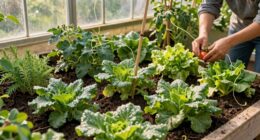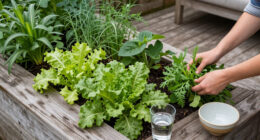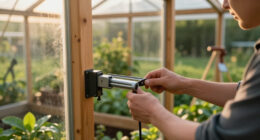

To teach one skill without feeling awkward, focus on a simple, foundational task like watering or seed starting that builds confidence quickly. Prepare clear, step-by-step instructions with visual aids, and gather all materials beforehand. Create a relaxed atmosphere with friendly body language, encouraging questions and hands-on practice. Keep the tone light and engaging, emphasizing support and fun. Stay positive and remember that ongoing practice boosts confidence—continue exploring for more tips and strategies.

Get garden gear delivered free — and shop member deals
- Fast, free delivery on millions of items
- Access to Prime Big Deal Days deals on October 6–7
- Prime Video, Amazon Music and more included
Key Takeaways
- Choose a simple, foundational greenhouse skill suited for beginners to build confidence and ensure quick, positive results.
- Prepare clear, visual step-by-step instructions to facilitate understanding and reduce awkwardness during teaching.
- Foster a relaxed, friendly environment with positive body language, light humor, and engaging activities to ease social tension.
- Encourage questions and peer support, acknowledging different learning paces to create an inclusive, supportive atmosphere.
- Reinforce learning with at-home practice and follow-up support to boost confidence and maintain participant engagement.
As an affiliate, we earn on qualifying purchases.
How to Choose the Right Greenhouse Skill to Teach Beginners

Choosing the right greenhouse skill for beginners is essential to guarantee they gain confidence and see quick results. Start by selecting appropriate beginner skills that match their experience level and available resources. Evaluating learner interest is key—ask your participants what they’re excited to learn or what gardening challenges they want to tackle. This helps you tailor the workshop to their needs and keeps them engaged. Focus on simple, foundational skills like seed starting, watering techniques, or basic plant care. These skills build confidence and provide immediate, visible success. Remember, the goal is to make newcomers feel capable and motivated, so choose skills that are achievable yet meaningful. By carefully selecting skills aligned with their interests, you set the stage for a successful and enjoyable greenhouse experience. Utilizing online resources can also help you find comprehensive guides and tutorials to enhance your teaching.
Building Confidence Before Your Workshop: Overcome Nerves and Feel Prepared

Feeling nervous before your workshop is normal, but taking steps to build your confidence can make a big difference. Start with a mindset shift—remind yourself that you’re capable and knowledgeable. Confidence building begins with positive self-talk and focusing on your strengths. Practice your main points aloud or run through your plan beforehand to reduce uncertainty. Visualize a successful session, imagining your participants engaged and learning. Remember, preparation helps you feel more in control, so review your materials and plan for questions. By shifting your mindset from doubt to confidence, you’ll approach your workshop with calm and enthusiasm. This mental groundwork sets a strong foundation, helping you overcome nerves and feel truly prepared to teach your greenhousing skill effectively. Incorporating positive affirmations can also reinforce your self-belief and reduce anxiety during your presentation.
How to Prepare Clear, Step-by-Step Instructions That Everyone Can Follow
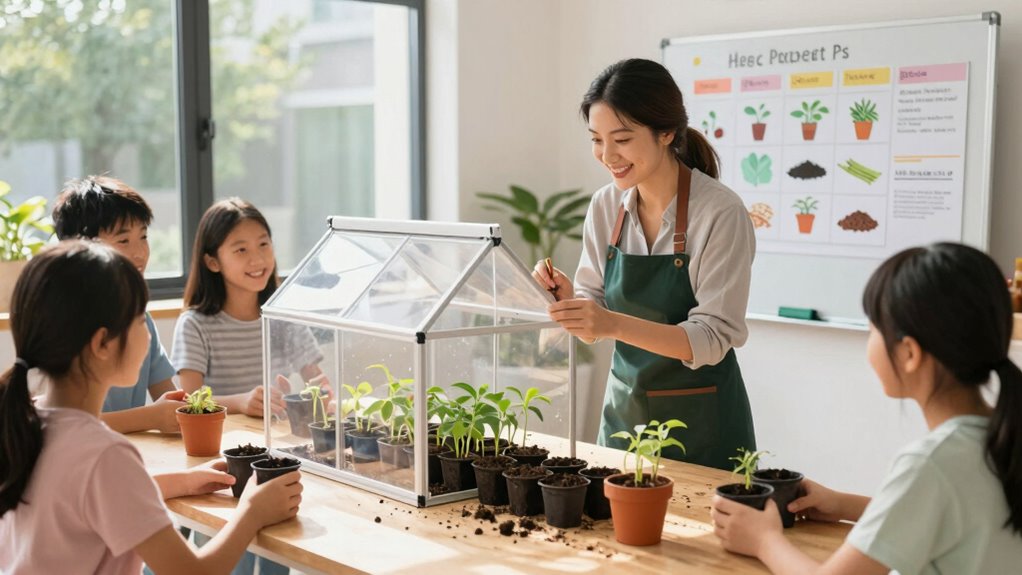
To make certain everyone can easily follow your instructions, include clear visual aids that illustrate each step. Use simple, sequential language that guides participants without confusion. This approach helps make your workshop more accessible and effective for all attendees. Incorporate Free Floating elements in your setup to ensure flexibility and adaptability during the demonstration.
Clear Visual Aids Are Essential
Clear visual aids are crucial for guaranteeing everyone understands your step-by-step instructions. They help clarify complex processes and keep participants engaged. Use visual aids like diagrams, labeled photos, or charts to illustrate each step clearly. Incorporate demonstration techniques such as live demos or using props to make instructions tangible. Make sure your visuals are simple and focused on key points. You can:
- Use large, easy-to-read images or diagrams
- Highlight important parts with color or arrows
- Break complex steps into smaller, clear visuals
- Keep visuals consistent with your verbal instructions
- Understanding visual communication ensures your visuals effectively support your teaching.
These strategies ensure your visual aids complement your demonstration techniques, making your instructions straightforward and accessible to all. Clear visuals eliminate confusion and boost participants‘ confidence in learning the skill.
Use Simple, Sequential Language
Using simple, sequential language is key to making your instructions easy to follow. When planning your workshop on plant care, break down each step clearly and logically. Start with basic tasks, like watering or checking soil moisture, then move to more detailed actions. Use straightforward words and short sentences, avoiding jargon that might confuse beginners. Number each step to guide participants through the process smoothly. This approach helps everyone stay on track and builds confidence. Clear, step-by-step instructions also prevent misunderstandings and frustration. When practicing workshop planning, consider what participants need to know first and what can come afterward. Emphasizing clarity and simplicity ensures your guidance is accessible. By focusing on simplicity and order, you make your mini greenhouse workshop accessible and enjoyable for all skill levels.
Gathering Materials and Setting Up Your Greenhouse Demo
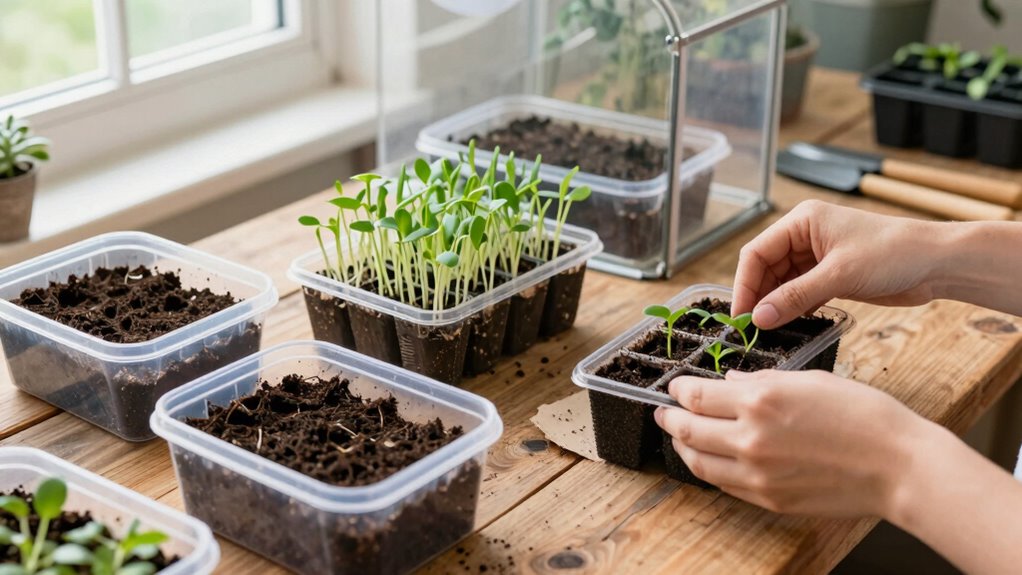
To get started, gather all the materials you’ll need for your greenhouse demo, so you don’t waste time searching later. Organize everything beforehand to make setup smoother and more efficient. With your supplies in order, you’ll set your workshop up for success from the start. Additionally, understanding device and network security measures can help protect your digital tools during the workshop.
Gather Materials Efficiently
Gathering materials efficiently is essential to guarantee your greenhouse setup goes smoothly and stays on schedule. Start by creating a detailed supply checklist to ensure nothing gets overlooked. To streamline your process, focus on material organization so everything is easy to find and access. Here are key tips:
- Categorize items by type, such as tools, containers, and seeds
- Prepare all materials in one designated area before starting
- Double-check your supply checklist to avoid missing essentials
- Keep frequently used items within arm’s reach for quick access
- Understanding greenhouse design principles can help you anticipate additional materials you might need.
Arrange Setup for Success
Before you begin assembling your greenhouse, take a few moments to arrange your materials and workspace strategically. Use visualization techniques to picture each step, which helps create a clear mental map and boosts your confidence. Lay out tools, containers, and plants in an organized manner, reducing stress during setup. This preparation acts as a confidence builder, making you feel more in control and ready to teach. Set up your demo area with everything accessible and in order, so you can focus on guiding your audience without distraction. When materials are well-arranged, your demonstration flows smoothly, and your confidence shines through. Taking this extra moment ensures you’re prepared, calm, and ready to inspire your participants with a seamless greenhouse workshop. Additionally, understanding the importance of setup organization can help you streamline your process and create a more engaging learning experience.
Engaging Participants With Hands-On Practice and Friendly Tips

Engaging participants effectively requires a balance of hands-on practice and friendly guidance. Incorporate interactive activities to keep everyone involved, like planting seeds or assembling mini greenhouses. Encourage peer collaboration by pairing participants to share ideas and troubleshoot together, fostering a supportive environment. To maximize engagement, consider these tips:
Engage participants with hands-on activities, peer collaboration, clear instructions, and friendly support for a dynamic learning experience.
- Offer clear, step-by-step instructions for each activity
- Use encouraging language to motivate participants
- Circulate around, providing individual assistance and feedback
- Incorporate small challenges or competitions to add fun
- Highlight lifestyle products that can improve gardening experiences and tools
These approaches make learning more dynamic and memorable. By combining practical tasks with friendly tips, you help participants build confidence and stay interested throughout the workshop. Your enthusiasm and support will create a positive, engaging atmosphere for everyone involved.
Answering Questions and Helping Everyone Keep Up at Their Own Pace

As participants get hands-on with planting or assembling mini greenhouses, questions are bound to arise. Your role is to foster an environment of peer support and active listening. Encourage participants to ask questions and share their experiences without hesitation. When someone speaks up, listen carefully and acknowledge their concern, showing you’re engaged. This approach aligns with creating calm, clutter-light homes, where open communication and patience help reduce stress. This not only helps clarify doubts but also builds confidence among attendees. Remember, everyone learns at their own pace, so be patient and avoid rushing responses. Use gentle prompts to guide participants in finding answers themselves, reinforcing their understanding. By actively listening and supporting each person, you create a collaborative atmosphere where everyone feels comfortable, valued, and confident to keep up with the workshop.
Creating a Relaxed, Fun Atmosphere to Reduce Awkwardness

Creating a relaxed, fun atmosphere starts with setting a friendly tone that encourages participants to enjoy the process. You can do this by playing soft music ambiance, which instantly eases tension. Sharing personal stories related to gardening or greenhouses helps build connections and makes everyone feel comfortable. Keep the mood light with these tips:
Create a fun, relaxed vibe with soft music, personal stories, humor, and friendly body language.
- Use humor or lighthearted comments to keep things lively
- Encourage participants to share their own experiences
- Smile and maintain open body language to show you’re approachable
- Plan simple, interactive activities that promote teamwork
Encouraging Practice at Home and Following Up After the Workshop

Encouraging participants to practice at home helps reinforce what they’ve learned and build confidence in their greenhouse skills. After the workshop, follow up with post workshop feedback to understand their progress and address any challenges they face. Offer ongoing encouragement by sharing additional resources, tips, or simple tasks to keep their momentum going. You can send friendly emails or messages, asking about their projects and offering support. Remind them that practice makes perfect and that setbacks are normal. Creating an open line of communication keeps participants motivated and engaged. By demonstrating your continued interest, you help them see their growth and feel more comfortable applying new skills independently. This ongoing support solidifies their learning and encourages long-term success.
Frequently Asked Questions
How Do I Handle Participants With Varying Skill Levels?
To handle participants with different skill levels, use differentiated instruction by tailoring activities to each person’s ability. Pair more experienced participants with beginners in group pairing, encouraging peer learning and support. This approach fosters confidence and guarantees everyone stays engaged. You can also provide optional challenges for advanced learners while offering basic tasks for newcomers. This way, everyone feels comfortable and included, making your workshop more effective and enjoyable.
What Should I Do if I Forget Part of My Presentation?
If you forget part of your presentation, don’t panic—use your presentation backup as a confidence booster. Imagine you’re teaching a greenhouse workshop, and suddenly, you lose your place. Quickly refer to your notes or slides, take a deep breath, and continue smoothly. Practicing this beforehand helps you stay calm, guarantees you cover key points, and keeps your confidence high, so your audience stays engaged and trusts your expertise.
How Can I Make My Workshop More Interactive and Engaging?
To make your workshop more interactive, incorporate hands-on activities like planting mini greenhouse models or seed sorting. You can also introduce group challenges, such as competing to design the best small greenhouse or solve gardening puzzles. These activities keep participants engaged, foster teamwork, and make learning fun. Encourage questions and discussions throughout, and use visual aids to maintain energy and interest, ensuring everyone feels involved and excited.
What Are Some Ways to Manage Time Effectively During the Session?
Did you know that effective time management can boost workshop engagement by 25%? To manage time well, use time blocking to allocate specific periods for each activity, guaranteeing you stick to your schedule. Monitor your session pacing by setting timers and adjusting as needed, so you cover all topics without rushing. This keeps your workshop smooth, engaging, and ensures participants stay focused and interested throughout.
How Do I Encourage Shy or Reserved Participants to Join In?
To encourage shy participants to join in, build their confidence by creating a welcoming environment and offering gentle prompts. Use encouraging language and acknowledge their efforts to foster comfort. You can also provide small, manageable tasks that suit their comfort level, gradually encouraging participation. Remember, patience and positive reinforcement are key to helping reserved individuals feel more confident and enthusiastic to engage in your mini greenhouse workshop.
Conclusion
Remember, feeling nervous is normal, but it doesn’t have to hold you back. Focus on sharing your passion and making the experience enjoyable, not perfect. Your enthusiasm and willingness to help will inspire your participants far more than flawless execution. With preparation and a friendly attitude, you’ll create a memorable, fun workshop. Just trust yourself—you’re capable of teaching this skill and sparking interest in greenhouses, even if you feel a little awkward at first.
Fall yard work Picks
leaf blowers
As an affiliate, we earn on qualifying purchases.