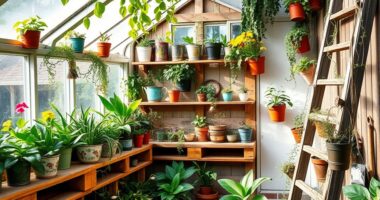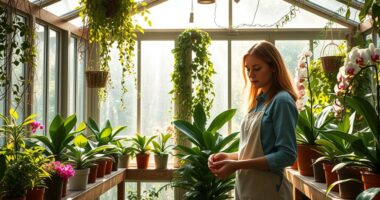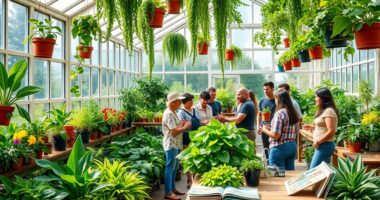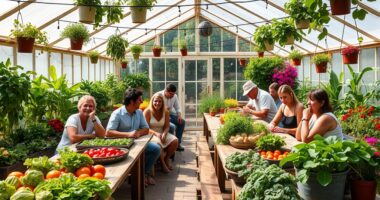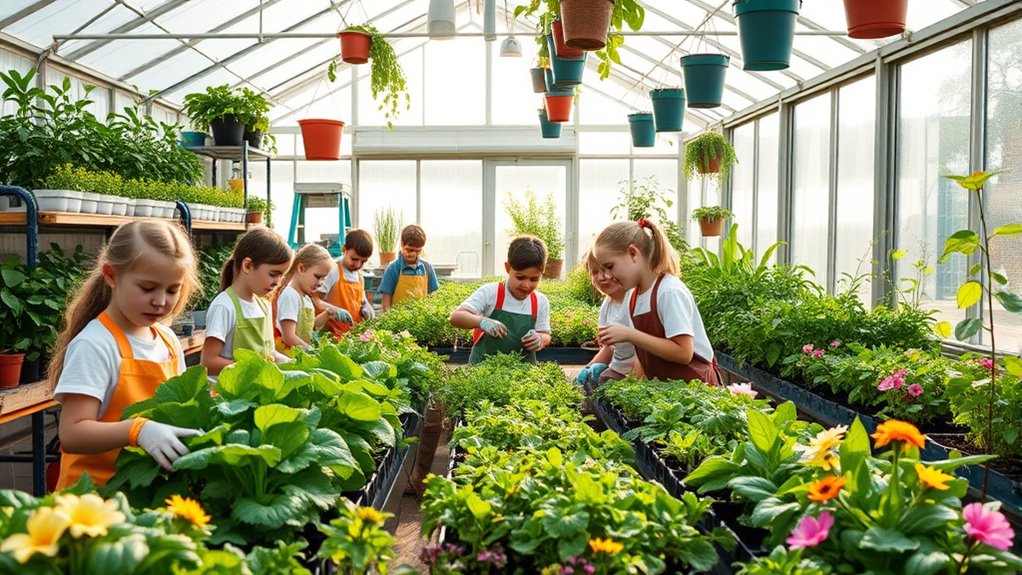

School greenhouses are valuable tools that bring hands-on learning to students. They allow you to teach science, ecology, and sustainability through gardening activities. Students can observe plant growth, explore photosynthesis, and conduct experiments on environmental factors. Greenhouses also connect different subjects like math, technology, and social studies, making lessons more engaging. If you want to discover ways to enhance learning experiences with these greenhouses, there’s more to explore.
Key Takeaways
- Greenhouses serve as interactive learning environments for science, ecology, and agriculture education.
- Gardening activities promote hands-on inquiry, data collection, and scientific problem-solving skills.
- They facilitate interdisciplinary lessons connecting plant growth with math, technology, and social studies.
- Greenhouse projects boost student engagement, responsibility, and motivation through visible plant development.
- They teach sustainability, biodiversity, and environmental stewardship through real-world plant care experiences.
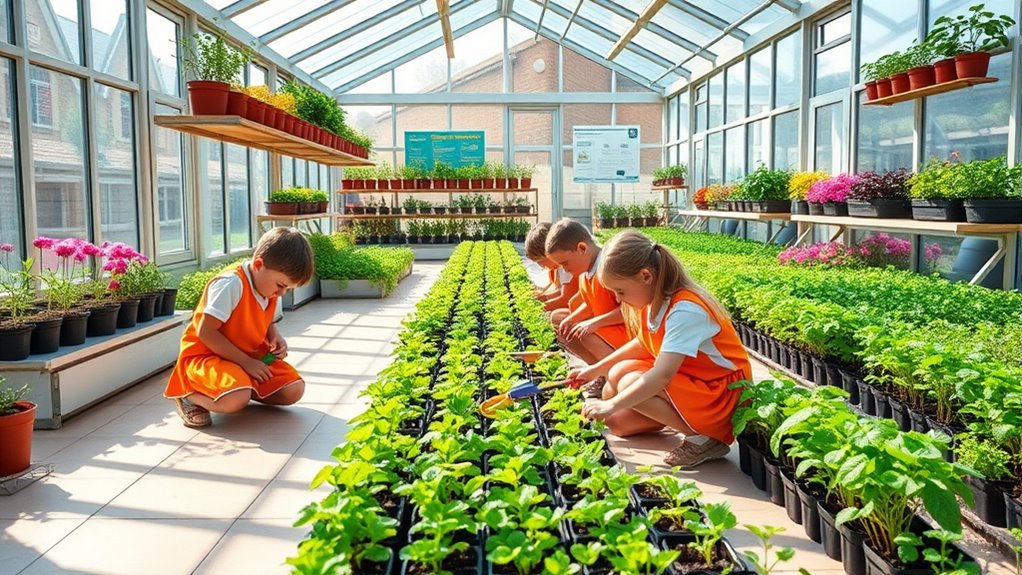
School greenhouses are becoming increasingly popular as hands-on learning tools that inspire students to explore science, ecology, and agriculture. When you introduce students to a greenhouse environment, you open the door to a world of plant science, where they can observe the growth processes of seeds, understand photosynthesis, and learn about plant physiology firsthand. This immersive experience helps students grasp complex biological concepts in a tangible way, making abstract ideas more concrete and memorable.
By engaging with a greenhouse, you also enhance environmental education, encouraging students to think critically about sustainability, conservation, and the role plants play in our ecosystem. Working in this controlled setting, students see how plants respond to different conditions, which fosters an understanding of ecosystems and the importance of biodiversity. They learn how to care for living organisms, develop responsibility, and appreciate the delicate balance required for healthy plant growth—all essential lessons in environmental stewardship.
Engaging with greenhouses teaches students sustainability, biodiversity, and responsibility through real-world plant care and ecosystem understanding.
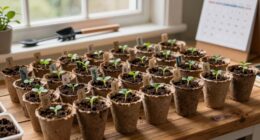
In your role, you can design lessons that integrate plant science with real-world applications. For example, students can experiment with different soil types, watering schedules, or light conditions to see how these factors influence plant health. These activities not only teach scientific inquiry but also promote problem-solving skills and critical thinking. As they track growth and analyze results, students gain insights into variables that affect plant development, providing a foundation for future scientific pursuits.
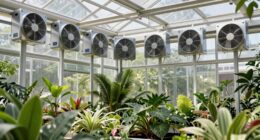
Furthermore, greenhouses serve as excellent venues for interdisciplinary learning. You can connect plant science to math through measurements and data analysis, to technology via automation and climate control systems, and to social studies by exploring agriculture’s role in local and global economies. Such integrated lessons deepen understanding and demonstrate the interconnectedness of scientific disciplines.
The hands-on nature of greenhouse work also boosts student engagement and motivation. When learners see the fruits of their labor—whether sprouting seeds or lush foliage—they develop a sense of accomplishment and curiosity. This active participation fosters a lifelong appreciation for science and the environment, potentially inspiring future careers in horticulture, ecology, or environmental science. Additionally, incorporating reliable climate control systems ensures consistent conditions that optimize plant growth and learning outcomes.
Frequently Asked Questions
How Do Greenhouses Impact Student Nutrition Education?
Greenhouses profoundly impact your student nutrition education by providing hands-on experiences with plant growth, helping kids understand where food comes from. As they nurture plants, students discover the nutritional benefits of fresh vegetables and herbs, fostering healthier eating habits. Watching plant development from seed to harvest reinforces the importance of nutrition, making lessons more engaging. This active learning encourages students to make better food choices, boosting their overall understanding of healthy eating practices.
What Safety Measures Are Needed for Children in Greenhouses?
You need to implement hazard prevention by keeping the greenhouse safe and organized. Make sure children wear protective equipment like gloves, goggles, and aprons to prevent injuries from tools or chemicals. Supervise closely to prevent accidents, and teach kids proper handling of gardening tools. Regularly inspect the greenhouse for hazards, and establish clear safety rules so children understand how to stay safe while learning through gardening activities.
How Can Greenhouses Support STEM Learning Initiatives?
You can support STEM learning initiatives by using greenhouses to explore plant biology and crop cultivation firsthand. Encourage students to observe plant growth, experiment with different conditions, and analyze results. This hands-on approach helps them understand key scientific concepts while developing problem-solving skills. By actively engaging in planting and caring for crops, students see the real-world applications of science, technology, engineering, and math, fostering deeper learning and curiosity.
What Are Cost-Effective Ways to Maintain a School Greenhouse?
Think of your greenhouse as a thriving garden, and you’re its diligent gardener. To keep costs low, you can use simple composting methods to enrich soil naturally, reducing expenses. Maximize greenhouse lighting by utilizing sunlight wisely and supplementing with energy-efficient LEDs when needed. Regular maintenance, such as cleaning and adjusting vents, keeps the environment *ideal* without high costs. This approach *guarantees* your greenhouse remains healthy and vibrant, just like a well-tended garden.
How Do Greenhouses Influence Student Environmental Awareness?
Greenhouses boost your students’ environmental awareness by encouraging hands-on activities like indoor composting and plant propagation. As they care for plants, they learn about recycling organic waste and sustainable practices. You help them see how ecosystems work and the importance of conservation. This active engagement fosters responsibility and eco-conscious thinking, making environmental issues real and relevant. Ultimately, greenhouses inspire students to become thoughtful stewards of the planet.
Conclusion
By incorporating greenhouses into your school, you’re giving students hands-on learning experiences that foster responsibility and curiosity. Did you know that students involved in gardening programs often see a 20% increase in science test scores? These greenhouses not only teach kids about plant biology and sustainability but also build confidence and teamwork. Embracing this approach transforms the classroom into a vibrant, living laboratory, inspiring the next generation to value nature and develop lifelong skills.