To turn your seed swap into a big success, start by clearly defining your goals and target audience, then choose a welcoming venue and set a date that avoids conflicts. Gather and prepare seeds carefully, ensuring they’re labeled and in good condition. Promote your event through social media and local groups to attract participants. Organize exchange formats, set clear guidelines, and prepare supplies. Address safety and community respect, and gather feedback afterward for continuous improvement—discover more tips to make your event thrive.

Get garden gear delivered free — and shop member deals
- Fast, free delivery on millions of items
- Access to Prime Big Deal Days deals on October 6–7
- Prime Video, Amazon Music and more included
Key Takeaways
- Establish clear roles, safety practices, and exchange formats to ensure organized, respectful participation.
- Define event goals, target audience, and develop tailored promotion strategies for maximum outreach.
- Select an accessible venue, prepare quality seed supplies, and ensure proper labeling and packaging.
- Decide on exchange methods, set guidelines for fairness, and foster community engagement throughout the event.
- Collect feedback post-event to evaluate success and identify improvements for future seed swaps.
As an affiliate, we earn on qualifying purchases.
Define Your Goals and Audience for the Seed Swap

Before you begin planning your seed swap, it’s essential to clearly define your goals and understand your target audience. Consider whether you want to promote seed diversity or focus on particular gardening interests, such as organic gardening or native plants. Knowing your audience helps you tailor the event to their needs and preferences, ensuring higher participation and engagement. If your goal is to increase seed diversity, you might encourage participants to share heirloom or rare varieties. Alternatively, if your audience is primarily interested in vegetable gardening, focus on seeds suited for their climate and growing conditions. Clarifying these objectives early on helps shape your outreach, materials, and overall event structure, making your seed swap more successful and enjoyable for all involved. Additionally, understanding seed types and qualities can help you select the most suitable varieties to meet your goals.
Choose a Venue and Set the Date for Your Event

Selecting the right venue and setting a date are essential steps to guarantee your seed swap runs smoothly. Your choice of venue impacts accessibility, space, and atmosphere, so consider a location that’s easy for attendees to find and comfortably fits your expected crowd. During venue selection, check for tables, seating, and facilities like restrooms or kitchen areas. Once you’ve chosen a suitable spot, focus on date setting. Pick a date that avoids conflicts with major local events or holidays, giving your community ample notice. A well-planned date encourages maximum participation. Remember, both venue selection and date setting are foundational to your event’s success—they set the tone and logistics for a fun, organized seed swap. Incorporating herbal remedies into your planning can help ensure a healthy and vibrant community gathering.
Gather and Prepare Seeds for Sharing

Gathering and preparing seeds for sharing is a crucial step to guarantee your seed swap is successful. Start by selecting healthy seed varieties that are well-suited to your climate and your participants’ needs. Clean and dry each seed variety thoroughly to prevent mold and disease. Label each seed packet with clear information, including the seed variety, harvest date, and any special growing instructions. Use proper seed packaging, such as small envelopes or breathable containers, to keep seeds fresh and organized. Make certain that each participant receives enough seeds for their garden while maintaining diversity. Taking these steps helps preserve seed quality, makes the exchange smooth, and encourages everyone to enjoy planting with healthy, well-prepared seeds. Incorporating local seed sources can further enhance the quality and adaptability of your seed exchange.
Promote Your Seed Swap to Attract Participants

To attract participants, you should actively promote your seed swap through social media platforms where your community gathers. Distributing flyers in local spots can also guarantee awareness and bring in interested gardeners. Combining these methods will help you reach a wider audience and secure a successful event. Highlighting the benefits of exchanging seed varieties can also encourage more gardeners to join.
Leverage Social Media
Leveraging social media is a powerful way to boost your seed swap and reach more participants. Use platforms like Facebook, Instagram, and Twitter for online outreach, creating engaging posts that highlight the event’s benefits and details. Share eye-catching images of seeds, plants, or previous swaps to attract attention. Encourage your network to share your posts to expand your reach organically. Creating a dedicated event page or hashtag helps build excitement and makes it easy for people to find information. Posting regular updates, reminders, and countdowns keeps your audience engaged and enthusiastic to participate. Remember, social media allows you to target local gardening groups and community pages, maximizing your event’s visibility and ensuring a successful seed swap. Incorporating visual content such as videos or infographics can further increase engagement and interest in your event.
Distribute Flyers Effectively
Distributing flyers effectively is essential for attracting participants to your seed swap. To maximize your flyer distribution, focus on reaching the right audience through targeted efforts. Think about where gardening enthusiasts gather and place your flyers there. Audience targeting helps ensure your message resonates with people interested in seeds and gardening. Additionally, consider that understanding odor cues can help you recognize and avoid potential issues with food or environment-related odors during planning or events.
Organize Seed Exchange Formats and Sharing Guidelines

You need to decide on the best sharing formats and methods that fit your community, whether it’s in-person exchanges or online platforms. Clear seed exchange guidelines help make certain of fairness and quality, making participation smoother for everyone. Organizing roles and participation levels keeps the swap running efficiently and encourages active involvement. Utilizing European cloud solutions can also facilitate secure and sustainable data management for your event.
Sharing Formats and Methods
Organizing seed exchange formats and sharing guidelines guarantees a smooth and fair process for all participants. Choosing the right format options for seed sharing ensures everyone understands how to contribute and receive seeds. Clear methods prevent confusion, promote fairness, and encourage participation. Consider options like seed swaps, seed exchanges by mail, or local seed libraries. Each format has unique benefits and requirements that suit different groups. You might also use digital platforms or shared spreadsheets to coordinate seed sharing efficiently. Providing guidelines on how to package and label seeds is essential to maintain quality and traceability. Additionally, understanding the benefits of essential oils can help in creating a more relaxed and positive environment during seed exchanges. By establishing these formats and methods upfront, you create an inclusive environment that makes seed sharing accessible and enjoyable for everyone involved.
Seed Exchange Guidelines
Effective seed exchange guidelines set the foundation for a smooth and fair sharing process. You should clearly define how seed variety information is documented, ensuring everyone understands the specific types being exchanged. Emphasize the importance of seed quality by setting standards for healthy, viable seeds, and encourage participants to inspect their seeds before trading. Establish consistent formats for sharing seed details, including origin, planting history, and condition, to minimize confusion. Decide on the exchange method—whether it’s in-person, mail, or digital—so participants know what to expect. Clear guidelines help prevent misunderstandings, protect seed integrity, and promote trust among participants. By maintaining transparency and consistency, your seed swap can run efficiently, fostering a thriving community of growers sharing high-quality seed varieties. Transforming Spaces for a Better Senior Living Experience
Organizing Participation and Roles
To guarantee your seed swap runs smoothly, it’s important to set up clear formats for participation and define roles for all involved. This ensures everyone understands their volunteer roles and participant responsibilities. Decide whether you’ll have a formal sign-up process or a more casual approach. Assign specific volunteer roles like check-in coordinators, seed organizers, and setup helpers. Clarify participant responsibilities, such as bringing labeled seeds, respecting sharing guidelines, and engaging courteously. Establish a clear exchange format, like seed packets or shared tables. Communicate roles and responsibilities upfront to avoid confusion. Encourage volunteers to facilitate conversations and support new gardeners, emphasizing the importance of organized seed sharing for maximizing success.
Set Up Safety Measures and Respectful Practices

Before diving into your seed swap, it’s essential to establish safety measures and respectful practices to guarantee a positive experience for everyone involved. Prioritize personal safety by encouraging participants to handle seeds and tools carefully, and remind everyone to wash hands afterward. Foster respectful communication by setting clear guidelines for conversations, ensuring no one feels pressured or dismissed. Encourage participants to listen actively and ask questions politely. Make sure everyone understands the importance of respecting each other’s contributions and space. If conflicts arise, address them calmly and privately. Creating a welcoming environment where safety and respect are emphasized helps build trust and camaraderie. When everyone feels secure and valued, your seed swap becomes an enjoyable event that promotes community and sharing.
Prepare Supplies, Signage, and Materials for Participants

Getting everything ready for your seed swap starts with gathering and preparing supplies, signage, and materials that make the event smooth and welcoming. You’ll want to have enough seed packets for participants to exchange and take home, ensuring variety and clarity. Use clear signage materials to guide attendees—labels for seed packets, directions, and event info help create a friendly atmosphere.
Consider including:
- A table for displaying seed packets with labels for easy identification
- Signage materials like banners or signs to direct flow and highlight important areas
- Supplies such as pens, scissors, and markers for labeling and organizing
These preparations make the swap more organized, accessible, and enjoyable, encouraging community participation and ensuring everyone leaves with what they need.
Encourage Community Engagement Before, During, and After
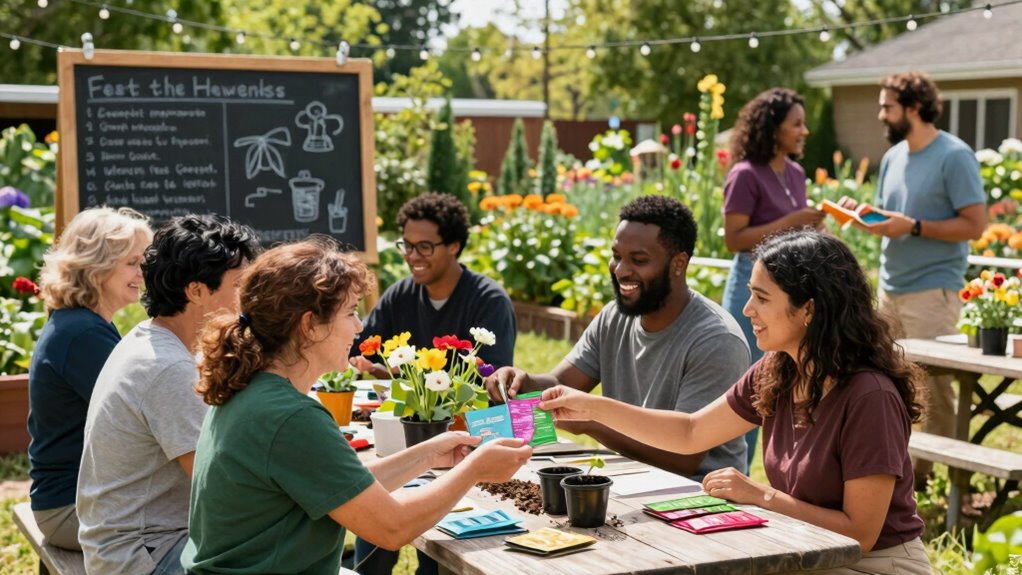
Engaging your community before, during, and after the seed swap builds enthusiasm and fosters long-term connections. Before the event, share information about seed preservation techniques to encourage participants to bring high-quality seeds that enhance garden aesthetics. Promote the event through social media, flyers, and local groups to generate excitement. During the swap, encourage conversations about garden styles and seed origins, helping attendees learn from each other. Afterward, follow up with participants to gather feedback and share success stories. Highlight how their contributions help preserve diverse seeds and improve garden aesthetics over time. This ongoing engagement nurtures a sense of community, inspiring continued participation and strengthening relationships long after the event ends.
Evaluate the Event and Gather Feedback for Next Time

Evaluating your seed swap event is essential for understanding what worked well and identifying areas for improvement. Gathering honest event feedback from participants helps you see the event through their eyes and pinpoint specific strengths and weaknesses. Use this insight to develop effective improvement strategies for future swaps. After the event, consider collecting feedback through surveys, informal conversations, or comment cards. Focus on aspects like organization, seed quality, and community engagement. Key points to review include:
- Overall attendee satisfaction and suggestions
- Effectiveness of promotional efforts
- Opportunities to streamline the exchange process
Frequently Asked Questions
How Can I Ensure Diverse Seed Varieties at My Swap?
To guarantee diverse seed varieties at your swap, you should verify seed authenticity by sourcing seeds from reputable providers. Also, consider pollination compatibility by selecting plants that attract different pollinators or are cross-compatible, which promotes genetic diversity. Encourage participants to bring unique seeds and share knowledge about each variety’s origin. This approach guarantees a rich, diverse collection, boosting the success and sustainability of your seed swap.
What Legal Considerations Should I Keep in Mind?
You should focus on proper seed labeling to guarantee clarity and compliance, clearly indicating seed varieties and sources. Be aware of liability concerns by verifying seed origins and avoiding the distribution of contaminated or uncertified seeds. Check local regulations regarding seed sharing, and consider including disclaimers to limit legal risks. Staying informed about seed laws helps protect you and participants, making your swap both enjoyable and legally sound.
How Do I Handle Seed Contamination or Quality Issues?
To handle seed contamination or quality issues, first, assess seed purity and identify any contamination. You should conduct germination tests and inspect seeds visually. Prevent contamination by storing seeds in clean, labeled containers, away from chemicals or pests. If issues are found, replace contaminated seeds and consider testing seed sources before swapping. Maintaining strict hygiene and proper storage guarantees high-quality, pure seeds for a successful swap.
What Are Cost-Effective Ways to Promote the Event?
You can promote your seed swap event cost-effectively by leveraging social media platforms to reach local audiences. Partner with local community groups, nurseries, or gardening clubs to spread the word through flyers, emails, or word-of-mouth. Engaging posts and sharing event details online encourage participation without extra costs. Building local partnerships not only boosts visibility but also fosters community support, making your seed swap a bigger success.
How Can I Foster Ongoing Community Seed Sharing Efforts?
Like a trusty knight’s sword, ongoing seed sharing relies on strong volunteer coordination. You can foster community efforts by creating a seed library, hosting regular meetups, and encouraging members to share seed diversity stories. Use social media to keep the momentum alive, spotlighting local successes. This approach cultivates trust, sustains enthusiasm, and guarantees seed exchange continues, turning a one-time event into a thriving, long-term community movement.
Conclusion
With your seed swap planned to perfection, you plant the seeds of community and hope. Watch as your event blossoms into a vibrant tapestry of shared stories and new friendships, each seed a tiny promise of growth. When you nurture this gathering with care, it becomes more than just an exchange—it transforms into a garden of possibilities, where every sprout symbolizes a future rooted in connection and renewal. Your effort turns small beginnings into a flourishing legacy.
Fall yard work Picks
leaf blowers
As an affiliate, we earn on qualifying purchases.