To keep leaf-eaters like caterpillars and worms at bay, start by encouraging natural predators such as ladybugs, parasitic wasps, and birds by installing birdhouses and planting nectar-rich flowers. Use organic sprays like Bacillus thuringiensis (Bt) and neem oil to target pests early without harming beneficial insects. Maintain good garden hygiene, inspect plants regularly, and employ mulching to prevent infestations. Keep these strategies in mind, and you’ll find controlling these pests more manageable as you learn more about effective techniques.
Key Takeaways
- Encourage natural predators like birds and beneficial insects to keep caterpillar and worm populations under control.
- Use organic sprays such as Bacillus thuringiensis (Bt) and neem oil for targeted, eco-friendly pest management.
- Regularly inspect plants for early signs of infestation and remove affected foliage promptly.
- Maintain garden hygiene by removing debris, fallen leaves, and pruning infested parts to reduce hiding spots.
- Practice crop rotation, mulching, and timed applications to prevent pest establishment and minimize damage.
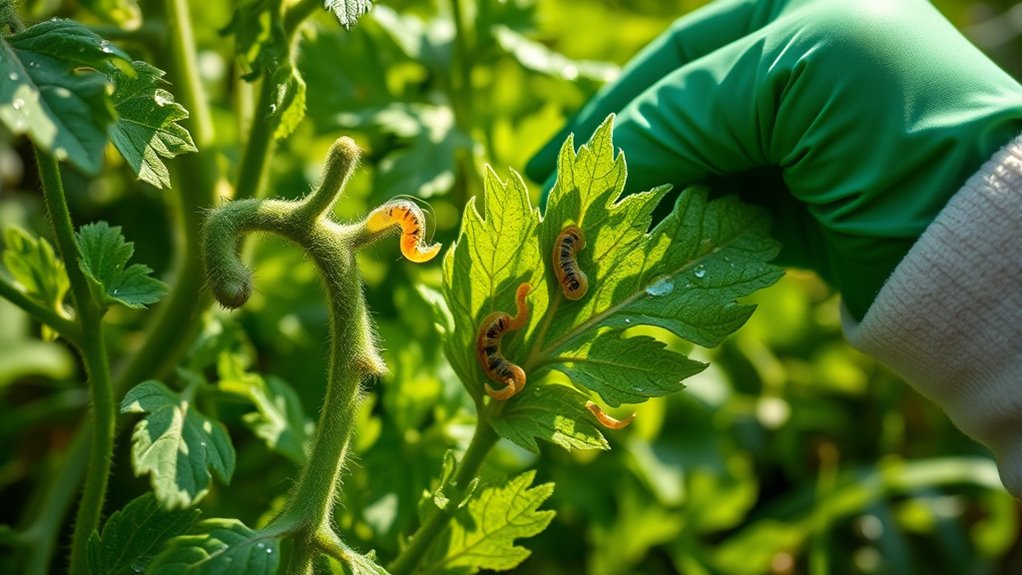
Caterpillars and worms can quickly become a major problem for your garden, damaging leaves, stems, and fruits if left unchecked. These pests can devour your plants rapidly, turning healthy foliage into ragged, chewed-up remnants. To combat this, understanding natural predators and organic sprays is essential. Natural predators, like birds, parasitic wasps, and beneficial insects such as ladybugs and predatory beetles, naturally keep caterpillar and worm populations in check. Encouraging these allies in your garden creates a biological balance that reduces the need for chemical interventions. Installing birdhouses, planting nectar-rich flowers, or leaving some undisturbed areas can attract these helpful creatures, giving you a sustainable way to control pests.
Organic sprays are another effective tool in your pest control arsenal. Unlike chemical pesticides, organic sprays are safer for your plants, your family, and the environment. Bacillus thuringiensis (Bt) is one of the most popular organic options; it’s a naturally occurring soil bacterium that targets caterpillars and worms when ingested. When sprayed on affected plants, Bt causes the pests to stop feeding and eventually die, without harming beneficial insects or pollinators. You can also use neem oil, which works as a contact and systemic insecticide, disrupting the pests’ feeding and reproductive cycles. Both these organic sprays are easy to apply and can be used preventively or at the first signs of infestation.
To maximize your efforts, combine the use of organic sprays with attracting natural predators. Regularly inspect your plants for early signs of pests—small holes, frass, or larvae—and act quickly. Applying organic sprays during the early morning or late evening, when pests are most active, improves effectiveness and minimizes disruption to pollinators. You should also maintain garden hygiene by removing fallen leaves, pruning infested parts, and rotating crops to prevent pests from establishing a foothold. Mulching can help suppress weeds and create a barrier that makes it harder for worms to reach your plants.

Bonide Captain Jack's Bacillus Thuringiensis BT, 32 oz
- Effective pest control: Controls worms and caterpillars
- Wide application: Suitable for fruits, vegetables, trees
- Eco-friendly: Harmless to beneficial insects and wildlife
As an affiliate, we earn on qualifying purchases.
As an affiliate, we earn on qualifying purchases.
Frequently Asked Questions
Are Organic Methods Effective Against All Caterpillar Species?
Organic methods can be effective against many caterpillar species, but not all. You should consider biological control, like introducing natural predators, and organic sprays such as Bacillus thuringiensis. These methods often work well for common pests, but some species may require additional strategies or targeted treatments. Always identify the specific caterpillar to choose the most effective organic control method and monitor your plants regularly for best results.
How Can I Identify Caterpillars Early Before Damage Occurs?
Like catching a whisper before it becomes a shout, early detection is key. You can identify caterpillars early by observing visual signs such as tiny holes in leaves, webbing, or frass near plant stems. Regularly inspect your plants, especially undersides of leaves, and look for small, soft-bodied creatures or unusual markings. Staying vigilant helps you address problems promptly, preventing significant damage and keeping your garden healthy and vibrant.
What Natural Predators Help Control Caterpillar Populations?
You can rely on predator insects like ladybugs, lacewings, and certain wasps for natural control of caterpillar populations. These beneficial insects hunt and consume caterpillars, helping keep their numbers in check without chemicals. Introducing or encouraging these predator insects in your garden creates a natural balance, reducing the damage caused by leaf-eaters. By promoting their presence, you support an eco-friendly approach to pest management that’s effective and sustainable.
Can Over-The-Counter Pesticides Harm Beneficial Insects?
Over-the-counter pesticides can indeed harm beneficial insects, risking pesticide risks that disrupt your garden’s balance. For example, using broad-spectrum insecticides might eliminate pests but also kills pollinators like bees that are essential for plant health. To guarantee beneficial insect safety, choose targeted, organic options and apply them carefully, avoiding flowering plants during bloom. This approach helps protect helpful insects while controlling pests effectively.
How Often Should I Inspect Plants for Worms and Caterpillars?
You should inspect your plants weekly, especially during peak feeding seasons. Use timing schedules to set regular intervals and make inspection techniques easier, like checking undersides of leaves and along stems. Look for signs of worms and caterpillars early, so you can remove them promptly. Consistent inspections help prevent damage and keep your plants healthy. Make it a routine to catch problems before they become severe, ensuring your garden thrives.
Conclusion
By staying vigilant and applying the right methods, you can turn the tide against these pesky leaf-eaters. Think of your garden as a battleground, where your efforts tip the scales toward healthy, thriving plants. Don’t let caterpillars and worms win the war—arm yourself with knowledge and action. With persistence, you’ll transform your garden into a lush, pest-free paradise, proving that even the smallest defenders can make the biggest difference.