
To control pests in your greenhouse without chemicals, focus on organic solutions like introducing beneficial insects such as ladybugs and predatory mites, which target common pests naturally. Use organic pesticides like neem oil, insecticidal soap, or pyrethrin for targeted treatment, applying early for best results. Regular monitoring helps you spot signs of pests or spoilage early, allowing timely action. If you want to explore effective strategies and keep your crops safe, there’s more to discover below.
Key Takeaways
- Use beneficial insects like ladybugs and predatory mites to naturally control pests.
- Implement organic pesticides such as neem oil and insecticidal soap for targeted pest management.
- Monitor crops regularly to detect early signs of pests and prevent infestations.
- Incorporate companion planting to attract beneficial insects and enhance natural pest control.
- Adopt an integrated pest management approach combining biological control and organic treatments for sustainable results.
Are pests threatening your greenhouse’s health and productivity? If so, you’re not alone. Pests can quickly damage your crops, reduce yields, and compromise the quality of your plants. But instead of relying on harsh chemicals, you can turn to organic solutions that are safer for both your plants and the environment. One effective approach involves harnessing beneficial insects and using organic pesticides, creating a natural balance that keeps pests in check without harmful residues.
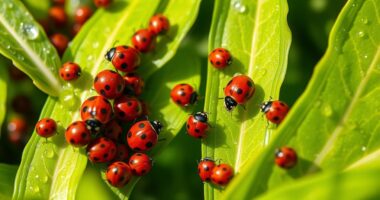
Beneficial insects are your allies in pest control. These natural predators, such as ladybugs, lacewing larvae, and predatory mites, target specific pests like aphids, whiteflies, and spider mites. By introducing or encouraging these insects within your greenhouse, you create a biological control system that continuously patrols your crops. To attract beneficial insects, you can plant companion plants that provide nectar and pollen, creating a welcoming environment. You might also purchase and release beneficial insects directly into your greenhouse, ensuring they establish themselves and begin controlling pest populations naturally. This method reduces the need for chemical interventions and promotes a healthier, more resilient crop system.
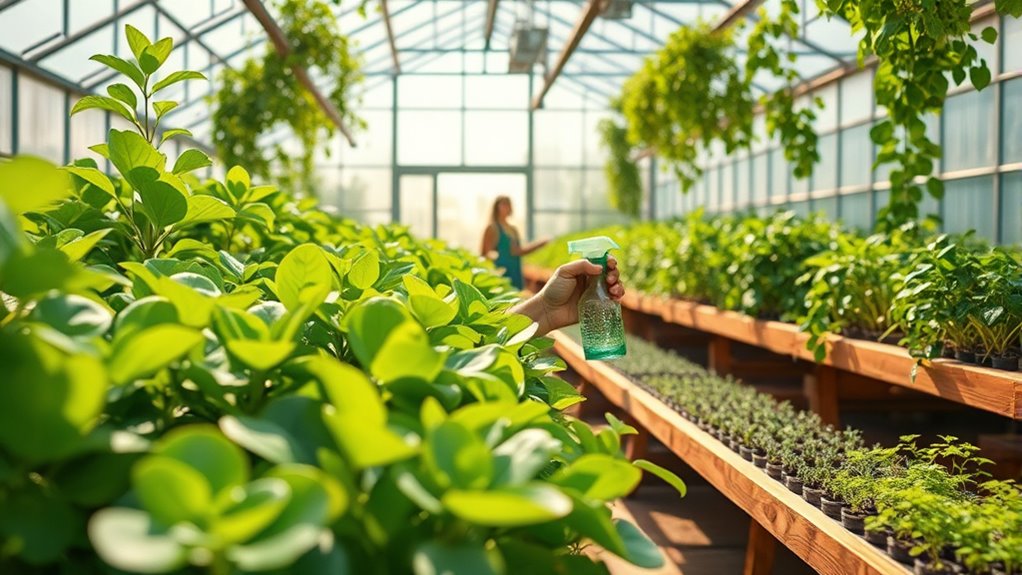
Organic pesticides serve as another essential tool in your pest management arsenal. Unlike synthetic chemicals, organic pesticides are derived from natural sources and are designed to target pests while minimizing harm to beneficial insects, humans, and the environment. Products containing neem oil, insecticidal soap, or pyrethrin are common choices for organic pest control. These substances can be sprayed directly onto affected plants, disrupting pest life cycles without leaving toxic residues. Regular monitoring and early intervention are indispensable when using organic pesticides, as they tend to be most effective when pests are caught early. Applying these treatments during cooler parts of the day reduces the risk of harming beneficial insects and ensures better absorption.
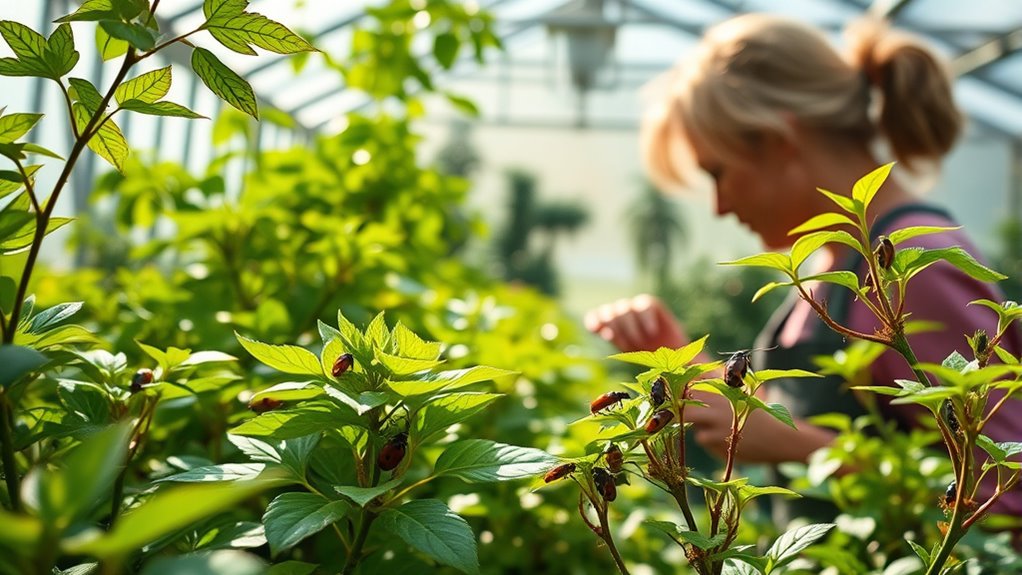
In addition, understanding the signs of spoilage in organic products like pest control agents can help you ensure that your organic solutions remain effective and safe to use. Combining the use of beneficial insects with organic pesticides creates a holistic, chemical-free pest control strategy. This integrated approach not only minimizes pest populations but also fosters a balanced ecosystem within your greenhouse. The key is consistency and observation—monitor your crops closely, identify pests early, and respond with targeted releases of beneficial insects or organic sprays. Over time, you’ll develop a sustainable pest management system that supports healthy plant growth, enhances yield, and maintains a safe environment for everyone involved. By embracing these organic solutions, you’re investing in a greener, safer way to protect your greenhouse and achieve long-term success.
Frequently Asked Questions
Are Organic Pest Control Methods Effective Against All Greenhouse Pests?
Organic pest control methods are highly effective against many greenhouse pests, but they might not work for all. Pest resistance can develop over time, reducing organic efficacy. You should monitor pest populations closely and rotate organic treatments to prevent resistance buildup. While organic solutions are a great eco-friendly option, some stubborn pests may require integrated approaches or targeted treatments to ensure complete control and protect your plants effectively.
How Often Should Organic Treatments Be Reapplied in a Greenhouse Setting?
You should reapply organic treatments every 7 to 14 days, depending on pest severity and environmental conditions. Monitoring your plants closely helps determine the ideal application frequency and reapplication schedule. Consistent reapplications guarantee pests stay under control and prevent outbreaks. Remember, organic solutions often require more frequent reapplication than chemical methods, so stay vigilant and adjust your schedule as needed to maintain a healthy, pest-free greenhouse.
Can Organic Pest Control Methods Harm Beneficial Insects?
Sure, organic pest control methods can harm beneficial insects if you’re not careful—because they’re just as susceptible as pests. While organic pesticides are generally safer, their impact on beneficial insect safety depends on application timing and product choice. To protect your allies, target treatments carefully and avoid spraying during peak activity hours. Remember, even natural solutions can have unintended consequences if you don’t consider organic pesticide impact on your helpful insects.
What Are the Costs Associated With Organic Pest Management?
Organic pest management costs vary depending on your methods, materials, and greenhouse size. Generally, you’ll find a favorable cost comparison to chemical options, especially over time, since organic solutions often require less frequent application and reduce harm to beneficial insects. For effective budget planning, consider initial investments in organic products like neem oil or insecticidal soaps, then evaluate ongoing expenses versus long-term benefits for a sustainable, eco-friendly pest control approach.
Are There Any Plants That Naturally Repel Pests in Greenhouses?
Some plants act as natural guardians in your greenhouse, quietly warding off pests through companion planting and repellent herbs. Marigolds, basil, and mint are like loyal allies, releasing subtle signals that discourage unwanted visitors. By strategically placing these plants, you create a harmonious environment where pests are less likely to invade. Embrace these green allies to protect your crops naturally, reducing the need for chemical interventions and fostering a thriving, healthy greenhouse.
Conclusion
By choosing organic solutions, you can effectively manage pests in your greenhouse without harmful chemicals. Imagine a small-scale grower who uses neem oil and beneficial insects, resulting in healthy plants and a thriving harvest. These natural methods not only protect your crops but also keep your environment safe. With a little patience and the right approach, you’ll see your greenhouse flourish, proving that chemical-free pest control is both possible and rewarding.