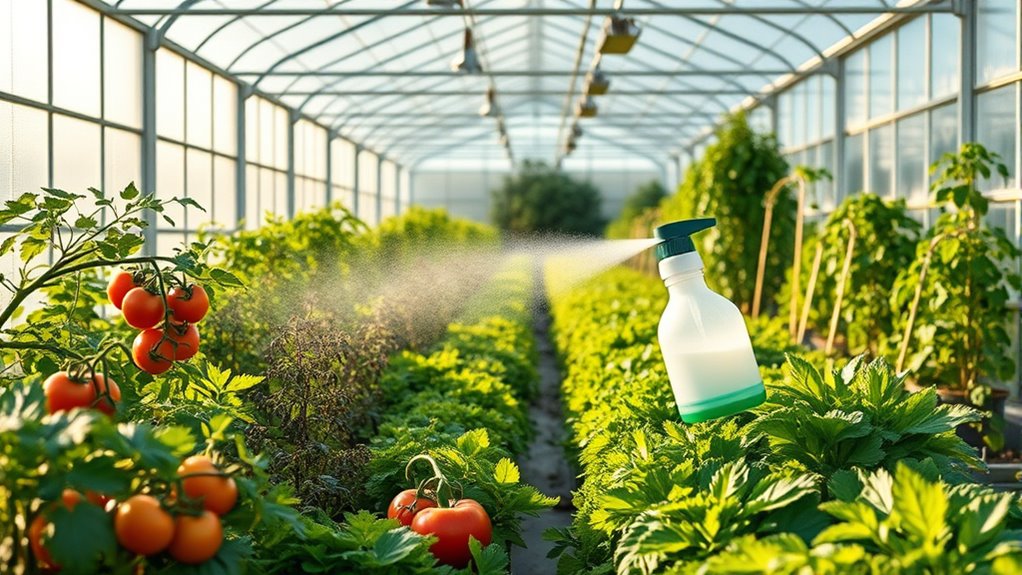

Using organic pesticides in your greenhouse is a safe and effective way to manage pests while protecting beneficial insects and your plants. These products rely on natural methods like biological control, minimize chemical hazards, and break down quickly in the environment. To guarantee safety, follow the instructions carefully, wear protective gear, and avoid applications during windy conditions or when pollinators are active. Explore more tips to create a healthy, sustainable greenhouse environment.
Key Takeaways
- Follow label instructions carefully and wear protective gear during application to ensure safety.
- Target specific pests with organic pesticides to minimize harm to beneficial insects and non-target organisms.
- Apply organic pesticides when pollinators are inactive and avoid windy conditions to prevent unintended spread.
- Combine organic pesticides with biological control methods for more effective and eco-friendly pest management.
- Keep children and pets away until the pesticide has safely dried or the recommended re-entry period has passed.

If you’re growing plants in a greenhouse, choosing organic pesticides can help protect your crops while maintaining a healthy environment. Unlike chemical options, organic pesticides often rely on natural methods like biological control, which involves introducing beneficial insects or microorganisms that target pests. This approach minimizes the risk of harming your plants, beneficial insects, or the surrounding ecosystem. It’s a safer alternative that aligns with your goal of sustainable gardening, especially when pesticide safety is a top priority. Organic pesticides are designed to be less toxic, reducing the potential hazards associated with traditional chemical pesticides, making them a smart choice for greenhouse cultivation.
Choosing organic pesticides promotes sustainable gardening and reduces hazards in greenhouse cultivation.
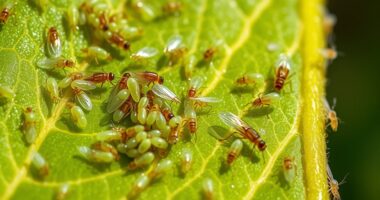
When considering biological control, you’re harnessing nature’s own pest management strategies. For example, releasing ladybugs to combat aphids or introducing predatory mites to control spider mites can be highly effective. These natural enemies don’t leave harmful residues on your plants, and they tend to target specific pests, leaving beneficial insects unharmed. This method not only helps keep pest populations in check but also supports overall pest management that’s environmentally friendly. Using biological control in conjunction with organic pesticides enhances your pest control system, creating a balanced environment where pests are kept at bay without the need for harsh chemicals. Additionally, selecting the right organic pesticide can improve the overall health of your plants by providing targeted pest control without disrupting your greenhouse’s delicate ecosystem. Moreover, choosing products with clarity of instructions can help ensure safe and effective application.
Pesticide safety is essential when applying any pest control product in your greenhouse. Organic pesticides typically have clear instructions for use and are formulated to break down more quickly in the environment, reducing the risk of residual buildup. Always read labels carefully and wear protective gear to avoid unnecessary exposure. Even though these products are considered safer, proper handling still matters. Avoid application during windy conditions or when beneficial pollinators are active, and make sure to keep children and pets away from treated plants until it’s safe. This careful approach ensures you’re protecting not only your crops but also yourself and your surrounding environment. Furthermore, integrating sustainable practices can further reduce your ecological footprint and promote long-term health for your greenhouse ecosystem. For example, selecting organic pesticides with a specific target pest in mind can improve efficiency and minimize non-target effects.
Frequently Asked Questions
Are Organic Pesticides Effective Against All Greenhouse Pests?
You might wonder if organic pesticides work on all greenhouse pests. While organic efficacy varies due to pest specificity, many organic options effectively target common pests. However, some pests may resist certain organic compounds, so it is crucial to identify your pests accurately. Combining organic pesticides with integrated pest management strategies increases success. Overall, organic pesticides can be a powerful tool, but their effectiveness depends on pest type and correct application.
How Often Should Organic Pesticides Be Reapplied in a Greenhouse?
Ever notice pests seem to pop up just when you think you’ve got them under control? That’s where understanding application frequency becomes key. You should reapply organic pesticides based on the pest lifecycle—typically every 7-14 days. Monitoring pest activity helps you spot infestations early, ensuring you target pests effectively without overdoing it. Adjust reapplication intervals as needed, especially during active pest seasons, to keep your greenhouse healthy.
Can Organic Pesticides Harm Beneficial Insects in My Greenhouse?
You might wonder if organic pesticides harm beneficial insects. Generally, organic pesticides are designed with selectivity for pests, which helps protect beneficial insect safety. However, some products can still affect helpful insects if not applied carefully. Always read labels and choose pesticides that specify high organic pesticide selectivity. Applying them during times when beneficial insects are less active can further reduce risks, ensuring your integrated pest management remains effective.
Are Organic Pesticides Safe for Edible Plants During Harvest?
Imagine a delicate dance, where timing is everything. When you use organic pesticides, you need to consider harvest timing to ensure minimal pesticide residue on your edible plants. Generally, organic options are safer and break down faster, making them suitable during harvest. However, always follow label instructions and wait the recommended period before harvesting to protect your crop and ensure it’s safe for consumption.
What Are the Best Storage Practices for Organic Pesticides?
You should practice proper storage of organic pesticides to guarantee pest containment and safety. Keep them in a cool, dry place away from direct sunlight and out of reach of children and pets. Use clearly labeled, airtight containers to prevent leaks and contamination. Store pesticides separately from food, seeds, and other chemicals. Regularly check for expiration dates and dispose of any expired products according to local regulations to maintain effective pest control.
Conclusion
Using organic pesticides in your greenhouse not only keeps your plants healthy but also protects your environment. Did you know that organic methods can reduce pesticide runoff by up to 90%? By choosing these eco-friendly solutions, you’re supporting sustainable farming and safeguarding your family’s health. Embrace organic pesticides today, and you’ll see a thriving, safer greenhouse, all while making a positive impact on the planet. Your green space deserves the best, naturally.