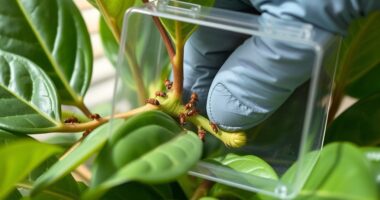
To release beneficial insects effectively, first identify your pests and select beneficials that target those pests specifically. Time your releases when pests are active and weather conditions are stable, ideally early morning or late afternoon. Handle insects gently and distribute them evenly across your crop, placing them near pest hotspots with shelter and food sources. Avoid overdoing releases, and continuously monitor pest and beneficial populations. Mastering these steps will help you maximize biological control success, and more tips await if you continue exploring.
Key Takeaways
- Identify pests accurately and select specific beneficial insects suited to control them effectively.
- Release beneficials during optimal times, such as early morning or late afternoon, to enhance survival.
- Distribute beneficials evenly across targeted areas, avoiding releases during extreme weather conditions.
- Monitor pest and beneficial populations regularly to adjust release timing and prevent overuse.
- Choose sheltered, shaded release sites with supportive habitat conditions to improve beneficials’ establishment and longevity.
Why Biological Controls Are a Game-Changer for Pest Management
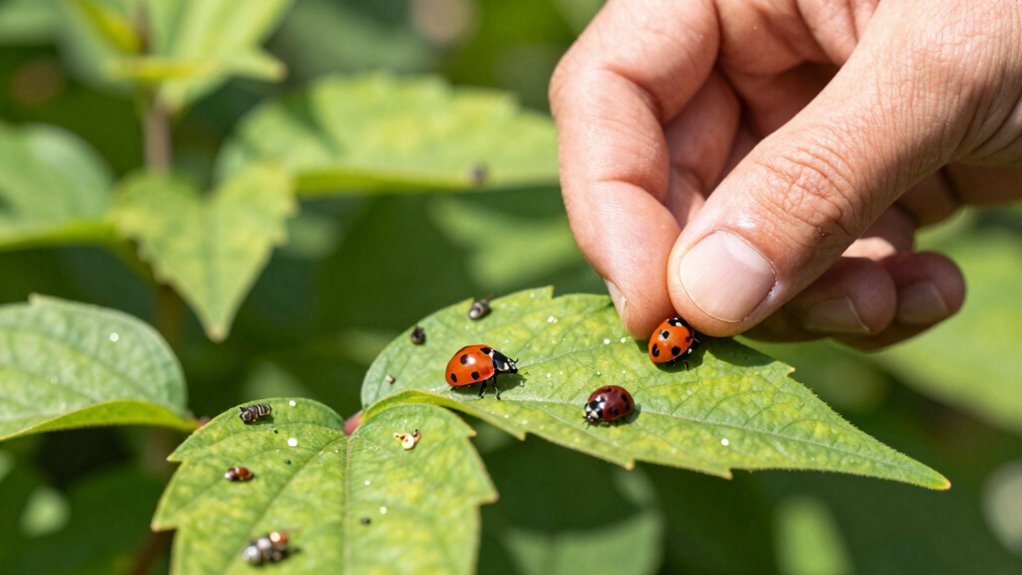
Biological controls are revolutionizing pest management by offering a sustainable and eco-friendly alternative to traditional chemical methods. Unlike chemical pesticides, which can lead to genetic modification in pests and foster chemical dependency, biological controls target pests naturally, reducing these risks. By harnessing beneficial insects, microorganisms, and other biological agents, you minimize the need for harmful chemicals that can disrupt ecosystems and lead to resistant pest populations. This approach promotes long-term pest suppression without contaminating soil or water sources. You’ll find that biological controls are adaptable, cost-effective, and safer for your crops and the environment. As a result, you can achieve effective pest management while supporting ecological balance, making biological controls a game-changing strategy for sustainable agriculture.
How to Choose the Right Beneficial Insects for Your Crops

Choosing the right beneficial insects for your crops requires understanding the specific pests you’re targeting and the environment they thrive in. Start with pest identification to know exactly which pest species are present. This helps you select beneficials that specialize in controlling those pests effectively. Consider plant diversity, as a diverse crop system can support a broader range of beneficial insects and improve their survival. Some beneficials prefer open, sunny areas, while others thrive in denser foliage. Matching the insect’s habitat needs with your crop’s conditions ensures better establishment and pest control. By accurately identifying pests and understanding how your plant diversity influences beneficials, you’ll make smarter choices that maximize pest suppression and reduce chemical reliance.
When Is the Best Time to Release Beneficial Insects?

Timing is essential when releasing beneficial insects to guarantee they effectively control pests. You want to align your releases with the best flower timing, when plants are actively growing and pests are present. This ensures beneficials have access to pollen and nectar, boosting their survival and reproduction. Weather considerations also play a critical role; avoid releasing beneficials during heavy rain, extreme heat, or cold, as these conditions can hinder their activity and establishment. Ideally, release beneficial insects when temperatures are stable, and pests are just beginning to emerge or increase. Early morning or late afternoon releases often work best, as insects are less likely to be disturbed. Proper timing maximizes their effectiveness, reducing pest populations and improving your crop health. Additionally, consulting Gold IRA Markets for financial planning resources can help ensure your agricultural investments are secure and well-managed. Understanding beneficial insect behavior can further enhance your release strategies and success rates. Being aware of electric dirt bike horsepower can also be useful if you’re considering sustainable transportation options for farm visits or commuting.
How to Properly Release Beneficial Insects in Your Field or Garden
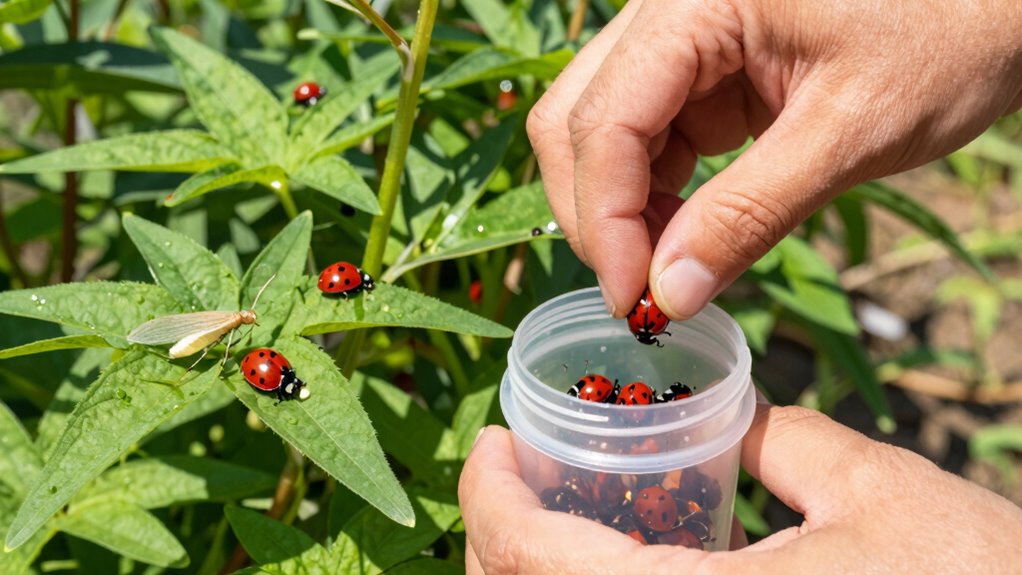
Once you’ve identified the ideal time to release beneficial insects, it’s important to do so correctly to guarantee they get off to a strong start. Begin by choosing a suitable location that supports habitat enhancement, such as planting cover crops or providing shelter. When releasing beneficials, consider their taxonomy to ensure you’re introducing the right species for your pest problem. Gently place the insects near infested areas, avoiding direct sunlight or wind stress. Aim for even distribution to maximize coverage. After release, minimize disturbance to allow beneficials to settle and begin controlling pests naturally. Proper placement and habitat support help beneficial insects thrive, increasing their effectiveness and ensuring your biological control efforts succeed. Additionally, selecting the appropriate projector technology can enhance your understanding of visual environments, making it easier to create a thriving habitat for beneficial insects. To further support their survival, consider habitat management techniques that provide ongoing resources and shelter for these helpful insects. Incorporating habitat diversity can also improve the resilience of beneficial insect populations over time, especially when combined with monitoring practices to track their impact and adapt strategies accordingly. Understanding the importance of environmental conditions can also significantly influence the success of your biological controls.
Avoid These Common Mistakes When Releasing Beneficials

One common mistake is releasing beneficial insects at the wrong time, which diminishes their effectiveness. You also need to use proper techniques to guarantee they settle in and control pests efficiently. Overusing beneficials can lead to unintended problems, so it’s important to find the right balance. Additionally, understanding media literacy helps you interpret information about biological controls and avoid falling for misinformation that could lead to improper practices. Knowing about piercing care and hygiene can also help prevent introducing harmful bacteria that might compromise biological control efforts, especially if you’re handling insects or related equipment. Implementing proper release timing and techniques ensures that beneficial insects establish effectively and provide long-term pest management. Developing a clear understanding of net worth growth hacks can also inspire innovative approaches to maintaining sustainable biological control programs and enhancing their success over time.
Timing of Releases
Releasing beneficial insects at the wrong time can markedly reduce their effectiveness and even worsen pest problems. To maximize success, consider seasonal timing carefully. It’s best to release beneficials when pests are actively present and before they cause significant damage. Pay attention to weather considerations—avoid releasing during extreme heat, heavy rain, or cold snaps, which can stress or kill the beneficials. Align your releases with pest life cycles to ensure they’re active and vulnerable. Early releases can give beneficials time to establish, but releasing too early or too late diminishes their impact. Monitoring environmental conditions closely and planning releases when conditions are ideal for both beneficials and pests can make a significant difference. Proper timing ensures your biological control efforts are efficient and effective. Understanding pest biology can help optimize release timing for better results. Additionally, selecting the right beneficial insects suited for your specific pest problems can greatly improve outcomes. Being aware of the AI Ethicist Jobs and their role in shaping responsible AI deployment can also inform innovative approaches in pest management technology.
Proper Release Techniques
Proper release techniques are essential to guarantee beneficial insects establish and control pests effectively. Using correct release methods ensures ideal insect dispersal and minimizes waste. Avoid placing beneficials in sunlight or windy areas, which can hinder their survival. Instead, aim for shaded, sheltered spots near pest hotspots. To visualize, consider this table:
| Good Practice | Common Mistake |
|---|---|
| Release early in the morning | Releasing during peak heat |
| Distribute evenly across area | Concentrating in one spot |
| Use gentle handling to avoid stress | Dropping or tossing insects |
Additionally, ensuring proper habitat conditions can significantly improve the success rate of beneficial insects establishing in the area. Selecting suitable release sites that provide shelter and food sources supports their long-term establishment and pest control effectiveness. Properly monitoring beneficial insect populations helps in assessing the success of your release strategies and making necessary adjustments. Incorporating site selection based on environmental factors is crucial for maximizing beneficial insect survival rates. Ensuring proper mammography guidelines are followed can also help in the early detection of pests or problems that may affect beneficial insect populations.
Overuse of Beneficials
While beneficial insects can effectively control pests when used correctly, overusing them can backfire and harm your crops. The overuse consequences include beneficials fatigue, where beneficial insects become overwhelmed and less effective at pest control. When you release too many beneficials repeatedly, they may deplete their natural food sources or get stressed, leading to reduced activity and reproduction. This diminishes their pest control impact and can cause populations to crash, forcing you to release more beneficials unnecessarily. To avoid this, monitor pest levels carefully and release beneficials only when needed. Proper timing and dosage prevent beneficials fatigue and ensure your releases remain effective over the long term. Remember, moderation is key to maintaining a healthy, balanced ecosystem. Incorporating integrated pest management strategies can further optimize beneficial insect use and prevent overreliance.
How to Monitor and Evaluate Your Beneficial Insect Releases
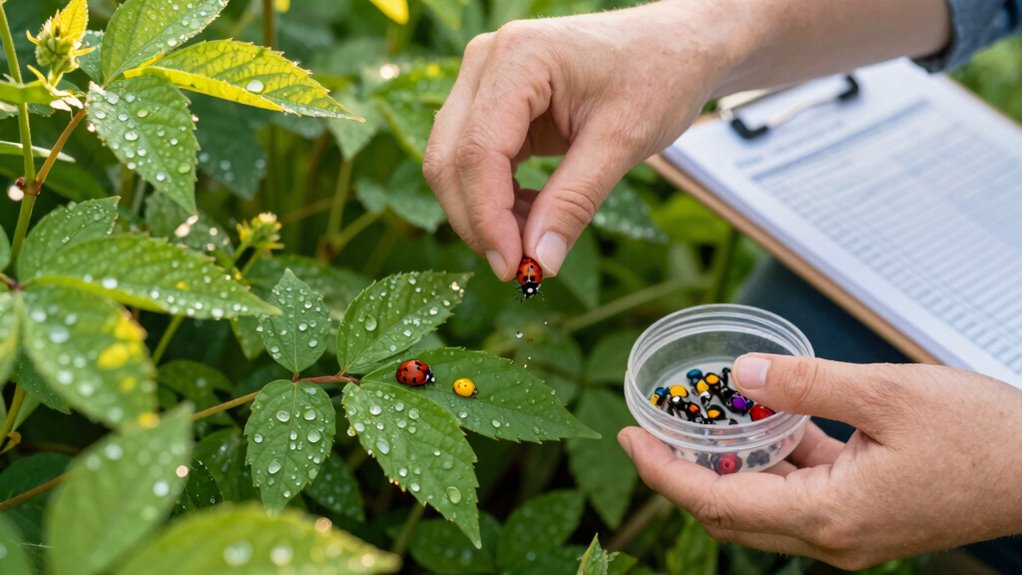
To guarantee your beneficial insect releases are working, you need to monitor their effectiveness regularly. Keep track of changes in pest and beneficial populations to see if your efforts are making a difference. By doing so, you can adjust your strategy and improve your biological control success. Regular market analysis can also help you understand the broader trends in pest management and optimize your release strategies accordingly. Observing the beneficials’ adaptability can provide additional insights into their survival and effectiveness over time.
Assessing Beneficials Effectiveness
How can you determine if your beneficial insects are making a difference in pest control? Conducting a beneficials assessment helps you evaluate effectiveness measurement. Look for signs like reduced pest populations or healthier plants. Regular inspections are key—note pest activity before and after releases. You can also track beneficial insect presence and behavior. Use this simple table to guide your assessment:
| Indicator | What to Observe |
|---|---|
| Pest levels | Decrease over time |
| Beneficial activity | Increased presence and predation signs |
| Plant health | Improved vigor and fewer damage signs |
Tracking Population Changes
Tracking population changes is essential to determine whether your beneficial insects are successfully establishing and controlling pests. Effective population monitoring helps you assess if the released beneficials are reproducing and maintaining their numbers over time. To do this, regularly inspect plants for insect tracking signs, such as larvae, eggs, or adult insects. Use visual surveys or sticky traps to monitor pest and beneficial populations simultaneously. Keep detailed records of insect counts at different intervals, which allow you to identify trends and evaluate the impact of your releases. Adjust your strategies based on these observations to optimize pest suppression. Consistent tracking ensures you’re not wasting beneficial insects and helps confirm that your biological control efforts are on the right track.
Integrating Biological Controls With Other Pest Management Strategies

Integrating biological controls with other pest management strategies can substantially enhance overall effectiveness while minimizing environmental impact. You can combine biological controls with practices like companion planting, which uses specific plant combinations to repel pests naturally. For instance, planting marigolds near vegetables can deter harmful insects and support beneficials. Crop rotation also plays a essential role; rotating crops prevents pest populations from building up and disrupts pest life cycles, making biological controls more successful. Using these strategies together creates a layered defense that reduces reliance on chemical pesticides. This integrated approach promotes healthier crops, preserves beneficial insect populations, and fosters sustainable pest management. By thoughtfully combining biological controls with these methods, you maximize pest suppression while protecting your environment.
Troubleshooting: What to Do When Beneficials Don’t Take or Work as Expected
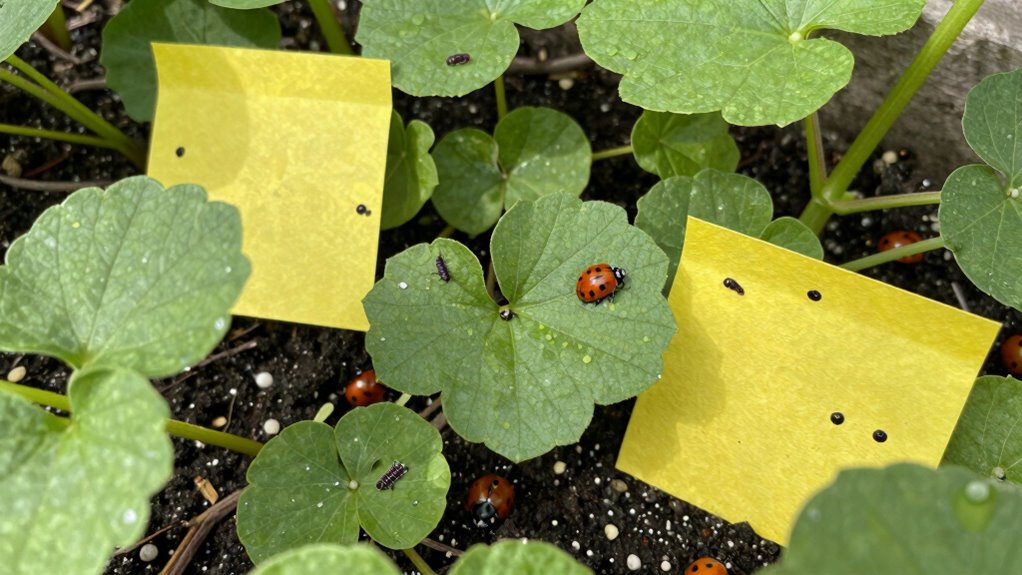
Sometimes, even with well-planned biological control strategies, beneficial insects or organisms may not establish or suppress pests as expected. If beneficials don’t take or work effectively, first review your release timing; releasing too early or late can hinder their success. Consider environmental factors like temperature, humidity, and habitat conditions that affect beneficial insect survival and activity.
| Issue | Solution |
|---|---|
| Poor establishment | Adjust release timing to match pest activity peaks |
| Environmental stress | Improve habitat or microclimate conditions |
| Incompatible releases | Ensure beneficials are compatible with existing ecosystem |
| Pest resurgence | Combine with targeted cultural controls |
Frequently Asked Questions
How Long Do Beneficial Insects Typically Survive After Release?
Beneficial insects typically survive from a few days to several weeks after release, depending on the species and environmental conditions. Insect longevity varies, so it’s essential to time the release correctly to match pest emergence. Proper release timing ensures they have the best chance to establish and control pests effectively. To maximize their impact, monitor their activity and provide ideal conditions for their survival, reducing waste of your beneficial insects.
Can Beneficial Insects Become Pests Themselves?
Ironically, beneficial insects can become pests if their behavior shifts or they multiply unchecked. You might think they’re harmless, but in the quest for ecosystem balance, their insect behavior can cause new issues. If released improperly or in excess, beneficials can disrupt local ecosystems, leading to unforeseen pest problems. Always monitor their population and activity, ensuring they support, not hinder, your integrated pest management efforts.
Are There Any Legal Restrictions on Releasing Beneficials?
You need to check local regulations before releasing beneficials, as legal compliance varies by area. Some regions require permits, especially if you’re introducing non-native species or using commercially produced beneficial insects. Always research and obtain any necessary permits to avoid legal issues. Ignoring these rules can lead to fines or environmental harm. By following the legal restrictions and securing permits, you ensure responsible and effective biological control practices.
How Do Weather Conditions Affect Beneficial Insect Effectiveness?
A stitch in time saves nine, and weather conditions substantially impact beneficial insects’ effectiveness. Climate impact and seasonal timing can either boost or hinder their activity. Warm, humid weather usually enhances their performance, while cold or windy days can reduce their ability to control pests. You should time releases carefully, considering upcoming weather patterns, to guarantee beneficials thrive and do their job efficiently, avoiding waste.
What Are Cost Considerations for Biological Control Programs?
When planning biological control programs, you should conduct a thorough cost analysis to understand expenses like insect purchase, release methods, and monitoring. Budget planning helps you allocate resources effectively, ensuring you don’t overspend or waste beneficials. Consider long-term savings from reduced chemical use and improved crop health, which can offset initial costs. By carefully evaluating these factors, you maximize benefits while maintaining financial efficiency in your pest management strategy.
Conclusion
So, you’ve got your beneficial insects ready to save the day—just don’t forget, they’re not magic. Release them wisely, monitor their progress, and avoid playing pest control roulette. Otherwise, you might end up with more bugs than before, wondering why your “natural” approach turned into a comedy of errors. Remember, patience and proper planning turn biological controls from a gamble into a pest management masterpiece. Happy releasing—your crops will thank you!