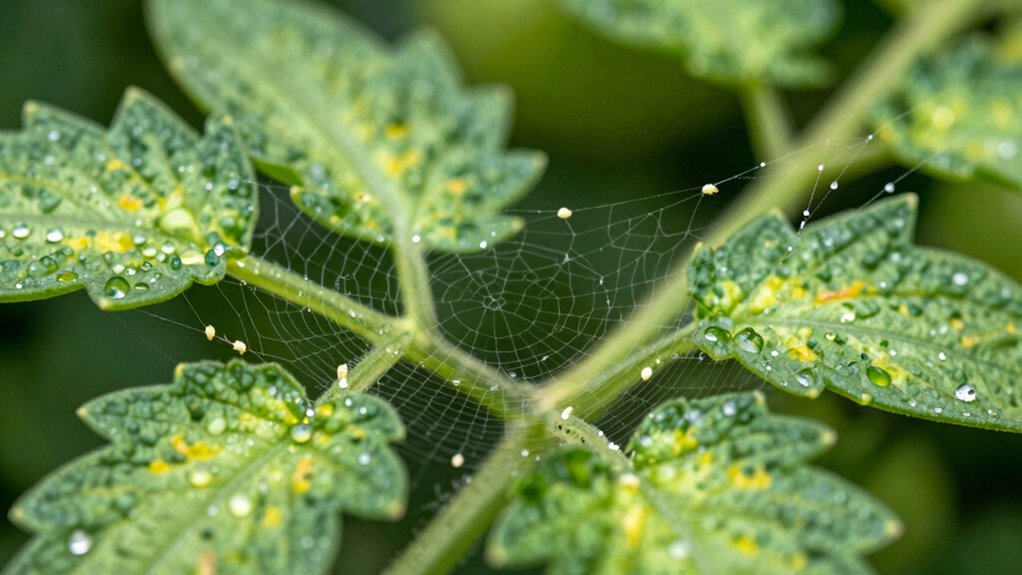

If you notice tiny, silk-like webbing on the undersides of your plant’s leaves or stems, spider mites are already taking control. This webbing appears as fine, fuzzy networks and often covers areas where the mites hide and breed. The presence of webbing means the infestation has worsened and mites are spreading rapidly. To stop them from gaining further ground, early action is essential—continue exploring for simple steps to get rid of webbing and control mites.
Play games included with Prime
Start a Prime free trial and play with Amazon Luna on your devices.
As an affiliate, we earn on qualifying purchases.
Key Takeaways
- Fine, silken webbing on undersides of leaves indicates spider mites are establishing a protective barrier.
- Dense, tangled webbing spreading across plant surfaces signals an advanced infestation.
- Webbing formation often occurs before visible mite damage, serving as an early warning.
- The presence of webbing correlates with rapidly growing mite populations and worsening plant health.
- Persistent webbing despite basic cleaning suggests mites have gained a strong foothold and are winning.
As an affiliate, we earn on qualifying purchases.
How to Recognize Early Signs of Spider Mite Infestation
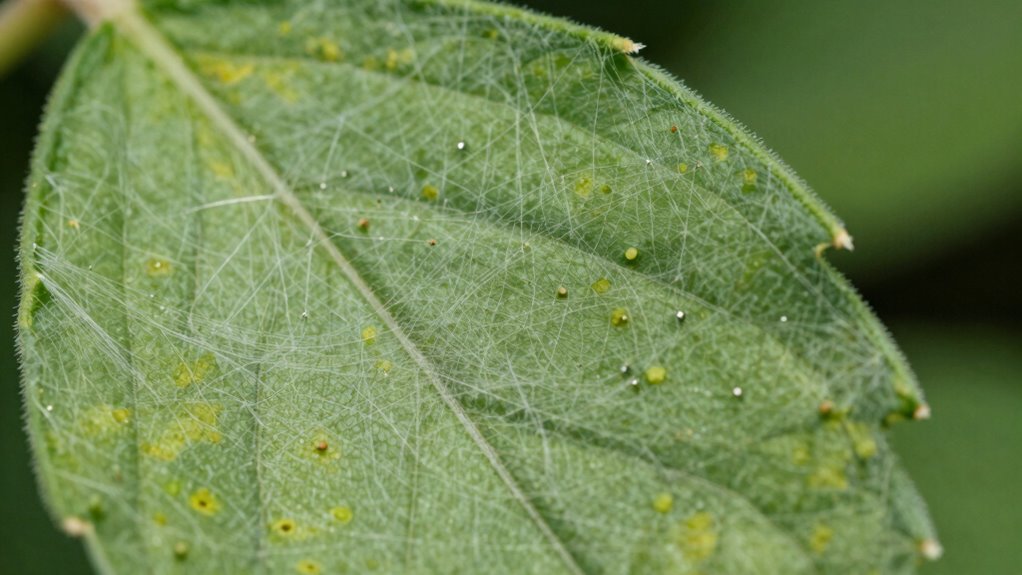
Early detection of spider mite infestation is essential to preventing widespread damage. You should regularly check your plants’ health for early signs of trouble. Look for tiny specks that cause leaves to turn yellow or stippled, indicating pest activity. Pest identification is key; spider mites are minuscule and often overlooked. Gently shake or tap leaves over a white paper to see if moving specks drop off—these are likely mites. Notice if the plant’s overall vigor declines, with curling or dry leaves. Spotting these early signs allows you to act quickly before webbing or severe damage appear. Staying vigilant about plant health and pest identification helps you catch infestations early, making treatment more effective and protecting your plants from lasting harm. Additionally, understanding sustainable pest management techniques can reduce chemical use and promote healthier plants. Regularly inspecting your indoor and outdoor plants can help you detect pest activity before it becomes unmanageable. Incorporating visual and auditory cues into your monitoring routine can also improve early detection efforts. Being familiar with plant stress signals can further aid in recognizing when pests are compromising your plants’ health, allowing for timely intervention. Recognizing early warning signs quickly can save your plants from irreversible damage.
What Spider Mite Webbing Looks Like and Why It’s a Warning Sign
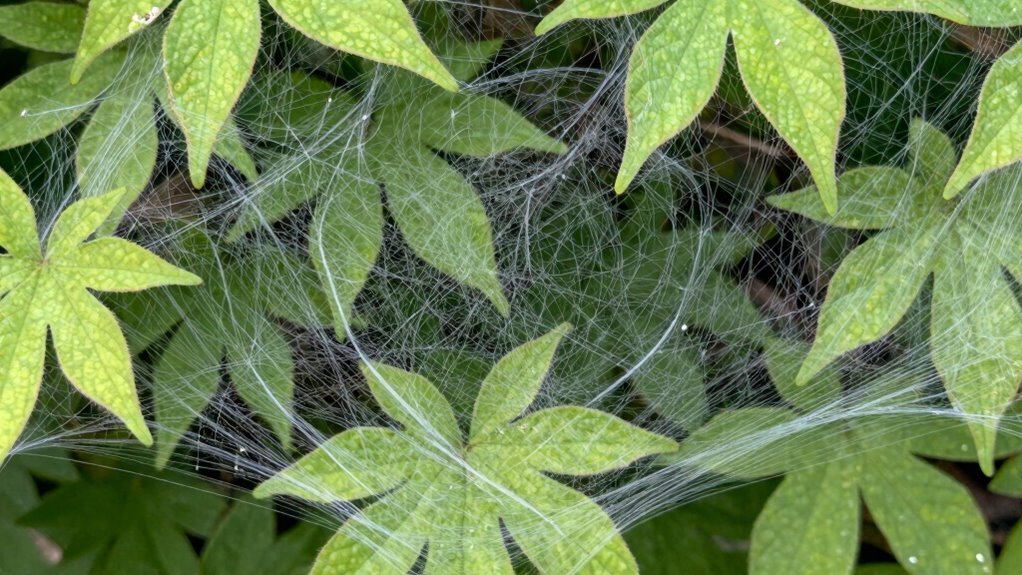
Spider mite webbing is one of the clearest signs of an infestation, and it’s important to recognize what it looks like. Typically, it appears as fine, silk-like patterns that resemble web structure, often covering the undersides of leaves or stems. The webbing is usually thin but dense, creating a fuzzy appearance. These silk patterns are different from spider webs; they’re lightweight and more scattered, often forming a protective barrier for mites. Recognizing this webbing early can save your plants. Color accuracy and contrast ratio are important factors that can influence how easily you can spot these signs on your plants. Additionally, understanding plant health indicators can help determine the severity of the infestation. Being aware of the webbing patterns can aid in early detection before the mites cause significant damage. Monitoring plant stress signals can also help identify infestations at an early stage, allowing for prompt interventions. Regular observation and understanding of piercing care and hygiene can further prevent mite infestations by reducing plant stress and vulnerabilities.
Why Webbing Means Your Spider Mite Problem Is Growing
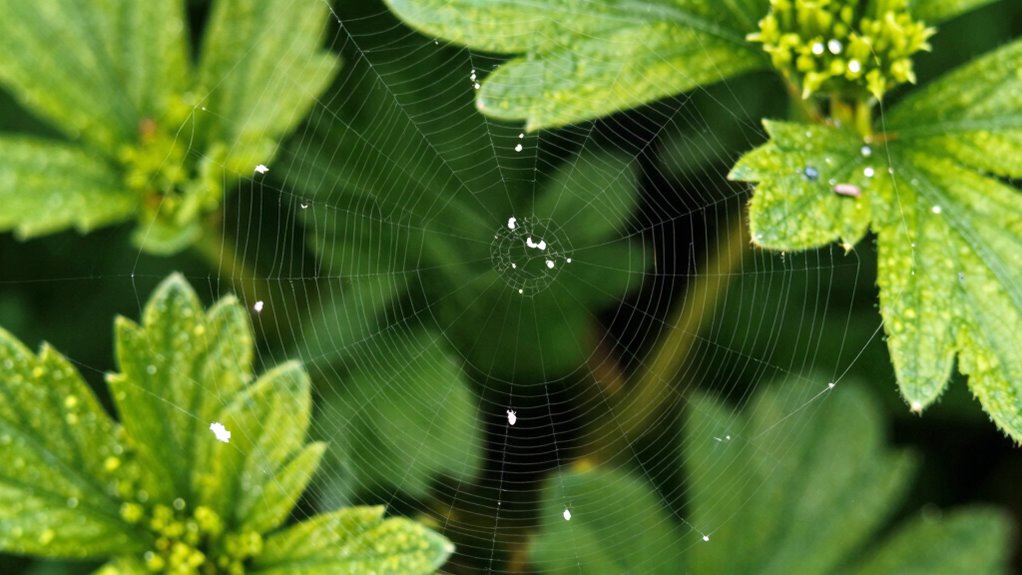
When you see webbing, it’s a clear sign your spider mite problem is getting worse. It means the infestation is spreading quickly, with mites reproducing rapidly. As the webbing thickens, damage to your plants can escalate in no time. Monitoring seasonal plant health can help you catch infestations early before webbing becomes widespread. Recognizing pest signs early allows for more effective management strategies and prevents further damage. Understanding the psychological impact of animal companionship can motivate you to stay proactive in addressing pest issues before they become unmanageable. Regular inspection and integrated pest management techniques are essential tools to keep infestation levels under control. Being aware of the signs of infestation can help you respond promptly and protect your plants effectively.
Webbing Indicates Infestation
Webbing is a clear sign that your spider mite problem is worsening. As the webbing spreads across your plants, it signals that infestation levels are increasing. This webbing often covers leaves, stems, and buds, making plants look dusty or fuzzy. Recognizing early signs helps you act before damage becomes irreversible. Additionally, webbing formation is a natural defense mechanism for spider mites, allowing them to protect themselves from predators and harsh environmental conditions. Understanding impactful quotes can inspire proactive measures to control infestations before they escalate. Being aware of diagnostic indicators can further aid in early detection and effective intervention.
Rapid Mite Reproduction
As webbing spreads across your plants, it signals that spider mites are reproducing at an alarming rate. Their mite lifecycle is quick, with eggs hatching into nymphs that mature within days. This rapid development fuels a swift population increase, especially when webbing formation provides a protective environment. The webbing acts like a shield, helping mites stay safe from predators and harsh conditions while they reproduce. Additionally, environmental factors such as temperature and humidity can significantly influence their development speed, making infestations escalate even faster under optimal conditions. As each generation grows, the webbing multiplies, creating a dense network that signals a severe infestation. The faster the mite lifecycle progresses, the more webbing you see, which means your spider mite problem is escalating quickly. Recognizing this pattern early is vital to stopping their rapid reproduction before it gets out of control, since mite lifecycle can be completed in just a few days under optimal conditions. Understanding the environmental factors that accelerate their development can help you take timely action to protect your plants. A thorough understanding of their reproductive cycle can guide effective intervention strategies, especially considering how population growth can rapidly overwhelm plants if not addressed promptly.
Damage Progresses Quickly
Once you notice webbing on your plants, the damage from spider mites can escalate rapidly. As they feed on plant cells, they deplete essential nutrients, compromising plant nutrition and weakening overall health. The more webbing present, the faster the damage progresses, as mites reproduce quickly and spread throughout your plant. If natural predators haven’t kept them in check, their population can explode within days, causing leaves to yellow, dry out, and drop. Without prompt action, your plant’s growth stalls, and recovery becomes more difficult. Recognizing webbing early is imperative because it signals an active, expanding infestation. The sooner you intervene, the better your chances of restoring plant health before irreparable harm occurs.
How to Confirm You Have Spider Mites
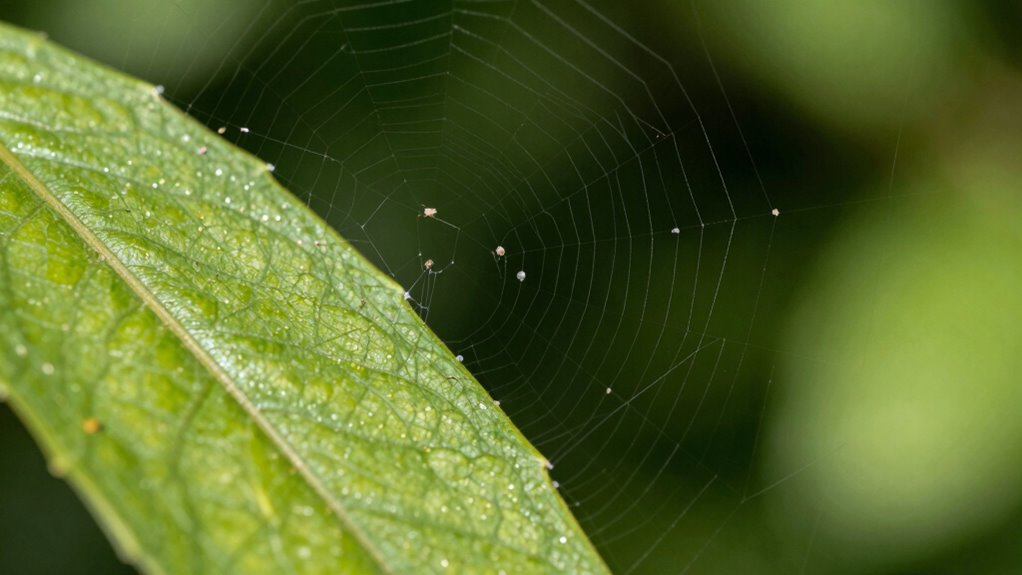
To confirm you have spider mites, look for fine webbing on your plants, especially on the undersides of leaves. Use a magnifying glass or your phone’s camera to closely inspect the foliage for tiny moving specks. Spotting these signs helps guarantee you’re dealing with a mite infestation before it worsens. Regular monitoring of plant health can help detect early signs of cybersecurity vulnerabilities that might be exploited by pests like spider mites.
Signs of Webbing Presence
Webbing is one of the clearest signs that spider mites are present on your plants. Look closely at the leaves and stems for fine, silken webbing patterns that often form in dense clusters or spread across the plant’s surface. These webs are typically seen on the undersides of leaves or in tight crevices where mites tend to hide. Pay attention to mite behavior—if you notice tiny moving dots or their webbing expanding quickly, it’s a strong indication of an infestation. The webbing may appear as a filmy, spider-like net, sometimes tangled with dust or debris. Recognizing these signs early helps confirm spider mite presence before the problem worsens, allowing you to take swift action.
Close Inspection Techniques
Performing a close inspection is essential to accurately confirm spider mite infestations. You need to carefully examine your plant’s leaves and stems for early signs of pest activity. To do this effectively, follow these steps:
- Use a magnifying glass or a smartphone camera with macro capabilities to spot tiny specks or webbing.
- Check the undersides of leaves where spider mites tend to hide and reproduce.
- Look for subtle discolorations, stippling, or leaf damage that indicate pest activity.
- Compare affected areas with healthy parts to assess overall plant health and confirm pest identification.
Strategies to Remove Webbing and Control Spider Mites
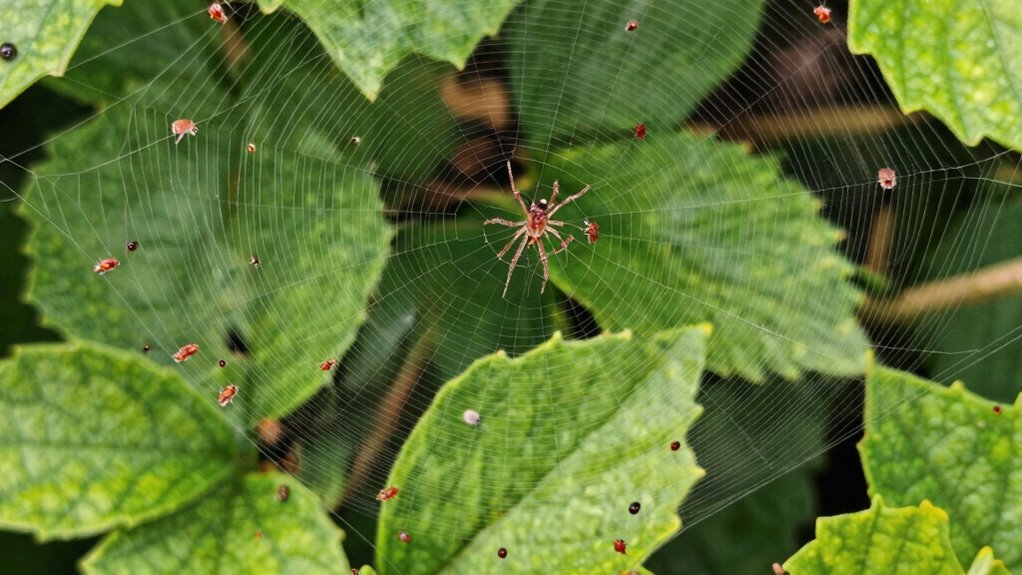
Removing spider mite webbing is an essential step in controlling their population, as it can hinder your ability to spot and treat the pests effectively. Use a strong stream of water or a gentle scrub brush to clear away the webbing from leaves and branches. This not only reveals hidden mites but also disrupts their habitat. Incorporate natural repellents, like neem oil or insecticidal soap, to make plants less attractive to mites. Encouraging beneficial insects such as ladybugs or predatory mites can also help keep populations in check naturally. Regularly removing webbing and applying these eco-friendly strategies create an environment less welcoming to spider mites, giving your plants a fighting chance without relying heavily on chemical treatments.
Tips to Prevent Spider Mites From Rebuilding Webs
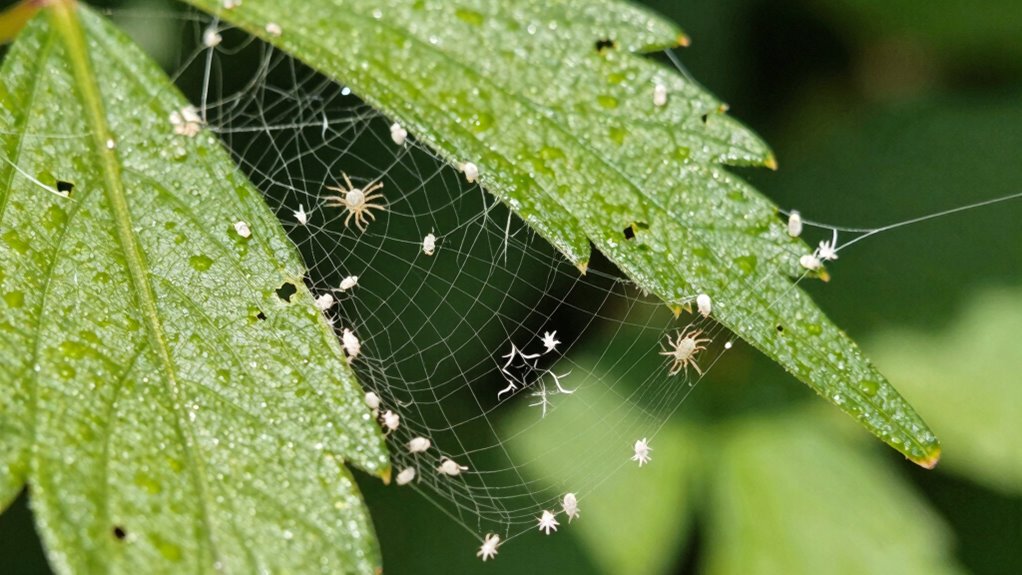
To prevent spider mites from rebuilding their webs, it’s important to take proactive steps immediately after you’ve removed existing webbing. Maintaining plant health is key to making plants less attractive to mites. You can try DIY remedies like spraying a mixture of neem oil and water or insecticidal soap to disrupt their webs. Additionally, regularly misting plants helps keep humidity levels high, which spider mites dislike. Here are some effective tips:
- Inspect plants frequently for early signs of mites and webbing.
- Prune heavily infested areas to reduce mite populations.
- Apply natural deterrents, such as neem oil or garlic spray.
- Ensure proper watering and fertilization to keep plants healthy and resilient against pests.
Consistent care minimizes web rebuilding and promotes plant vigor.
Frequently Asked Questions
Can Spider Mites Survive Winter Conditions Indoors?
Yes, spider mites can survive winter indoors if your plants lack resistance and pesticide effectiveness is low. They thrive in warm, dry environments, so if your indoor conditions are suitable, they’ll persist. To prevent infestations, make sure your plants are healthy and resistant, and use effective pesticides when needed. Regularly inspecting your plants helps catch spider mites early, making it easier to manage them before they become a major problem.
Are There Natural Predators That Control Spider Mite Populations?
Like knights defending their castle, beneficial insects act as natural predators to control spider mite populations. You can introduce biological control agents such as ladybugs, predatory mites, or lacewing larvae to help keep these pests in check. These natural predators hunt and feed on spider mites, providing an eco-friendly solution that reduces your need for chemical pesticides. Embracing biological control allows you to maintain a healthy, balanced garden ecosystem.
How Quickly Do Spider Mite Infestations Typically Spread?
Spider mite infestations can spread rapidly, often within just a few days to a week, especially in warm, dry conditions. Keep an eye on plant health and look for infestation signs like tiny webs, speckled or yellowed leaves, and fine webbing. Early detection is key; the faster you spot the signs, the easier it is to control the mites before they cause significant damage.
What Plants Are Most Vulnerable to Spider Mite Attacks?
Imagine your garden as a castle under siege. Vulnerable plants like tomatoes, peppers, and roses have weaker defenses, making them prime targets for spider mites. They often lack strong natural plant resistance, so pest identification becomes essential early on. Keep a close eye on these tender plants, and act quickly if you see tiny webs or speckled leaves, preventing the mites from gaining full control and saving your garden’s kingdom.
Can Overwatering or Underwatering Attract Spider Mites?
Overwatering or underwatering can increase watering stress, making your plants more vulnerable to spider mites. When plants are stressed from improper watering, they weaken their defenses and become attractive targets for pests. To minimize vulnerability, maintain consistent watering habits that suit each plant’s needs. Healthy, well-watered plants resist spider mite infestations better, so avoid extremes in watering to keep your plants strong and less attractive to these pests.
Conclusion
If you spot tiny webbing on your plants, act quickly—it’s a sign spider mites are already winning. Did you know that over 20,000 species of spider mites exist, and many can reproduce rapidly, doubling their population every few days? Catching early signs and controlling them now can save your plants from severe damage. Stay vigilant, remove webs promptly, and keep pests at bay to protect your green space before it’s too late.
NFL season / tailgating Picks
team gear
As an affiliate, we earn on qualifying purchases.