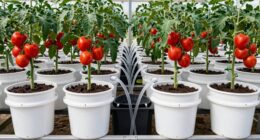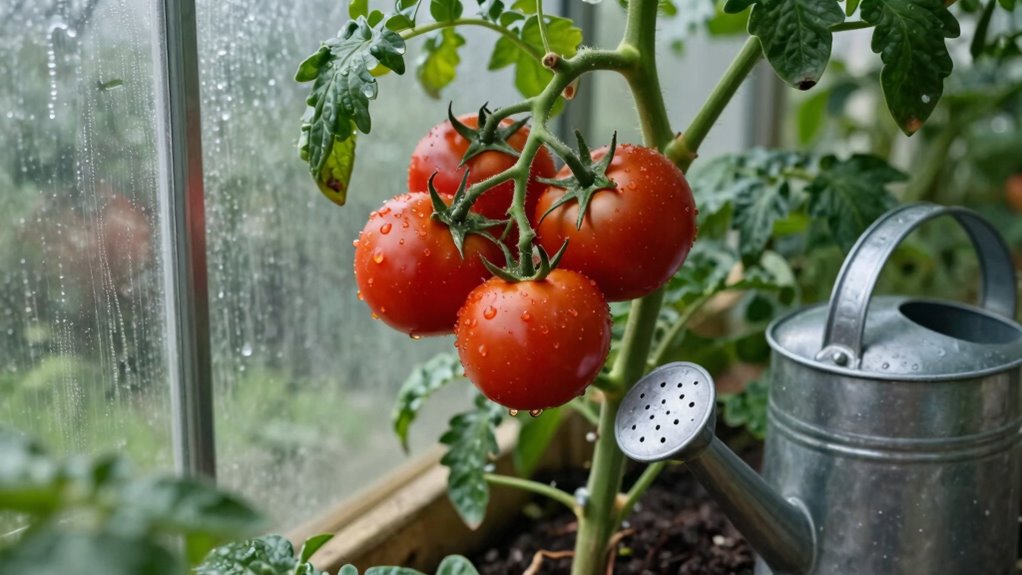
To keep your tomatoes healthy in low light, water them consistently by checking soil moisture at a depth of 4-6 inches with a moisture meter or your finger. Water less frequently, about every 4-5 days, and always let the top inch dry out between watering. Avoid overwatering or underwatering, and focus on deep watering to promote strong roots. By following these simple steps, you’ll help your plants stay vibrant even with limited sunlight. Keep going to learn more tips for thriving tomatoes.
Key Takeaways
- Water tomatoes deeply every 4-5 days, ensuring soil dries slightly between waterings to prevent overwatering and stress.
- Regularly check soil moisture at 4-6 inches depth with a meter or finger to maintain consistent soil hydration.
- Avoid watering on a fixed schedule; base watering on soil moisture levels and plant cues like wilting or yellowing leaves.
- Use well-draining soil enriched with compost to prevent waterlogging and promote healthy root development.
- Prune excess foliage and maintain steady fertilization to improve airflow and support plant health in low-light conditions.
Why Low Light Stresses Tomatoes and How Watering Helps
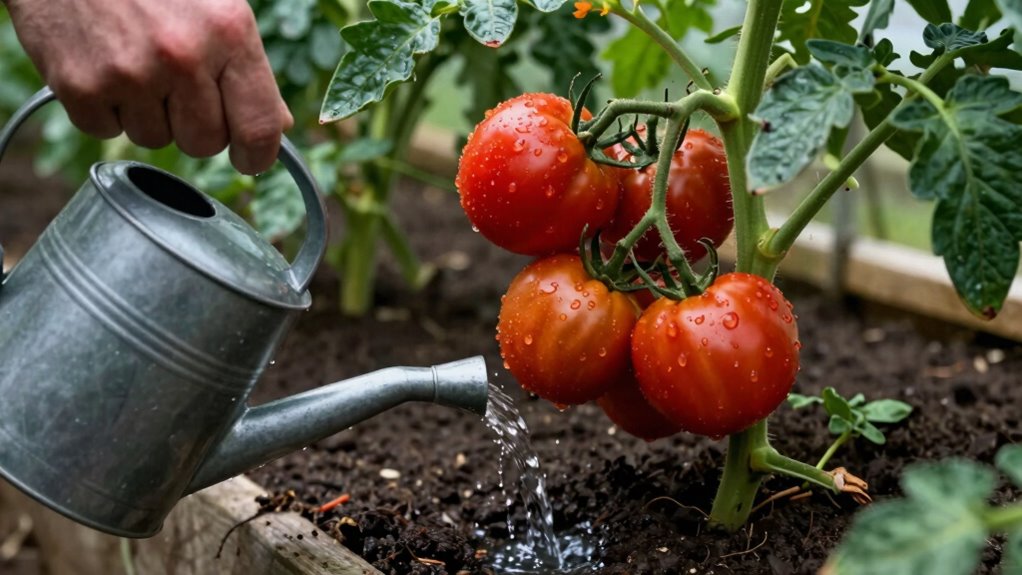
Low light conditions can stress tomato plants because they struggle to perform photosynthesis efficiently, which limits their energy production. When sunlight is scarce, proper watering frequency becomes essential. Overwatering can lead to waterlogged soil, causing poor soil drainage and root rot, while underwatering stresses plants further. In low light, roots can’t access oxygen as easily, making them vulnerable to disease if soil drains poorly. To help your tomatoes cope, maintain consistent moisture levels without excessive watering. Ensuring good soil drainage allows excess water to escape, preventing soggy roots and promoting healthy growth. Adjust your watering schedule based on soil moisture, not just time, to keep plants hydrated but not waterlogged. Proper watering and soil drainage reduce stress, helping your tomatoes stay healthy despite limited sunlight. Effective watering practices can make a significant difference in maintaining healthy tomatoes in low light conditions, especially when combined with understanding soil drainage and moisture management. Additionally, monitoring soil moisture levels regularly ensures optimal water balance for your plants, and using appropriate watering techniques can further support their resilience.
How Can You Tell When Tomatoes Need More Water in Shade?

You can tell your tomatoes need more water if their leaves start wilting or drooping, even in low light. Look for changes in leaf color, such as yellowing or browning, which may signal dehydration. Checking the soil moisture levels with a finger or a moisture meter helps confirm if your plants are getting enough water. Additionally, understanding the importance of proper watering helps prevent issues like plant stress, which can affect your tomato plants’ health. Incorporating watering techniques such as consistent scheduling and avoiding water stress can also promote overall plant vigor and resilience in challenging conditions.
Wilting or Drooping Leaves
When tomatoes don’t get enough water, their leaves often start to wilt or droop as a quick way to signal distress. This foliar symptom indicates your plant is struggling to maintain hydration. Drooping leaves can make your tomato plant look sad, but it’s often a sign that the roots aren’t absorbing enough water. Check the soil; if it feels dry, your plant needs more moisture. Prolonged wilting can harm root health, weakening the plant and reducing fruit production. To prevent this, water deeply and consistently, especially in low light conditions where evaporation is slower. Recognizing drooping leaves early helps you provide the right amount of water, keeping your tomatoes healthy and vigorous despite the shade. Using smart watering systems can help automate this process and ensure consistent hydration. Additionally, understanding plant hydration signals can help you respond more quickly to changing needs. Being aware of soil moisture levels can further assist in maintaining optimal water availability for your tomatoes.
Leaf Color Changes
Since tomatoes in shaded areas often receive less light, their leaf color can provide important clues about their watering needs. Foliage discoloration, such as yellowing or pale leaves, may indicate they’re not getting enough water, causing stress. Conversely, dark green, lush leaves can mean the plant is well-hydrated. However, if leaves turn yellow or show signs of browning, it could also point to a nutrient deficiency, often linked to inconsistent watering. Keep an eye on subtle color shifts; dull or faded foliage suggests the plant isn’t absorbing nutrients properly, possibly due to dehydration. Additionally, understanding the importance of plant health monitoring can help you maintain optimal watering practices. Regularly monitoring leaf color helps you determine whether your tomatoes need a drink, especially in low-light conditions where visual cues are your best guide.
Soil Moisture Levels
In shaded areas, visual cues like leaf color provide helpful hints, but checking soil moisture offers a more direct assessment of your tomato plants’ water needs. Feel the soil about two inches below the surface; if it feels dry, your plants likely need watering. Use a moisture meter for accuracy, especially since low light can cause subtle signs of drought stress. Good compost quality improves soil’s water retention, reducing the risk of uneven watering. Additionally, understanding plant stress signals can help you better interpret your plants’ needs and respond promptly. Proper watering techniques ensure that your tomatoes receive consistent moisture without overdoing it, which is especially important in shaded environments. Avoid overwatering, which can lead to pest management issues like root rot and fungal diseases. Consistent soil moisture encourages healthy growth and prevents plants from sulking. Regularly monitoring soil moisture levels helps prevent watering stress, ensuring your plants stay healthy and productive despite the shade. Maintaining proper soil moisture levels is essential for preventing stress and promoting vigorous growth in low-light conditions. Being aware of watering frequency can also help you avoid common watering mistakes that stress your plants further.
Easy Watering Tips to Keep Tomatoes Healthy in Low Light
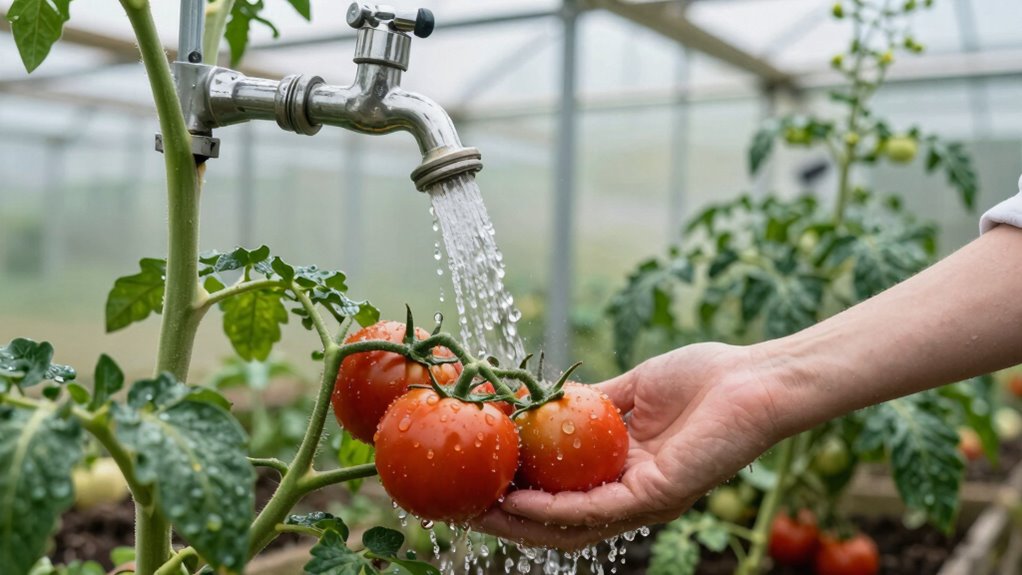
Maintaining proper watering practices is essential for keeping your tomatoes healthy, especially in low light conditions where growth can slow down. To prevent stress and sulking, water consistently, avoiding both over- and under-watering. Mulching helps retain moisture and stabilizes soil humidity. Planting tomatoes alongside companion plants like basil or marigolds can improve pest management, reducing the need for frequent watering by keeping pests at bay. These plants also promote healthier growth, helping tomatoes absorb nutrients more efficiently. Regular observation is key; look for signs of drought stress or excess moisture. Additionally, understanding the importance of soil health can lead to better watering practices and overall plant vitality. Proper watering techniques ensure that moisture levels are balanced, preventing issues like root rot or dehydration. Implementing soil testing can further optimize watering schedules based on specific soil conditions. Being attentive to plant response allows you to adjust your watering schedule promptly, preventing stress and promoting growth. This approach minimizes stress and encourages steady growth.
How to Use Soil Moisture Tools for Consistent Watering
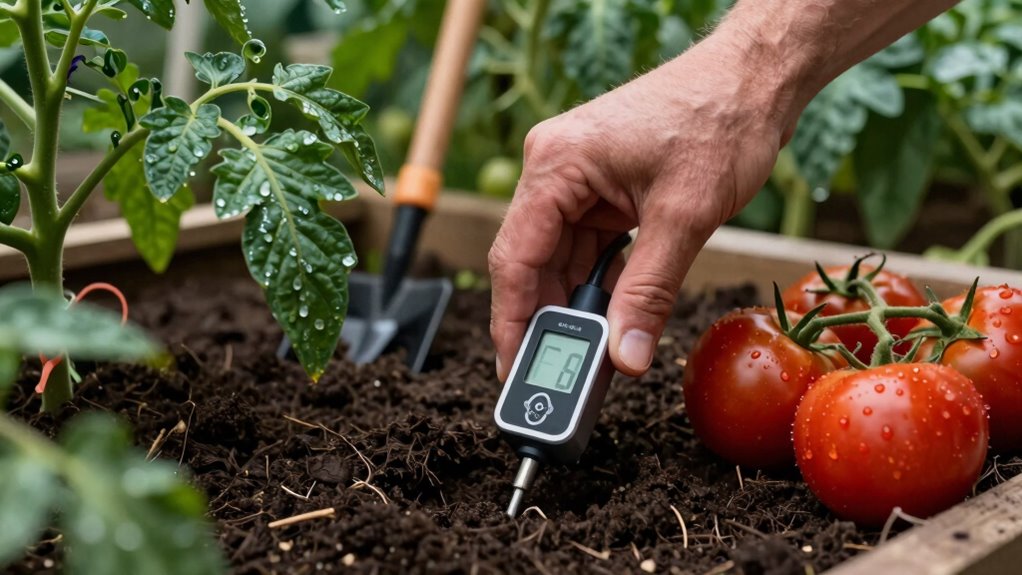
Using soil moisture tools can substantially improve your watering consistency, especially in low light conditions where your tomatoes are more prone to stress. Soil sensors help you monitor moisture levels accurately, enabling you to adjust your watering schedules effectively. By checking sensor readings regularly, you avoid over- or underwatering, which can cause stress or root problems. Here’s a simple guide:
| Moisture Level | Action | Ideal Range |
|---|---|---|
| Dry | Water deeply | 4-6 inches |
| Moist | Hold off watering | 6-8 inches |
| Wet | Let soil drain/dry out | 8+ inches |
| Suitable | Maintain consistent moisture | 4-6 inches |
Using these readings, you keep your tomatoes consistently hydrated, even in low light. Incorporating soil moisture monitoring into your gardening routine allows for more precise watering, reducing guesswork and promoting healthier plant growth. Additionally, understanding support breakfast options can inspire you to prepare nutritious meals that energize your gardening efforts. Proper watering not only benefits your plants but also minimizes the risk of issues like plant stress that can hamper growth.
Adjust Your Watering Based on Light Levels and Growth Stage
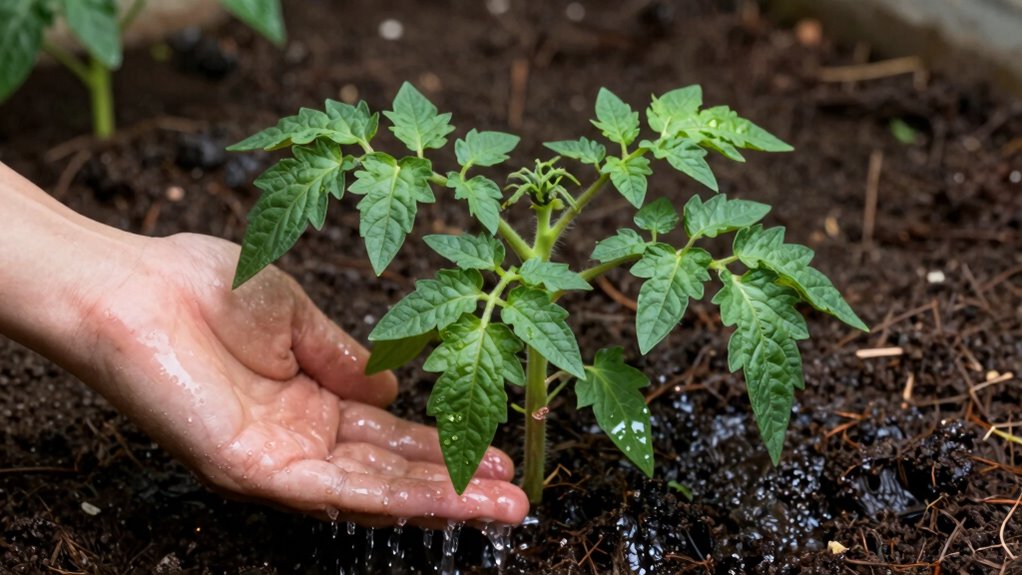
Since low light reduces your tomato plant’s water needs, you should adjust watering accordingly. During the vegetative stage, give the plants slightly less water to prevent overwatering and root problems. Keep a close eye on soil moisture levels to make certain your tomatoes stay healthy and productive. Proper watering practices are also essential for preventing issues like root rot, which can occur if moisture levels are not properly managed.
Light-Driven Water Needs
When tomato plants grow in low light conditions, their water needs change considerably. You should adjust your watering frequency to prevent overwatering, as low light reduces evaporation and plant transpiration. Check the soil moisture regularly; if the soil stays wet for too long, it can lead to root rot. Proper soil drainage is essential—ensure your pots or beds have good drainage to avoid waterlogged roots. In low light, your plants won’t use water as quickly, so watering too often can harm them. Instead, allow the top inch of soil to dry out between waterings. This helps keep the roots healthy and prevents issues caused by excess moisture, ultimately supporting steady growth despite the dim lighting.
Adjust During Vegetative Stage
During the vegetative stage, you should tailor your watering routine to reflect both the plant’s growth needs and the current light conditions. When light levels are low, water less frequently to prevent overwatering, which can lead to root issues. Consistent watering supports healthy foliage pruning and pest prevention by reducing stressed, vulnerable plants. Adjust your watering schedule based on foliage growth, ensuring the soil remains moist but not soggy. Use the following guide:
| Light Level | Watering Frequency | Tips |
|---|---|---|
| Low light | Every 4-5 days | Avoid overwatering, prune foliage regularly |
| Moderate | Every 3 days | Monitor for pests, maintain moisture |
| Bright light | Every 2-3 days | Support vigorous growth, prune as needed |
| Deep shade | Every 5-6 days | Focus on pest prevention, avoid overwatering |
| Consistent | Weekly | Maintain steady moisture levels |
Monitor Soil Moisture Regularly
Monitoring soil moisture regularly guarantees your watering remains appropriate for the plant’s current needs and light conditions. Using soil sensors helps you track moisture levels accurately, preventing over- or underwatering. In low light, tomatoes tend to need less water, so adjusting your watering schedule based on soil sensor data ensures you don’t water too frequently. Check the soil moisture at root level daily, especially during the vegetative and fruiting stages. Consistent monitoring allows you to spot dryness early and respond promptly, keeping the soil evenly moist but not soggy. This approach minimizes stress on your plants and discourages sulking. Remember, relying on sensors provides precise feedback, helping you tailor watering practices to maintain healthy growth despite limited sunlight.
Common Watering Mistakes That Make Tomatoes Sulk: and How to Avoid Them
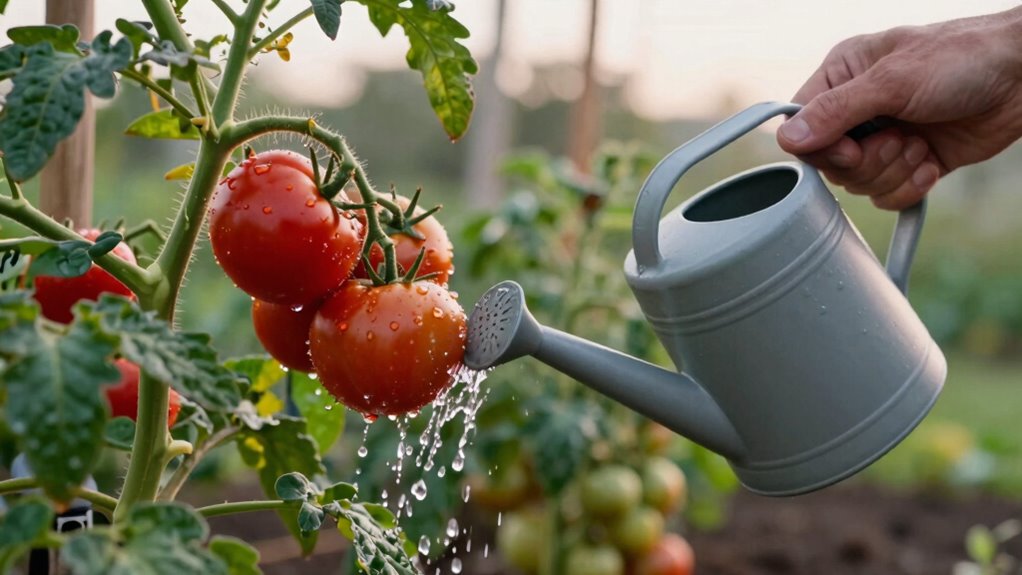
One common mistake that causes tomatoes to sulk is overwatering or underwatering them. Overwatering creates soggy soil, which can lead to root rot and promote fungal infections that weaken the plant. Underwatering, on the other hand, causes stress, making tomatoes droop and develop poor fruit. Both errors prevent proper nutrient uptake and weaken the plant’s health. To avoid these issues, water consistently, keeping the soil evenly moist but not waterlogged. Check soil moisture regularly, especially in low light, where evaporation is slower. Use well-draining soil and avoid shallow watering, which can encourage fungi. Proper watering helps prevent root rot and fungal infections, ensuring your tomatoes stay healthy, vibrant, and productive.
Extra Tips for Growing Happy Tomatoes in Limited Sunlight

Growing healthy tomatoes in limited sunlight requires strategic placement and mindful care. To maximize growth, focus on pruning techniques that promote airflow and reduce disease risk. Remove suckers and excess foliage regularly to direct energy toward fruit production. This also helps prevent legginess caused by low light. Additionally, adhere to a consistent fertilizer schedule tailored for tomatoes; using a balanced, slow-release fertilizer every few weeks ensures they receive essential nutrients despite limited sun. Consider supplementing with compost or organic matter to boost soil fertility. Keep your plants well-watered but avoid overwatering, which can cause stress. By combining proper pruning with a steady fertilizer routine, you’ll give your tomatoes the best chance to thrive, even in shaded conditions, and produce a healthy, fruitful harvest.
Frequently Asked Questions
Can Overwatering Cause Tomatoes to Sulk in Low Light?
Yes, overwatering can cause tomatoes to sulk in low light. When you water too often, soil moisture stays too high, leading to root rot and stress. Keep an eye on watering frequency and let the soil dry slightly between waterings. Proper soil moisture helps your tomatoes stay healthy and prevents them from sulking, especially in low light conditions where they’re more sensitive to overhydration.
What Are Signs of Underwatered Tomatoes in Shaded Areas?
Think of your shaded tomato plants like a tired athlete; they show signs of stress when underwatered. You might notice wilting, yellowing leaves, or fruit that’s smaller and less ripe. These are clear signals of tomato stress caused by insufficient water. In shaded growth, it’s easy to overlook hydration needs, so keep a close eye—your plants will thank you with healthier, tastier tomatoes.
How Often Should I Water Tomatoes During Cloudy Days?
During cloudy days, you should water your tomatoes every 2 to 3 days, adjusting based on soil moisture. Keep a close eye on the soil to guarantee it doesn’t dry out or become overly soggy. Use your finger or a moisture meter to check soil moisture regularly, and water when the top inch feels dry. Consistent watering helps prevent stress and keeps your tomatoes healthy, even in low light conditions.
Do Different Tomato Varieties Require Different Watering in Low Light?
Think of your tomato varieties as different dancers needing unique steps. Some thrive with slightly less water, while others crave consistent moisture. You should perform soil moisture testing regularly to understand their needs, especially after pruning, which can change how they absorb water. Adjust your watering schedule accordingly to keep each variety healthy, ensuring they don’t sulk or overwater in low light.
Is It Better to Water in the Morning or Evening in Shaded Conditions?
You should water in the morning under shaded conditions because it aligns with timing preferences and promotes consistent watering. Morning watering helps the soil absorb moisture throughout the day, reducing the risk of fungal issues and keeping your tomatoes healthy. Evening watering can leave moisture on leaves overnight, increasing disease risk. Stick to a routine, and you’ll support steady growth and prevent your plants from sulking.
Conclusion
Keep your tomatoes happy in low light by watering consistently and paying close attention to their needs. Think of your plants as a delicate dance partner—if you don’t move in sync, they’ll sulk. Use moisture tools, adjust your watering based on their growth stage, and avoid common mistakes. With patience and care, your tomatoes will thrive even in the shadows, proving that with the right rhythm, they can shine bright no matter how little sun they get.