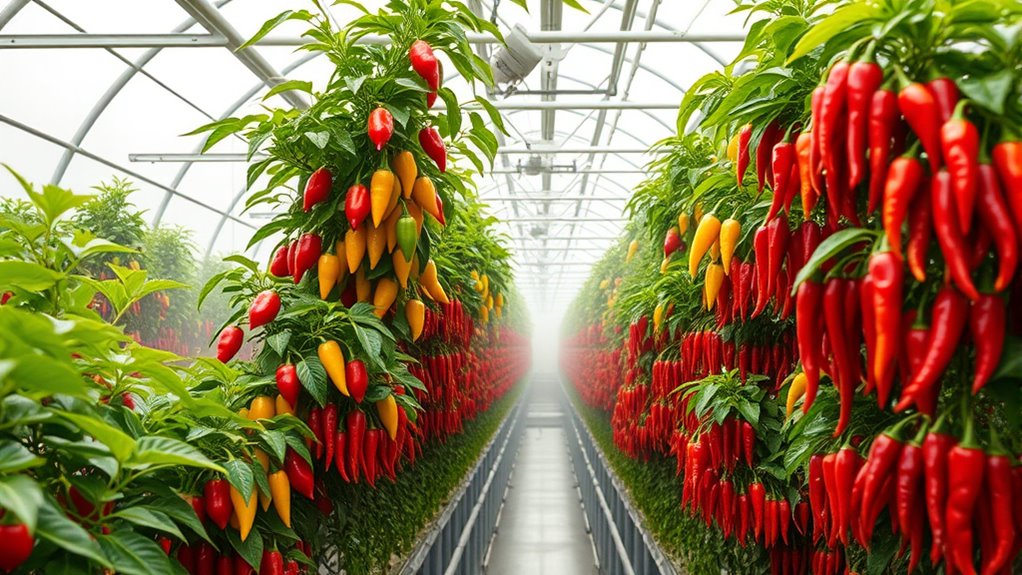

Growing peppers and chilies in greenhouses allows you to control environmental conditions like temperature, humidity, and light, leading to higher yields and better quality all year round. It also helps improve soil health through regular testing and organic amendments, while reducing pests with integrated strategies such as beneficial insects and physical barriers. Maintaining cleanliness and proper ventilation prevents diseases. Keep exploring for insights on optimizing your greenhouse setup and crop management for top results.
Key Takeaways
- Greenhouses offer controlled environments that optimize temperature, humidity, and light for consistent pepper and chili growth year-round.
- Regular soil testing and organic amendments enhance soil health, promoting vigorous root development and higher yields.
- Integrated pest management, including beneficial insects and physical barriers, effectively reduces pest and disease issues.
- Proper ventilation, sanitation, and environmental monitoring prevent fungal infections and pest infestations.
- Sustainable practices like crop rotation and organic fertilization improve soil vitality and crop quality over time.
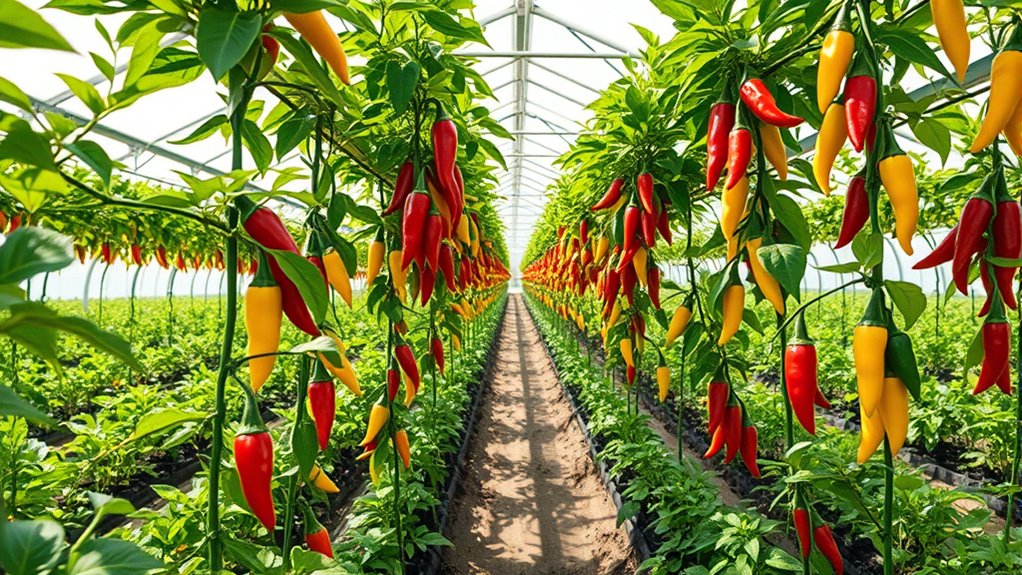
Growing peppers and chilies in greenhouses offers a controlled environment that boosts yield and quality year-round. When you cultivate in this way, you gain the advantage of enhancing soil health, which is essential for healthy plant growth. Maintaining soil fertility involves regular testing and amending the soil with organic matter or specific nutrients to guarantee your plants receive what they need. Healthy soil promotes vigorous root development, improves nutrient uptake, and reduces the likelihood of diseases. By monitoring soil conditions closely, you prevent issues like compaction or nutrient deficiencies that could stunt growth or lower your harvest.
Enhancing soil health is key to thriving greenhouse peppers and chilies.
In addition to nourishing your soil, pest control becomes more manageable within a greenhouse setting. You can implement integrated pest management strategies effectively because the controlled environment limits pest access and spread. Regular inspections allow you to catch infestations early before they escalate, reducing the need for chemical interventions. Introducing beneficial insects, such as ladybugs or predatory mites, can naturally keep pest populations in check. Also, physical barriers like insect screens and proper sanitation practices help prevent pest entry and reduce their habitat. Since the greenhouse environment is less exposed to external pests, you can focus your efforts on targeted control methods, which results in healthier plants and higher-quality peppers and chilies.
Furthermore, maintaining soil health and pest control in a greenhouse involves a proactive approach. Crop rotation and the use of disease-resistant varieties help break pest and disease cycles, keeping your plants healthy over multiple growing seasons. Adding organic amendments, such as compost or bio-fertilizers, boosts soil microbial activity, which naturally suppresses harmful pathogens and enhances nutrient availability. This not only improves plant resilience but also reduces the need for chemical treatments, making your crop more sustainable and eco-friendly. Understanding AI bifurcation and its implications can also help growers adopt smarter, data-driven pest and soil management practices, leading to more resilient cropping systems.
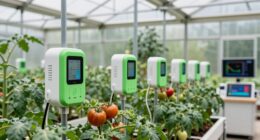
Effective pest management also includes keeping the greenhouse environment clean and free of debris, which can harbor pests and diseases. Proper ventilation and humidity control decrease conditions conducive to fungal infections and pests. As you monitor and adjust these factors, you’ll notice a healthier, more productive crop with fewer interruptions. The combination of maintaining soil health and implementing pest control strategies creates an ideal environment for your peppers and chilies to thrive throughout the year. By staying vigilant and attentive to these key aspects, you’ll maximize your greenhouse’s potential for consistent, high-quality harvests, regardless of the season outside.
Frequently Asked Questions
What Are the Most Common Pests Affecting Greenhouse Peppers and Chilies?
You’ll often encounter pests like aphids, whiteflies, and spider mites affecting your greenhouse peppers and chilies. Pest identification helps you spot these pests early, so you can act quickly. To manage them, consider natural pest control methods like introducing beneficial insects or using organic sprays. Regular monitoring and maintaining healthy plants keep these pests at bay, ensuring your peppers and chilies thrive in a pest-free environment.
How Can I Improve Pollination in a Greenhouse Environment?
To improve pollination in your greenhouse, you can use hand pollination techniques by gently shaking or tapping the flowers to transfer pollen. Additionally, introduce pollinators like bees or use attractants such as flowering plants to encourage natural pollination. Regularly monitor flower health, and guarantee proper environmental conditions like humidity and temperature, which help maximize pollination success and boost fruit development.
What Are the Best Practices for Managing Humidity Levels?
To manage humidity levels effectively, you should focus on humidity control and moisture regulation by using dehumidifiers or ventilation systems to prevent excessive moisture buildup. Maintain ideal humidity ranges—around 60-70%—to reduce disease risk and promote healthy growth. Regularly monitor with hygrometers, and adjust ventilation or misting accordingly. Proper humidity management ensures your plants thrive, reduces stress, and yields better peppers and chilies in your greenhouse.
How Do I Prevent Diseases in Greenhouse-Grown Peppers and Chilies?
To prevent diseases in your greenhouse peppers and chilies, you should practice soil sterilization regularly to eliminate pathogens. Additionally, implementing crop rotation disrupts disease cycles and maintains soil health. Keep your greenhouse clean by removing plant debris and monitoring for early signs of infection. Proper watering and ventilation also help reduce humidity-related issues. These steps work together to keep your plants healthy and disease-free.
What Are the Optimal Harvesting Times for Greenhouse Peppers and Chilies?
You should harvest your peppers and chilies during their ideal ripening window, which varies by variety but generally occurs when they reach full color and firmness. Ripeness indicators include color change, glossy appearance, and size. Waiting too long can lead to overripe fruit and reduced quality, while harvesting too early means less flavor and heat. Regularly check your peppers and chilies to pick at peak ripeness for the best flavor and harvest yield.
Conclusion
Growing peppers and chilies in greenhouses is like tending a fiery garden of dreams. With each careful step, you nurture vibrant bursts of color and spice, transforming a simple space into a flavorful symphony. Your hands craft a garden alive with passion and patience, where warmth and care blossom into fiery treasures. Embrace this journey, and watch your greenhouse become a heartwarming, spicy haven—where every harvest is a fiery melody waiting to be savored.