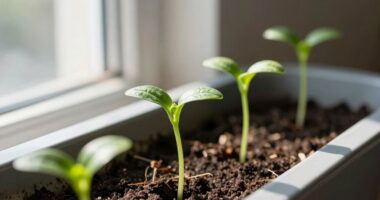
To prevent transplant shock, you should prepare your plants and site beforehand by evaluating soil, clearing debris, and watering plants the day before. During the first 24 hours after transplanting, gently water to stabilize roots, shield plants from harsh conditions, and avoid damaging roots. Avoid common mistakes like soil compaction or overwatering. Consistent care, monitoring, and proper long-term practices help your plants thrive. Continue with expert tips to keep your new plants healthy and vigorous.
Key Takeaways
- Gently water the root zone immediately after transplanting to stabilize soil and prevent air pockets.
- Shield plants from harsh sun and wind during the first 24 hours for environmental stability.
- Ensure proper soil contact and lightly firm soil around roots to promote root establishment.
- Handle roots carefully to minimize damage and avoid excessive root disturbance.
- Conduct regular checks twice daily to monitor plant response and address stress signs promptly.

Miracle-Gro Quick Start Planting & Transplant Starting Solution, 48 fl. oz.
- Supports Root Development: Enhances root growth for faster blooms
- Nutrient-Rich Formula: Provides essential nutrients for new plants
- Versatile Use: Suitable for seedlings, flowers, vegetables, and trees
As an affiliate, we earn on qualifying purchases.
As an affiliate, we earn on qualifying purchases.
Why Is Transplant Shock a Major Risk for New Plants

Transplant shock is a major risk for new plants because their root systems are often disturbed or damaged during the transplanting process. When roots are compromised, the plant struggles to absorb water and nutrients, making it vulnerable to stress. Proper soil aeration is vital during planting, as compacted soil can restrict root growth and oxygen flow, worsening shock. Without adequate aeration, roots may suffocate, delaying recovery. Additionally, transplanting leaves plants exposed to pests, which can further weaken the plant’s defenses. Pest prevention becomes essential immediately after transplanting to protect vulnerable new growth. By ensuring good soil aeration and preventing pests, you help your plant establish faster, reducing the severity of transplant shock and promoting healthier, more resilient growth. Maintaining optimal soil conditions is crucial to minimize soil compaction and support healthy root development.
How to Prepare Your Plants and Site Before Transplanting
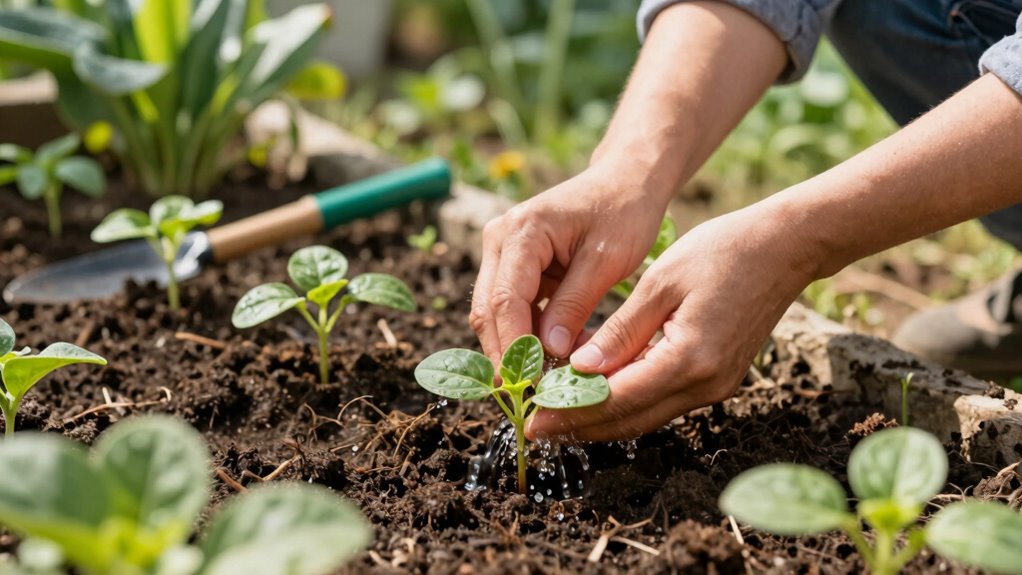
Preparing your plants and site beforehand can considerably reduce transplant shock. Begin with a thorough site evaluation to identify soil quality, drainage, and sunlight exposure. Proper soil preparation is essential; loosen the soil and mix in compost or organic matter to improve fertility and drainage. Make sure the planting area is free of weeds and debris, providing a healthy environment for your new plants. Water the plants well a day before transplanting to reduce stress and improve root health. Gently dig around the plant’s root zone, keeping roots intact, and handle the plant carefully to minimize damage. Additionally, incorporating sustainable practices into your gardening routine can promote healthier plant growth and contribute to environmental conservation. By evaluating your site and preparing the soil properly, you set a strong foundation for your plants’ transition, helping them adapt quickly and reducing shock.
The 24-Hour Routine to Reduce Transplant Shock
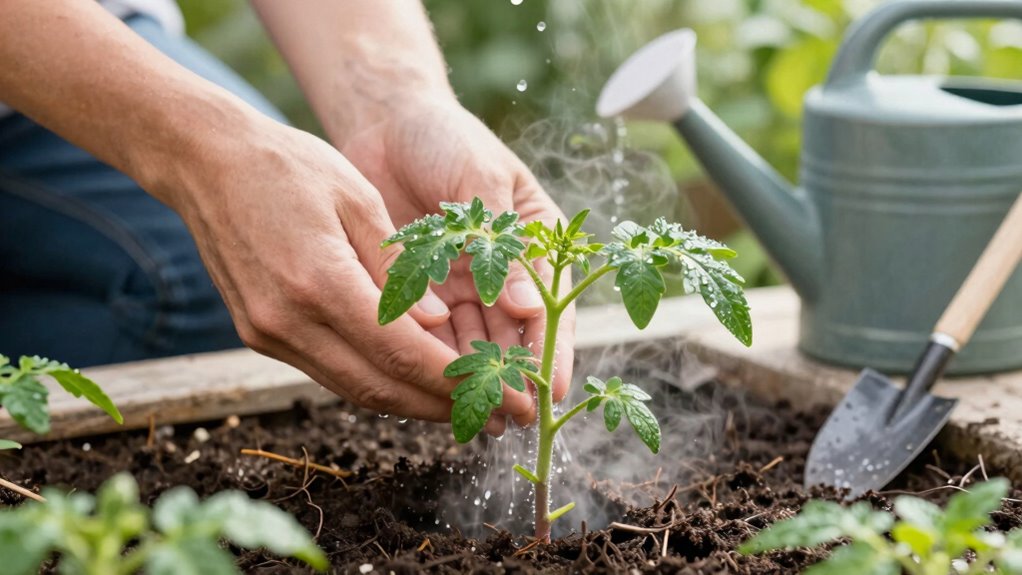
The first 24 hours after transplanting are critical for minimizing shock and helping your plants settle in. During this time, focus on facilitating plant acclimation and root stabilization. To do this effectively, you should: 1. Gently water around the root zone to keep the soil moist, aiding root stabilization. 2. Shield your plants from harsh sun or wind, creating a stable environment for plant acclimation. 3. Check soil contact and firm the soil lightly around the roots, ensuring good root-to-soil contact and preventing air pockets. Additionally, maintaining proper water chemistry helps prevent stress and promotes healthy root development. These steps help your plants adjust quickly, promoting root stabilization and reducing transplant shock. By maintaining a stable environment in this essential period, you set the stage for healthy growth and successful adaptation.
Easy Actions to Support Your Plants in the First Day

On the first day after transplanting, make sure to water your plants deeply and regularly to help their roots settle. Handle the roots gently to avoid unnecessary damage and disturbance. These simple steps give your plants a strong start and reduce transplant shock. Additionally, maintaining proper soil moisture levels during this crucial period can greatly enhance root establishment and overall plant health.
Water Deeply and Consistently
Have you ever wondered why some transplanted plants struggle to thrive immediately after planting? The key is consistent, deep watering. When you water thoroughly, you encourage roots to grow outward, reducing transplant shock. Imagine this:
- You pour water until it seeps evenly around the root zone, reaching soil amendments that improve drainage and nutrients.
- Roots receive enough moisture to avoid drying out, especially after root pruning, which temporarily weakens them.
- The soil stays consistently moist, preventing air pockets that can hinder root growth.
Minimize Root Disturbance
Minimizing root disturbance right after planting helps your transplants settle in faster and reduces stress. Handle the roots gently and avoid excessive root pruning, which can weaken the plant. Instead, focus on proper soil aeration around the roots to improve oxygen flow and promote healthy growth. Be careful during planting to keep roots intact and avoid circling or broken roots. Use the following table to guide your actions:
| Action | Benefit |
|---|---|
| Gentle Root Handling | Prevents root damage and shock |
| Soil Aeration | Encourages healthy root development |
| Minimal Root Pruning | Maintains root integrity and strength |
Additionally, maintaining optimal soil conditions around the roots can significantly influence transplant success.
Common Transplanting Mistakes and How to Avoid Them
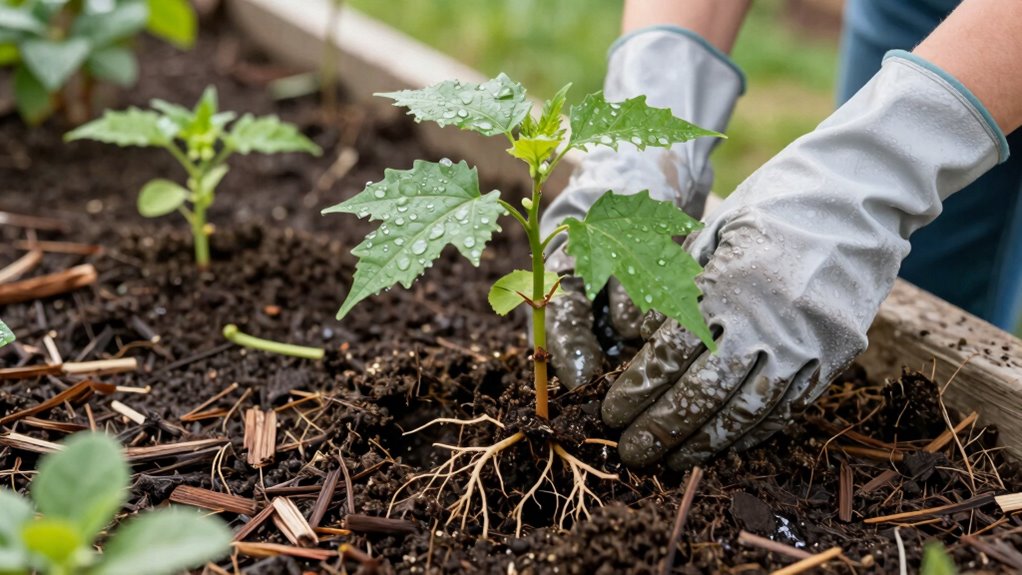
When transplanting plants, it’s easy to make mistakes that can set them back or even cause failure. Common errors include damaging roots, causing soil compaction, and improper watering. To avoid these pitfalls:
- Don’t yank or twist the plant, as root disturbance can hinder recovery. Use gentle, steady movements.
- Avoid pressing the soil too hard around the roots, which leads to soil compaction and restricts growth.
- Water thoroughly after transplanting to settle the soil and reduce air pockets.
Long-Term Tips for Healthy Transplants
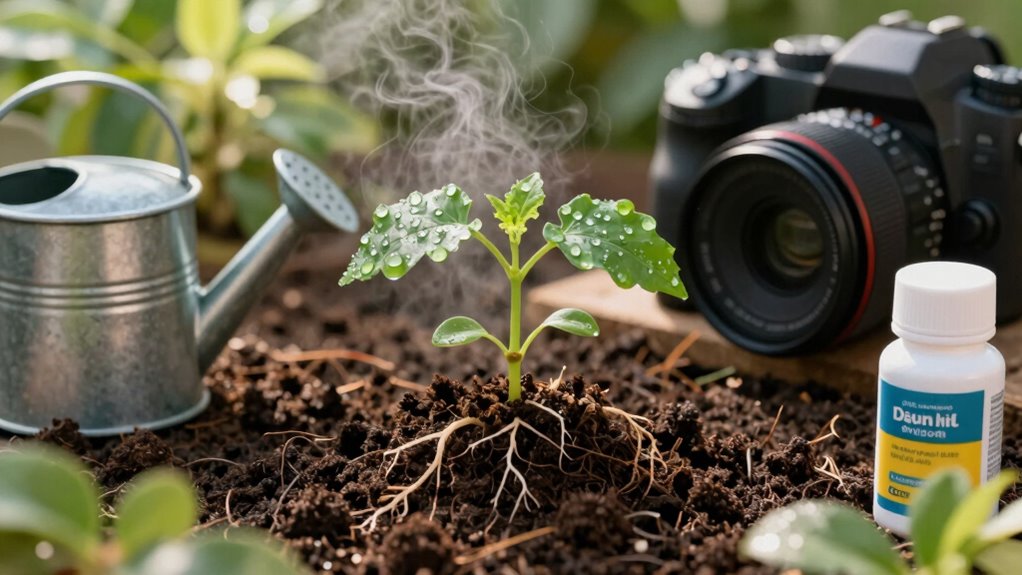
To keep your transplant healthy over the long term, focus on proper watering techniques to prevent stress and root issues. You should also follow effective nutrient management strategies to support growth and resilience. Paying attention to these points helps make certain your transplant stays strong and vibrant for years to come. Regular monitoring and adjusting care based on plant needs can further promote thriving, pest-free growth. Additionally, understanding simple gardening tips can help you create a more resilient and healthy garden environment.
Proper Watering Techniques
Proper watering is essential for helping your transplants establish strong roots and avoid transplant shock. To do this effectively, focus on consistent watering to keep the soil evenly moist. Think of it this way:
- Imagine your plant’s roots reaching deep into the soil, searching for moisture.
- Picture a layer of mulch benefits, helping retain soil moisture and regulate temperature.
- Visualize watering just enough to dampen the soil without waterlogging, promoting healthy root growth.
- Remember that understanding soil moisture retention helps you adjust watering practices for optimal plant health.
Adjust your watering frequency based on weather conditions—more often during hot spells, less during cooler periods. Mulching benefits your transplants by reducing evaporation, so you won’t need to water as frequently. Consistent, proper watering creates a stable environment, giving your plants the best chance to thrive.
Nutrient Management Strategies
Establishing a solid nutrient plan is essential for ensuring your transplants grow into healthy, vigorous plants. Start with appropriate fertilizer application tailored to your plant type, providing necessary nutrients without overdoing it. Incorporate soil amendments like compost or organic matter to improve soil structure and nutrient availability. Regularly assess your soil’s nutrient levels, adjusting your fertilization schedule as needed. Use slow-release fertilizers for sustained nourishment, and avoid excessive applications that could cause root damage. Incorporate organic amendments to enhance soil microbiome health, which supports better nutrient uptake. Additionally, choosing sulfate-free options can help minimize nutrient leaching and preserve soil quality. Keep an eye on plant responses, and modify your nutrient management strategies accordingly. Consistent, well-planned nutrient management helps your transplants develop strong roots and resilient growth, setting the stage for long-term health.
When and How to Check on Your Plants After Transplanting

After transplanting your plants, it’s crucial to check on them regularly to make certain they’re settling in well. During your visits, focus on three key areas:
After transplanting, check your plants regularly to ensure healthy settling and growth.
- Observe for signs of stress, like drooping or yellowing leaves, which may indicate watering issues or shock.
- Perform plant pruning to remove damaged or dead foliage, encouraging healthy growth.
- Conduct pest monitoring by inspecting leaves and stems for insects or webs, catching problems early.
- Use high-quality Suprem fabric in gardening supplies or plant covers when necessary to help regulate moisture and protect your new plants.
Checking twice daily during the first 24 hours ensures your plants aren’t struggling silently. Adjust watering if needed and keep an eye out for pests. Consistent, gentle care helps your new plants adapt and thrive, reducing transplant shock effectively.
Frequently Asked Questions
What Are Signs That My Plant Is Experiencing Transplant Shock?
You’ll notice signs of transplant shock when your plant’s leaves start wilting or its color begins fading. These symptoms indicate it’s struggling to adjust to its new environment. You may also see slowed growth or yellowing leaves. If you catch these signs early, you can act quickly by providing proper watering and avoiding direct sunlight, helping your plant recover and thrive after transplantation.
How Often Should I Water My Plant Immediately After Transplanting?
Like a careful artist tending their canvas, you should water your plant lightly but frequently immediately after transplanting. Check soil moisture daily, ensuring it stays consistently moist but not waterlogged. In the first 24 hours, water every few hours if needed, then gradually reduce frequency. This gentle watering helps the plant establish roots and minimizes transplant shock, giving it a strong start in its new environment.
Can I Fertilize My Plant During the First 24 Hours Post-Transplant?
You shouldn’t fertilize your plant within the first 24 hours after transplanting. Fertilizer application at this stage can stress the plant and interfere with soil nutrients absorption. Instead, focus on gentle watering to help it settle in. Wait at least a week before applying a balanced fertilizer, giving your plant time to recover. This approach encourages healthy root development and guarantees it adapts smoothly to its new environment.
What Indoor Conditions Help Reduce Transplant Shock?
Think of your plant as a delicate dance partner; keeping humidity control and temperature stability is key. You help reduce transplant shock by maintaining consistent conditions, avoiding cold drafts or sudden temperature swings. Use a humidifier if the air’s dry, and keep the room’s temperature steady, ideally around 65-75°F. This creates a cozy environment, allowing your plant to settle in gently, much like a well-rehearsed performance.
How Do Different Plant Species Respond to Transplanting Routines?
Different plant species respond uniquely to transplanting routines because of species variability and root sensitivity. Some plants tolerate root disturbance well, recovering quickly, while others need gentler handling and extra care. You should research each species’ specific needs, adjusting your routine accordingly. By understanding these differences, you can minimize stress, promote healthy growth, and guarantee successful transplantation for a wide range of plants.
Conclusion
By following this 24-hour routine, you give your new plants their best shot at thriving—transforming what could be a heartbreaking loss into a stunning, flourishing masterpiece. Don’t underestimate the power of these simple actions; they can turn your garden into a vibrant paradise that feels almost magical. With your careful attention, you’ll witness your plants bounce back stronger than ever, proving that even the tiniest effort can create a garden legend.