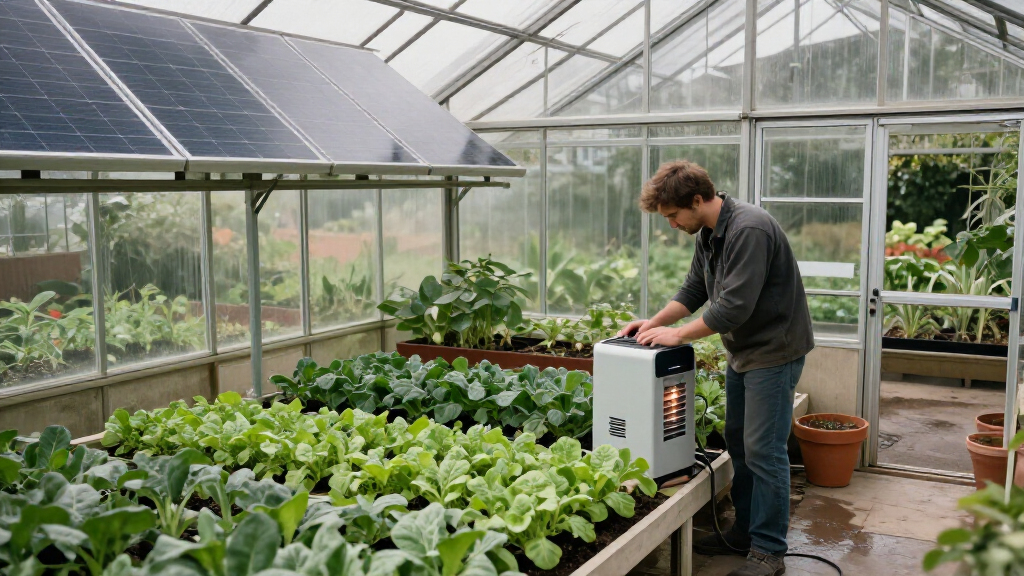
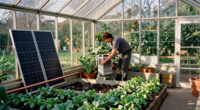
A solar powered greenhouse heater can mean two different things: a collector that warms air and sends it into the growing space, or a solar thermal collector that heats water stored in a tank or pipes. The real choice is whether you want a relatively simple way to use daytime sun or a system that can bank some heat for the evening. Solar air heaters are generally the lower cost, easier to install option, but their output drops when sunlight fades. Solar thermal systems can smooth temperature swings when sized and designed well, yet add plumbing, storage, controls, and expense. Choose based on your climate, night temperatures, growing season, and willingness to maintain equipment—not the word “solar” alone.

Get garden gear delivered free with Prime
- Fast, free delivery on millions of items
- Prime Video, Amazon Music and more included
- Member-only deals all year

Tixorelin 30W Solar Panel Heater Kit
- ✔ Solar panel: 30W monocrystalline silicon
- ✔ Power source: Solar panel with included battery box
- ✔ Heater type: Compact solar fan heater

TRUSTECH 1500W Greenhouse Heater with Digital Thermostat
- ✔ Heating output: 1500W
- ✔ Heating modes: 750W, 1500W, and fan only
- ✔ Coverage: Up to 160 sq. ft.

lesotc Smart Greenhouse Heater with Wi-Fi Thermostat, 1500W
- ✔ Power: 1500W
- ✔ Coverage: Up to 150 sq. ft.
- ✔ Temperature range: 41°F–113°F
At a Glance
| Criteria | Solar air heaters | Solar thermal water heaters | Winner |
|---|---|---|---|
| Upfront cost | Usually lower; can be a small collector or fan-assisted panel | Usually higher because it needs collectors, plumbing, storage, and controls | A |
| Installation | Relatively simple; air ducting or a fan may be needed | More involved; requires water loops, a tank, circulation, and freeze protection | A |
| Heat after sunset | Little or none unless paired with thermal mass or backup | Can release stored heat later, depending on tank size and system design | B |
| Cold-weather performance | Useful on sunny winter days, but output falls with weak sun | Can buffer temperature swings, but cannot create energy without adequate collection and storage | Depends |
| Maintenance | Low; check fans, vents, and collector surfaces | More components to inspect, including pumps, seals, fluid, and controls | A |
| Best scale | Small to medium hobby greenhouses | Larger or carefully managed growing spaces | Depends |
| Value | Strong for daytime heating and shoulder seasons | Worth the premium when stored heat meets a real overnight need | Depends |
Tixorelin 30W Solar Panel Heater Kit
The Tixorelin kit is the most direct fit for this roundup: it pairs a 30W monocrystalline solar panel with a battery box and a compact fan heater. That setup makes it relevant where running an AC cord is difficult, such as a small greenhouse, shed, or sheltered plant area. Compared with lesotc and TRUSTECH, it is the only listed model designed around solar input, so it earns the top position for buyers prioritizing that power source.Its role is narrower than the phrase “greenhouse heater” might suggest. The listing describes targeted warmth in small spaces and does not specify heat output, thermostat control, battery capacity, or operating time. We therefore would not treat it as a substitute for a high-output heater protecting a sizable greenhouse through a cold night. Solar availability also varies with weather and season, which directly affects charging and operation. Overheat protection is a useful safety feature, but the plastic construction and sparse performance details leave more unanswered questions than the electric alternatives. Choose it when portability and solar operation matter more than broad, precisely controlled heating.
Pros:
- Includes a 30W monocrystalline solar panel and battery box
- Compact kit is portable and easy to store
- Designed for targeted warmth in small spaces
- Overheat protection is included
Cons:
- Heating depends on available solar power
- The listing does not state battery capacity or runtime
- No thermostat or greenhouse coverage figure is provided
Best for: Growers seeking a portable solar-powered fan heater for a small greenhouse corner, plant shelter, or similar compact space.
Not ideal for: Anyone who needs stated high-wattage output, thermostat-based temperature maintenance, or dependable overnight heating across a large greenhouse.
Bottom line: Choose Tixorelin when solar operation and portability are the priority, while keeping expectations to targeted warmth in a small area.
“Choose Tixorelin when solar operation and portability are the priority, while keeping expectations to targeted warmth in a small area.”
TRUSTECH 1500W Greenhouse Heater with Digital Thermostat
For growers with a nearby outlet who need a more clearly specified heating range, TRUSTECH is the strongest electric alternative in this lineup. Its 750W and 1500W settings let us choose a lower or higher heat level, while fan-only mode can circulate air without selecting a heat setting. The digital thermostat works with a waterproof sensor probe, a useful combination for monitoring conditions where humidity is part of greenhouse life. TRUSTECH lists coverage up to 160 sq. ft., slightly more than lesotc’s stated 150 sq. ft.That extra listed coverage and its selectable heat levels make it more adaptable than lesotc for someone managing temperature at the heater itself. In return, it gives up lesotc’s specified app access and remote alerts. It also does not meet the solar brief: the listing specifies a 120V electric supply, so using it off-grid would require a separate compatible power system not included here. Its 7.5-foot cord can constrain placement, and actual performance will depend on insulation, outside temperatures, and greenhouse leaks. The tilt adjustment, handle, and non-slip base help with positioning, but they do not remove the need to plan outlet access and safe placement.
Pros:
- Two heat levels: 750W and 1500W
- Digital thermostat includes a waterproof sensor probe
- Fan-only mode and 90° adjustable tilt offer flexible use
- Portable design includes a handle and non-slip base
Cons:
- Requires a 120V AC power source and is not solar powered as listed
- The 7.5-foot cord may limit placement
- Coverage is listed up to 160 sq. ft.; real results depend on greenhouse conditions
Best for: Greenhouse owners with AC power who want selectable heat levels, a digital thermostat, and a sensor probe for temperature monitoring.
Not ideal for: Buyers who require an included solar power system, remote app alerts, or operation far from an outlet.
Bottom line: Pick TRUSTECH for adjustable, outlet-powered heating and probe-based temperature monitoring when solar operation is not essential.
“Pick TRUSTECH for adjustable, outlet-powered heating and probe-based temperature monitoring when solar operation is not essential.”
lesotc Smart Greenhouse Heater with Wi-Fi Thermostat, 1500W
lesotc stands out for the way it manages heat rather than for its power source. Its Wi-Fi app controls and temperature alerts let growers adjust settings and receive notifications remotely, which can be useful when a greenhouse is away from the house or work area. The thermostat range runs from 41°F to 113°F, and a 24-hour timer supports scheduled operation. Like TRUSTECH, this is a 1500W AC heater; it is listed for spaces up to 150 sq. ft. and is not solar powered as supplied.Compared with TRUSTECH, lesotc trades a second heat level and waterproof probe for remote access, alerts, and 70° oscillation. Oscillating airflow and a fan mode may help move air around a compact space, while tip-over shutoff, overheat protection, power-failure protection, and an IPX4 rating address practical operating concerns. Those features do not make the heater suitable for every damp location; placement and electrical safety still matter. Its coverage is slightly below TRUSTECH’s stated maximum, and reliance on an AC outlet rules it out for a strictly solar-powered setup. We would choose it when monitoring and adjusting conditions remotely matters more than solar independence or variable heat output.
Pros:
- App supports remote temperature adjustment and alerts
- 24-hour timer and adjustable thermostat support scheduled heating
- 70° oscillation and fan mode help circulate air
- IPX4 housing plus tip-over, overheat, and power-failure protection
Cons:
- Requires AC power and is not solar powered as listed
- Coverage is limited to spaces up to 150 sq. ft.
- Only one 1500W heating output is specified
Best for: Growers with an AC outlet who want app-based temperature adjustments, alerts, scheduling, and oscillating airflow in a compact greenhouse.
Not ideal for: Buyers seeking an included solar panel, multiple wattage settings, or a listed coverage area above 150 sq. ft.
Bottom line: Choose lesotc when remote monitoring and alerts are more useful than solar power or selectable heat levels.
“Choose lesotc when remote monitoring and alerts are more useful than solar power or selectable heat levels.”
As an Amazon Associate we earn from qualifying purchases.
Key Differences
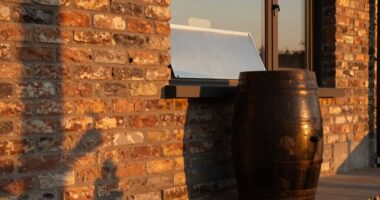
The central difference is timing. A solar air heater delivers heat while its collector receives useful sunlight. That makes it straightforward and relatively inexpensive, but it does not solve a cold night by itself. Insulation, sealed gaps, thermal mass such as water barrels, and a separate backup heater may still be needed. A water based system moves some collected energy into storage, allowing heat to be released after sunset. That benefit is real only when the collector, storage capacity, circulation, and greenhouse heat loss are matched to the job.
For most small greenhouse owners seeking daytime warmth or a longer shoulder season, solar air heating is the practical starting point. It costs less and has fewer parts to troubleshoot. Solar thermal becomes more compelling when nighttime temperature stability matters, the greenhouse is large enough to justify the equipment, and the owner can manage installation and freeze protection. Neither type guarantees frost protection through cloudy cold spells; both depend on available sun and sound greenhouse design. A backup heat source may be necessary for valuable plants or severe winters.
Detailed Comparison
Upfront cost (Solar air heaters wins — moderate)
Solar air heaters usually win by a moderate margin because a basic collector has fewer parts and may need only a fan or duct. Solar thermal adds collectors, pipes, a tank, circulation equipment, and controls. That price premium buys the potential to store heat, so it makes sense only if evening warmth is useful enough to justify the added system.
Installation (Solar air heaters wins — major)
Solar air heaters are generally easier to fit to a small structure: mount the collector, provide an air path, and wire a fan if required. Water systems need a safe plumbing layout, circulation, sensors or controls, and protection against freezing. The installation gap is major for a do-it-yourself owner with a small greenhouse; professional help can reduce the burden but raises cost.
Heat after sunset (Solar thermal water heaters wins — moderate)
Solar thermal wins when designed with enough storage, since heated water can release energy after collection stops. The advantage is moderate rather than automatic: a small tank or poorly insulated pipes may store too little to matter. A solar air heater has no meaningful heat reserve on its own, though water barrels or other thermal mass can help either setup buffer temperature changes.
Cold-weather performance (major difference)
This is a close call. Air collectors can contribute heat on bright winter days, while stored water can soften the temperature drop into evening. Neither system performs well without adequate sunlight, and cold weather increases greenhouse heat loss. Solar thermal may have the edge where sunny days are followed by cold nights, but only with suitable storage and freeze protection; cloudy, freezing stretches may require backup heat.
Maintenance (Solar air heaters wins — moderate)
Solar air heating wins by a minor to moderate margin. Its main upkeep is keeping the collector clear and checking any fan, vent, or duct. Solar thermal has more failure and inspection points, including pumps, valves, seals, fluid, and controls. Owners who are comfortable maintaining plumbing may find this manageable; those who want a simple seasonal system should favor air.
Suitable greenhouse size (moderate difference)
Neither type wins across every size. Air collectors are a natural fit for small and medium hobby greenhouses because the equipment can stay simple. A larger growing space may justify thermal storage and a more planned distribution loop, but capacity must be calculated against heat loss. For a very small greenhouse, an elaborate water system can cost more than the warmth it provides.
Overall value (major difference)
Solar air heaters offer better value for daytime use, mild climates, and extending the season at low cost. Solar thermal earns its higher price when the owner needs heat after sunset and has enough sunny collection time to charge storage. Paying more for storage is worthwhile only if it reduces a meaningful temperature problem; it is poor value if the greenhouse still needs substantial backup heating every night.
Solar air heaters: Pros and Cons
Pros:
- Lower initial cost and simpler equipment
- Well suited to daytime heating and shoulder seasons
- Fewer components to maintain
Cons:
- Heat output follows sunlight closely
- Does not provide dependable overnight warmth alone
- Fans and air paths may distribute heat unevenly
Solar thermal water heaters: Pros and Cons
Pros:
- Can store collected heat for release after sunset
- May reduce sharp temperature swings when properly sized
- Can suit larger or more closely managed growing spaces
Cons:
- Higher cost and more involved installation
- Requires plumbing, circulation, and freeze protection
- Storage and controls add maintenance; cloudy spells still limit heat
Who Should Choose What
Choose Solar air heaters if:
- You have a small greenhouse and mainly want warmer daytime conditions.
- You want the least expensive solar option and can use thermal mass or backup heat at night.
- You prefer a simpler installation with fewer parts to maintain.
Choose Solar thermal water heaters if:
- Your greenhouse loses too much warmth after sunset and you have sunny days to charge storage.
- Temperature stability matters for the plants you grow, and the system can be properly sized.
- You can handle plumbing, controls, freeze protection, and the higher initial cost.
Skip both if: Skip both as your only heat source if your site has long cloudy winters, severe frost, or valuable plants that need guaranteed temperatures; plan reliable backup heat and improve insulation first.
Value for Money
Solar air heating is the better value for owners who want to add daytime warmth without committing to a complex system. Its lower cost leaves room in the budget for insulation, sealing leaks, a thermostat controlled fan, or a backup heater—often changes that improve plant protection more than a larger collector alone. The air system is less valuable if the main problem is a rapid nighttime temperature collapse.
Pay more for solar thermal only when stored heat addresses that specific gap. A well sized water loop and tank can shift some daytime collection into the evening, but the added components do not make energy from cloudy skies. Compare the installed system cost with the amount of temperature buffering it can realistically provide, and account for freeze protection and maintenance. For many hobby growers, a modest air collector paired with thermal mass and dependable backup heat is the more sensible overall investment.
Final Verdict
For most small greenhouse owners, choose a solar air heater: it is cheaper, simpler, and effective for adding warmth during sunny hours and extending the growing season. Choose a solar thermal water system if you have a clear need for heat after sunset, enough winter sun to charge storage, and the budget and skill to manage a more involved installation. The deciding factor is whether overnight buffering is worth paying for. If frost protection must be dependable through cloudy cold weather, choose neither as a stand-alone heater; use a reliable backup source alongside better insulation.
Frequently Asked Questions
Can a solar greenhouse heater keep plants warm overnight?
A solar air heater generally stops adding useful warmth when sunlight fades. Solar thermal storage can release collected heat after sunset, but only within the limits of its collector, tank, and greenhouse heat loss. Thermal mass and insulation can help either system, while a backup heater is prudent when plants cannot tolerate frost.
Which type is better for a small hobby greenhouse?
A solar air heater is usually the more practical choice because it costs less and has fewer installation demands. Add thermal mass and seal drafts if night temperatures are a concern. A water system is harder to justify at small scale unless stored evening heat is a clear priority.
Is a solar thermal system worth paying more for?
It can be, when the greenhouse needs heat after sunset and sunny days provide enough energy to store. The premium buys storage and more stable release, not guaranteed heat in every weather condition. If daytime warmth is your main goal, the simpler air collector is typically better value.
Do either of these systems work during cloudy winter weather?
Both depend on solar collection, so output falls when clouds reduce sunlight. Stored water may carry some heat forward from earlier sunny hours, but it cannot compensate indefinitely for poor collection and ongoing heat loss. Use backup heat for sustained cold spells and protect the collector and pipes from freezing as required by the design.