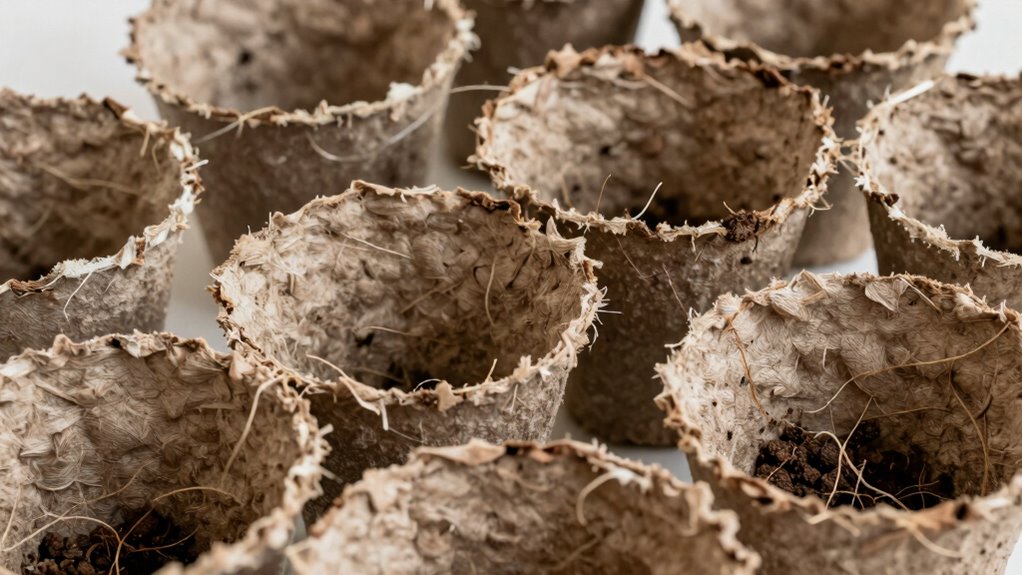

Biodegradable pots are designed to break down naturally in the environment, unlike plastics or ceramics, often using materials like peat, coir, or rice husks. Their decomposition depends on factors like moisture, temperature, soil microbes, and pot size. Proper conditions, such as composting, speed up this process, but synthetic blends may take longer. If you’re curious about how to optimize their breakdown and make eco-friendly choices, there’s more to discover below.
Open a free Amazon Business account
Business pricing, bulk buying and tax-exempt orders.
As an affiliate, we earn on qualifying purchases.
Key Takeaways
- Biodegradable pots are designed to naturally decompose in soil, reducing waste and environmental impact.
- Decomposition rate depends on material type, environmental conditions, and proper disposal methods like composting.
- Natural materials such as peat, coir, and rice husks typically break down faster than synthetic blends.
- Breaking pots into smaller pieces and maintaining optimal moisture and temperature accelerates breakdown.
- Responsible disposal via composting enhances environmental benefits and minimizes landfill accumulation.
As an affiliate, we earn on qualifying purchases.
What Are Biodegradable Pots, and How Do They Differ From Traditional Containers?

Have you ever wondered how biodegradable pots differ from traditional containers? These eco-friendly options are designed to support plant propagation by breaking down naturally in the environment, unlike plastic or ceramic pots that last indefinitely. When you use biodegradable pots, you eliminate the need to transfer seedlings later, simplifying your gardening process. They also promote container reusability because you can plant seedlings directly into the ground, reducing waste and minimizing disturbance to roots. Traditional containers often require cleaning and repurposing, while biodegradable ones decompose after use, enriching the soil. This makes them an attractive choice for sustainable gardening, helping you grow plants efficiently while reducing your ecological footprint. Overall, biodegradable pots blend environmental sustainability with functionality and responsibility.
What Types of Materials Are Used in Biodegradable Pots?
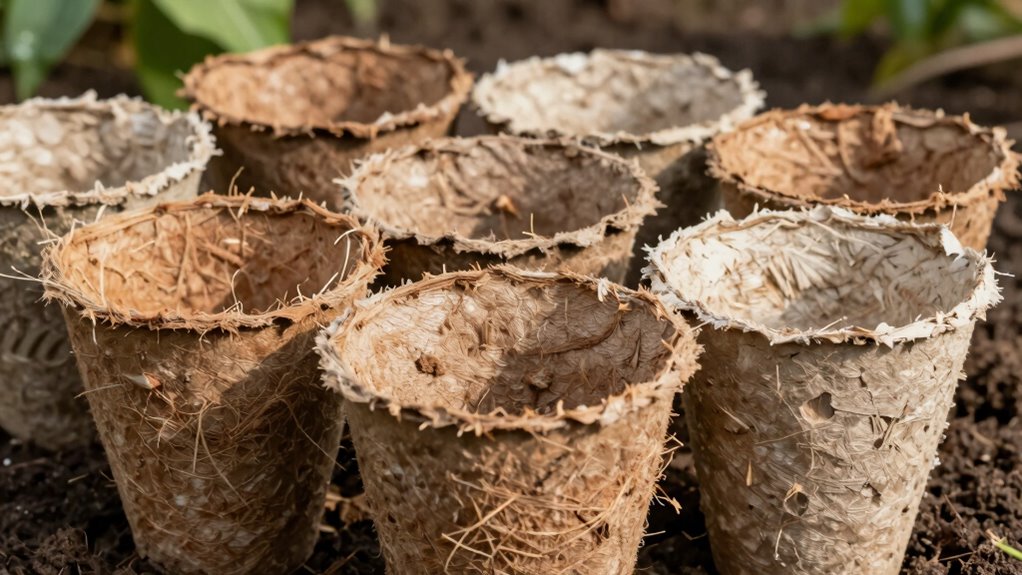
You’ll find that biodegradable pots are made from a variety of materials, including natural options like peat, coir, and rice husks. Some manufacturers also use synthetic or blended materials to enhance durability, but these still break down over time. Understanding the balance between material strength and environmental impact helps you choose the best option for your needs.
Common Natural Materials Used
Biodegradable pots are typically made from a variety of natural materials that break down easily in the environment. Materials like peat, coir, and rice husks are popular choices because they support plant health and simplify manufacturing processes. These substances provide nutrients and aeration, encouraging healthy root growth. Here’s a quick look:
| Material | Benefits | Breakdown Time |
|---|---|---|
| Peat | Retains moisture, rich in organic matter | 6-12 months |
| Coir | Durable, resistant to pests | 1-2 years |
| Rice Husks | Lightweight, improves aeration | 1-3 years |
Using these natural options guarantees your plants thrive while the pots return safely to the environment. Additionally, the choice of biodegradable materials can influence the overall sustainability of the planting process, emphasizing the importance of environmentally friendly materials.
Synthetic and Blended Options
While natural materials dominate biodegradable pots, manufacturers often blend or incorporate synthetic components to boost durability and performance. These synthetic blends can include bioplastics or biodegradable polymers that withstand handling and transportation better than pure natural options. Such materials are designed to degrade during composting processes, but their breakdown rate may differ from natural fibers. Including synthetic components helps create pots that are both sturdy and eco-friendly, appealing to growers seeking practical solutions. However, it’s essential to understand how these blends behave during composting, as some synthetics may slow down the overall breakdown or require specific conditions to fully degrade. Additionally, the breakdown rate of these synthetic components can vary significantly depending on the specific material used and environmental factors, impacting composting efficiency. Despite these concerns, synthetic and blended options are popular choices for those wanting a balance between strength and sustainability.
Material Durability and Breakdown
What materials make biodegradable pots durable enough for practical use while still breaking down effectively? Typically, materials like pressed paper, coconut husk fiber, and bioplastics are chosen for plant propagation and commercial manufacturing. These materials offer enough strength to hold soil and roots during seedling growth, yet they decompose naturally once planted in the ground. For example, fiber-based pots are sturdy and resistant to cracking, ensuring durability during handling and watering. Bioplastics made from cornstarch or sugarcane provide a balance between durability and biodegradability. Additionally, material durability is a crucial factor to ensure that biodegradable pots can withstand the rigors of transplantation and watering without breaking down prematurely. The key is selecting materials that withstand the demands of transplantation while still breaking down within a reasonable time frame, ensuring your gardening practices remain eco-friendly without sacrificing practicality.
What Conditions Are Needed for Biodegradable Pots to Decompose Properly?

For biodegradable pots to break down effectively, they need the right environmental conditions. Maintaining adequate moisture levels and ensuring active microbial activity are essential. When these factors align, your pots will decompose properly and return nutrients to the soil. Additionally, proper disposal methods can help optimize decomposition by providing the ideal environment.
Proper Environmental Conditions
Biodegradable pots require specific environmental conditions to break down effectively, and understanding these factors can help you guarantee proper decomposition. First, ensure the soil quality is suitable; rich, well-draining soil with ample microbial activity accelerates breakdown. Second, consider plant compatibility: planting in environments where your plants thrive promotes healthy growth and natural decomposition processes. Third, avoid overly compacted or contaminated soils, which can hinder microbial activity and slow decomposition. Maintaining a balanced pH and avoiding chemicals that inhibit microbes are also essential. Additionally, monitoring moisture levels is crucial since microbial activity depends on adequate hydration. By optimizing these conditions, you create an ideal environment for your biodegradable pots to decompose naturally and efficiently, reducing waste and supporting eco-friendly gardening. Proper environmental management guarantees your biodegradable pots fulfill their promise of sustainable disposal.
Adequate Moisture Levels
Have you guaranteed your biodegradable pots receive the right amount of moisture to break down effectively? Proper watering practices are essential for ideal decomposition. You should maintain consistent soil moisture around the pots, avoiding both dryness and waterlogging. Too little moisture slows microbial activity, hindering breakdown, while excessive water can create anaerobic conditions that delay decay. Check your soil moisture regularly, ensuring it stays damp but not soaked. Covering the pots with mulch or placing them in well-drained areas helps regulate moisture levels. Remember, the right balance fosters microbial activity, which is vital for biodegradation. Additionally, understanding soil moisture levels can help optimize conditions for faster breakdown. By keeping soil moisture steady and appropriate, you give your biodegradable pots the best chance to decompose naturally and efficiently.
Sufficient Microbial Activity
Maintaining proper moisture levels creates an environment where microbes can thrive and break down the pots efficiently. To guarantee sufficient microbial activity, focus on these key factors:
- Temperature: Keep the soil warm enough (around 50-70°F) to promote active soil microbes that aid decomposition.
- Aeration: Avoid compacting the soil; good airflow boosts microbial activity and improves soil health.
- Nutrient Availability: Incorporate organic matter or compost to provide microbes with essential nutrients, speeding up breakdown.
How Do Biodegradable Pots Break Down? Factors That Affect Decomposition?
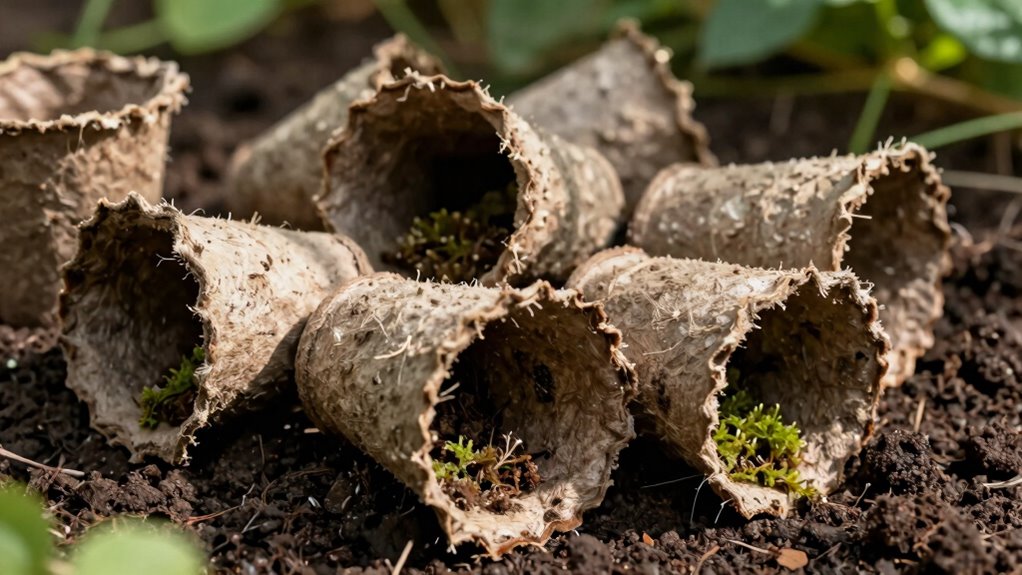
When biodegradable pots begin to break down, several factors influence how quickly and completely they decompose. Soil health plays a crucial role, as rich, nutrient-dense soil encourages microbes that accelerate breakdown. The composting benefits of these pots depend on maintaining ideal conditions like temperature, moisture, and aeration, which facilitate microbial activity. If the environment is too dry or cold, decomposition slows, leaving residues longer. The material composition of the pot also matters; those made from plant-based fibers tend to biodegrade faster than thicker or synthetic additives. Additionally, particle size impacts surface area exposure, with smaller pieces decomposing more rapidly. By understanding these factors, you can guarantee proper disposal methods, maximizing soil health and enjoying the full composting benefits of biodegradable pots.
Are Biodegradable Pots Eco-Friendly and Sustainable?
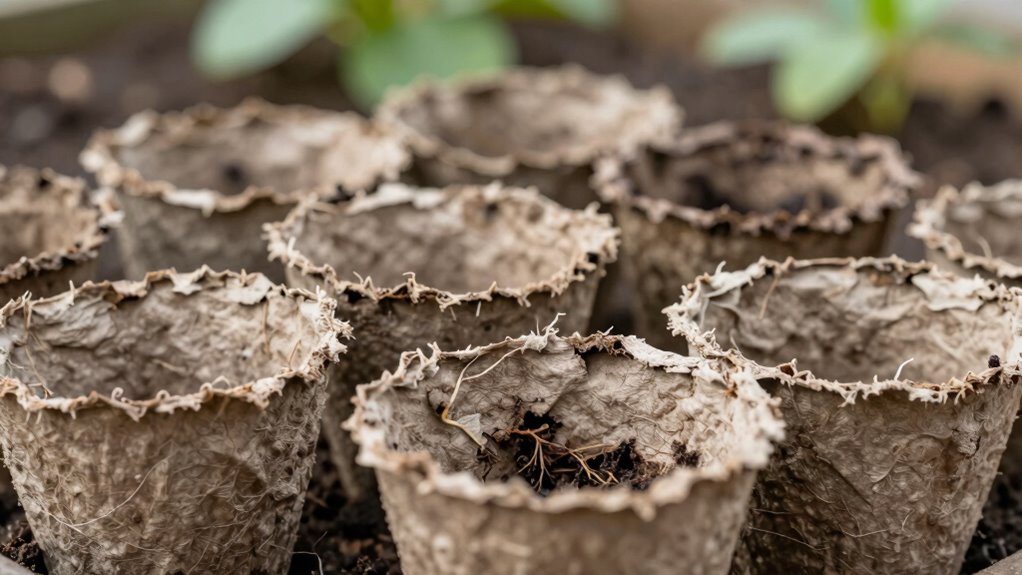
Biodegradable pots are considered eco-friendly and sustainable because they break down naturally, reducing waste in landfills and lowering environmental impact. But how do you guarantee they truly benefit the environment? Here are three key points:
- Choose proper composting methods to accelerate decomposition and avoid lingering residues.
- Understand that their environmental impact depends on the materials used and how they’re disposed of.
- Recognize that when composted correctly, these pots can enrich soil rather than pollute it.
- Utilizing biodegradable materials in their production can further enhance their environmental advantages.
While biodegradable pots can be eco-friendly, their sustainability hinges on responsible disposal. Proper composting methods are essential to maximize their benefits and minimize environmental harm.
Tips to Help Your Biodegradable Pots Decompose Faster and Reduce Waste?
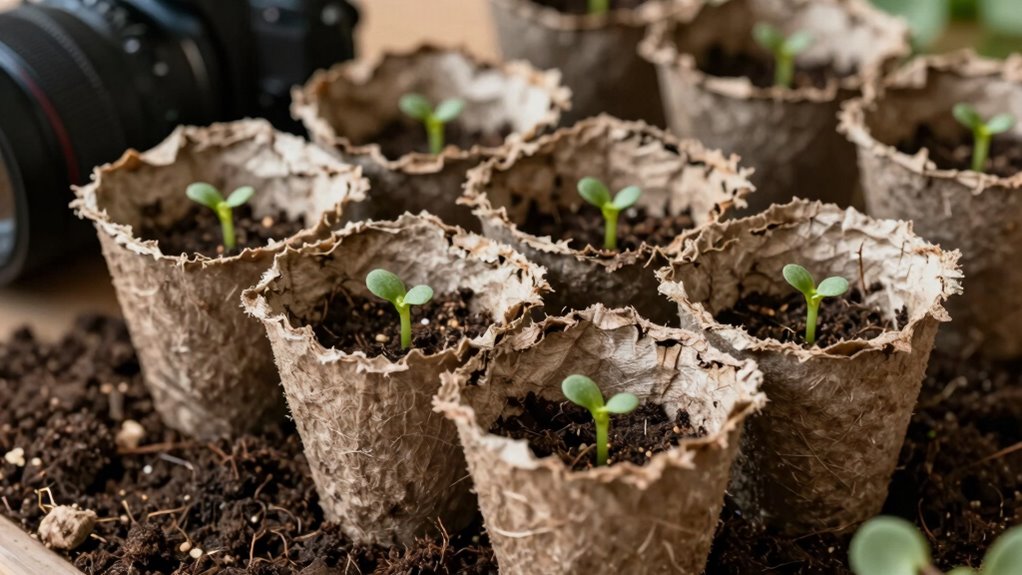
To guarantee your biodegradable pots break down quickly and effectively, adopting proper disposal techniques can make a significant difference. Composting methods are one of the best ways to accelerate decomposition; verify your pots are placed in a hot, well-maintained compost pile with other organic waste. Break the pots into smaller pieces to speed up the process. Additionally, explore recycling options if available in your area—some facilities accept biodegradable plastics for specialized processing. Avoid throwing your pots in regular trash, as they may end up in landfills where decomposition is slow. By choosing composting or recycling, you help reduce waste and support eco-friendly disposal, ensuring your biodegradable pots fulfill their promise of environmental benefit rather than becoming another landfill burden. Incorporating proper disposal techniques can significantly impact how quickly your pots decompose.
Frequently Asked Questions
Are Biodegradable Pots Suitable for All Plant Types?
Biodegradable pots aren’t suitable for all plant types because plant compatibility varies, especially with delicate or deep-rooted plants. You need to take into account pot durability; some biodegradable options may break down too quickly, risking root disturbance. For hardy or long-term plants, traditional pots might be better. Always match the pot’s material and lifespan with your plant’s growth needs to ensure healthy development and avoid transplant shock.
How Long Does It Typically Take for Biodegradable Pots to Decompose?
Biodegradable pots usually take about 3 to 6 months to decompose, depending on factors like material sourcing and environmental conditions. If kept in moist, warm soil, they break down faster, supporting better plant growth by enriching the soil. Keep in mind, some materials may linger longer, so choosing pots made from sustainably sourced, high-quality biodegradable material guarantees quicker decomposition and healthier plant development.
Can Biodegradable Pots Be Composted at Home Effectively?
Like a sponge soaking up water, you can compost biodegradable pots at home, but success depends on conditions. Use a balanced mix of green and brown materials, keep it moist, and turn it regularly. Proper composting enriches the soil and reduces environmental impact. While some pots decompose faster, others may take longer, so patience is key. With effort, you’ll turn waste into nutrient-rich soil, benefiting your garden and the planet.
Do Biodegradable Pots Release Any Harmful Substances During Breakdown?
Biodegradable pots generally don’t release harmful substances during breakdown if made from safe materials like cornstarch or paper. They’re designed to have minimal chemical safety risks, making them environmentally friendly. However, some cheaper options might contain additives or plastics that could leach chemicals over time. Always check product labels for eco-friendly certifications to reduce environmental impact and guarantee safe decomposition.
What Are the Common Mistakes That Hinder Proper Decomposition?
You might unknowingly hinder proper decomposition by making common mistakes. When you use non-biodegradable materials or add plastics, you create soil contamination and face recycling challenges. Overly wet or compacted compost environments slow down breakdown, while insufficient aeration prevents microbes from working effectively. To guarantee proper decomposition, avoid these pitfalls, and give your biodegradable pots a chance to break down naturally, revealing the true eco-friendly promise they hold.
Conclusion
While biodegradable pots seem eco-friendly, their true impact depends on proper disposal and conditions. If you toss them carelessly, they might not break down as promised, leaving behind waste instead of benefits. By understanding how they decompose and taking steps to guarantee they’re disposed of correctly, you can genuinely reduce environmental harm. Remember, the power to make these pots truly eco-friendly lies in your hands—choose wisely and act responsibly.
Fall Picks
fall essentials
As an affiliate, we earn on qualifying purchases.