
Instead of tossing out your old potting mix, recondition it to save money and help the environment. Start by testing its nutrients and health, then clean and sterilize it to remove pests and pathogens. Use organic amendments like compost tea and aged manure to replenish nutrients naturally. Store the mix properly and avoid common mistakes like neglecting sterilization or contamination. Want to learn step-by-step methods to recondition soil safely? Keep exploring to find out how.
Key Takeaways
- Test soil regularly to assess nutrient levels and identify deficiencies before reconditioning.
- Sanitize and sterilize old potting mix by baking or steaming to eliminate pests and pathogens.
- Enrich soil with organic amendments like compost tea, aged manure, or seaweed to restore nutrients naturally.
- Store reconditioned soil properly in breathable containers, adding antimicrobial oils to prevent microbial contamination.
- Incorporate beneficial microbes and monitor soil health continuously to maintain fertility and prevent contamination.

Rapitest Soil Test Kit for Gardens, Vegetables, Flowers and Lawns. USA designed and assembled soil tester completely, quickly and accurately measures/analyzes soil pH acidity and garden nutrients.
- Quick at-home soil pH and nutrient testing: Measures pH, Nitrogen, Phosphorous, Potash
- Includes 20 tests with all components: 5 tests each for pH, N, P, K
- Suitable for multiple garden spots: Test various areas in yard or garden
As an affiliate, we earn on qualifying purchases.
As an affiliate, we earn on qualifying purchases.
Why Reconditioning Potting Mix Is Better Than Tossing It Out
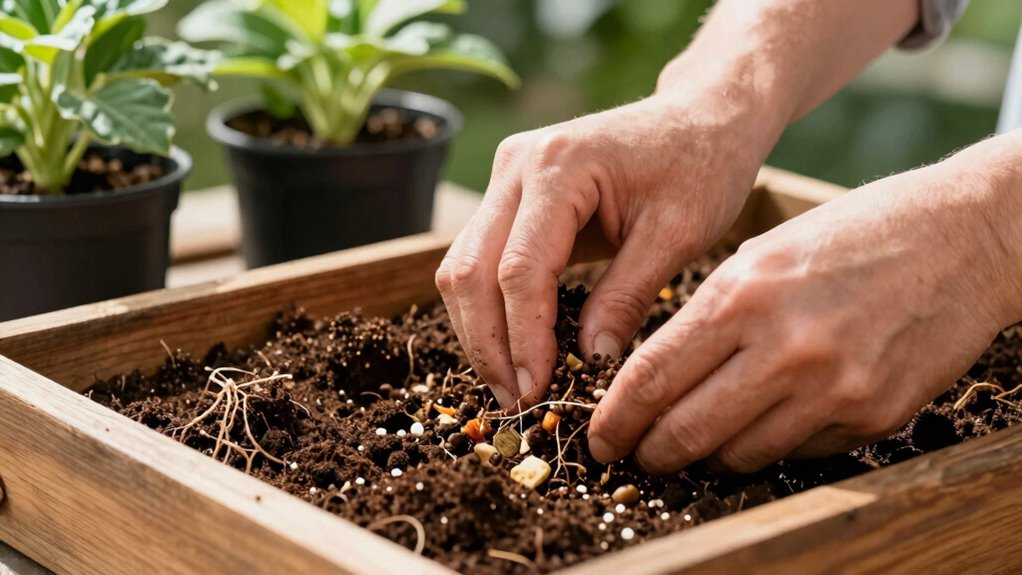
Reconditioning your potting mix is a smarter choice than tossing it out because it saves money and reduces waste. Over time, soil contamination can occur from pests, disease spores, or leftover chemicals, making your soil less healthy. Nutrient depletion is another common issue, where plants use up essential nutrients, leaving the soil less fertile. Instead of discarding your old soil, reconditioning restores its energy, saving you money and helping the environment. You can improve contaminated soil by removing debris and adding sterilizing agents or organic matter. To address nutrient depletion, replenishing nutrients with compost, organic fertilizers, or soil amendments will make your mix suitable for healthy plant growth again. Reconditioning ensures your soil remains productive and eco-friendly, extending its lifespan and reducing waste. Additionally, understanding the role of color accuracy in soil health can help you select appropriate soil amendments for optimal plant growth and vibrant foliage. Regularly testing soil pH and nutrient levels provides valuable insights, allowing for more precise and effective reconditioning efforts. By assessing soil composition, you can better tailor your reconditioning efforts to meet your plants’ specific needs and promote sustainable gardening practices. Incorporating knowledge of auditory processing, such as sound therapy techniques, can also inspire innovative ways to approach soil health through environmental enrichment and stimulation. Recognizing the importance of soil health indicators can further guide your reconditioning strategies for long-term success.
How to Test Your Old Soil’s Nutrients and Health

To determine if your old soil is still healthy and nutrient-rich, you need to test it properly. Soil testing is the best way to assess its current condition and identify nutrient deficiencies or imbalances. Start by collecting a representative sample from different areas of your soil, avoiding surface debris. You can send this sample to a local extension service or use a home testing kit for a quick overview. Nutrient analysis measures essential elements like nitrogen, phosphorus, and potassium, giving you a clear picture of what’s lacking or excessive. Regular testing helps you make informed decisions about reconditioning your soil, ensuring it provides a healthy environment for your plants. Keep track of your results to monitor improvements over time and adjust your soil management practices accordingly.
How to Clean and Sanitize Old Potting Mix
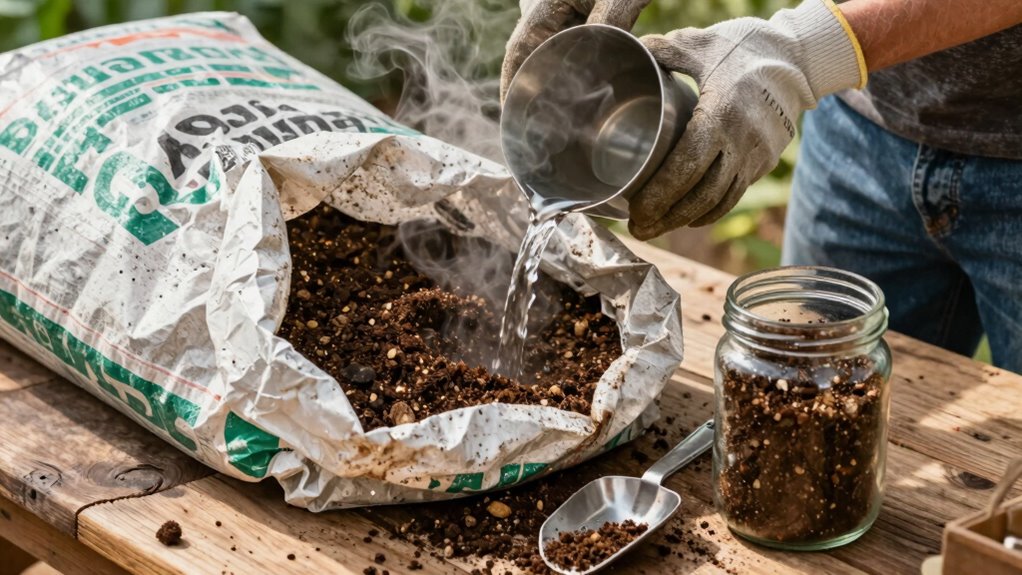
When dealing with old potting mix, cleaning and sanitizing is essential to prevent disease and pests from lingering in your soil. Start by removing debris and breaking up clumps to improve soil aeration. To sanitize, spread the mix on a tray and bake it at 180°F for 30 minutes, killing pathogens. Alternatively, soak the mix in a compost tea solution, which adds beneficial microbes. During storage, stir the soil occasionally to maintain aeration and prevent mold. Incorporating smart home technology like soil moisture sensors can help monitor soil health in real time. Additionally, adding antimicrobial essential oils such as tea tree oil to your compost tea may further help suppress harmful microbes. Using proper storage techniques can also extend the lifespan of your reconditioned soil and maintain its quality over time. Use the following table as a quick guide:
| Step | Method | Purpose |
|---|---|---|
| Cleaning | Remove debris, break up clumps | Improve soil aeration |
| Sanitizing | Baking or steaming | Kill pests and pathogens |
| Enriching | Compost tea soak | Reintroduce beneficial microbes |
Proper cleaning helps rejuvenate your soil safely and effectively.
Using Organic Methods to Restore Soil Nutrients
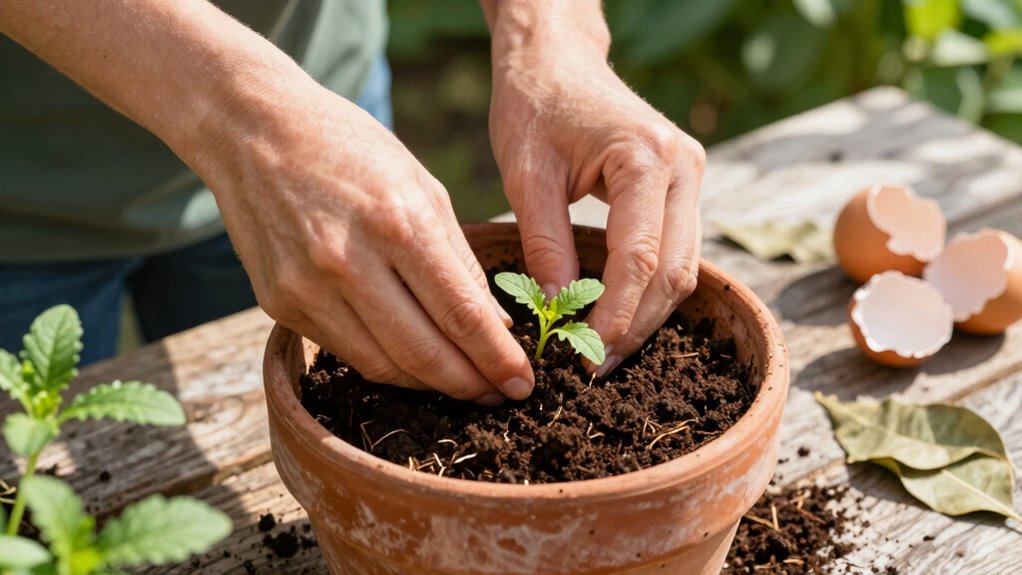
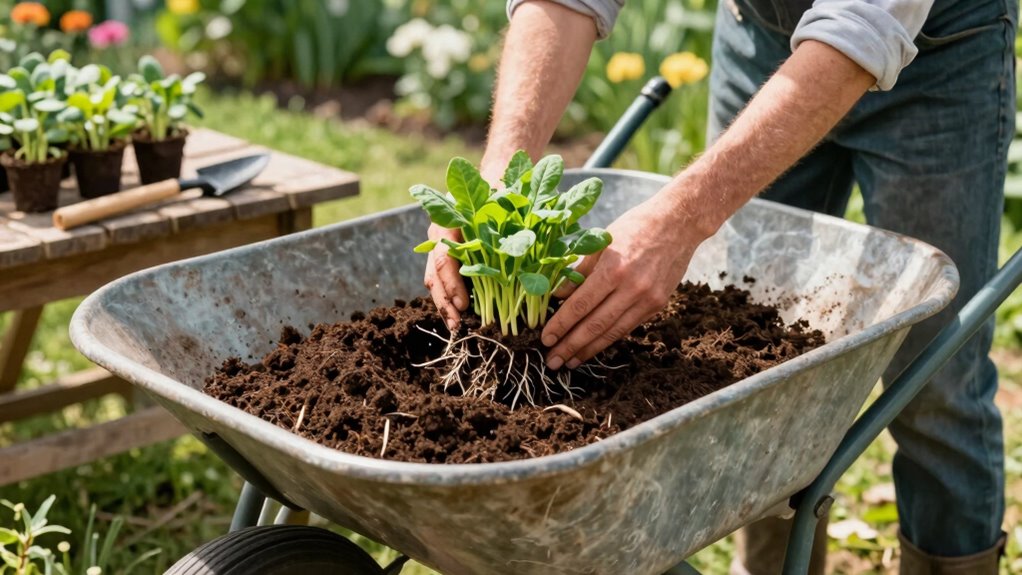
Organic methods are an effective way to restore your soil’s nutrients without relying on synthetic fertilizers. One simple approach is using compost tea, which delivers a rich boost of nutrients and beneficial microbes directly to your soil. You can make compost tea by steeping compost in water, then applying it as a liquid feed for your plants. Additionally, incorporating organic amendments like compost, aged manure, or seaweed adds essential nutrients and improves soil structure. These natural inputs enhance microbial activity, which helps break down organic matter and release nutrients more efficiently. Soil health can be significantly improved through regular application of these organic practices, fostering a sustainable and vibrant growing environment. By regularly applying compost tea and organic amendments, you nurture healthy, resilient soil that supports vigorous plant growth. This sustainable approach keeps your potting mix fertile and reduces the need for chemical fertilizers.
Best Practices for Storing Reconditioned Potting Mix
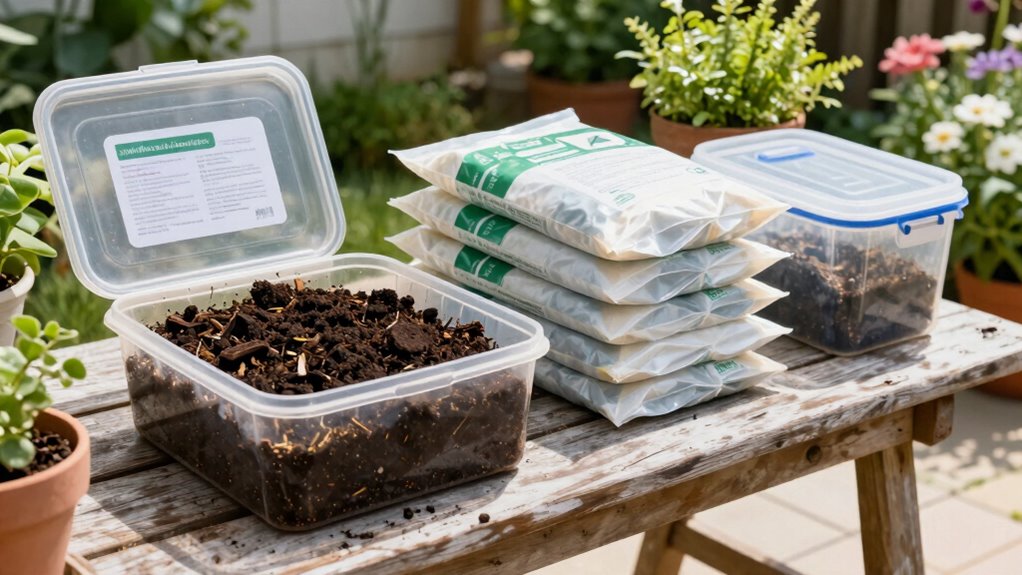
Proper storage is essential to keep your reconditioned potting mix fresh, free from pests, and ready for use whenever you need it. To achieve this, store your mix in a sealed container or breathable bag to maintain proper moisture retention without becoming overly damp. Guarantee the container allows for soil aeration by avoiding airtight seals that trap excess moisture or cause mold growth. Keep the mix in a cool, dry place away from direct sunlight, which can degrade organic matter. Regularly check the stored soil for signs of pests or excess moisture, and stir it occasionally to promote even moisture distribution and prevent compaction. Proper storage preserves the soil’s structure, supporting healthy plant growth when you’re ready to reuse it. Additionally, considering soil sterilization methods can help eliminate pathogens and pests, ensuring your reconditioned mix remains safe and effective for future use. Using proper storage techniques can significantly extend the lifespan of your soil and maintain its quality over time. For optimal results, you might also consider soil testing to monitor the nutrient levels and overall health of your stored soil. Incorporating essential oils like tea tree or lavender in storage areas can also help deter pests naturally and keep your soil fresh. Moreover, adding biological controls such as beneficial microbes can enhance the health of your stored soil and improve its fertility when reused.
Common Mistakes to Avoid When Reusing Potting Soil

When reusing potting soil, you might overlook potential contamination or neglect proper sterilization, which can harm your plants. Ignoring nutrient depletion can leave your soil lacking essential elements, leading to weak growth. To prevent these issues, consider testing your soil’s health regularly and maintaining its nutrients to ensure optimal plant development. Additionally, proper sterilization techniques can help eliminate pathogens and pests, safeguarding your plants’ health. Regularly monitoring soil conditions can also help catch issues early and keep your soil healthy and productive for your plants. Being aware of soil contamination risks is crucial for maintaining a healthy garden environment. Incorporating soil testing methods can further aid in identifying deficiencies or problems early, allowing for timely corrective actions. Avoid these mistakes to make sure your soil stays healthy and productive for your plants.
Overlooking Soil Contamination
Many gardeners overlook the risk of soil contamination when reusing potting soil, which can lead to plant diseases or reduced growth. Soil contamination occurs when leftover roots, pests, or pathogens remain in the soil, increasing the chance of infection. Chemical residues from previous fertilizers, pesticides, or herbicides can also linger, potentially harming new plants or causing stress. If you reuse soil without checking for these issues, you risk introducing harmful substances that compromise plant health. Instead, always inspect your soil carefully, looking for signs of contamination. Consider testing for chemical residues if you’re unsure. Proper reconditioning, including sterilization or composting, can help eliminate these risks and guarantee your soil is safe and healthy for your next planting. Regularly testing soil quality can help identify hidden contaminants and ensure your garden thrives. Additionally, understanding soil contamination can help you develop better practices for sustainable gardening, supporting long-term plant health and productivity. Using professional testing services can provide more accurate assessments, especially if you’re dealing with persistent issues.
Neglecting Proper Sterilization
Neglecting proper sterilization is a common mistake that can undermine your efforts to reuse potting soil safely. Without sterilizing, you risk soil contamination from pathogens or pests, which can infect new plants. Additionally, neglecting sterilization may lead to nutrient depletion, as harmful organisms deplete essential nutrients. To understand the importance, consider this table:
| Issue | Consequence |
|---|---|
| Soil contamination | Disease spread, pest infestation |
| Nutrient depletion | Poor plant growth, reduced yield |
| Lack of sterilization | Increased risk of plant failure |
Sterilizing eliminates harmful microbes, ensuring your soil remains healthy and safe. Skipping this step jeopardizes your gardening success, making proper sterilization an essential part of soil reconditioning. Moreover, soil health can significantly decline if sterilization is neglected, impacting long-term plant vitality. Implementing proper sterilization techniques can prevent these issues and promote healthier plant growth over time.
Ignoring Nutrient Depletion
Even if your soil looks healthy, it can still be depleted of essential nutrients after multiple uses. Ignoring nutrient depletion is a common mistake that hampers plant growth. To avoid this, perform soil testing to accurately assess nutrient levels and identify deficiencies. Once you know what’s lacking, focus on nutrient restoration by adding compost, organic fertilizers, or specific amendments tailored to your plants’ needs. Reusing potting soil without addressing nutrient loss can lead to poor plant health and reduced yields. Regularly testing your soil helps you target the right nutrients, saving you time and money. Remember, healthy soil is the foundation for thriving plants, so don’t overlook the importance of replenishing nutrients during each reconditioning cycle.
FAQs About Reconditioning Potting Mix Safely

Are you wondering how to recondition your potting mix safely? The key is proper soil testing to identify nutrient levels and pH balance before adding anything. This helps you avoid over-fertilizing or introducing harmful substances. Organic amendments like compost, worm castings, or aged manure are excellent options to revitalize your soil naturally. When reconditioning, mix these amendments thoroughly into your existing mix, ensuring even distribution. Always water well afterward to help nutrients integrate. You might also consider sterilizing the soil if it’s heavily contaminated or has pests. By following these steps, you can safely restore your potting mix’s health, making it suitable for multiple uses without risking plant health or environmental harm. Proper reconditioning ensures your plants thrive season after season.
Frequently Asked Questions
How Often Should I Recondition My Potting Mix?
You should recondition your potting mix every 1-2 years or when soil testing shows nutrient deficiencies. To do this, add compost to boost organic matter and nutrients, and gently mix it in. Regularly checking soil pH and nutrient levels helps determine when reconditioning is needed, ensuring your plants stay healthy. Reconditioning keeps your soil rich, balanced, and ready for new growth, saving you money and reducing waste.
Can I Reuse Potting Mix for Different Plant Types?
You can reuse potting mix for different plant types, but don’t forget soil sterilization and nutrient replenishment. Think of your soil as a magic potion—each plant has unique needs, so it’s best to refresh the mix with compost or organic amendments. This way, you prevent disease transfer and ensure your new plants get the right nutrients. Always tailor your soil to match each plant’s specific requirements for thriving growth.
What Signs Indicate My Soil Needs Reconditioning?
If your soil shows poor plant growth, discoloration, or slow drainage, it likely needs reconditioning. Conduct soil testing to check for nutrient deficiency or pH imbalance. You might notice compacted or crusted soil, which hampers roots and water movement. When you see these signs, it’s time to amend your soil with compost, organic matter, or fertilizers to restore its health and guarantee your plants thrive.
Is Reconditioning Soil Effective for All Potting Mixes?
Reconditioning soil is effective for most potting mixes, but it depends on the condition. You can use soil sterilization to eliminate pests and disease, and replenish nutrients with compost or organic amendments. While reconditioning works well for mixes that have lost nutrients or become compacted, heavily contaminated or degraded soils might need more extensive treatment or replacement. Regularly testing your soil helps determine if reconditioning is suitable for your specific needs.
How Long Does Reconditioned Soil Last Before Needing Reuse?
Like a seasoned alchemist, you can expect reconditioned soil to last about one to two growing seasons before needing reuse. Over time, soil degradation and nutrient depletion diminish its importance, so it’s wise to replenish nutrients regularly. Keep an eye on plant health and soil condition; if growth slows or plants show stress, it’s time to recondition or replace the mix to maintain prime growth.
Conclusion
Instead of throwing out your potting mix, test it, clean it, and restore it. Instead of wasting resources, save money and reduce waste. Instead of guessing, learn the right methods to nurture your soil and plants. Reconditioning your potting mix keeps your garden thriving, your environment healthy, and your gardening skills sharp. Embrace the cycle of reuse, the art of renewal, and the joy of sustainable gardening—because every bit of effort counts.