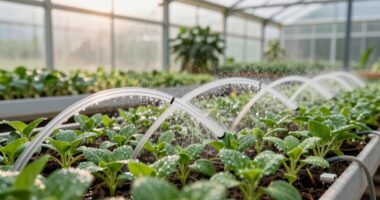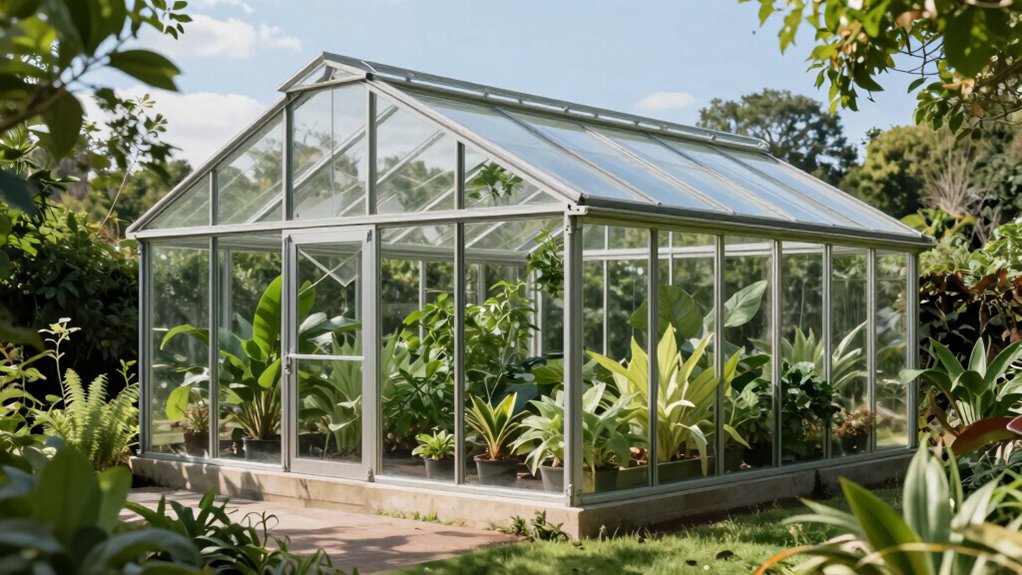

Choosing simple greenhouse designs makes them more sustainable because they rely on natural processes like ventilation and passive solar techniques, reducing energy use and costs. Using local, eco-friendly materials and avoiding complex machinery increases durability and makes maintenance easier. By focusing on simplicity, you lower dependence on fossil fuels and create a resilient system that supports biodiversity and eco-friendly growth. If you want to discover how these strategies can transform your greenhouse, stay with us to find out more.
Open a free Amazon Business account
Business pricing, bulk buying and tax-exempt orders.
As an affiliate, we earn on qualifying purchases.
Key Takeaways
- Simple designs minimize maintenance and repair, increasing longevity and reducing resource consumption.
- Low-tech solutions utilize local, eco-friendly materials, lowering environmental impact and transportation emissions.
- Natural ventilation and passive solar techniques decrease reliance on energy-intensive cooling and heating systems.
- Fewer mechanical components reduce the risk of failure and promote resilience in varying climates.
- Emphasizing biodiversity and ecosystem balance supports sustainable, self-regulating greenhouse environments.
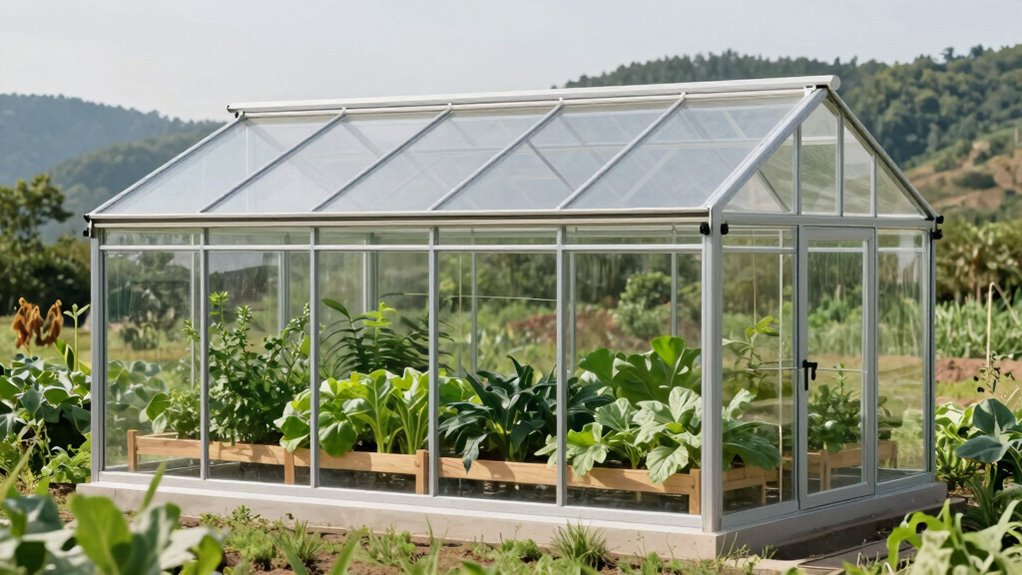
Greenhouses can be both productive and eco-friendly when you prioritize simplicity and sustainability. The key lies in choosing straightforward design principles that minimize energy use and reduce environmental impact. One effective way to achieve this is by embracing natural ventilation. Instead of relying on complex, energy-intensive cooling systems, you can design your greenhouse to maximize airflow naturally. This involves strategically placing vents, windows, or louvers that open and close with the temperature changes outside. By harnessing natural ventilation, you keep your greenhouse cool during hot days without consuming electricity, lowering your carbon footprint and cutting costs.
Maximize airflow naturally with vents and louvers to keep your greenhouse cool sustainably and cost-effectively.
Simplicity in design also means sticking with low tech solutions. These are tried-and-true methods that require minimal maintenance and are easy to understand and operate. For instance, using simple shading devices or reflective mulches can control heat gain without sophisticated technology. You might consider using passive solar techniques like orienting your greenhouse to face south in the northern hemisphere, allowing maximum sunlight during winter while avoiding overheating in summer. These low tech solutions are reliable, cost-effective, and often more durable than complex systems that depend on electricity or mechanical parts. Incorporating passive solar techniques into your design enhances energy efficiency without adding complexity. Additionally, employing local materials for construction can further reduce environmental impact and increase the resilience of your greenhouse. Incorporating sustainable materials can also help minimize waste and support eco-friendly construction practices. Choosing eco-friendly construction methods is essential for creating a truly sustainable greenhouse.
By focusing on natural ventilation and low tech solutions, you reduce your reliance on fossil fuels and electrical systems that can fail or become costly over time. The beauty of this approach is its resilience; simple systems tend to be more durable and easier to repair if something goes wrong. Plus, they require less technical knowledge to operate, making them accessible whether you’re an experienced gardener or just starting out. This simplicity also encourages a closer connection to your environment, allowing you to observe and respond to natural changes rather than constantly adjusting complicated machinery.
Another benefit is that these strategies promote sustainability beyond just energy use. Using local materials for construction or passive methods reduces waste and transportation emissions. Additionally, embracing biodiversity in your planting choices can enhance ecosystem health and resilience. Natural ventilation and low tech solutions work in harmony with the environment, creating a balanced, self-regulating system that supports healthy plant growth without harming the planet. Overall, by prioritizing straightforward, eco-friendly strategies like natural ventilation and low tech solutions, you foster a greenhouse that’s not only productive but also aligned with sustainable principles. This approach makes your gardening efforts more resilient, affordable, and gentle on the Earth, proving that sometimes, less really is more.

Year Round Solar Greenhouse & Off Grid Solar Power: 2-in-1 Compilation Make Your Own Solar Power System and build Your Own Passive Solar Greenhouse Without Drowning in a Sea of Technical Jargon
As an affiliate, we earn on qualifying purchases.
As an affiliate, we earn on qualifying purchases.
Frequently Asked Questions
How Does Simplicity Reduce Greenhouse Gas Emissions in Greenhouses?
Simplicity reduces greenhouse gas emissions in greenhouses by promoting energy conservation and material durability. When you choose straightforward designs, you use fewer energy-intensive systems, lowering your carbon footprint. Durable materials require less frequent replacement, cutting down manufacturing emissions. This approach minimizes complex, energy-consuming technologies, helping you operate more sustainably while maintaining effective plant growth. Ultimately, simplicity streamlines maintenance and reduces overall resource use, making your greenhouse more eco-friendly.
Can Simple Greenhouse Designs Outperform Complex Systems in Efficiency?
Yes, simple greenhouse designs can outperform complex systems in efficiency. They offer greater design flexibility, allowing you to adapt easily to changing conditions and optimize resource use. Plus, their cost effectiveness means you spend less on construction and maintenance, enabling better resource allocation. Simpler designs reduce energy losses and improve airflow, making them not only more efficient but also easier to operate and sustain over time.
What Are Common Challenges in Implementing Simple Sustainability Solutions?
You might face challenges like balancing cost effectiveness with aesthetic appeal when implementing simple sustainability solutions. Sometimes, affordable materials or designs may not match your desired look or durability, making it tough to find the right compromise. Additionally, limited technical knowledge or resistance to change can hinder adoption. Staying flexible and prioritizing key sustainability goals helps overcome these hurdles while keeping your greenhouse both efficient and visually appealing.
How Does Simplicity Impact Long-Term Maintenance Costs?
Simplicity greatly reduces long-term maintenance costs by minimizing the need for complex repairs and frequent replacements. With a straightforward design, you benefit from easier troubleshooting and fewer parts that can break down, leading to cost reduction over time. Additionally, simple structures offer greater design flexibility, allowing you to adapt or upgrade your greenhouse without costly overhauls, ensuring sustainable operation and ongoing affordability.
Are Simple Greenhouses Suitable for All Climate Types?
Simple greenhouses can be suitable for many climate types, but their effectiveness depends on factors like historical context and cultural influences. For example, traditional designs in colder climates often emphasize insulation, while in warmer regions, natural ventilation might suffice. You should consider local environmental conditions and cultural practices when choosing a simple greenhouse design, ensuring it aligns with historical methods and community needs for maximum sustainability and performance.
Conclusion
Remember, in the world of greenhouses, simplicity is your steady compass guiding you through a lush, sustainable landscape. Like a clear stream flowing effortlessly, straightforward strategies keep your system resilient and easy to maintain. Embracing simplicity isn’t just about trimming complexity; it’s about planting seeds for a future where your greenhouse thrives in harmony with nature. Sometimes, the most elegant solutions are the ones that grow quietly and endure forever.
College move-in / dorm season Picks
dorm essentials
As an affiliate, we earn on qualifying purchases.