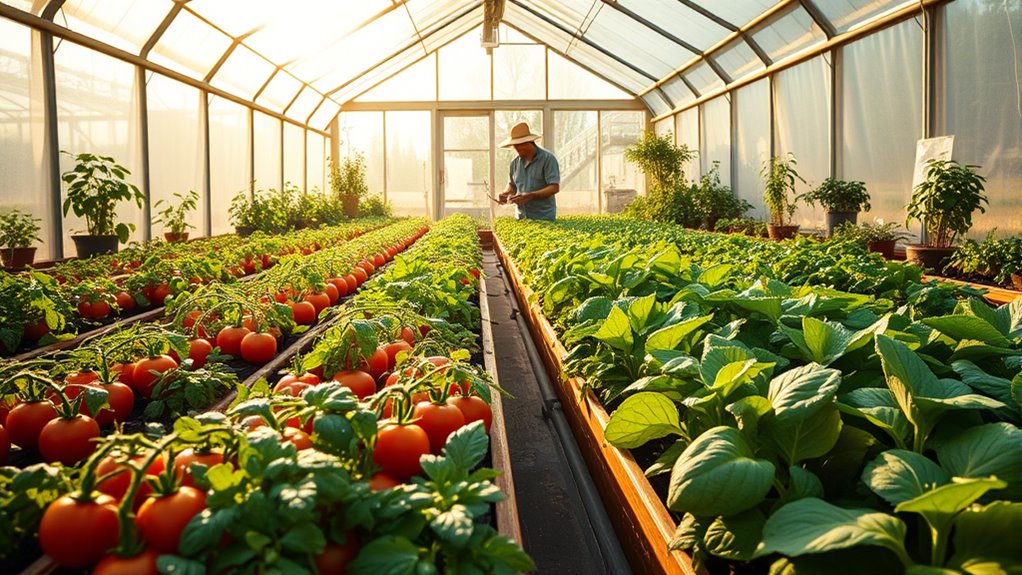
Using greenhouses helps you create a flexible, controlled environment that shields your plants from unpredictable weather, extreme temperatures, and soil erosion. You can extend growing seasons, protect crops from frosts and heatwaves, and improve pest management naturally. Plus, greenhouses support soil health through crop rotation and composting. By incorporating these strategies, you’ll build a resilient garden that adapts to changing climate conditions. Keep exploring to discover how to maximize these benefits for your garden.

Get garden gear delivered free with Prime
- Fast, free delivery on millions of items
- Prime Video, Amazon Music and more included
- Member-only deals all year
Key Takeaways
- Greenhouses provide a controlled environment to mitigate climate unpredictability and protect plants from extreme weather events.
- Soil management strategies like crop rotation and composting within greenhouses enhance soil resilience and fertility.
- Greenhouses facilitate early planting and extend growing seasons, reducing risks from frosts and heatwaves.
- Integrated pest management in greenhouses minimizes chemical use by promoting natural predators and organic treatments.
- Combining greenhouses with sustainable practices strengthens climate adaptation and supports long-term gardening resilience.
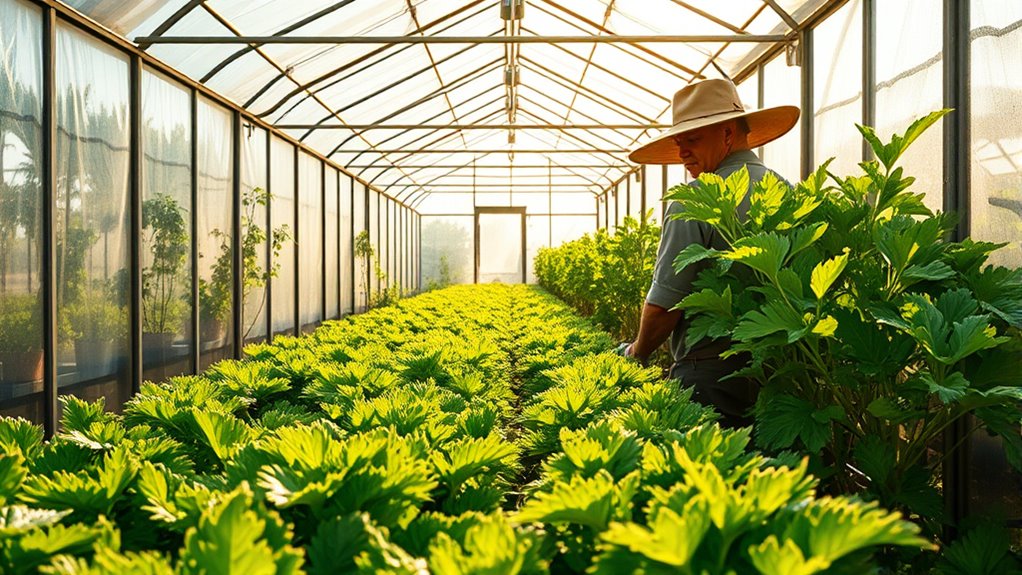
As climate patterns become more unpredictable, gardening strategies must adapt to guarantee your plants thrive despite changing conditions. One effective way to do this is by using greenhouses, which offer a controlled environment that protects your plants from extreme weather and fluctuating temperatures. But beyond the convenience of a stable climate, greenhouses also play an essential role in maintaining soil health and pest management. When you create a sealed, managed environment, you can better monitor and enhance your soil’s quality, ensuring it remains rich and fertile. Healthy soil is the foundation of resilient gardening because it supports strong plant growth and helps plants withstand stress from unpredictable weather. You can implement crop rotation, organic composting, and cover cropping inside your greenhouse to boost soil nutrients and prevent soil degradation. This controlled setting also minimizes soil erosion, allowing you to sustain long-term productivity without constant worry about weather-related runoff or compaction.
Additionally, a greenhouse provides an ideal space to implement integrated pest management (IPM). Instead of relying heavily on chemical pesticides, you can introduce natural predators, beneficial insects, or organic treatments to control pests. Since pests tend to thrive in unpredictable outdoor conditions, a greenhouse lets you create an environment where pest populations are easier to monitor and manage. You can regularly inspect plants, remove affected foliage, and introduce biological controls without risking the spread of pests to your entire garden. This proactive approach not only reduces chemical use but also promotes a healthier ecosystem, making your garden more resilient to pest outbreaks caused by changing climate conditions. Understanding how to identify and manage pest problems effectively is crucial for sustainable gardening. Using a greenhouse also gives you the flexibility to extend your growing season, which is essential as climate variability causes unpredictable frosts or heatwaves. With a controlled environment, you can start seedlings earlier and protect mature plants from sudden cold snaps or heat stress. This adaptability helps ensure a steady supply of produce and reduces the risks associated with extreme weather. Combining greenhouse cultivation with strategic soil management and pest control creates a robust system that withstands climate fluctuations. You’ll find it easier to experiment with different crops, adjust watering schedules, and implement organic practices—all within a stable environment that supports your long-term gardening success.
greenhouse kit for vegetable gardening
As an affiliate, we earn on qualifying purchases.
As an affiliate, we earn on qualifying purchases.
Frequently Asked Questions
What Are the Most Cost-Effective Greenhouse Materials?
When choosing greenhouse materials, you want the most cost-effective options. Consider greenhouse insulation to keep temperatures stable without high energy costs. Polyethylene film is affordable and offers good insulation, making it a popular choice for budget-conscious gardeners. Conduct a cost comparison between materials like polycarbonate and glass—while glass is durable, it’s pricier. Overall, polyethylene provides a balance of low cost and decent insulation, helping you save money long-term.
How Can I Automate Climate Control in My Greenhouse?
You can automate climate control in your greenhouse by installing automated ventilation systems and climate sensors. These sensors monitor temperature, humidity, and light levels, sending data to a controller that adjusts ventilation fans or shade systems accordingly. This setup helps maintain ideal growing conditions, reduces manual effort, and ensures your plants thrive regardless of outside weather changes. It’s a smart way to keep your greenhouse climate steady and efficient.
Are There Eco-Friendly Heating Options for Greenhouses?
You’re wondering if eco-friendly heating options exist for greenhouses. Solar heating is a great choice, harnessing sunlight to warm your space sustainably. You can also use thermal mass, like water barrels or stone, which absorb heat during the day and release it at night, reducing energy needs. These options help you maintain a warm environment while minimizing your carbon footprint, making your greenhouse more eco-friendly.
How Do Greenhouses Impact Local Biodiversity?
Think of your greenhouse as a tiny universe. While it helps you grow plants, it can also affect local biodiversity. You might unintentionally introduce invasive species or disrupt native plant preservation. To keep your ecosystem balanced, manage invasive species carefully and focus on native plants. This way, your greenhouse supports a thriving environment, helping preserve local biodiversity instead of harming it.
What Are Common Pests in Greenhouse Gardening?
In greenhouse gardening, you’ll often encounter common pests like aphids, whiteflies, and spider mites. Effective pest management involves monitoring crops regularly and using integrated pest management (IPM) strategies, such as introducing beneficial insects or applying organic controls. By staying vigilant and employing these techniques, you can keep pest populations under control, protect your plants, and maintain a healthy, productive greenhouse environment.
Conclusion
By embracing greenhouses, you turn your garden into a fortress against climate’s unpredictability. They act like a warm hug for your plants, shielding them from extreme weather and helping your garden thrive no matter what Mother Nature throws your way. With this resilient approach, you’re not just growing food and flowers—you’re cultivating hope and stability in a changing world. So, step inside your greenhouse and watch your garden flourish like a song that never fades.
Fall yard work Picks
leaf blowers
As an affiliate, we earn on qualifying purchases.