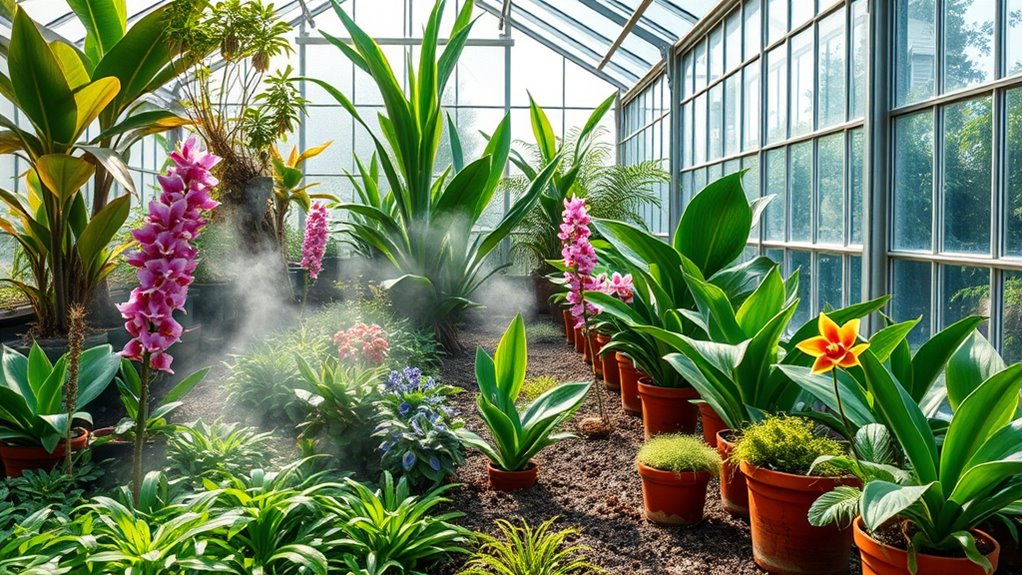

Using greenhouses helps protect rare plants by providing a controlled environment tailored to their needs. You can manage temperature, humidity, and light to mimic their natural habitats, which boosts their growth and resilience. Greenhouses also shield plants from extreme weather, invasive species, and other threats. They’re essential tools for conservation and biodiversity. Keep exploring to discover more ways greenhouses support plant survival and ecological balance.
Key Takeaways
- Greenhouses provide controlled environments that mimic natural habitats, supporting the growth and survival of rare and endangered plants.
- They enable climate adaptation and invasive species management, protecting native biodiversity from external threats.
- Greenhouses facilitate research on plant needs and vulnerabilities, informing effective conservation strategies.
- They help preserve genetic diversity by nurturing rare plants in protected, stable conditions.
- Greenhouses contribute to biodiversity preservation by supporting species resilience and enabling reintroduction efforts.

Have you ever wondered how rare plants survive in the face of climate change and habitat loss? It’s a pressing concern, especially since many of these plants are highly sensitive to environmental shifts. One effective way to protect them is through the use of greenhouses, which offer a controlled environment tailored to their specific needs. These structures allow you to create a stable microclimate, shielding delicate species from temperature extremes, unpredictable weather, and other external threats. By carefully managing light, humidity, and temperature, you can give rare plants a fighting chance to thrive despite the changing climate.
Greenhouses protect rare plants by creating stable, controlled environments against climate extremes and habitat loss.
However, simply providing a protected space isn’t enough. Climate adaptation becomes *essential* when dealing with invasive species, which often threaten native and rare plants alike. Invasive species can outcompete native flora for resources, introduce new pests or diseases, and disrupt existing ecosystems. Greenhouses give you a strategic advantage here, as you can implement biosecurity measures to prevent invasive species from entering your cultivation space. Regular monitoring and sanitation reduce the risk of invasive plants taking hold, helping preserve the genetic integrity and survival of rare species.
In addition to preventing invasive species, greenhouses enable you to simulate the plant’s natural habitat more precisely. This precise climate control helps rare plants develop resilience, making them better equipped to handle future environmental stresses. It’s a form of active climate adaptation—adjusting conditions within the greenhouse to mimic seasonal cycles, rainfall patterns, and temperature fluctuations that these plants would face in the wild. Over time, this careful management can foster stronger, healthier plants that are more capable of surviving outside the greenhouse if reintroduction becomes possible.
Furthermore, greenhouses serve as a valuable research tool. You can experiment with different climate conditions and assess how plants respond, gaining insights into their specific needs and vulnerabilities. This knowledge is essential for developing conservation strategies that can be applied beyond the greenhouse setting. It also allows for the cultivation of plants that might otherwise be impossible to grow in your region, broadening the scope of conservation efforts. Additionally, utilizing advanced climate control systems can optimize environmental conditions, further improving plant health and research outcomes.
In essence, greenhouses are more than just protective structures—they’re dynamic tools for climate adaptation and invasive species management. They enable you to nurture rare plants in a controlled environment, giving them the best chance to survive and adapt amidst ongoing environmental challenges. By integrating these strategies, you’re actively participating in the preservation of biodiversity, ensuring that future generations can enjoy the richness of plant life that’s increasingly at risk.
Frequently Asked Questions
How Do Greenhouses Mimic Natural Ecosystems for Rare Plants?
Greenhouses mimic natural ecosystems by controlling the microclimate, creating ideal conditions like temperature, humidity, and light for rare plants. You can also implement pollination strategies, such as using gentle hand pollination or introducing specific insects, to imitate natural pollination. This helps guarantee reproduction and genetic diversity, closely resembling how plants thrive in their native habitats. Your careful management supports the survival of rare plants and promotes biodiversity.
What Are the Cost Implications of Maintaining Endangered Plant Greenhouses?
Maintaining endangered plant greenhouses involves significant operational expenses, including climate control, lighting, and regular maintenance. You might face funding challenges that limit resources or delay necessary upgrades. These costs can add up quickly, requiring ongoing financial support. To guarantee sustainability, you need to seek diverse funding sources, optimize energy use, and prioritize essential activities, all while balancing the crucial goal of conserving rare plant species effectively.
Can Greenhouses Support the Reproduction of Rare Plant Species?
Yes, greenhouses can support the reproduction of rare plant species by controlling environmental conditions. You can use pollination techniques like hand-pollination or introducing specific pollinators to enhance reproduction. Greenhouses also help maintain genetic diversity by facilitating cross-breeding between different populations. This controlled setting ensures successful reproduction, preserves genetic traits, and boosts the survival chances of these rare plants, contributing markedly to biodiversity conservation efforts.
How Do Greenhouses Prevent the Spread of Plant Diseases?
You can prevent plant diseases in greenhouses by controlling pest infestations and maintaining proper humidity levels. Think of it as playing it safe—regular pest control keeps harmful bugs away, while humidity regulation prevents mold and fungi from taking hold. By keeping conditions stable and clean, you’re giving your plants a fighting chance, stopping diseases before they take root. Greenhouses are your fortress against plant ailments, ensuring healthy growth.
What Technological Innovations Enhance Greenhouse Conservation Efforts?
You can enhance greenhouse conservation efforts through technological innovations like automated climate control and remote monitoring. Automated systems maintain suitable temperature, humidity, and light, preventing stress on rare plants. Remote monitoring allows you to track environmental conditions in real-time, quickly addressing issues before they cause damage. These innovations guarantee a stable environment, improve plant health, and boost conservation success, making it easier for you to protect and preserve endangered plant species effectively.
Conclusion
By using greenhouses to protect rare plants, you safeguard nature’s fragile treasures. You conserve diversity, you support ecosystems, and you nurture future generations. With each effort, you stand as a guardian, a protector, a steward of the Earth’s beauty. Together, you can create a world where rare plants thrive, where biodiversity flourishes, and where hope endures. Your actions matter. Your commitment counts. And your choices today can ensure a vibrant tomorrow for all life on our planet.