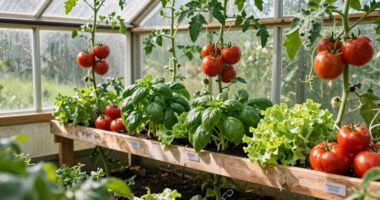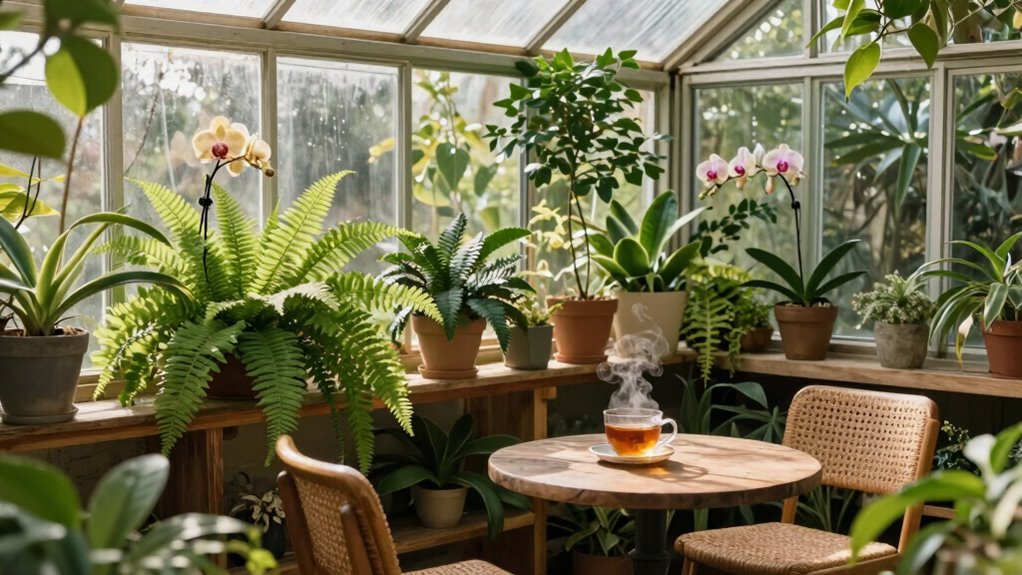

To make your greenhouse part of a more intentional home life, prioritize connecting daily routines with your plants through active gardening and mindful observation. Use it to cultivate herbs, vegetables, or flowers year-round, fostering sustainable habits and a deeper appreciation for natural cycles. Create a peaceful space that encourages reflection and eco-friendly practices like composting. By integrating these mindful habits, you’ll nurture your well-being and environmental consciousness—keep exploring to discover how to deepen these enriching connections even further.

Get garden gear delivered free with Prime
- Fast, free delivery on millions of items
- Prime Video, Amazon Music and more included
- Member-only deals all year
Key Takeaways
- Integrate greenhouse activities into daily routines, such as morning watering or evening reflection.
- Use the greenhouse to grow herbs and vegetables, promoting sustainable, homegrown meals.
- Design the space as a mindful retreat for relaxation, learning, and connection with nature.
- Practice eco-friendly maintenance like composting and water conservation to reinforce sustainability habits.
- Incorporate educational and reflective moments to deepen understanding of natural cycles and personal growth.
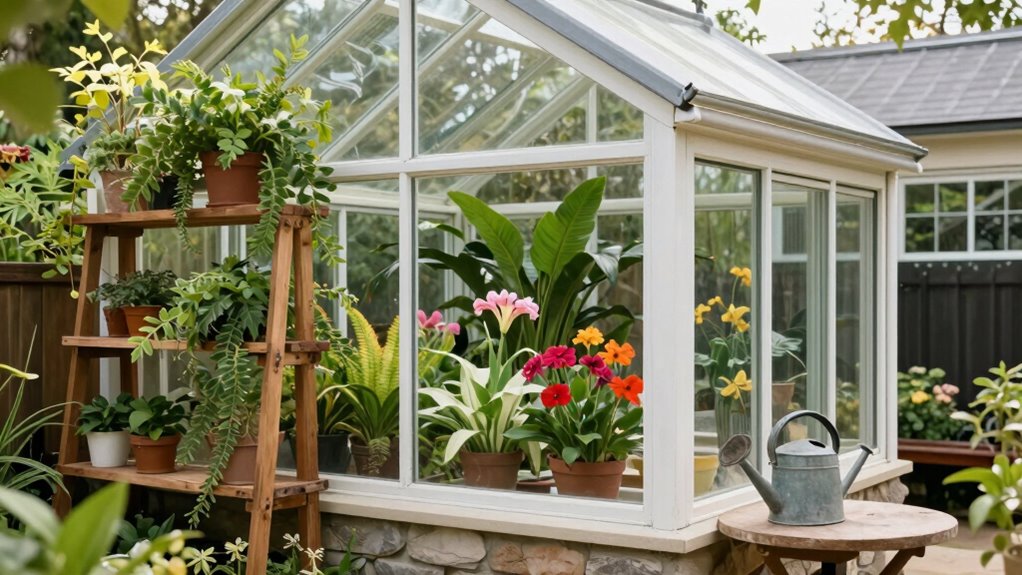
Have you ever considered how a greenhouse can transform your home into a more mindful and sustainable space? When you incorporate a greenhouse into your living environment, you open the door to a world of opportunities for indoor gardening and sustainable living. It’s not just about growing plants; it’s about creating a conscious connection between your daily routines and the environment. With a greenhouse, you can cultivate fresh herbs, vegetables, and flowers year-round, regardless of the weather outside. This consistency encourages you to embrace a more intentional lifestyle, where you’re actively participating in nourishing your body and mind through your own garden.
Indoor gardening becomes more accessible and enriching with a greenhouse because it extends your growing season and provides a controlled environment. You can learn to optimize sunlight, temperature, and humidity, which translates into healthier plants and more successful harvests. As you tend to your greenhouse, you develop a deeper appreciation for the natural cycles and the effort it takes to grow food and beauty. This process encourages patience, mindfulness, and a sense of achievement, fostering a more intentional approach to your home life. Additionally, understanding sustainable practices can help you make more eco-friendly decisions in your gardening routines. Incorporating eco-friendly practices into your greenhouse maintenance can further enhance its positive impact on the environment.
A greenhouse also reinforces your commitment to sustainable living. By growing your own produce, you reduce reliance on store-bought foods that often come with packaging waste and long transportation emissions. It’s about making conscious choices that lower your ecological footprint. Plus, a greenhouse can serve as a hub for composting organic waste, recycling nutrients, and implementing eco-friendly practices. These habits not only benefit the environment but also deepen your understanding of sustainability principles. Biodiversity is supported when you cultivate a variety of plants, helping to promote a balanced ecosystem within your home.
Integrating a greenhouse into your home encourages you to slow down and focus on the present moment. You become more aware of your role in the larger ecosystem, connecting with nature in a tangible way. Regularly caring for your plants reminds you to be intentional with your time and energy, aligning your actions with your values. Over time, this space becomes more than just a growing area; it becomes a sanctuary for reflection, learning, and mindful living.
Ultimately, making a greenhouse part of your home allows you to live more intentionally. It’s a simple yet powerful step toward fostering sustainability and cultivating a more mindful, connected lifestyle. As you nurture your indoor garden, you cultivate not only plants but also a deeper relationship with yourself and the environment.
Frequently Asked Questions
How Much Space Is Needed to Build a Greenhouse at Home?
You’ll need at least 6×8 feet of space for a small, functional greenhouse, but larger sizes like 10×12 feet offer more room for diverse plants and better garden design. Consider how urban aesthetics blend with your space — a compact greenhouse can enhance your home’s look without overwhelming it. Make sure you leave enough clearance for ventilation and access, integrating it seamlessly into your garden or backyard for an intentional, sustainable home life.
What Are the Best Plants for Beginner Greenhouse Gardeners?
For beginner greenhouse gardeners, start with hardy plants like herbs, lettuce, and radishes. These are easy to manage and grow quickly, giving you confidence and quick results. Focus on plant selection that adapts well to indoor environments, and follow simple gardening tips like maintaining consistent moisture and temperature. As you gain experience, you can experiment with more delicate plants, building your skills step by step.
How Do I Maintain Proper Temperature and Humidity Levels?
Remember, “A stitch in time saves nine.” To maintain proper temperature and humidity, you should use effective ventilation strategies like roof vents and exhaust fans, which help regulate airflow. Incorporate humidity control techniques such as misting or using a humidifier for moisture, and a dehumidifier or ventilation for drying excess humidity. Regularly monitor your greenhouse with a thermometer and hygrometer to keep conditions ideal for your plants’ health.
What Safety Precautions Should I Take When Building a Greenhouse?
When building a greenhouse, you should prioritize hazard prevention by carefully handling tools and materials, and always wearing safety gear like gloves, goggles, and a dust mask. Make certain proper ventilation, keep your workspace clean, and stabilize structures to prevent accidents. Additionally, follow manufacturer instructions and local building codes. These safety precautions help protect you from injuries and create a secure environment for your gardening endeavors.
How Can I Incorporate Sustainable Practices Into My Greenhouse?
They say, “Waste not, want not,” and that’s perfect for your greenhouse. You can incorporate sustainable practices by using rainwater harvesting to water your plants and practicing composting methods to enrich your soil naturally. These actions reduce reliance on external resources, lower costs, and support eco-friendly growth. Implementing these practices makes your greenhouse more sustainable, helping you cultivate a greener, more intentional home life.
Conclusion
By weaving a greenhouse into your daily routine, you create a sanctuary where sunlight filters softly through glass, nurturing both your plants and your spirit. Imagine stepping into this lush haven, the gentle hum of growth surrounding you as you tend to your garden with mindful intention. As seasons change outside, inside your greenhouse, life flourishes in your deliberate care, transforming your home into a vibrant, living demonstration to your commitment to a more intentional, connected life.
Fall yard work Picks
leaf blowers
As an affiliate, we earn on qualifying purchases.