To keep greens fresh twice as long, gently rinse and dry them thoroughly, then wrap them loosely in paper towels to absorb excess moisture. Place the greens in an airtight container or perforated bag and store in the crisper drawer of your fridge at a steady 35-40°F. Avoid exposing greens to ethylene-producing fruits. Following these simple steps helps maintain crispness, freshness, and extends shelf life—continue to discover more tips for keeping greens perfect longer.
Key Takeaways
- Rinse greens thoroughly in cold water and dry completely to prevent moisture buildup.
- Wrap greens loosely in paper towels to absorb excess moisture and maintain crispness.
- Store greens in airtight containers or resealable bags, removing as much air as possible.
- Keep greens in the fridge crisper drawer at a stable 35-40°F (1.5-4°C), away from ethylene-producing fruits.
- Regularly replace damp paper towels and check greens for spoilage to prolong freshness.
Why Do Greens Wilt Fast and How Can You Keep Them Fresh?
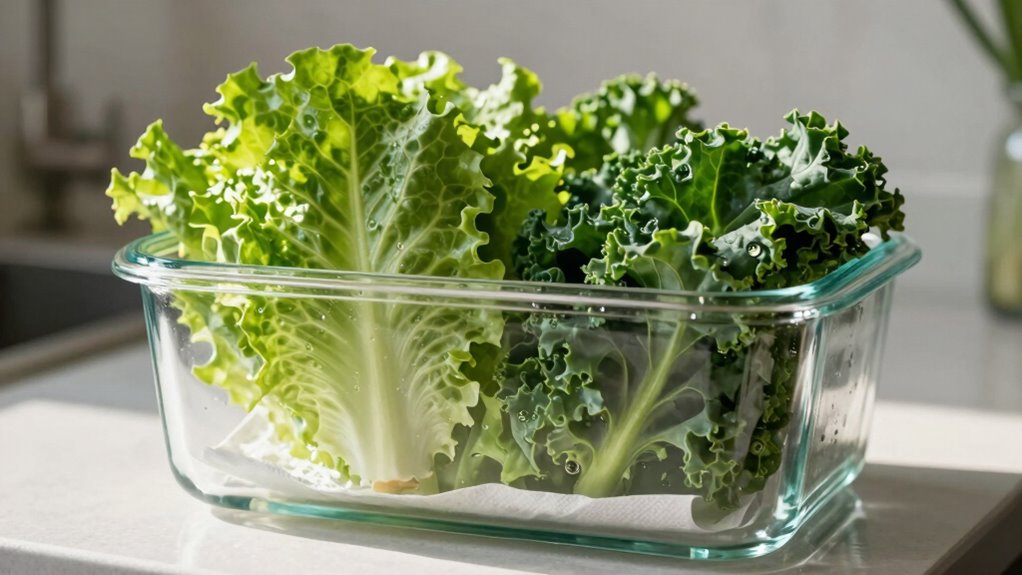
Greens tend to wilt quickly because they lose moisture through their leaves, especially when exposed to air, heat, or sunlight. In hydroponic farming, plants often stay fresher longer because their roots are kept in nutrient-rich water, reducing moisture loss. Using organic fertilizers in hydroponic setups promotes healthy growth and enhances the plant’s resilience to wilting. When greens are harvested, their delicate leaves start to dry out without proper storage, leading to wilting. To keep them fresh longer, avoid leaving greens exposed to direct sun or warm air. Instead, store them in a cool, moist environment. Understanding how moisture loss happens helps you choose better storage techniques, ensuring your greens stay crisp and vibrant for as long as possible. Additionally, maintaining proper storage conditions can significantly extend freshness and prevent wilting.
Essential Supplies to Keep Greens Crisp and Fresh
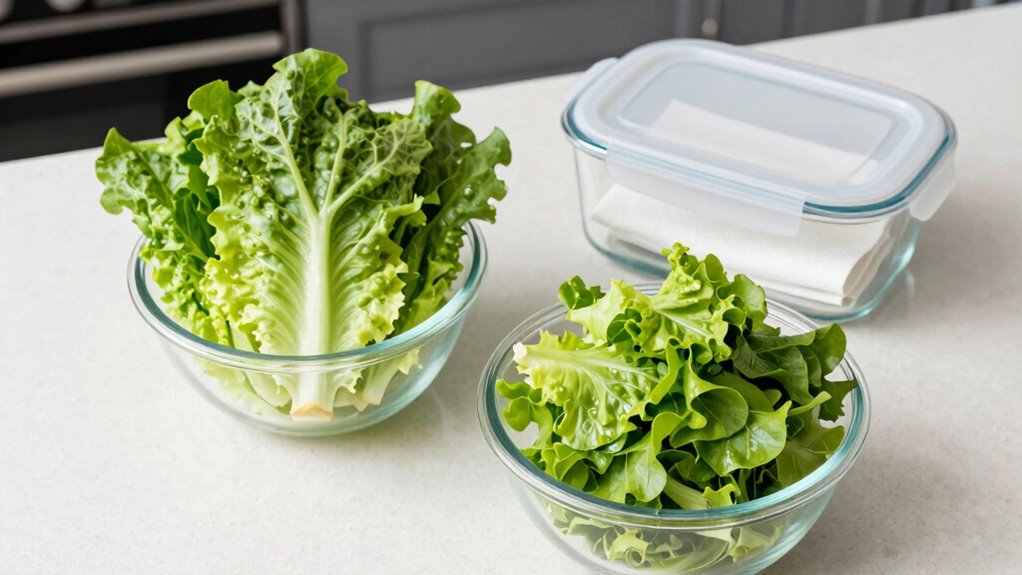
Keeping greens fresh requires more than just choosing the right storage spot; it also involves having the right supplies on hand. For effective green storage and vegetable preservation, gather supplies like airtight containers, plastic wrap, or resealable bags. Using paper towels inside containers helps absorb excess moisture, preventing greens from wilting. Consider a breathable produce bag for added airflow, which slows spoilage. A sharp knife or kitchen scissors is useful for trimming greens before storage, ensuring they stay fresh longer. Additionally, keeping a small container of clean, cold water nearby allows you to rinse greens quickly if needed. Proper storage techniques, such as humidity control, are essential for maintaining freshness. Incorporating proper ventilation can further extend the lifespan of your greens by reducing excess moisture and preventing mold growth. With these supplies, you can maintain ideal vegetable preservation, prolonging the crispness and freshness of your greens. Proper supplies make a significant difference in green storage success.
How to Prepare Greens Before Storing for Best Results

Before storing your greens, proper preparation is essential to maximize freshness. Start by gently rinsing the leaves with cool water to remove dirt and debris. After washing, carefully dry the greens using a salad spinner or pat them dry with paper towels, as excess moisture can cause spoilage. To prevent moisture buildup, consider leaf wrapping—wrap the greens loosely in a paper towel to absorb any remaining moisture. This helps control humidity and keeps the leaves crisp longer. Additionally, using air purifiers to remove airborne contaminants can help keep greens fresher for longer by reducing exposure to pollutants. Incorporating air purification systems into your storage area can further enhance freshness by filtering out harmful airborne particles. Being mindful of storage conditions, such as temperature and humidity, also plays a crucial role in extending the shelf life of your greens. Proper temperature control can significantly slow down the spoilage process and maintain their crispness.
How to Store Greens Step-by-Step to Keep Them Fresh Longer

To effectively store greens and extend their freshness, start by placing the prepared leaves in an airtight container or a resealable plastic bag. Gently wrap the green leaf bunches in paper towels to absorb excess moisture, which helps prevent wilting and spoilage. Guarantee you remove as much air as possible from the bag or container to promote moisture control and reduce oxidation. Store the greens in the crisper drawer of your fridge, where temperature and humidity are more stable. Regularly check the greens and replace paper towels if they become damp. This simple step minimizes excess moisture and keeps the greens crisp longer. Proper moisture control is key to maintaining freshness and preventing rapid spoilage, making your greens last twice as long. Additionally, understanding the ideal humidity levels in your fridge can further optimize freshness and prolong storage life, since humidity control helps maintain optimal conditions for leafy greens. Being aware of proper storage techniques can also help avoid common mistakes that lead to spoilage. Incorporating a whole-house water filtration system can ensure your fridge maintains consistent humidity levels, further supporting your efforts to keep greens fresh. Maintaining proper temperature regulation is also essential, as fluctuations can accelerate spoilage and reduce shelf life.
Keep Greens Fresh With Proper Humidity and Temperature

Maintaining the right humidity and temperature levels is essential for keeping greens fresh longer. Proper humidity control prevents greens from wilting or drying out, while temperature regulation slows spoilage. Keep your greens in the crisper drawer of your fridge, set between 32-40°F (0-4°C), to maintain ideal cooling. Avoid temperature fluctuations, which can cause spoilage. To manage humidity, store greens in perforated plastic bags or breathable containers that allow air circulation. This helps retain moisture without excess dampness that can promote mold. Ensuring the right balance is key: controlling humidity helps keep greens fresh and crisp. Additionally, understanding produce storage best practices can further extend freshness, particularly for delicate greens. Implementing European cloud server solutions in your storage systems can also enhance monitoring and control of environmental conditions, leading to better preservation. Regularly checking and adjusting storage conditions based on food safety guidelines ensures your greens stay fresh and safe for longer. Proper monitoring of these conditions can also be facilitated by advanced storage technologies, which provide real-time data to optimize freshness.
Mistakes That Make Greens Spoil Faster: and How to Avoid Them

One common mistake that speeds up greens’ spoilage is neglecting proper storage conditions, such as leaving them in airtight containers without airflow or exposing them to fluctuating temperatures. This creates an environment where greens can quickly decay. Avoid storing greens next to chemical preservatives or in conditions that mimic hydroponic farming setups without proper ventilation. Using sealed containers can trap moisture, encouraging mold growth and decay. Also, exposing greens to temperature swings accelerates spoilage. Instead, keep greens in breathable bags or containers with small holes to allow airflow. Properly managing storage conditions prevents excess moisture buildup and maintains freshness longer. Proper temperature management is essential for prolonging greens’ shelf life by slowing down microbial activity. Additionally, using proper storage techniques can significantly extend the shelf life of greens by maintaining optimal temperature and humidity levels. Being mindful of environmental factors such as light exposure and humidity helps further prolong freshness. Stay vigilant about temperature stability and avoid overusing chemical preservatives, which can mask spoilage signs and reduce greens’ shelf life. Maintaining consistent temperature control is crucial to slowing down the natural deterioration process and keeping greens fresh.
Signs Your Greens Are Still Fresh or Starting to Spoil

You’ll know your greens are still fresh if they maintain a vibrant color and firm texture. If they turn dull or feel slimy or limp, it’s a sign they’re starting to spoil. Recognizing these cues helps you decide when to use or discard your greens promptly. Well‑sourced coverage ensures that you can rely on accurate information to assess food freshness and spoilage.
Color Changes Indicate Spoilage
Color changes are a clear sign that greens may be starting to spoil. When you notice a shift in hue, it’s often a spoilage indicator. Fresh greens typically have vibrant, consistent color, while dullness or dark spots suggest they’re nearing the end of their freshness. Pay attention to these signs:
- Fading color or yellowing leaves
- Dark or brown spots appearing
- Uneven color patches
- Overall dullness compared to when you bought them
These color change signs signal that the greens are losing freshness and may soon spoil. Recognizing spoilage indicators early helps you decide whether to use them promptly or discard them. Staying alert to these visual cues ensures you enjoy fresh greens longer and avoid waste.
Slimy or Wilted Texture
A slimy or wilted texture is a strong indicator that greens are nearing spoilage. If your greens feel slimy to the touch, it’s a clear sign they’re past their prime and should be discarded to avoid health risks. Wilted texture, on the other hand, suggests the greens are losing moisture and freshness, but they may still be salvageable if they aren’t slimy. When greens become limp and floppy, they’re beginning to spoil, though they might still be usable in cooked dishes. Always check for an overly slimy surface or excessive wilting before using greens. Proper storage can slow down these changes, but once the slimy texture appears, it’s time to toss them for safety and quality.
Extra Tips to Keep Your Greens Fresh for Longer

To keep your greens fresh longer, start with proper washing techniques that remove dirt without damaging the leaves. Store them in ideal conditions—cool, dry, and airtight—to slow spoilage. Paying attention to these tips ensures your greens stay crisp and vibrant for more days.
Proper Washing Techniques
Washing your greens properly is essential to remove dirt, bacteria, and residual pesticides that can spoil their freshness. Fresh leafy greens benefit from gentle yet thorough washing to ensure they stay crisp longer. Use cold water and a large bowl or sink to rinse your greens. Swish them around gently to loosen dirt and contaminants. Avoid using soap or commercial produce washes, as they can leave residues. After washing, drain excess water and dry your greens thoroughly. Proper washing methods help prevent spoilage caused by bacteria and moisture.
- Use cold water for rinsing leafy greens
- Gently agitate to loosen dirt
- Avoid soaking for too long
- Dry thoroughly before storage
Optimal Storage Conditions
Ensuring your greens stay fresh longer depends on creating ideal storage conditions. Start by keeping them in the crisper drawer of your refrigerator, where humidity levels support freshness preservation. Use breathable produce bags or wrap greens loosely in paper towels to prevent excess moisture, which can cause spoilage. Avoid overcrowding, as good airflow helps maintain ideal temperature and humidity. Keep greens away from ethylene-producing fruits like apples or bananas, which accelerate spoilage. Set your refrigerator’s temperature to around 35-40°F (1.5-4°C) for best results. Regularly check stored greens for any signs of wilting or rot, removing affected leaves promptly. These simple storage tips ensure your greens stay fresh longer, allowing you to enjoy their crispness and nutrients for days.
Frequently Asked Questions
Can This Storage Method Be Used for Other Leafy Vegetables?
Yes, you can use this storage method for other leafy greens. Just place your greens in clean, breathable storage containers, and make sure to remove excess moisture. This helps prevent spoilage and keeps your leafy greens fresh longer. You’ll find that the same principles apply across different kinds of leafy vegetables, so your produce stays crisp and vibrant, saving you money and reducing waste.
How Long Can Greens Typically Stay Fresh Using This Technique?
You can typically keep greens fresh for up to two weeks using this leafy preservation method. By properly storing them, you markedly extend their freshness, making your greens last much longer than traditional methods. This technique works well for most leafy vegetables, ensuring that their texture and flavor stay vibrant. For ideal freshness extension, remember to keep greens dry and airtight, limiting exposure to moisture and air.
Does Washing Greens Before Storage Affect Their Longevity?
Washing greens before storage can actually reduce their shelf life, as excess moisture promotes spoilage. About 70% of people overlook the washing impact on freshness. To improve storage preparation, wash greens just before use, not before storing. Make certain they’re thoroughly dried with a salad spinner or paper towels. Proper drying minimizes moisture, helping your greens stay fresh longer and stay crisp for up to twice as long.
Is This Method Suitable for Commercial Green Storage?
Yes, this method is suitable for commercial storage and large-scale preservation. It effectively extends the freshness of greens, helping you reduce waste and maintain quality over longer periods. By implementing this simple approach, you can optimize your storage process, guarantee greens stay fresh longer, and improve your supply chain efficiency. It’s a practical solution that benefits both small and large operations, making your produce more appealing and cost-effective.
What Are Common Mistakes That Reduce Greens’ Shelf Life?
You often reduce greens’ shelf life by ignoring wilted leaves and improper sealing. Wilted leaves indicate dehydration, so you should remove them promptly. Improper sealing allows air and moisture to spoil greens faster, causing wilting and decay. Make sure you store greens in an airtight container or plastic bag, removing excess air. Also, keep greens cold and dry, and avoid crushing them, which can accelerate wilting and spoilage.
Conclusion
By mastering this simple storage method, you’ll turn your greens into a vibrant, crunchy garden in your fridge. Think of it as giving your greens a cozy, humidity-rich blanket that keeps them lively and fresh, like a lush meadow untouched by time. With just a few mindful steps, you’ll watch your greens stay crisp and delicious, transforming your fridge into a fresh-keeper’s paradise. Your greens will thank you with every crunchy, flavorful bite.