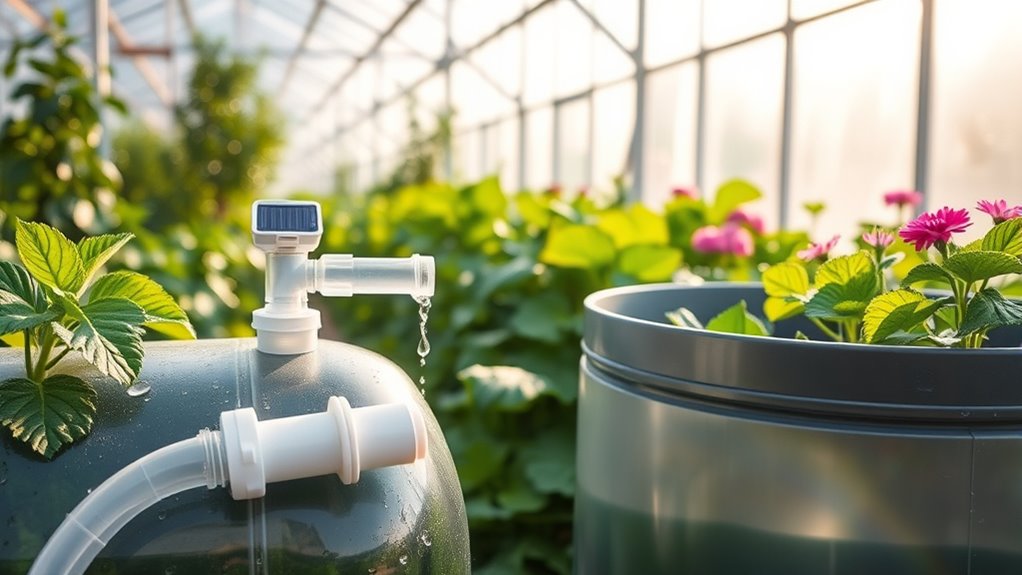

By adopting sustainable watering in your greenhouse, you can efficiently reuse greywater from sinks or laundry for irrigation and harvest rainwater using rain barrels or tanks. These methods reduce your reliance on fresh water, lower bills, and protect local resources. Proper filtration and eco-friendly soaps are vital for safety. If you’re interested in learning how these techniques can create a more eco-friendly greenhouse, continue exploring the benefits and implementation tips.
Key Takeaways
- Greywater recycling reuses wastewater from sinks, showers, and laundry for greenhouse irrigation, conserving fresh water resources.
- Rainwater harvesting captures runoff from roofs, providing a sustainable, cost-effective water source for greenhouse plants.
- Proper filtration and eco-friendly soaps prevent clogging and protect plants when using greywater or rainwater.
- Covering storage tanks and installing first-flush diverters minimize contamination, mosquitoes, and debris in recycled water systems.
- Implementing these methods reduces water bills, supports environmental conservation, and promotes resilient greenhouse operations.
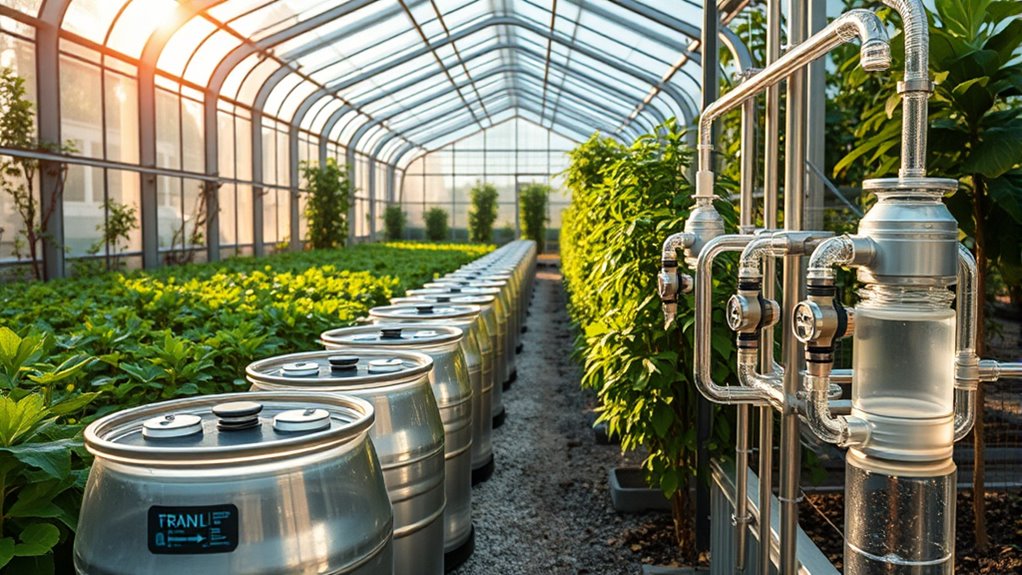
Water is an essential resource, and practicing sustainable watering helps guarantee it remains available for future generations. If you’re managing a greenhouse, you can make a significant impact by implementing methods like greywater recycling and rainwater harvesting. These strategies not only conserve water but also create a more resilient and environmentally friendly operation. Greywater recycling involves capturing wastewater from sources like sinks, showers, or laundry, and reusing it for irrigation. This reduces the volume of fresh water you need to draw from natural sources and minimizes the amount of wastewater sent to treatment facilities. When you set up a greywater system, you guarantee that water used for cleaning or personal hygiene doesn’t go to waste; instead, it nourishes your plants, saving you money and reducing your ecological footprint.
Implement greywater recycling to conserve water and nourish your plants sustainably.
Rainwater harvesting is another effective way to supplement your greenhouse watering needs. By collecting rain runoff from roofs or other surfaces, you establish a sustainable water source that’s free and readily available. Installing rain barrels or larger storage tanks allows you to gather rainwater during wet periods, which you can then use during dry spells or when watering your plants. This method decreases your reliance on municipal water supplies and helps prevent stormwater runoff from causing erosion or pollution elsewhere. When combined, greywater recycling and rainwater harvesting form a holistic approach to sustainable watering that maximizes resource use and minimizes waste. Water conservation is a key principle that underpins these strategies, ensuring you’re making the most of available resources.
Integrating these systems into your greenhouse requires some planning, but the benefits are well worth the effort. Make sure your greywater system is properly filtered to prevent clogging and bacterial growth, and use eco-friendly soaps to avoid harming your plants or soil. With rainwater harvesting, ensure your storage tanks are covered to prevent mosquito breeding and algae growth. You can also incorporate simple filtration or first-flush diverters to keep debris and contaminants out of your storage. Both methods promote a closed-loop water cycle, which reduces your dependence on external sources and helps you adapt to changing water availability.
Practicing sustainable watering through greywater recycling and rainwater harvesting demonstrates your commitment to environmental conservation. It’s a practical way to reduce water bills, protect local water supplies, and create a healthier environment for your plants and the planet. By adopting these methods, you’re not only ensuring your greenhouse remains productive but also playing a part in safeguarding water resources for generations to come.
Frequently Asked Questions
How Do Greywater Systems Impact Local Wildlife?
Greywater systems can affect local wildlife by causing wildlife disturbance if not properly managed. When used carefully, they help maintain ecosystem balance by reducing reliance on freshwater sources. However, if greywater contains chemicals or contaminants, it may harm animals or disrupt their habitats. You should guarantee your greywater system is designed to prevent wildlife disturbance and protect the ecosystem balance, promoting a healthy environment for all living creatures.
What Are the Legal Regulations for Greywater Use in Greenhouses?
You need to know that legal regulations for greywater use in greenhouses vary by region, so you don’t want to step on any toes. It’s essential to verify legal compliance and understand water rights before setting up your system. Think of it as crossing a busy street—you must look both ways first. Check local laws, obtain necessary permits, and follow guidelines to keep your project legal and sustainable.
How Can Rainwater Be Effectively Stored in Small-Scale Setups?
You can effectively store rainwater in small-scale setups by using a properly positioned storage tank, ideally placed on a stable, elevated surface to facilitate gravity-fed filtration. Start with rainwater filtration to remove debris before it enters your tank. Make certain your tank has a secure lid to prevent contamination and mosquito breeding. Regularly clean and inspect the tank, and direct runoff from your roof to maximize collection efficiency.
Are There Specific Plants That Benefit Most From Greywater?
You’ll find that plants with high water absorption and adaptable plant suitability, like ornamental grasses, fruit trees, and vegetables, benefit most from greywater. These plants can tolerate the slightly different nutrient profile and potential contaminants in greywater. To maximize benefits, choose plants that thrive with consistent moisture and monitor their response, adjusting watering as needed to prevent overwatering or stress, ensuring healthy growth and efficient water use.
What Maintenance Is Required for Rainwater Harvesting Systems?
Coincidentally, maintaining your rainwater harvesting system is straightforward. You need to regularly check and clean the filters to prevent clogging and assure water purity. Tank cleaning is essential to remove debris, algae, or sediment buildup that can contaminate your stored water. By staying on top of filter maintenance and tank cleaning, you keep your system efficient and your plants healthy, making your sustainable watering setup truly effective.
Conclusion
By embracing greywater and rain collection, you’re tapping into nature’s own resources, much like Pandora opening her box to reveal hope. You play a part in nurturing your greenhouse while protecting the planet’s precious water. Every drop you save echoes the wisdom of ancient gardens where harmony with nature thrived. So, continue this sustainable journey—your efforts not only grow healthier plants but also nurture a greener, more resilient Earth for generations to come.