Create a home routine that combines planting, harvesting, and meal planning to enjoy your homegrown produce regularly. Start by scheduling planting those crops best suited to your climate and tracking key dates. Dedicate weekly time to harvesting and using fresh ingredients in meals, adjusting grocery shopping accordingly. Preserve surplus produce for later. Keep a garden journal to refine your process over time. By integrating these steps, you’ll maximize your harvest and savor the flavors, and you’ll discover more ways to improve your routine.

Get garden gear delivered free with Prime
- Fast, free delivery on millions of items
- Prime Video, Amazon Music and more included
- Member-only deals all year
Key Takeaways
- Plan meals around current harvests to ensure fresh consumption and reduce waste.
- Maintain a garden journal to track planting, harvest, and successful recipes for future use.
- Incorporate regular harvests into routines to prevent overripe produce and encourage ongoing growth.
- Use preservation methods like freezing or pickling to extend harvest usability year-round.
- Adjust grocery shopping based on garden yields to complement homegrown ingredients and minimize waste.
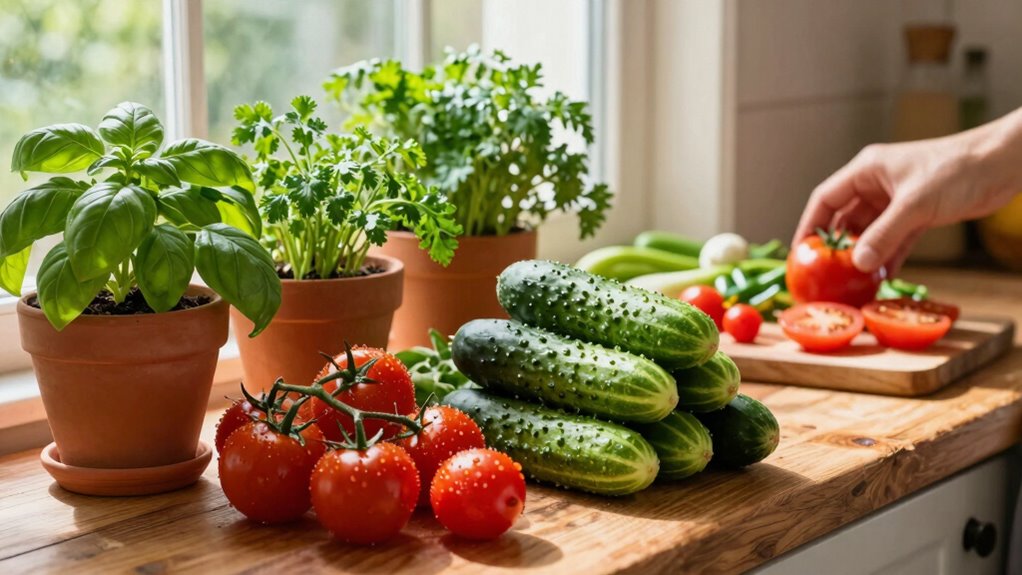
Growing your own food is a rewarding way to guarantee fresh, healthy meals, but turning your garden into a reliable source for daily eating requires a thoughtful routine. To make this happen, you need to develop a system that consistently connects gardening efforts with your meal planning. This means applying effective gardening tips and aligning your planting schedule with your weekly menu. When you plan your meals around what’s growing, you prevent waste and assure you’re eating produce at its peak freshness.
Start by choosing crops that suit your climate and growing season. Incorporate gardening tips that promote healthy growth—like proper spacing, soil preparation, and watering routines—so your plants thrive. When you understand how long different vegetables take to mature, you can plan your planting schedule accordingly. For example, if you know that tomatoes ripen in 70 days, you’ll time your planting so they’re ready when you want to include them in your meals. This foresight minimizes the chances of ending up with surplus produce that might spoil before you get around to eating it.
Choose crops suited to your climate and plan planting schedules around their maturation times to reduce waste and enjoy peak freshness.
Meal planning plays a vital role in maintaining a home routine that encourages you to eat what you grow. Dedicate some time each week to designing your meals around the harvest. For instance, if your garden is abundant with greens or herbs, plan salads, pestos, or wraps that highlight these ingredients. Adjust your grocery shopping to focus on complementary items rather than bulk buying produce you already have. This approach not only reduces waste but also reinforces your commitment to eating from your garden. Incorporating crop rotation techniques can help improve soil health and increase your yields over time.
Another key tip is to harvest consistently. Regularly picking ripe vegetables and herbs encourages continued production and prevents overripe or rotting produce. Incorporate harvest days into your routine, and immediately use or preserve what you pick. Freezing herbs, pickling vegetables, or drying herbs ensures you have access to your homegrown foods year-round, making it easier to stick to your meal plans. Using gardening insights can help you optimize your harvest timing and crop selection for better yields. Paying attention to soil health can significantly impact your overall harvest quality and plant vitality, leading to more predictable and bountiful results. Additionally, understanding plant growth cycles can further enhance your planning and productivity, ensuring you maximize your garden’s potential throughout the year.
Lastly, keep a garden journal or log. Record planting dates, harvest times, and what dishes work best with each crop. This record helps refine your gardening tips and meal planning over time, creating a cycle that becomes second nature. When your routine integrates these practices, you’ll find it easier to eat what you grow—turning your garden into a sustainable, delicious source of daily nourishment. Incorporating garden management techniques can further streamline this process and ensure continuous growth and productivity.
garden harvest storage containers
As an affiliate, we earn on qualifying purchases.
As an affiliate, we earn on qualifying purchases.
Frequently Asked Questions
How Can I Start a Home Gardening Routine With Limited Space?
Start your home gardening routine by using container gardening and vertical planting to maximize limited space. Choose small pots or containers for herbs, vegetables, or flowers, and stack or hang planters to create vertical layers. You can place containers on windowsills, balcony railings, or wall-mounted shelves. Consistently water, fertilize, and monitor your plants, making gardening a daily habit that fits even the tightest spaces.
What Are Quick Tips for Harvesting and Storing Homegrown Produce?
Don’t let your harvest go to waste; timing is everything. Pick produce early in the morning for peak freshness, then cool and refrigerate promptly. Use composting techniques to enrich soil for future crops, and practice crop rotation to prevent disease. Store root vegetables in a cool, dark place, and preserve herbs by drying or freezing. These quick tips keep your homegrown bounty fresh and thriving, making the most of your efforts.
How Do I Prevent Pests Without Using Chemicals?
To prevent pests naturally, you should use natural repellents like neem oil or homemade garlic spray. Additionally, practice companion planting by pairing your vegetables with pest-repelling plants like marigolds or basil. These methods create a barrier that discourages pests without chemicals, keeping your garden healthy and organic. Consistent monitoring and encouraging beneficial insects also help maintain pest control naturally.
What’s the Best Way to Plan a Year-Round Garden?
You can plan a year-round garden by understanding that companion planting boosts plant health and pest control, making your garden more resilient. Start by rotating crops to prevent soil depletion and enrich the soil with compost regularly. Map out your planting schedule based on your climate, staggering crops and utilizing season extenders like cold frames. This approach guarantees continuous harvests and a thriving, sustainable garden throughout the year.
How Can I Involve Children in My Gardening and Eating Routine?
You can involve children in your gardening and eating routine by making family involvement fun and educational. Let them help with planting, watering, and harvesting, turning it into a learning experience. Incorporate their favorite vegetables into meal planning, so they feel excited to eat what they’ve grown. Encourage kids to share their ideas and take ownership of small tasks, fostering a love for healthy eating and gardening as a family activity.
Conclusion
By establishing a consistent home routine, you’ll naturally eat more of what you grow. For instance, Sarah started dedicating Sunday mornings to harvest and prep her veggies, making it easy to incorporate fresh produce into her week. Over time, her meals became healthier, and she felt more connected to her food. Stick to a routine like this, and you’ll find it’s not just about growing food — it’s about creating a sustainable, nourishing habit that benefits your entire family.
Halloween Picks
halloween
As an affiliate, we earn on qualifying purchases.