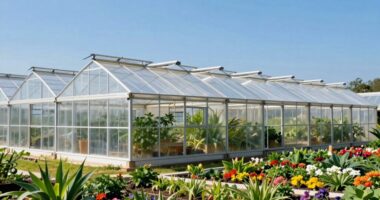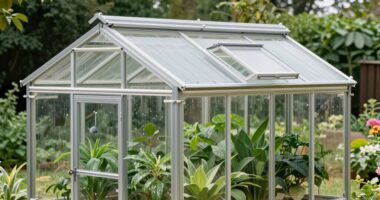
The best traditional greenhouse overall in this roundup is the Coumy 8 x 14 ft Aluminum and Polycarbonate Walk-In Greenhouse, with a roomy footprint and a durable-feeling material combination suited to serious home growing. For a wood-frame alternative, the Backyard Discovery Bellerose XL adds a pergola-style outdoor feature, while the Jocisland 6 × 12 ft offers a more compact walk-in layout with two roof vents. The main tradeoffs are growing space versus yard footprint, rigid panels versus portable covers, and lower upkeep versus the look of timber. I compare all 13 options by their size, materials, ventilation, usability, and likely maintenance demands. Read on for the full breakdown and guidance on matching a greenhouse to your garden.

Get garden gear delivered free with Prime
- Fast, free delivery on millions of items
- Prime Video, Amazon Music and more included
- Member-only deals all year
Complete the kit


Key Takeaways
- Walk-in aluminum-and-polycarbonate models lead on practical growing space: the Coumy 8 x 14 ft and Garvee 6 × 10 ft offer rigid-panel layouts, while the larger Coumy needs more room and site preparation.
- Wood options vary beyond appearance: the Backyard Discovery Bellerose XL pairs cedar construction with a pergola, while the IDEALHOUSE 6 x 8 ft and Rotihom 7 × 8 ft focus on more compact growing footprints.
- Ventilation is a differentiator, not an afterthought: the Jocisland 6 × 12 ft includes two roof vents, and the IDEALHOUSE has an adjustable roof vent; buyers should compare vent placement and airflow against their climate.
- Pop-up models prioritize flexibility over a permanent structure: the Sannwsg and EAGLE PEAK are easier to treat as seasonal setups, but their covered construction does not offer the same rigid-panel experience as the aluminum and wood models.
- Large footprints demand more than extra planting space: the AMERLIFE hybrid and Outsunny walk-in designs need suitable ground, access, and a plan for anchoring and ventilation before purchase.
| 6 x 4 ft Polycarbonate Greenhouse with Hygrometer | 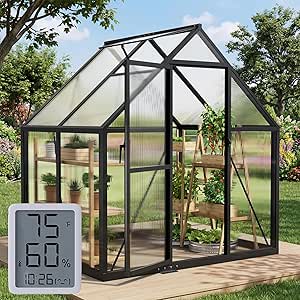 | Best Compact Traditional Greenhouse | Dimensions: 6 × 4 ft | Frame material: Aluminum alloy | Panel material: Double-wall polycarbonate | VIEW LATEST PRICE | See Our Full Breakdown |
| Jocisland 6 × 12 ft Walk-In Polycarbonate Greenhouse with Two Roof Vents |  | Best Value for Walk-In Growing Space | Dimensions: 6 × 12 × 6.4 ft | Frame material: Aluminum | Panel material: 4 mm polycarbonate | VIEW LATEST PRICE | See Our Full Breakdown |
| Coumy 8 x 14 ft Aluminum and Polycarbonate Walk-In Greenhouse |  | Best for Ventilation and Access | Model: DJ1286 | Dimensions: 160.98 in D × 87.8 in W × 85 in H | Frame: Reinforced aluminum | VIEW LATEST PRICE | See Our Full Breakdown |
| Sannwsg 8 × 6 ft Walk-In Pop-Up Greenhouse |  | Best for Fast, Tool-Free Setup | Size: 8 × 6 ft | Dimensions: 117 × 117 × 102 in | Frame material: Alloy steel | VIEW LATEST PRICE | See Our Full Breakdown |
| AMERLIFE 12 x 10 x 8 ft Hybrid Polycarbonate Greenhouse |  | Best Premium Large-Capacity Greenhouse | Dimensions: 12 × 10 × 8 ft | Usable volume: 435 cu. ft. | Weight: 245 lb | VIEW LATEST PRICE | See Our Full Breakdown |
| EAGLE PEAK 8 x 6 ft Pop-Up Walk-In Greenhouse, Green |  | Best for Quick Setup | Dimensions: 98.4 x 70.9 x 91.7 in | Footprint: 8 x 6 ft | Weight: 37.3 lb | VIEW LATEST PRICE | See Our Full Breakdown |
| Garvee 6 × 10 ft Aluminum Greenhouse with Polycarbonate Panels |  | Best for Weather-Focused Stability | Dimensions: 6 × 10 ft | Item length: 120 inches | Frame material: Aluminum | VIEW LATEST PRICE | See Our Full Breakdown |
| Modern Shade 6.5 x 10 ft Cedar Wood Greenhouse with Charging Ports |  | Best for Built-In Gardening Conveniences | Dimensions: 6.5 x 10 ft | Peak height: 8 ft | Frame material: FSC-certified cedar wood | VIEW LATEST PRICE | See Our Full Breakdown |
| IDEALHOUSE 6 x 8 ft Wooden Greenhouse with Adjustable Roof Vent and Lockable Door |  | Best Compact Wooden Greenhouse | Dimensions: 6 x 8 ft | Frame material: Spruce wood | Panel material: PC panels | VIEW LATEST PRICE | See Our Full Breakdown |
| Jocisland 10 x 13.2 ft Wooden Greenhouse |  | Best for Maximum Growing Space | Dimensions: 13.2 × 10 × 8 ft | Wall height: 5.45 ft (166 cm) | Peak height: 7.68 ft (234 cm) | VIEW LATEST PRICE | See Our Full Breakdown |
| Rotihom 7 × 8 ft Wooden Greenhouse with 9 mm Polycarbonate Panels |  | Best for a Well-Equipped Mid-Size Wooden Greenhouse | Size: 7 × 8 ft | Dimensions: 93.3 × 84.6 × 80.3 in | Weight: 226 lb | VIEW LATEST PRICE | See Our Full Breakdown |
| Outsunny Outdoor Walk-In Greenhouse, 11.5 x 10 x 6.5 ft, Green |  | Best for Seasonal Growing on a Flexible Footprint | Size: 11.5 × 10 × 6.5 ft | Dimensions: 137.75 × 118 × 78.75 in | Weight: 34.1 lb | VIEW LATEST PRICE | See Our Full Breakdown |
| Backyard Discovery Bellerose XL Cedar Wood Greenhouse with Pergola |  | Best Premium Traditional Greenhouse | Dimensions: 13 × 11 ft | Interior space: 143 sq ft | Materials: Cedar wood and four-wall polycarbonate | VIEW LATEST PRICE | See Our Full Breakdown |
| traditional greenhouse | Dimensions | Frame material | Ventilation |
|---|---|---|---|
| 6 x 4 ft Polycarbonate Greenho | 6 × 4 ft | Aluminum alloy | Adjustable roof vents |
| Jocisland 6 × 12 ft Walk-In Po | 6 × 12 × 6.4 ft | Aluminum | — |
| Coumy 8 x 14 ft Aluminum and P | 160.98 in D × 87.8 in W × 85 in H | — | 4 adjustable windows |
| Sannwsg 8 × 6 ft Walk-In Pop-U | 117 × 117 × 102 in | Alloy steel | — |
| AMERLIFE 12 x 10 x 8 ft Hybrid | 12 × 10 × 8 ft | Aluminum | 2 adjustable roof vents |
| EAGLE PEAK 8 x 6 ft Pop-Up Wal | 98.4 x 70.9 x 91.7 in | Alloy steel | 2 mesh windows |
| Garvee 6 × 10 ft Aluminum Gree | 6 × 10 ft | Aluminum | Adjustable vents |
| Modern Shade 6.5 x 10 ft Cedar | 6.5 x 10 ft | FSC-certified cedar wood | Four fans in a front-to-back configuration; description also refers to natural wind |
| IDEALHOUSE 6 x 8 ft Wooden Gre | 6 x 8 ft | Spruce wood | — |
| Jocisland 10 x 13.2 ft Wooden | 13.2 × 10 × 8 ft | Cedar | — |
| Rotihom 7 × 8 ft Wooden Greenh | 93.3 × 84.6 × 80.3 in | — | — |
| Outsunny Outdoor Walk-In Green | 137.75 × 118 × 78.75 in | — | — |
| Backyard Discovery Bellerose X | 13 × 11 ft | — | Temperature-activated exhaust fan and 2 windows |
More Details on Our Top Picks
6 x 4 ft Polycarbonate Greenhouse with Hygrometer
For a traditional greenhouse in a modest footprint, this 6 x 4 ft aluminum-and-polycarbonate model offers a more permanent setup than the Sannwsg pop-up, with rigid panels and an adjustable roof vent. Its double-wall, 4 mm panels are designed to buffer plants from weather and filter UV rays, while the lockable door adds a practical security feature. The smaller interior suits gardeners who want a dedicated growing area without committing to a walk-in structure as large as the Jocisland 6 × 12 ft. That compact size is also the main limit: there is less room for staging, tools, or multiple growing zones. Assembly may take help, and the listed guidance says glass glue may be needed at panel gaps, so expect some attention to fit rather than a completely hands-off build.
Pros:- Double-wall 4 mm polycarbonate panels are designed for weather and UV protection.
- Adjustable roof vents allow airflow when the interior warms up.
- Lockable door offers a more secure closure than a simple cover.
- Labeled parts, instructions, and assembly tools are included.
Cons:- Assembly may require another person.
- Panel gaps may need glass glue for added reinforcement.
- Limited floor area restricts bench space and movement.
Best for: Gardeners with limited yard space who want a rigid-panel greenhouse for starting seedlings and protecting a focused collection of plants.
Not ideal for: Gardeners who need room to walk between several benches or store tools inside; the 6 × 4 ft footprint is smaller than the Jocisland 6 × 12 ft.
- Dimensions:6 × 4 ft
- Frame material:Aluminum alloy
- Panel material:Double-wall polycarbonate
- Panel thickness:4 mm
- Panel weight:580 g
- Ventilation:Adjustable roof vents
- Door:Lockable
- Included:Labeled parts, instructions, and assembly tools
Our verdict“Choose this compact rigid-panel greenhouse if you want a traditional structure for a small growing area and can accept a snug interior and some panel-gap reinforcement.”
Jocisland 6 × 12 ft Walk-In Polycarbonate Greenhouse with Two Roof Vents
The Jocisland makes the list for a useful middle ground: it provides a 6 × 12 ft walk-in growing area without the larger footprint and more involved build of the AMERLIFE 12 × 10 × 8 ft. Its aluminum frame and 4 mm polycarbonate panels create a conventional rigid-panel structure, and the two adjustable roof vents give growers more control over heat buildup than the compact 6 × 4 ft greenhouse. The panels are specified to block 99.99% of UV rays, and stakes and bolts are included for anchoring. The tradeoff is that size and stability depend on careful setup: assembly calls for two people, and wind resistance depends on secure installation. This is a sensible choice for gardeners who want walk-in access and room for tools, but not the broad capacity or extra features of a much larger model.
Pros:- Walk-in 6 × 12 ft footprint provides room for plants and gardening tools.
- Two adjustable roof vents support airflow and heat management.
- 4 mm polycarbonate panels are specified to block 99.99% of UV rays.
- Ground stakes and bolts are included for anchoring.
Cons:- Assembly is specified for two people.
- Wind resistance depends on secure anchoring and installation.
- One swing door provides less access flexibility than the Coumy’s two lockable doors.
Best for: Home gardeners who want a walk-in greenhouse with space for plants and basic tools, plus a two-person assembly plan.
Not ideal for: Solo builders or gardeners in exposed, windy locations who cannot secure the structure carefully; installation quality affects wind resistance.
- Dimensions:6 × 12 × 6.4 ft
- Frame material:Aluminum
- Panel material:4 mm polycarbonate
- UV protection:Blocks 99.99% of UV rays
- Door:1 swing door
- Roof vents:2 adjustable vents
- Assembly time:About 2–3 hours with two people
- Anchoring:Ground stakes and bolts included
Our verdict“Pick the Jocisland if you want a roomy, conventional walk-in greenhouse without stepping up to the AMERLIFE’s much larger footprint.”
Coumy 8 x 14 ft Aluminum and Polycarbonate Walk-In Greenhouse
The Coumy stands apart from the Jocisland 6 × 12 ft with a wider, longer walk-in layout and two lockable doors, making it a better fit for gardeners who want access from both ends of a growing space. Four adjustable windows offer more ventilation points than the Jocisland’s two roof vents, while rain gutters and six ground anchors add useful outdoor details. Its reinforced aluminum frame and UV-blocking panels keep the design in the traditional rigid-panel category rather than the fabric-covered style of the Sannwsg pop-up. Those advantages come with setup caveats: the greenhouse ships in two packages, and panel gaps may need glass glue for a tighter, more stable fit. The listed dimensions also call for generous yard space. I’d choose it over the Jocisland when access and ventilation matter more than a simpler, smaller footprint.
Pros:- Four adjustable windows provide multiple points for airflow.
- Two lockable doors allow access from both ends.
- Six ground anchors and a reinforced aluminum frame support outdoor setup.
- Rain gutters offer a way to manage roof runoff.
Cons:- Ships in two separate packages.
- Panel gaps may need glass glue for added stability and tightness.
- Large dimensions require substantial yard space.
Best for: Gardeners with room for a large walk-in structure who want multiple ventilation points, two-door access, and rain gutters.
Not ideal for: Small-yard owners or buyers seeking a straightforward single-package build; this model has a large footprint, ships in two packages, and may need panel-gap reinforcement.
- Model:DJ1286
- Dimensions:160.98 in D × 87.8 in W × 85 in H
- Frame:Reinforced aluminum
- Panels:UV-blocking polycarbonate
- Ventilation:4 adjustable windows
- Doors:2 lockable doors
- Anchors:6 ground anchors
- Additional feature:Rain gutters
Our verdict“Choose the Coumy over the Jocisland if you have the space and prioritize two-door access and more ventilation points.”
Sannwsg 8 × 6 ft Walk-In Pop-Up Greenhouse
This is the outlier in a roundup focused on traditional greenhouses: the Sannwsg has a folding alloy-steel frame and PE cover, not the rigid polycarbonate panels found on the Jocisland or Coumy. Its place here is for gardeners who value quick setup and seasonal flexibility over a fixed, hard-panel structure. The preassembled frame opens and folds without tools, and the walk-in layout offers more room to tend plants than a compact 6 × 4 ft greenhouse. A screened roll-up window provides ventilation, while included thermometers and plant growth lights add accessories that the other listed rigid-panel models do not specify. The compromise is durability and climate control: only one vent is listed, and a PE cover is a different, more flexible enclosure than a traditional polycarbonate shell. Choose it for convenience, not for the sturdier feel of the Jocisland.
Pros:- Preassembled frame opens and folds without tools.
- Walk-in size gives room to handle plants inside.
- Screened roll-up window supports ventilation.
- Indoor thermometers and plant growth lights are included.
Cons:- PE cover does not provide the rigid-panel construction of the Jocisland or Coumy.
- Only one vent is listed, limiting ventilation options.
- Zipper closure may be less secure and robust than a rigid greenhouse door.
Best for: Seasonal gardeners who want a walk-in growing shelter that can be opened and folded without tools, with lights and thermometers included.
Not ideal for: Buyers seeking a permanent rigid-panel greenhouse or multiple ventilation points; the PE cover and single listed vent are less suited to that preference.
- Size:8 × 6 ft
- Dimensions:117 × 117 × 102 in
- Frame material:Alloy steel
- Cover material:Polyethylene (PE)
- Vents:1 screened roll-up window
- Closure:Zipper
- Usage:Outdoor
- Included accessories:Indoor thermometers and plant growth lights
Our verdict“Pick the Sannwsg for easy seasonal setup and included accessories, but choose a rigid-panel model if permanence is your priority.”
AMERLIFE 12 x 10 x 8 ft Hybrid Polycarbonate Greenhouse
For gardeners planning a substantial growing space, the AMERLIFE combines the largest listed footprint in this batch with 435 cu. ft. of usable volume. Its hybrid clear and translucent polycarbonate panels offer more variation in light transmission than the single-panel descriptions for the Jocisland and Coumy, while two swing doors and two adjustable roof vents support access and airflow. The listed wind resistance of up to 56 mph and snow load of up to 18 psf give buyers concrete load figures to weigh against their local conditions, though they do not replace proper installation. Compared with the Coumy, this model adds more stated structural capacity and a quick-connect assembly system, but its 245 lb weight and roughly six-hour, three-person assembly make it a serious project. It makes sense when capacity matters more than a quick or solo build.
Pros:- 435 cu. ft. of usable volume supports multiple growing areas.
- Clear and translucent panels offer different light-transmission qualities.
- Wind resistance up to 56 mph and snow load up to 18 psf are specified.
- Two swing doors, adjustable vents, integrated gutters, and quick-connect assembly are included.
Cons:- Assembly is listed at about six hours with three people.
- At 245 lb, the structure is heavy to move and position.
- Its 12 × 10 ft footprint needs more yard space than the Jocisland or Coumy.
Best for: Experienced gardeners or households planning multiple growing zones who have a large, suitable site and several people available for assembly.
Not ideal for: Small-yard owners, solo assemblers, or anyone unable to handle a 245 lb structure and a build listed at about six hours with three people.
- Dimensions:12 × 10 × 8 ft
- Usable volume:435 cu. ft.
- Weight:245 lb
- Frame material:Aluminum
- Cover material:Hybrid clear and translucent polycarbonate
- Doors:2 swing doors
- Ventilation:2 adjustable roof vents
- Wind resistance:Up to 56 mph
- Snow load:Up to 18 psf
Our verdict“Choose the AMERLIFE if you need a large, feature-rich traditional greenhouse and have the space and crew for a demanding installation.”
EAGLE PEAK 8 x 6 ft Pop-Up Walk-In Greenhouse, Green
Among these traditional-greenhouse options, the EAGLE PEAK is the pick for growers who value a simple setup over a permanent, rigid structure. Its pre-assembled steel frame is designed for one-person, tool-free setup, while the 8 x 6 ft walk-in footprint gives you room to tend plants and add shelving. A roll-up door and two mesh windows offer basic access and airflow. Compared with the Garvee aluminum greenhouse, this pop-up model is easier to put in place but relies on a flexible polyethylene cover rather than polycarbonate panels and reinforced anchors. That makes it a less substantial choice for a long-term garden structure. Shelving is not included, and the one-year limited protection is brief. I’d choose it for straightforward seasonal growing, not for buyers seeking a fixed, weather-focused greenhouse.
Pros:- Pre-assembled steel frame is designed for one-person, tool-free setup
- Walk-in 8 x 6 ft footprint leaves room to work and add shelving
- Roll-up zippered door and two mesh windows provide access and ventilation
- Steel frame and polyethylene cover create an outdoor growing enclosure
Cons:- Polyethylene cover is less rigid than the polycarbonate panels on the Garvee
- Shelving is not included
- Limited protection lasts one year
Best for: Gardeners who want a roomy seasonal greenhouse that one person can set up without tools.
Not ideal for: Buyers seeking a permanent rigid-panel structure, included shelving, or a longer stated warranty.
- Dimensions:98.4 x 70.9 x 91.7 in
- Footprint:8 x 6 ft
- Weight:37.3 lb
- Frame material:Alloy steel
- Cover material:Polyethylene (PE)
- Door:1 roll-up zippered door
- Ventilation:2 mesh windows
- Warranty:1-year limited protection
Our verdict“Choose the EAGLE PEAK if easy, tool-free setup matters more than the permanence of a rigid-panel greenhouse.”
Garvee 6 × 10 ft Aluminum Greenhouse with Polycarbonate Panels
The Garvee 6 × 10 ft suits growers who want a traditional rigid-panel greenhouse with added stability features. Its aluminum frame, UV-coated polycarbonate panels, ground anchors, and mid-post supports form a more substantial setup than the polyethylene-covered EAGLE PEAK. The stated maximum supported load of 110 lbs/sq ft gives buyers a useful load figure to compare, though it does not remove the need to follow site and assembly guidance. Adjustable vents help manage airflow, and lockable doors add controlled access. A drainage system can collect rainwater, giving this model a practical garden-use detail the other listed greenhouses do not specify. The tradeoff is assembly: unlike the EAGLE PEAK’s tool-free pop-up design, this greenhouse requires construction. I’d favor it for buyers prioritizing rigid panels and anchoring features over quick setup or wood framing.
Pros:- UV-protective polycarbonate panels admit sunlight while providing panel coverage
- Reinforced aluminum frame, four ground nails, and two mid-post supports add stability features
- Adjustable vents and lockable doors support airflow and access control
- Drainage system can collect rainwater
Cons:- Assembly is required
- Aluminum and panel construction may not suit buyers seeking the cedar look of the Modern Shade or Jocisland models
Best for: Gardeners who want a rigid aluminum-and-polycarbonate greenhouse with adjustable ventilation, anchoring, and a stated load capacity.
Not ideal for: Buyers who need a tool-free setup or prefer a natural wood frame and have little time for assembly.
- Dimensions:6 × 10 ft
- Item length:120 inches
- Frame material:Aluminum
- Panel material:Polycarbonate
- Panel weight:720 g/m²
- Maximum supported load:110 lbs/sq ft
- Ventilation:Adjustable vents
- Stability features:4 reinforced ground nails and 2 mid-post supports
- Doors:Lockable
Our verdict“Pick the Garvee if you want a rigid-panel greenhouse with specified anchoring and load features and are prepared to assemble it.”
Modern Shade 6.5 x 10 ft Cedar Wood Greenhouse with Charging Ports
The Modern Shade stands apart from the simpler traditional greenhouses here by building in work and utility features. Its FSC-certified cedar frame, 6 mm polycarbonate roof panels, shelving, and workspace make it more of a dedicated gardening station than the basic walk-in structure offered by the IDEALHOUSE. A brass faucet with a standard hose interface can simplify watering, while USB, USB-C, and standard outlets provide places to connect equipment. Four listed fans and a roof-window pull rod add ventilation options, though the product description is inconsistent about whether ventilation is fan-driven or natural; I would verify the setup before relying on a specific airflow method. The 8-foot peak gives more headroom than the 6 x 8 ft IDEALHOUSE. The missing assembly details and warranty terms make this a less transparent purchase than the more fully specified Jocisland.
Pros:- FSC-certified cedar frame paired with 6 mm polycarbonate roof panels
- Built-in shelving and workspace reduce the need to add basic work surfaces
- Integrated brass faucet has a US-standard hose interface
- USB, USB-C, and standard outlets offer built-in power access
Cons:- Ventilation description is inconsistent about natural airflow versus four fans
- Assembly details are not provided
- Warranty terms are not provided
Best for: Gardeners setting up a dedicated workspace who value built-in shelving, water access, and electrical ports.
Not ideal for: Buyers who need clear assembly and warranty information or want a straightforward greenhouse without integrated utilities.
- Dimensions:6.5 x 10 ft
- Peak height:8 ft
- Frame material:FSC-certified cedar wood
- Roof panels:6 mm polycarbonate
- Faucet:1/2-inch brass faucet with US-standard hose interface
- Ventilation:Four fans in a front-to-back configuration; description also refers to natural wind
- Power:USB and USB-C ports, plus 2 standard outlets
- Included features:Built-in shelving, workspace, integrated piping, and roof window pull rod
Our verdict“Choose the Modern Shade if built-in work, water, and power features matter more than clear setup and warranty information.”
IDEALHOUSE 6 x 8 ft Wooden Greenhouse with Adjustable Roof Vent and Lockable Door
For buyers who want a traditional wood-framed greenhouse without committing to a large footprint, the IDEALHOUSE 6 x 8 ft is the most compact wooden option in this group. Its spruce frame and PC panels give it a more conventional, permanent look than the fabric-covered EAGLE PEAK, while the adjustable roof vent provides a direct way to manage airflow. The lockable door is another practical feature for a garden space that may need controlled access. Compared with the larger Jocisland 10 x 13.2 ft, this model takes up less room but offers fewer specified vents and no listed pre-assembled sections. The product information also omits assembly guidance, so buyers should be ready to clarify installation requirements before purchase. I’d choose it for a modest garden footprint, not for maximum growing capacity.
Pros:- Compact 6 x 8 ft footprint compared with the 10 x 13.2 ft Jocisland
- Spruce wood frame gives it a traditional greenhouse appearance
- PC panels are described as providing UV protection and light transmission
- Adjustable roof vent and lockable door are included
Cons:- Assembly and installation details are not provided
- Only one adjustable roof vent is specified
- Available product information gives limited detail about panel and frame construction
Best for: Gardeners with limited yard space who want a compact wood-framed walk-in greenhouse with a roof vent.
Not ideal for: Growers who need a large interior, detailed installation guidance, or multiple listed ventilation points.
- Dimensions:6 x 8 ft
- Frame material:Spruce wood
- Panel material:PC panels
- Vent:Adjustable roof vent
- Door:Lockable
- Brand:IDEALHOUSE
- Model number:CH-P-zhKLocV
Our verdict“Pick the IDEALHOUSE if you want a smaller traditional wooden greenhouse and can confirm the installation details before buying.”
Jocisland 10 x 13.2 ft Wooden Greenhouse
The Jocisland 10 x 13.2 ft is the strongest fit here for gardeners who want room to grow beyond a few beds or shelves. Its cedar frame, polycarbonate panels, two adjustable roof vents, and two doors create a larger walk-in structure than the IDEALHOUSE 6 x 8 ft; that added footprint can support a broader planting layout, though it also demands more yard space. Pre-assembled walls, doors, and windows may simplify part of setup, but the greenhouse still requires assembly. At 314 lb, it is also a substantial item to position, so buyers should plan for delivery and placement rather than treating it like the lighter EAGLE PEAK pop-up. The 5.45-foot wall height and 7.68-foot peak provide useful interior dimensions to check against your needs. Choose it for capacity, not convenience or compactness.
Pros:- Large 10 x 13.2 ft footprint offers more growing room than the IDEALHOUSE
- Cedar frame and polycarbonate panels combine wood construction with panel coverage
- Two adjustable roof vents support airflow and humidity management
- Pre-assembled walls, doors, and windows simplify some setup steps
Cons:- At 314 lb, it requires planning for delivery and placement
- Assembly is still required despite the pre-assembled sections
- Its large footprint is a poor fit for compact yards
Best for: Gardeners with ample outdoor space who need a large wooden greenhouse for varied plants and a walk-in layout.
Not ideal for: Small-yard growers or buyers who need a lightweight greenhouse that can be set up with minimal assembly.
- Dimensions:13.2 × 10 × 8 ft
- Wall height:5.45 ft (166 cm)
- Peak height:7.68 ft (234 cm)
- Weight:314 lb
- Frame material:Cedar
- Panel material:Polycarbonate
- Doors:2
- Vents:2 adjustable roof vents
- Model:YPG215
Our verdict“Choose the Jocisland if growing capacity and a cedar walk-in structure matter more than a compact footprint or easy relocation.”
Rotihom 7 × 8 ft Wooden Greenhouse with 9 mm Polycarbonate Panels
The Rotihom brings a practical mix of wood-frame character and thick 9 mm polycarbonate panels to a 7 × 8 ft footprint. Compared with the larger Backyard Discovery Bellerose XL, it takes up less room and keeps the setup simpler, but gives up that model’s included exhaust fan, extensive staging, and stated weather-load ratings. The Rotihom still covers everyday organization well: its foldable two-sided shelf can make room for taller plants, while the tool-hook panel keeps hand tools close by. One adjustable roof vent supports airflow, though growers in hot conditions may want more ventilation. The frame weighs 226 lb, which can add stability but makes moving it difficult. Its fan opening is only an installation area; the exhaust fan must be purchased separately.
Pros:- 9 mm polycarbonate panels paired with a spruce wood frame
- Adjustable 19 × 18 in roof vent supports natural airflow
- Foldable two-sided shelf can free space for taller plants
- Tool-hook panel and metal reinforcements add practical utility
Cons:- Exhaust fan is not included despite the dedicated installation area
- At 226 lb, the greenhouse is difficult to move once assembled
- One roof vent may provide limited airflow during hot weather
Best for: Gardeners who want a mid-size outdoor greenhouse with a spruce frame, thick panels, and built-in storage for tools and supplies.
Not ideal for: Growers who need active ventilation out of the box, want a lightweight structure they can reposition, or need the larger working area and included fan of the Backyard Discovery Bellerose XL.
- Size:7 × 8 ft
- Dimensions:93.3 × 84.6 × 80.3 in
- Weight:226 lb
- Frame:Spruce wood with metal reinforcements
- Panels:Polycarbonate, 9 mm thick
- Door and vent:1 door; 1 adjustable 19 × 18 in roof vent
- Storage:Foldable two-sided shelf and tool-hook panel
- Fan provision:11.8 × 11.8 in installation area; fan not included
Our verdict“Choose the Rotihom for a mid-size wooden greenhouse with useful storage and thick panels, but look to the Bellerose XL if you need an included fan and substantially more workspace.”
Outsunny Outdoor Walk-In Greenhouse, 11.5 x 10 x 6.5 ft, Green
With an 11.5 × 10 ft growing area and a lightweight 34.1 lb frame-and-cover setup, the Outsunny offers much more room than the Rotihom without committing to a rigid wood-and-panel structure. Its galvanized steel frame, reinforcing tubes, and guy ropes provide a supported frame, while the two-layer polyethylene cover passes 85% of sunlight and helps protect plants from UV exposure. Six mesh-protected windows offer more ventilation points than the Rotihom’s single roof vent, a useful advantage when the greenhouse warms up. The tradeoff is weather exposure: the cover needs to come off during heavy snow, strong winds, or heavy rain. Installing it also takes extra work because the cover’s extended edges need to be buried. I’d treat this as a seasonal, adaptable shelter, not a permanent alternative to the cedar Bellerose XL.
Pros:- 11.5 × 10 ft footprint offers generous growing space
- Six mesh-protected roll-up windows provide multiple ventilation points
- Two-layer 140 GSM cover transmits 85% of sunlight and helps guard against UV exposure
- Galvanized steel frame includes reinforcing tubes and bracing
Cons:- Cover should be removed during heavy snow, strong winds, or heavy rain
- Setup requires burying the cover’s extended edges
- Flexible polyethylene cover is less suited to permanent use than the Bellerose XL’s rigid panels
Best for: Gardeners who need a roomy, seasonal greenhouse with multiple ventilation windows and can remove the cover when severe weather is forecast.
Not ideal for: Growers seeking a year-round rigid greenhouse, a wood-frame appearance, or a structure that can stay covered through heavy snow, strong winds, and heavy rain.
- Size:11.5 × 10 × 6.5 ft
- Dimensions:137.75 × 118 × 78.75 in
- Weight:34.1 lb
- Frame:Galvanized alloy steel
- Cover:Two-layer, 140 GSM polyethylene
- Sunlight transmission:85%
- Access and ventilation:1 zippered door and 6 mesh-protected roll-up windows
- Included anchoring:4 ground stakes and 4 guy ropes
Our verdict“Pick the Outsunny for a large, ventilated seasonal growing shelter, but choose a rigid-panel greenhouse such as the Bellerose XL for year-round use.”
Backyard Discovery Bellerose XL Cedar Wood Greenhouse with Pergola
The Bellerose XL is the lineup’s largest and most fully equipped rigid greenhouse, combining cedar framing with four-wall polycarbonate panels across 143 sq ft. That scale and construction make it a more substantial year-round gardening setup than the seasonal Outsunny, whose polyethylene cover must be removed in severe weather. The Bellerose adds a temperature-activated exhaust fan, two windows, and extensive staging, so it offers more built-in support for ventilation and plant care than the Rotihom, which has one roof vent and a fan opening but no fan. Its stated wind and snow capacities apply only when anchored as specified, and the kit still requires assembly. The PowerPort adds three outlets and three USB ports, but needs a separate power source. This is the clearest fit for gardeners who want a dedicated, equipped workspace rather than a basic shelter.
Pros:- 143 sq ft interior combines cedar framing with four-wall polycarbonate panels
- Temperature-activated exhaust fan and two windows support ventilation
- Includes 48 linear ft of staging shelves, eight plant hooks, and hose connections
- Stated capacity of up to 9,200 lb of snow and wind resistance up to 100 mph when anchored as specified
Cons:- Large 13 × 11 ft footprint requires substantial yard space
- Assembly and anchoring are required for the stated weather resistance
- PowerPort has no included power source
Best for: Experienced gardeners seeking a spacious, permanent-style cedar greenhouse with built-in ventilation, extensive shelving, and provisions for powered accessories.
Not ideal for: Buyers with limited yard space, those who want a lightweight or quick-setup structure, or anyone unwilling to assemble and anchor a large greenhouse or supply power separately.
- Dimensions:13 × 11 ft
- Interior space:143 sq ft
- Materials:Cedar wood and four-wall polycarbonate
- Snow load capacity:Up to 9,200 lb or 30 in of snow
- Wind resistance:Up to 100 mph when anchored as specified
- Ventilation:Temperature-activated exhaust fan and 2 windows
- Shelving:33 linear ft of lower staging shelves and 15 ft of upper shelves
- PowerPort:3 electrical outlets and 3 USB ports; power source not included
- Warranty:5 years
Our verdict“Choose the Bellerose XL if you want a spacious, highly equipped cedar greenhouse and can accommodate its assembly, anchoring, and power requirements.”

How We Picked
I compared these greenhouses through the needs of traditional home growing: enough usable space for plants and movement, glazing and frame materials suited to regular outdoor use, practical ventilation, and a design that fits the site. I also weighed setup style and upkeep, since a pop-up cover, an aluminum frame with panels, and a timber structure bring different demands. Product details such as stated dimensions, roof vents, panel thickness, doors, and included features informed the comparison; I did not treat a larger footprint or extra feature as an automatic advantage.
The ranking favors options that balance growing room, useful construction, and day-to-day practicality. The Coumy 8 x 14 ft leads for buyers who want a substantial rigid-panel walk-in greenhouse; more compact models rank higher for limited gardens or simpler needs. Wood models earn a place for their distinct appearance and, in the Bellerose XL’s case, pergola feature, while portable pop-ups suit seasonal flexibility rather than a permanent greenhouse. Because yard conditions and assembly requirements can change the fit, I call out tradeoffs rather than presenting one style as right for everyone.
| traditional greenhouse | Frame material |
|---|---|
| 6 x 4 ft Polycarbonate Greenho | Aluminum alloy |
| Jocisland 6 × 12 ft Walk-In Po | Aluminum |
| Coumy 8 x 14 ft Aluminum and P | — |
| Sannwsg 8 × 6 ft Walk-In Pop-U | Alloy steel |
| AMERLIFE 12 x 10 x 8 ft Hybrid | Aluminum |
| EAGLE PEAK 8 x 6 ft Pop-Up Wal | Alloy steel |
| Garvee 6 × 10 ft Aluminum Gree | Aluminum |
| Modern Shade 6.5 x 10 ft Cedar | FSC-certified cedar wood |
| IDEALHOUSE 6 x 8 ft Wooden Gre | Spruce wood |
| Jocisland 10 x 13.2 ft Wooden | Cedar |
| Rotihom 7 × 8 ft Wooden Greenh | — |
| Outsunny Outdoor Walk-In Green | — |
| Backyard Discovery Bellerose X | — |
Factors to Consider When Choosing Best Traditional Greenhouses
Choosing among traditional greenhouses starts with how and where you plan to grow, not the largest dimension on the listing. I would match the structure to available ground, local weather, access for assembly, and the time you can give to ventilation and upkeep. These broader checks help avoid buying a greenhouse that fits the garden on paper but proves awkward to use.
Measure the working footprint, not just the outside dimensions
Greenhouse dimensions describe the shell, not the clear space left after framing, shelving, and door swing. Mark out the footprint on the ground and leave room to walk around the structure, open the door, and reach plants along the walls. Think through how you will move soil, pots, and watering equipment inside; a narrow route can make a large greenhouse frustrating. Taller crops may need clear roof height as well as floor area. A compact model can serve a small garden better than a larger one that blocks paths or shade. For larger options, check delivery access and whether the assembly area can accommodate long frame sections.
Match the frame and glazing to your maintenance tolerance
Aluminum frames and polycarbonate panels are a practical pairing for buyers who want a rigid structure without a timber appearance. Wood can blend more naturally into a garden, but it generally calls for attention to finish and exposure over time. Polycarbonate thickness and panel design matter because they affect rigidity and insulation; do not assume that every greenhouse with polycarbonate performs the same way. Ask whether panels are replaceable and how they attach to the frame. A lower-maintenance preference may favor a simpler metal structure, while a buyer choosing wood should plan for care appropriate to the material and site. Compare the full construction details rather than choosing by frame material alone.
Plan ventilation around your climate and growing season
Ventilation affects heat buildup and moisture, so the number and placement of vents matter alongside the greenhouse size. Roof vents can release rising warm air, while a door or lower opening can help create airflow through the structure. In a sunny location, a greenhouse with too little ventilation may need additional shading or a routine for opening vents during warm periods. In a cooler climate, think about how you will balance airflow with heat retention. Check whether vents are adjustable and whether you can reach them easily after shelves or tall plants are in place. A greenhouse that looks well ventilated in a feature list may still need a separate airflow plan.
Choose permanent construction or seasonal flexibility
A rigid-panel greenhouse makes more sense when you want a dedicated growing structure that stays in place. Pop-up designs can suit seasonal use or a garden where a permanent build is not practical, but their covered construction is a different proposition from rigid glazing. Before choosing a portable model, consider wind exposure, anchoring, and where it will be stored or secured when conditions change. For a permanent structure, check local rules, ground preparation, and whether the site is level. Do not confuse a walk-in label with a permanent-build specification. The right choice depends on how long the structure will stay up and what weather it must face.
Decide what features are worth paying for
Extra features only help when they support a real routine. Roof vents can simplify temperature control, while a lockable door may matter when the greenhouse is accessible from a shared or exposed area. Integrated charging ports, as on the Modern Shade cedar model, are useful only if the placement and power setup suit your garden. A pergola can add outdoor utility, but it also makes the structure larger and changes how it fits beside paths or other garden features. Before paying for additions, list the tasks you want the greenhouse to make easier. A simpler model can be the better buy when it delivers the space and access you need without features you will rarely use.
Check the assembly plan before committing
Greenhouse assembly can involve many frame connections and panels, so the build is part of the buying decision. Confirm how many people the manufacturer recommends, what tools are needed, and whether the instructions cover anchoring and panel installation. A large structure can be difficult to handle in a confined yard even if the final footprint fits. Set aside a level work area and keep panels protected until they are installed. Also check whether replacement parts or panels are available if damage occurs later. If you are new to greenhouse ownership, a manageable footprint and straightforward layout may be more valuable than maximum capacity.
Frequently Asked Questions
Is a polycarbonate greenhouse a better choice than a wooden greenhouse?
Neither material is automatically better; the right choice depends on your priorities and site. Polycarbonate models with aluminum frames suit buyers who want rigid panels and a more utilitarian structure, while wood can better match a landscaped garden. Timber may call for more ongoing attention to its finish, and panel models still require checks for secure fittings and damaged sections. Compare the specific panel construction and frame details rather than relying on broad material labels. Also think about how the greenhouse will look beside your home and how much maintenance you are willing to take on.
How much ventilation does a greenhouse need?
Ventilation needs depend on sunlight, local temperatures, greenhouse size, and the plants inside. A roof vent can let hot air escape, but airflow is more effective when air can also enter from a lower opening or door. If the greenhouse sits in a sunny, sheltered spot, heat can build up quickly even when the structure is not especially large. Consider whether vents are adjustable and accessible once the space is planted. Buyers in hot climates should plan for extra airflow or shade rather than assuming one vent will suit every condition.
Can I leave a pop-up greenhouse outside year-round?
A pop-up greenhouse is generally better suited to flexible or seasonal use than a permanent rigid-panel structure. Whether it can remain outside depends on its cover, frame, anchoring, and the wind and weather at your location. Before leaving one up, review the maker’s care and weather guidance and consider how you would secure or take it down when conditions worsen. A sheltered spot can reduce exposure, but it does not remove the need to check the structure. If year-round use is the goal, compare a pop-up carefully against a permanent aluminum or wood greenhouse.
Should I buy a larger greenhouse than I need right now?
Extra space can make room for future plants, shelving, and comfortable access, but it also takes up more yard and may require more preparation. Map out the beds and paths you want before deciding, including room to work without brushing against plants. A larger structure can be harder to assemble and may need more attention to ventilation and anchoring. If your growing plans are uncertain, a moderate footprint with a useful layout can be easier to manage than a very large shell. Choose extra capacity when you have a clear use for it and a suitable site.
What should I check before buying a greenhouse kit?
Check the exact assembled dimensions, foundation or ground requirements, assembly guidance, and what anchoring hardware is included. Confirm the door opening and vent operation, then compare panel or cover details with your intended growing season. Look for information about replacement panels and parts, since these can affect long-term upkeep. Also confirm that the delivery route and assembly area can handle the kit’s longest pieces. These checks help prevent a mismatch between the greenhouse advertised and the structure you can practically install and maintain.
Conclusion
For most buyers seeking a roomy, rigid-panel traditional greenhouse, I would start with the Coumy 8 x 14 ft as the best overall pick; choose the Garvee 6 × 10 ft as a more moderate-sized aluminum-and-polycarbonate alternative when the larger footprint is too much. The best value depends on the space and construction you need, but the Jocisland 6 × 12 ft gives buyers a walk-in layout with two roof vents without stepping up to the Coumy’s larger dimensions. For a best premium choice, the Backyard Discovery Bellerose XL stands apart with cedar construction and a pergola, while buyers wanting wood in a more compact form can compare the IDEALHOUSE and Rotihom. Beginners who prefer a flexible setup can look at the EAGLE PEAK pop-up, accepting that it is not a substitute for a permanent rigid-panel greenhouse. For specific needs, pick the Jocisland 6 × 12 ft for roof ventilation, the Modern Shade for its charging ports, or the Bellerose XL for an integrated pergola. Match the structure to your site and growing routine first; the best fit is the one you can install, ventilate, and maintain comfortably.
Columbus Day / Indigenous Peoples' Day Picks
long weekend sales
As an affiliate, we earn on qualifying purchases.