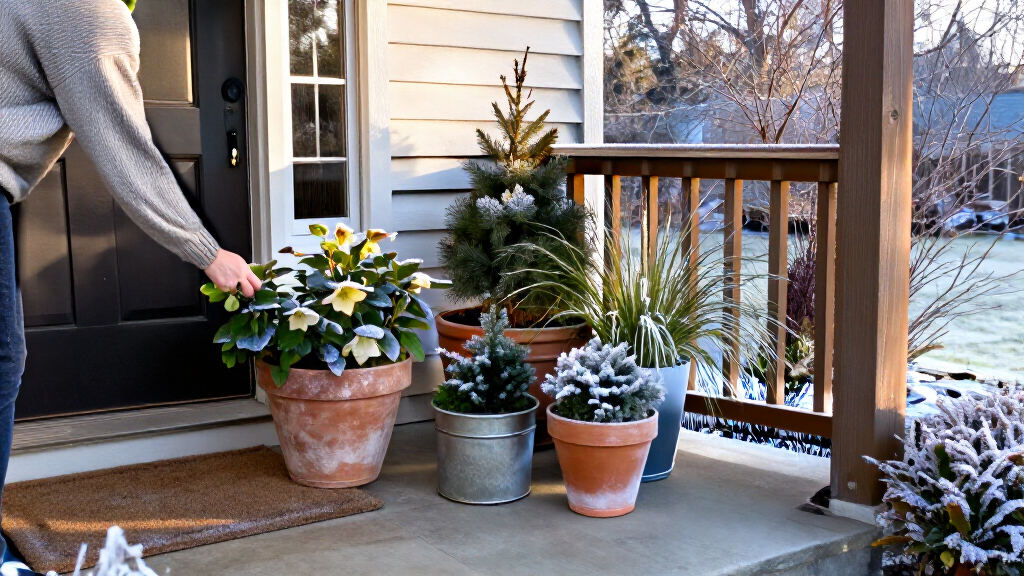
For the best frost-hardy porch plants, I’d put First Frost Hosta at the top for dependable foliage in a shaded container, with the 20-pack hardy succulents a standout for sunny porches and Frostproof Gardenia a fragrant choice for sheltered spots. The main tradeoff is that cold tolerance depends on more than a plant label: roots in pots face harder freezes than roots in garden soil, and sun, wind, and drainage all matter. Gardenias offer scent but need more shelter, while hostas and brunnera suit shade and succulents need sharp drainage. Read on for the full breakdown of all 14 options and help matching a plant to your porch.

Get garden gear delivered free with Prime
- Fast, free delivery on millions of items
- Prime Video, Amazon Music and more included
- Member-only deals all year
Complete the kit


Key Takeaways
- First Frost Hosta is the strongest all-around fit for a shady porch, while its foliage role differs from the flower-and-fragrance appeal of gardenias.
- The 20-plant succulent variety pack offers the widest mix for sunny containers; the six-plant pack is a smaller, easier-to-place alternative.
- The three Frostproof Gardenia formats trade readiness for cost and scale: a 3-gallon plant gives a fuller start, while bare-root starters need more patience and protection.
- Brunnera ‘Jack Frost’ and First Frost Hosta suit shade better than the roses, daylilies, or succulents, so porch light should guide the choice before flower color does.
- Small plants, bare roots, and seeds can take longer to establish, and their roots need extra protection in containers during hard freezes.
| First Frost Hosta Live Plants, 2-Pack |  | Best for Shady Porches | Plant type: Live perennial hosta | Quantity: 2 plants | Plant height at shipment: 10 inches | VIEW LATEST PRICE | See Our Full Breakdown |
| Sow Right Seeds Frost Hardy Flower Seed Collection |  | Best Variety for Seasonal Color | Packet count: 5 | Seed varieties: Pansy, violet, calendula, snapdragon, and sweet pea | Seed features: Non-GMO, heirloom | VIEW LATEST PRICE | See Our Full Breakdown |
| Perfect Plants Frostproof Gardenia Live Plant, 1-Gallon Pot |  | Best Fragrant Porch Accent | Plant type: Gardenia shrub | Pot size: 1 gallon | Mature size: 5 feet tall × 4 feet wide | VIEW LATEST PRICE | See Our Full Breakdown |
| Brighter Blooms Frost Proof Gardenia Shrub, 1 Gallon |  | Best for Clearly Stated Cold-Zone Guidance | Plant type: Gardenia shrub | Container size: 1 gallon | USDA hardiness zones: 7–10 | VIEW LATEST PRICE | See Our Full Breakdown |
| Frostproof Gardenia Jasminoides Bare-Root Plant, 4–5 Inches Tall |  | Best Compact Bare-Root Starter | Plant type: Bare-root flowering evergreen shrub | Height: 4–5 inches | Bloom period: Spring to summer | VIEW LATEST PRICE | See Our Full Breakdown |
| Colorful Random Hydrangea Live Plant, 5–9 Inches Tall |  | Best for Colorful Blooms in Cooler Zones | Plant type: Live hydrangea shrub | Height at delivery: 5–9 inches | Mature height: 3–6 feet | VIEW LATEST PRICE | See Our Full Breakdown |
| Mountain Crest Gardens Hardy Succulents, 20-Pack Variety in 2-Inch Pots |  | Best Value for a Frost-Tolerant Container Display | Quantity: 20 plants | Plant types: Sempervivum and Sedum | Pot size: 2 inches | VIEW LATEST PRICE | See Our Full Breakdown |
| Perfect Plants Frostproof Gardenia Live Plant, 3-Gallon Pot | | Best Established Gardenia for Mild-Winter Porches | Plant type: Gardenia shrub | Pot size: 3 gallons | Mature size: About 5 feet tall by 4 feet wide | VIEW LATEST PRICE | See Our Full Breakdown |
| Live Red Rose Plant, Everblooming Ornamental Rose, 6–10 Inches Tall |  | Best for Long-Season Red Flowers | Plant type: Live rooted rose plant | Plant height at delivery: Approximately 6–10 inches | Expected mature height: 5 feet | VIEW LATEST PRICE | See Our Full Breakdown |
| Brunnera ‘Jack Frost’ Live Perennial Plant, #1 Container |  | Best for Shady Porches | Plant type: Live perennial | Container size: #1 container | Expected height: About 15 inches | VIEW LATEST PRICE | See Our Full Breakdown |
| Frostproof Jasmine Gardenia Live Plant, 4–5-Inch Bare-Root Starter |  | Best Fragrant Evergreen | Plant type: Evergreen flowering shrub | Form: Bare-root starter | Plant size: 4–5 inches | VIEW LATEST PRICE | See Our Full Breakdown |
| Pink Hydrangea Live Plant, 5–10 Inches Tall |  | Best for Cold-Zone Color | Plant type: Hydrangea shrub | Starting height: 5–10 inches | Mature height: 3–6 feet | VIEW LATEST PRICE | See Our Full Breakdown |
| 5 Fragrant Orange Daylily Bare Roots |  | Best Low-Maintenance Border Plant | Plant type: Perennial daylily bare roots | Quantity: 5 | Flower color: Orange-yellow | VIEW LATEST PRICE | See Our Full Breakdown |
| Mountain Crest Gardens Hardy Succulents, 6-Plant Variety Pack in 2-Inch Pots |  | Best Compact Frost-Tolerant Set | Plant type: Sempervivum and Sedum succulents | Quantity: 6 rooted plants | Pot size: 2 inches | VIEW LATEST PRICE | See Our Full Breakdown |
| frost hardy porch plant | Plant type | Sunlight | USDA hardiness zones | Quantity |
|---|---|---|---|---|
| First Frost Hosta Live Plants | Live perennial hosta | Partial shade | 3–9 | 2 plants |
| Sow Right Seeds Frost Hardy Fl | — | Full sun | — | — |
| Perfect Plants Frostproof Gard | Gardenia shrub | Full sun to partial shade | — | — |
| Brighter Blooms Frost Proof Ga | Gardenia shrub | Full sun or partial shade | 7–10 | — |
| Frostproof Gardenia Jasminoide | Bare-root flowering evergreen shrub | Full sun | 7–10 | — |
| Colorful Random Hydrangea Live | Live hydrangea shrub | Full sun to partial shade | — | 1 plant |
| Mountain Crest Gardens Hardy S | — | Full sun or partial sun | 7–10 | 20 plants |
| Perfect Plants Frostproof Gard | Gardenia shrub | Full sun to partial shade | — | — |
| Live Red Rose Plant | Live rooted rose plant | — | 5–9 | 1 plant |
| Brunnera ‘Jack Frost’ Live Per | Live perennial | Shade to partial shade | 4–8 | — |
| Frostproof Jasmine Gardenia Li | Evergreen flowering shrub | Full sun | 7–10 | — |
| Pink Hydrangea Live Plant | Hydrangea shrub | — | — | 1 plant |
| 5 Fragrant Orange Daylily Bare | Perennial daylily bare roots | — | — | 5 |
| Mountain Crest Gardens Hardy S | Sempervivum and Sedum succulents | Full or partial sun | 7–10 | 6 rooted plants |
More Details on Our Top Picks
First Frost Hosta Live Plants, 2-Pack
First Frost hosta earns its place for porches that get little direct sun, where its blue-green leaves with gold edges provide color without relying on flowers. The margins fade toward white as the season progresses, giving this pair more visual change than the evergreen foliage of either Frostproof Gardenia option. Its USDA zones 3–9 also make it a broader cold-climate choice than the zone 7–10 gardenias in this roundup. The tradeoff is time: plants arrive about 10 inches tall and can take four to eight years to mature to their full spread. They need regular watering and well-draining soil, and strong direct sun is a poor fit. I’d choose these for a shaded porch bed or large container, not a hot, exposed landing.
Pros:- Suitable for partial-shade locations where many flowering picks need more sun
- Leaf color shifts from blue-green with gold margins toward white
- Hardy across USDA zones 3–9
- Two perennial plants are included
Cons:- Strong direct sunlight can harm the plants
- May take four to eight years to reach mature size
- Regular watering is needed
Best for: Porch gardeners in cooler regions who have partial shade and want long-lived foliage rather than a show of flowers.
Not ideal for: People with sunny, exposed porches or buyers who want a fast-filling plant; hostas dislike strong direct sun and mature slowly.
- Plant type:Live perennial hosta
- Quantity:2 plants
- Plant height at shipment:10 inches
- Pot size:1 quart
- Mature size:16 inches tall × 3 feet wide
- Sunlight:Partial shade
- USDA hardiness zones:3–9
- Moisture needs:Regular watering
Our verdict“Choose this pair for a shady, cold-climate porch where changing foliage matters more than quick growth or flowers.”
Sow Right Seeds Frost Hardy Flower Seed Collection
This five-packet collection is the flexible pick for gardeners who want to grow a changing display rather than buy an established shrub. Pansy, violet, calendula, snapdragon, and sweet pea seeds offer a mix of colors and forms for spring and fall beds or porch containers. Compared with the First Frost Hosta, this is a better route to flowers, but it asks for more preparation: seeds need planting, suitable conditions, and regular watering before they make a display. The collection is listed for full sun, so shaded porches that suit the hosta are a poor match. Its included growing instructions help make the assortment approachable, though no individual germination rates are specified. I’d pick it for someone happy to start plants from seed and tend several varieties, not for a ready-to-place porch accent.
Pros:- Five flower varieties provide a broader seasonal display than a single plant
- Seeds are listed as non-GMO and heirloom
- Growing instructions are included with each packet
- Varieties are suited to spring and fall gardens
Cons:- Requires full sun, limiting use on shaded porches
- Needs regular watering and time to grow from seed
- Individual germination rates are not provided
Best for: Gardeners with a sunny porch or nearby planting space who enjoy starting several seasonal flowers from seed.
Not ideal for: Buyers seeking an instant, low-effort porch plant or those with mostly shaded space; this collection needs full sun and regular watering.
- Packet count:5
- Seed varieties:Pansy, violet, calendula, snapdragon, and sweet pea
- Seed features:Non-GMO, heirloom
- Growing environment:Indoor or outdoor
- Expected planting period:Spring
- Blooming period:Spring to fall
- Sunlight:Full sun
- Moisture needs:Regular watering
Our verdict“Pick this collection if you want varied seasonal flowers and are willing to start and care for them from seed.”
Perfect Plants Frostproof Gardenia Live Plant, 1-Gallon Pot
For a porch where fragrance and evergreen structure matter more than broad cold-zone coverage, this one-gallon gardenia is the more established-looking choice than the 4–5-inch bare-root gardenia in this roundup. It brings deep green foliage and fragrant white flowers in spring and summer, and its eventual 5-foot height and 4-foot width suit a border or roomy patio setting better than a small landing. Unlike the First Frost Hosta, it needs full sun to partial shade and is chosen for blooms as well as foliage. The product details do not list a hardiness zone, so buyers seeking a plant with clearly stated cold-range guidance may prefer the zone 7–10 Brighter Blooms gardenia. It also cannot ship to California or Arizona.
Pros:- Fragrant white flowers bloom in spring and summer
- Deep green evergreen foliage adds structure outside bloom season
- Larger stated mature dimensions than the bare-root gardenia pick
- Plant food is included
Cons:- Does not ship to California or Arizona
- Needs a sunny to partially shaded outdoor location
- Mature size may overwhelm a small porch or container area
Best for: Gardeners with a spacious, sunny-to-partly-shaded porch or border who want fragrant seasonal blooms and evergreen foliage.
Not ideal for: Buyers in California or Arizona, or those needing a compact plant or a clearly specified hardiness zone.
- Plant type:Gardenia shrub
- Pot size:1 gallon
- Mature size:5 feet tall × 4 feet wide
- Sunlight:Full sun to partial shade
- Blooming period:Spring to summer
- Flower color:White
- Special features:Fragrant, deer resistant
- Shipping restriction:Does not ship to California or Arizona
Our verdict“Choose this gardenia for a roomy, bright porch where fragrance and established shrub growth take priority over compact size.”
Brighter Blooms Frost Proof Gardenia Shrub, 1 Gallon
Among the gardenias here, this is the clearest choice for buyers who want a stated cold-hardiness range: USDA zones 7–10. It pairs fragrant white spring blooms with deer resistance and can grow in full sun or partial shade. Compared with the Perfect Plants one-gallon gardenia, whose supplied details do not list a hardiness zone, that range gives buyers a more defined starting point for matching the plant to their climate. The limitation is that zone 7 is still far less cold-tolerant than the First Frost Hosta, rated for zones 3–9, so this is not the pick for the coldest regions. Moderate watering is required, and shipping is unavailable to Alaska, Arizona, and Hawaii. Its indoor-or-outdoor listing offers flexibility, but the stated sun needs still matter for placement.
Pros:- Lists USDA hardiness zones 7–10
- Produces fragrant white blooms in spring
- Tolerates full sun or partial shade
- Deer resistant
Cons:- Not listed for regions colder than USDA zone 7
- Shipping is unavailable to Alaska, Arizona, and Hawaii
- Requires moderate watering
Best for: Gardenia buyers in USDA zones 7–10 who want fragrant spring flowers and a listed hardiness range for planning.
Not ideal for: Gardeners in colder zones or residents of Alaska, Arizona, and Hawaii; its listed range and shipping limits rule it out for them.
- Plant type:Gardenia shrub
- Container size:1 gallon
- USDA hardiness zones:7–10
- Bloom color:White
- Blooming period:Spring
- Sunlight:Full sun or partial shade
- Water needs:Moderate
- Shipping restrictions:Unavailable to Alaska, Arizona, and Hawaii
Our verdict“Choose this gardenia if your climate falls within zones 7–10 and you want clearer hardiness guidance than the other one-gallon gardenia provides.”
Frostproof Gardenia Jasminoides Bare-Root Plant, 4–5 Inches Tall
This 4–5-inch bare-root gardenia is the most compact starting point among the gardenia choices, making it easier to fit into a porch container or a small border than the one-gallon shrubs. It shares their fragrant white flowers and glossy evergreen foliage, while its listing gives a specific USDA zone range of 7–10. Compared with the Brighter Blooms one-gallon plant, this option suits buyers who prefer to begin with a smaller plant, but it will need time and care before it makes a substantial display. It wants full sun, moderate watering, and moist, well-draining loamy soil; that is a less forgiving setup than the partial-shade tolerance offered by the hosta. I’d skip it for colder regions or anyone expecting a large porch accent on arrival.
Pros:- Compact 4–5-inch bare-root size suits small planting spaces
- Fragrant white flowers and glossy evergreen foliage
- Can be grown in borders, hedges, or patio containers
- Lists USDA hardiness zones 7–10
Cons:- Full sun is required
- Small bare-root starter needs time to fill a container or border
- Needs moderate watering and moist, well-draining loamy soil
Best for: Gardeners in USDA zones 7–10 who have full sun, want a compact gardenia starter, and can wait for it to grow.
Not ideal for: Buyers in colder climates, shaded-porch owners, or anyone needing an immediately substantial plant.
- Plant type:Bare-root flowering evergreen shrub
- Height:4–5 inches
- Bloom period:Spring to summer
- Flower color:White
- Sunlight:Full sun
- USDA hardiness zones:7–10
- Soil:Moist, well-draining loamy soil
- Moisture needs:Moderate watering
Our verdict“Pick this bare-root starter for a sunny porch in zones 7–10 if compact shipping size matters more than an immediate display.”
Colorful Random Hydrangea Live Plant, 5–9 Inches Tall
This hydrangea earns its place for buyers who want a flowering porch shrub with a broader cold-climate range than the Frostproof Gardenia options, which are listed for zones 7–10. Hardy in zones 3–9, it can suit colder regions, and its blooms add a more dramatic seasonal display than the foliage-focused Brunnera ‘Jack Frost’. Its size also leaves room to grow in a container or garden bed, though a mature height of 3–6 feet means it is not a permanent small-pot accent. The main compromise is uncertainty: the plant arrives just 5–9 inches tall, and its flower color is random, with color shifts affected by soil conditions. I’d choose it for hardiness and generous blooms, not for a guaranteed color or immediate impact.
Pros:- Hardy across zones 3–9, covering colder climates than the listed gardenia options
- Produces large blooms in spring and summer
- Can grow in a garden bed, patio container, or other outdoor setting
- Mature size can create a substantial flowering accent
Cons:- Ships as a small 5–9-inch starter plant that needs time to fill out
- Flower color is random and may shift with soil conditions
- Mature height of 3–6 feet can outgrow compact porch containers
Best for: Porch gardeners in zones 3–9 who can give a young shrub room to grow and are flexible about bloom color
Not ideal for: Buyers who need an established, full-looking container plant right away or want a specific flower color
- Plant type:Live hydrangea shrub
- Height at delivery:5–9 inches
- Mature height:3–6 feet
- Hardiness zones:3–9
- Sunlight:Full sun to partial shade
- Bloom season:Spring and summer
- Quantity:1 plant
- Flower color:Random colorful blooms; color can shift with soil conditions
Our verdict“Choose this hydrangea if cold hardiness and showy seasonal flowers matter more than a predictable color or instant size.”
Mountain Crest Gardens Hardy Succulents, 20-Pack Variety in 2-Inch Pots
For a porch with several pots or a broad planter to fill, this 20-plant assortment offers more planting flexibility than the six-plant Mountain Crest Gardens pack elsewhere in the roundup. It includes rooted Sempervivum and Sedum in individual 2-inch pots, so I’d favor it for spreading a varied display across containers rather than creating one large flowering centerpiece like the Colorful Random Hydrangea. The listed cold tolerance reaches at least 0°F, but the stated growing range is zones 7–10; that makes local winter conditions and container exposure important. These succulents need well-draining soil and watering only after it dries, a relatively light routine, but they are not suited to persistently wet pots. They also need direct sun or grow lights indoors, so this is best treated as an outdoor planting.
Pros:- Twenty rooted plants provide more coverage than the six-plant variety pack
- Individual 2-inch nursery pots are ready to transplant
- Sempervivum and Sedum varieties are listed as frost tolerant, with cold tolerance of at least 0°F
- Watering is limited to when the well-draining soil has dried
Cons:- Listed for USDA zones 7–10, limiting suitability in colder areas
- Poor drainage and persistently damp soil conflict with its growing needs
- Indoor growing requires direct sun or grow lights
Best for: Gardeners in zones 7–10 who want to fill multiple sunny, well-drained porch pots with varied, low-water plants
Not ideal for: Buyers in colder zones, shaded porches, or locations where containers stay wet and drain poorly
- Quantity:20 plants
- Plant types:Sempervivum and Sedum
- Pot size:2 inches
- Cold tolerance:At least 0°F
- USDA hardiness zones:7–10
- Sunlight:Full sun or partial sun
- Soil and watering:Well-draining soil; water only when soil is dry
- Expected plant height:5 inches
Our verdict“Pick the 20-pack for a sunny, dry porch where you want many small frost-tolerant succulents rather than one larger flowering shrub.”
Perfect Plants Frostproof Gardenia Live Plant, 3-Gallon Pot
Compared with the 1-gallon Frostproof Gardenia elsewhere in this roundup, this 3-gallon option is the more established choice for buyers who want a substantial shrub rather than a smaller starter. It is listed to reach about 5 feet tall and 4 feet wide, with fragrant white flowers in spring and summer, making it better suited to a roomy porch edge or border than a tight step-side pot. Its frost-hardy appeal has a clear regional limit: the stated growing zones are 7–10, so it does not match the hydrangea’s zones 3–9 range for colder gardens. It prefers full sun to partial shade and moderate watering, and the seller does not ship it to California or Arizona. I’d choose it for fragrance and shrub presence, not broad cold-climate coverage.
Pros:- 3-gallon pot offers a larger starting plant than the listed 1-gallon gardenia option
- Fragrant white flowers bloom in spring and summer
- Can serve as a border, low hedge, or garden accent
- Described as deer resistant and not requiring pruning to maintain its shape
Cons:- Growing zones 7–10 limit its fit for colder winter climates
- Does not ship to California or Arizona
- Mature size of about 5 feet tall and 4 feet wide needs substantial space
Best for: Gardeners in zones 7–10 who want a larger, fragrant evergreen-style accent for a spacious porch or border
Not ideal for: Buyers in colder zones, California, or Arizona, or anyone with a small porch that cannot accommodate a 5-foot shrub
- Plant type:Gardenia shrub
- Pot size:3 gallons
- Mature size:About 5 feet tall by 4 feet wide
- Bloom color and season:White; spring to summer
- Growing zones:7–10
- Sunlight:Full sun to partial shade
- Soil and watering:Sandy soil; moderate watering
- Shipping restrictions:Does not ship to California or Arizona
Our verdict“Choose this larger gardenia for fragrance and shrub presence in a mild-winter region, provided its size and shipping limits work for you.”
Live Red Rose Plant, Everblooming Ornamental Rose, 6–10 Inches Tall
This rose is the pick for buyers who want a defined bloom color and a longer flowering window: it is expected to bloom red from spring to fall, unlike the hydrangea’s random flower color and spring-to-summer season. Its stated hardiness range of zones 5–9 also reaches colder areas than the Frostproof Gardenia, though not as far as the zones 3–9 hydrangea. The plant arrives as a 6–10-inch starter, so it will take time to approach its expected 5-foot mature height. Full sun and well-drained soil are required, and late-winter or early-spring pruning adds maintenance that the Brunnera does not call for in its listed care details. I’d choose this for a sunny porch or garden with room for a shrub rose, not for a shaded entry or a hands-off container.
Pros:- Red flowers are specified, unlike the random color of the hydrangea
- Expected bloom period runs from spring to fall
- Perennial growth can return year after year in suitable conditions
- Can be planted in a garden, container, patio, or flower bed
Cons:- Requires full sun and well-drained soil
- Arrives as a 6–10-inch starter and needs time to grow
- Needs pruning in late winter or early spring
Best for: Gardeners in zones 5–9 with a sunny porch or bed who want red blooms over a long spring-to-fall season
Not ideal for: People with shaded porches, poorly draining soil, or little room for a rose that can reach 5 feet
- Plant type:Live rooted rose plant
- Plant height at delivery:Approximately 6–10 inches
- Expected mature height:5 feet
- USDA hardiness zones:5–9
- Expected bloom period:Spring to fall
- Flower color:Red
- Sunlight and soil:Full sun; well-drained soil
- Quantity:1 plant
Our verdict“Pick this rose for a sunny spot where a specified red color and long bloom season outweigh pruning and space needs.”
Brunnera ‘Jack Frost’ Live Perennial Plant, #1 Container
Most flowering picks here ask for a sunnier spot: the red rose needs full sun, while this Brunnera ‘Jack Frost’ prefers shade to partial shade. That makes it the clearest fit for a porch that gets limited direct light, with silvery-white and green heart-shaped leaves providing interest beyond its April and May blue flowers. Its zones 4–8 hardiness also covers colder areas than the gardenia and reaches into colder territory than the succulent assortment’s listed zones 7–10. At about 15 inches tall, it stays more compact than the hydrangea or rose, though the 18-inch spacing means it still needs room to spread. It is a foliage-led perennial rather than a long-season bloom choice, and moderate watering plus unavailable shipping to some states may rule it out for some buyers.
Pros:- Distinctive silver and green variegated foliage adds interest outside the bloom period
- Blue flowers appear in April and May
- Hardy in zones 4–8, including colder climates than the listed gardenias
- Compact expected height of about 15 inches suits smaller porch spaces
Cons:- Needs shade to partial shade, unlike the full-sun rose
- Spring flowers are seasonal rather than a long bloom display
- Shipping is unavailable to some states
Best for: Gardeners with a shaded or partly shaded porch in zones 4–8 who want compact, frost-hardy foliage and spring flowers
Not ideal for: Buyers seeking full-sun plants, blooms through summer, or a plant that can ship to every state
- Plant type:Live perennial
- Container size:#1 container
- Expected height:About 15 inches
- USDA hardiness zones:4–8
- Sunlight:Shade to partial shade
- Foliage:Silvery-white and green variegated, heart-shaped leaves
- Bloom period:April and May
- Plant spacing:18 inches
Our verdict“Choose Brunnera ‘Jack Frost’ for a shady porch where attractive foliage and cold hardiness matter more than summer-long flowers.”
Frostproof Jasmine Gardenia Live Plant, 4–5-Inch Bare-Root Starter
For a porch that needs greenery through winter as well as fragrant summer flowers, this evergreen gardenia has a useful advantage over the Pink Hydrangea Live Plant, which is deciduous and may arrive dormant. Its white blooms are expected from spring through summer, and the shrub can serve as a container focal point or later be planted near a foundation or in a hedge. The frost-hardy claim is bounded by the stated USDA Zones 7–10, so I would not treat it as a severe-winter choice outside that range. This listing is a 4–5-inch bare-root starter, not an established potted shrub; it needs planting and time to settle in. It also calls for full sun and moderately moist, well-draining soil, while the hydrangea allows partial shade.
Pros:- Evergreen foliage keeps a porch or nearby foundation green beyond the flowering season.
- Fragrant white blooms are expected from spring through summer.
- Can be grown in a container or planted as a hedge or foundation shrub.
- Specified for USDA Zones 7–10.
Cons:- The 4–5-inch bare-root starter needs planting and establishment before it becomes a substantial porch feature.
- Full sun is specified, limiting suitability for shaded porches.
- Its stated hardiness range excludes gardeners in colder zones.
Best for: Porch gardeners in USDA Zones 7–10 who want year-round foliage, scented white flowers, and are comfortable establishing a small bare-root shrub.
Not ideal for: Buyers in colder zones, gardeners with a shaded porch, or anyone wanting an established plant that can be displayed immediately.
- Plant type:Evergreen flowering shrub
- Form:Bare-root starter
- Plant size:4–5 inches
- Bloom color:White
- Expected bloom period:Spring to summer
- Sunlight:Full sun
- USDA hardiness zones:7–10
- Soil and moisture:Loamy, moist but well-draining soil; moderate watering
Our verdict“Choose this gardenia for a sunny, Zone 7–10 porch where evergreen foliage and fragrance matter more than an instant, mature display.”
Pink Hydrangea Live Plant, 5–10 Inches Tall
Among these four picks, the Zones 3–9 hardiness range makes this hydrangea the more adaptable choice for colder porches than the Frostproof Jasmine Gardenia, which is listed for Zones 7–10. Its white and pink flowers may shift among blue, pink, purple, and other shades during the growing season, giving it more color variation than the orange-yellow blooms of the 5 Fragrant Orange Daylily. It also tolerates full sun or partial shade, with morning sun and afternoon shade recommended—helpful where a porch gets strong later-day exposure. The tradeoff is seasonal uncertainty: the plant may arrive dormant in winter, and the listing says it may come with or without a pot. At 5–10 inches tall, it is a starter rather than a full-sized flowering shrub.
Pros:- Hardiness range of USDA Zones 3–9 covers colder areas than the listed gardenia options.
- Flower colors may change through the growing season.
- Can grow in full sun or partial shade.
- Rooted shrub form offers a head start over bare-root options.
Cons:- May arrive dormant in winter, with no immediate leafy or flowering display.
- Pot inclusion varies by season, so the arrival format is not consistent.
- Its 5–10-inch starting height requires time and space to reach its 3–6-foot mature height.
Best for: Gardeners in USDA Zones 3–9 seeking a rooted porch shrub with changing flower colors and a spot offering morning sun or partial shade.
Not ideal for: Buyers who need a reliably blooming plant on arrival, require a pot, or want evergreen winter foliage.
- Plant type:Hydrangea shrub
- Starting height:5–10 inches
- Mature height:3–6 feet
- Bloom colors:White and pink; may shift among blue, pink, purple, and other shades
- Light:Full sun or partial shade; morning sun and afternoon shade recommended
- Hardiness zones:USDA Zones 3–9
- Quantity:1 plant
- Seasonal and pot details:May be dormant in winter; may arrive with or without a pot depending on the season
Our verdict“Pick this hydrangea for a colder-zone porch with some sun or shade if you can wait through dormancy and accommodate a larger shrub.”
5 Fragrant Orange Daylily Bare Roots
For buyers who would rather fill a bed or broad container than tend a shrub, this five-root daylily pack is the practical, low-maintenance choice. Its Zones 3–9 range overlaps the Pink Hydrangea Live Plant, but the daylily’s grass-like foliage and bright orange-yellow summer flowers create a different effect from the hydrangea’s changing blooms. It can grow in full sun or partial shade and is described as able to rebloom, making it a flexible option for borders as well as porch containers. Compared with the six-plant Hardy Succulents Variety Pack, it asks for more garden space and does not offer compact rosette forms. These are bare roots, however, not established potted plants, so buyers must plant them and wait for growth; the listing also gives no specific bloom timing beyond summer or detailed moisture guidance.
Pros:- Five bare roots provide several plants for a border or larger container planting.
- Hardy in USDA Zones 3–9.
- Grows in full sun or partial shade.
- Low-care perennial with bright summer flowers and possible rebloom.
Cons:- Bare roots need planting and establishment before they create a visible display.
- The listing does not provide mature size or detailed watering guidance.
- A group planting needs more room than the compact Hardy Succulents Variety Pack.
Best for: Gardeners in USDA Zones 3–9 who want several hardy flowering plants for a sunny or partly shaded border, bed, or roomy container.
Not ideal for: Porch owners with only a small tabletop or narrow pot, or buyers who want an established plant with visible foliage on arrival.
- Plant type:Perennial daylily bare roots
- Quantity:5
- Flower color:Orange-yellow
- Sun exposure:Full sun or partial shade
- Hardiness zones:USDA Zones 3–9
- Soil:Well-drained
- Bloom period:Summer; may rebloom
- Care level:Minimal care
Our verdict“Choose these daylilies for a low-effort, multi-plant summer display when you have space for a bed or generous container.”
Mountain Crest Gardens Hardy Succulents, 6-Plant Variety Pack in 2-Inch Pots
This pack is the strongest fit here for a small porch where compact plants and modest watering needs matter more than large flowers. It includes six rooted Sempervivum and Sedum plants in individual 2-inch pots, so it offers more variety and immediate planting options than the single Frostproof Jasmine Gardenia starter. The grower describes the varieties as frost-tolerant to 0°F, but the stated USDA range is Zones 7–10; I would follow that range for choosing a location rather than assume every plant suits harsher winters. Full or partial sun and watering only after the soil dries suit gardeners who prefer a drier routine. The limits are clear: these are small plants, not a flowering shrub, and indoor growing calls for direct sun or grow lights. They also need well-draining soil to avoid staying wet.
Pros:- Six rooted plants arrive in individual 2-inch nursery pots for flexible arranging or transplanting.
- Sempervivum and Sedum varieties provide a mix of forms and colors.
- Grower-stated frost tolerance to 0°F, with USDA Zones 7–10 specified.
- Watering is limited to when the well-draining soil dries.
Cons:- The stated USDA range is Zones 7–10, limiting its fit for colder-region porch exposure.
- Small 2-inch plants will not make an instant, large focal point.
- Indoor growing requires direct sun or supplemental grow lights.
Best for: Porch gardeners in USDA Zones 7–10 who want six compact, rooted plants for sunny or partly sunny containers and can provide fast-draining soil.
Not ideal for: Buyers in colder zones seeking dependable winter exposure, gardeners wanting large blooms, or indoor growers without direct sun or grow lights.
- Plant type:Sempervivum and Sedum succulents
- Quantity:6 rooted plants
- Pot size:2 inches
- Cold tolerance:Grower-stated tolerance to 0°F
- USDA hardiness zones:7–10
- Expected plant height:5 inches
- Sunlight:Full or partial sun
- Soil and watering:Well-draining soil; water deeply only after soil dries
Our verdict“Choose this set for a compact, low-watering porch arrangement in Zones 7–10, not for a large flowering display or a colder-zone guarantee.”

How We Picked
I compared the 14 listings against the needs of a porch container: stated cold-hardiness cues, plant form and starting size, likely fit for pots, light and drainage needs, and the care required to get established. I gave preference to options with a clear role—such as shade foliage, sunny succulents, or fragrant flowering shrubs—rather than treating every item labeled frostproof or hardy as equally suited to every porch.
The order reflects practical fit and buyer tradeoffs, not a claim that any plant will survive every winter. First Frost Hosta leads as a useful foliage choice for many sheltered, shady porches; the succulent assortment ranks highly for sunny, well-drained setups. Larger gardenias offer a more developed starting point but need better shelter, while smaller bare-root plants, seeds, and mixed-color listings require more patience or leave more uncertainty about the finished result. I also distinguish garden plants from container plants: hardiness in the ground does not guarantee survival in an exposed pot.
Factors to Consider When Choosing Best Frost Hardy Porch Plants
Before choosing from this lineup, match the plant to the conditions your porch can actually provide. Light, pot exposure, and winter moisture can matter as much as the plant’s cold tolerance, and a sheltered entryway behaves differently from an open balcony.
Match the plant to your porch’s winter exposure
Cold air can collect around an exposed porch, while walls and roof cover may soften temperature swings. Wind can dry foliage and chill pots quickly, so a plant that handles winter in a garden bed may struggle in a container beside an open railing. Note whether the spot gets wind, rain, and direct cold from multiple sides before selecting a plant. A sheltered location gives more flexibility with tender or newly planted choices such as gardenia starters. For a very exposed porch, choose a hardy plant and plan to move its pot close to the building or protect it during severe cold. Avoid assuming that a variety name containing “frostproof” means the plant is safe in every climate or pot.
Account for the colder roots in containers
Roots in a pot have less insulation than roots in the ground, so container plants can face colder conditions even when their foliage is considered hardy. A small pot cools faster than a large one, but a large pot also weighs more and may be difficult to move under cover. If winter survival is your priority, use a container with drainage and enough room for the plant’s root system, then group pots or place them beside a protected wall during cold snaps. Bare-root and small starter plants may need extra care while they establish. Don’t choose a plant solely by a hardiness claim intended for in-ground growing; check how your local winter lows compare with the plant’s needs.
Choose by light before flower color
Porches vary from deep shade to hours of direct sun, and that difference narrows the suitable plants quickly. Hostas and brunnera are foliage-led picks for shadier locations, while hardy succulents generally need bright light and soil that drains readily. Roses, daylilies, and flowering shrubs also need enough light to support healthy growth and blooms. Track direct sun across a typical day rather than relying on a general label such as “bright porch.” If light is limited, a colorful flower listing may disappoint even if the plant survives cold. Matching light first helps avoid buying a plant that lives but never performs as hoped.
Treat drainage and winter watering as a pair
Cold, wet potting mix can stress roots, especially for succulents and plants sitting in containers without clear drainage. Make sure excess water can escape and that the pot does not stand in a saucer full of rain or meltwater. At the same time, don’t leave evergreen or actively growing plants bone-dry simply because the weather is cold; check the soil and water when the plant’s needs and conditions call for it. Succulents generally need a different watering rhythm from thirsty flowering shrubs, so combining them in one mixed pot can create a care mismatch. Choose plants with similar moisture needs if you want one container to be easy to maintain.
Decide how much patience and uncertainty you can accept
Established potted plants provide a more immediate display, while seeds, bare roots, and short starters may need time before they fill a porch container. Larger plants usually take up more room and can be harder to move for winter protection, but they offer a more developed starting point. Seed collections can offer variety, though the final mix and timing depend on germination and growing conditions. Listings described as random-color plants also leave less control over the finished look. If you need a predictable display for a specific spot, favor a clearly identified plant and size; if you enjoy growing from an early stage, smaller starts may suit you.
Plan the container around the plant, not just the porch
A pot should suit the plant’s mature growth and root habits, not only the available floor space. Trailing or spreading plants can crowd a narrow walkway, while a large shrub may overwhelm a small entry and become awkward to shelter. Check the expected mature size and leave room for airflow rather than planting several choices tightly together. Use a stable pot for top-heavy plants and make sure it can be moved safely if winter protection is needed. For a compact porch, the six-plant succulent set offers a smaller starting group than the 20-plant pack, but either still needs individual placement and suitable drainage. Keep access, weight, and storage in mind before committing to a container size.
Frequently Asked Questions
Can a frost-hardy plant stay outside in a pot all winter?
Sometimes, but a plant’s cold tolerance in the ground does not automatically carry over to a pot. Roots in containers are more exposed to cold, and wind or prolonged wet conditions can add stress. The outcome also depends on your local winter lows, pot size, drainage, and how sheltered the porch is. For a plant you want to keep, move the pot near a protected wall or provide appropriate winter insulation during severe cold. Check the plant’s growing guidance for your climate rather than relying on a “frostproof” name alone.
Which options in this lineup suit a shady porch best?
First Frost Hosta and Brunnera ‘Jack Frost’ are the clearest foliage-led choices for a shadier spot. They offer visual interest through leaves rather than relying on a sunny position for a flower display. Their performance still depends on the amount of light and the moisture conditions on your porch, so distinguish bright shade from a dark, enclosed corner. Avoid choosing hardy succulents for a dim location, since their light needs differ. If the porch receives only a little direct sun, prioritize foliage options and check each plant’s care instructions.
Should I choose a potted Frostproof Gardenia or a bare-root starter?
A potted gardenia is a better fit if you want a more established starting point and have room to manage a larger container. The 3-gallon option is the fuller format, while a 1-gallon plant takes up less space. Bare-root starters are smaller and call for more patience as they establish, so they make more sense if you can provide attentive early care and don’t need an immediate display. All of these gardenias benefit from a suitable sheltered location; the frostproof name does not make an exposed porch risk-free. Choose based on your space, establishment timeline, and ability to protect the pot in cold weather.
Is the 20-plant succulent pack a better choice than the six-plant pack?
The larger assortment makes sense if you have room for multiple pots or want material for several sunny arrangements. The six-plant pack is easier to place in a smaller porch setup and limits the number of plants you need to manage. Neither is a good match for a shaded or persistently wet location, since succulents need suitable light and drainage. Also think about whether you can protect the pots in severe cold; a hardy label does not remove the extra exposure of container roots. Pick the pack size based on usable space and care capacity, not just the number of varieties.
Are seeds or bare-root plants a good choice if I need a porch display soon?
They are less suited to an immediate display than an established potted plant. Seeds need time to germinate and grow, and their final appearance depends on growing conditions and the plants that successfully establish. Bare-root plants also need time to develop roots and foliage after planting. If your porch needs a finished look soon, choose a more developed live plant and use seeds or bare roots as a longer-term project. Keep in mind that even a larger plant may need time to settle into a new container before it looks its best.
Conclusion
For the best overall pick, I’d choose First Frost Hosta when the porch is shady and you want dependable foliage; for a bright, dry spot, the 20-pack hardy succulents offers more variety. The best value depends on your setup: the six-plant succulent pack keeps a sunny planting smaller, while bare-root gardenias suit patient growers who can provide shelter. For a premium, fuller start, choose the 3-gallon Frostproof Gardenia if you have room and can protect it; the 1-gallon size is easier to place. Beginners should favor a clearly identified live plant suited to their porch light over seeds or random-color listings. For specific needs, pick Brunnera or hosta for shade, succulents for bright and well-drained locations, and gardenia for fragrance in a sheltered spot.
Fall yard work Picks
leaf blowers
As an affiliate, we earn on qualifying purchases.