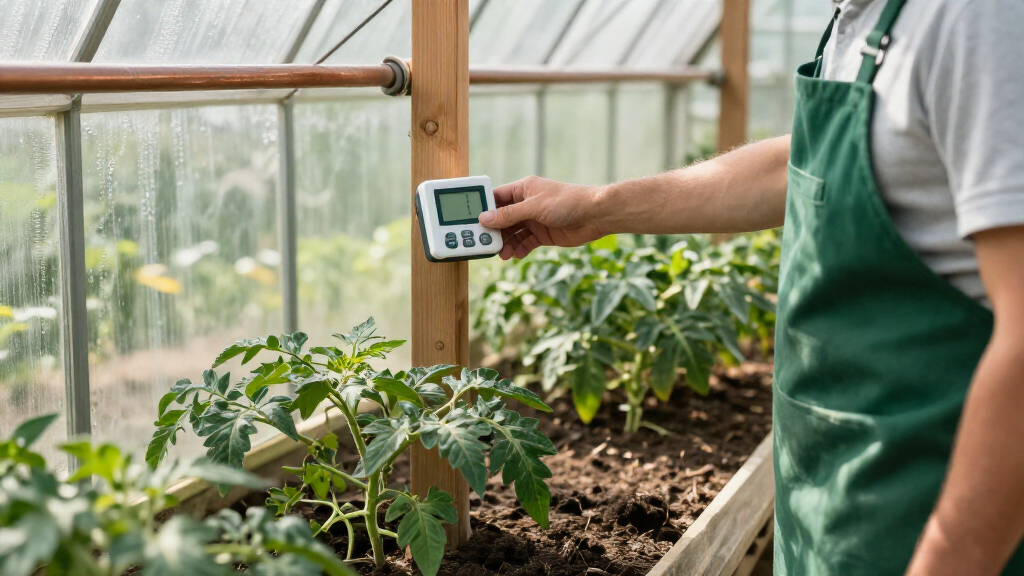

The best greenhouse temperature controllers balance dependable heating and cooling control with simple setup and a probe suited to a damp growing space. My best overall pick is the Inkbird ITC-308, a straightforward dual-stage controller for growers who want to manage both heating and cooling. The Inkbird ITC-308 Wi-Fi adds remote monitoring, while the DIGITEN DTC151 is a stronger fit for buyers who need a higher stated current capacity. The main tradeoffs are local versus app-based control, basic temperature management versus added humidity control, and power capacity versus installation simplicity. Read on for how all 14 options compare and which type of setup each suits best.

Get garden gear delivered free with Prime
- Fast, free delivery on millions of items
- Prime Video, Amazon Music and more included
- Member-only deals all year
Complete the kit


Key Takeaways
- Dual-stage control is the most useful baseline: The standard Inkbird ITC-308 and similar heating-and-cooling units can control two connected devices, while single-purpose outlet controllers may require a second unit for a separate heating or cooling system.
- Wi-Fi is a convenience, not a substitute for local control: Inkbird’s Wi-Fi versions and the DEWENWILS smart model suit remote checks, but growers who want a simpler setup can choose a non-connected controller.
- Probe protection matters in greenhouse conditions: Waterproof-probe models such as the DIGITEN DTC310 and SENSTREE are more suited to damp or splash-prone placements than controllers without a clearly stated waterproof probe.
- Power ratings differ enough to check before connecting equipment: The DIGITEN DTC151 lists 15A, while several other models list 10A; the controller’s rating must still match the heater or cooling device and the circuit.
- Temperature-only control and humidity control solve different problems: The Inkbird ITC-308 with IHC-200 adds a humidity controller, but it is a more involved setup than a basic thermostat and does not replace good ventilation or watering practices.
| BN-LINK Digital Reptile Thermostat Temperature Controller, 40–108°F, 1000W |  | Best for Heating-Only Greenhouses | Temperature range: 40–108°F | Maximum load: 1000W, 8.3A | Voltage: 120VAC, 60Hz | VIEW LATEST PRICE | See Our Full Breakdown |
| Inkbird ITC-308 Digital Temperature Controller |  | Best Overall | Model: SYNCHKG084064 | Voltage: 110V, 240V | Maximum power: 1200W | VIEW LATEST PRICE | See Our Full Breakdown |
| WILLHI WH2408 Digital Temperature Controller, 10A, 1200W |  | Best for Fine Setpoint Adjustments | Model: WH2408 | Control resolution: 0.1°F | Probe temperature range: -58°F to 230°F (-50°C to 110°C) | VIEW LATEST PRICE | See Our Full Breakdown |
| Inkbird ITC-308 Wi-Fi Temperature Controller |  | Best for Remote Monitoring | Model: ITC-308-WIFI-LW | Connectivity: 2.4 GHz Wi-Fi | Control: App and push-button | VIEW LATEST PRICE | See Our Full Breakdown |
| DIGITEN DTC310 Waterproof Temperature Controller, 10A Digital Thermostat |  | Best for Damp Greenhouse Conditions | Model: DTC-310 | Temperature range: -40°F to 248°F (-40°C to 120°C) | Display: Illuminated LED | VIEW LATEST PRICE | See Our Full Breakdown |
| INKTEM Digital Temperature Controller with Heating and Cooling |  | Best for Dual-Equipment Greenhouses | Model: TC01 | Input voltage: 120V AC 60Hz or 230V AC 50Hz | Maximum output: 1200W at 120V; 2300W at 230V | VIEW LATEST PRICE | See Our Full Breakdown |
| Diymore Plug-In Digital Thermostat Controller |  | Best for Flexible Timed Control | Model: GXAB0002-006 | Temperature range: -40°F to 248°F | Temperature precision: ±1°F | VIEW LATEST PRICE | See Our Full Breakdown |
| Inkbird WiFi ITC-308 Digital Temperature Controller Thermostat |  | Best for Remote Monitoring | Model: ITC-308-US | Connectivity: 2.4 GHz Wi-Fi | Control: App and push button | VIEW LATEST PRICE | See Our Full Breakdown |
| SENSTREE Waterproof Digital Temperature Controller, 110V, 10A, 1100W |  | Best for Damp Greenhouse Areas | Model: DTC310ZJ-JP | Voltage: 110V and 220V listed; title specifies 110V | Current: 10A | VIEW LATEST PRICE | See Our Full Breakdown |
| BN-LINK Digital Cooling Thermostat Controller Outlet |  | Best for Fan-Only Cooling | Model: BNQ-T7B(C) | Temperature control: Cooling | Control range: 40–108°F | VIEW LATEST PRICE | See Our Full Breakdown |
| DIGITEN DTC151 Digital Temperature Controller, 110V 15A, Heating and Cooling |  | Best for a Wide Temperature Range | Model: DTC151-15A | Voltage: 110 V | Current: 15 A | VIEW LATEST PRICE | See Our Full Breakdown |
| KETOTEK KT3100 Digital Thermostat Outlet Plug |  | Best for Flexible Timing Modes | Model: KT3100 | Power supply: 100–250V AC | Maximum output: 15A at 120V | VIEW LATEST PRICE | See Our Full Breakdown |
| Inkbird ITC-308 Temperature Controller with IHC-200 Humidity Controller |  | Best for Temperature and Humidity Control | Included controllers: ITC-308 temperature controller and IHC-200 humidity controller | Number of items: 2 | Voltage: 120 volts | VIEW LATEST PRICE | See Our Full Breakdown |
| DEWENWILS Smart Wi-Fi Temperature Controller with Memory |  | Best for Remote App Control | Model: HTCS02D2 | Connectivity: Wi-Fi | Control method: App | VIEW LATEST PRICE | See Our Full Breakdown |
| greenhouse temperature controller | Model | Display | Voltage |
|---|---|---|---|
| BN-LINK Digital Reptile Thermo | — | LED | 120VAC, 60Hz |
| Inkbird ITC-308 Digital Temper | SYNCHKG084064 | LCD | 110V, 240V |
| WILLHI WH2408 Digital Temperat | WH2408 | — | — |
| Inkbird ITC-308 Wi-Fi Temperat | ITC-308-WIFI-LW | LCD | — |
| DIGITEN DTC310 Waterproof Temp | DTC-310 | Illuminated LED | — |
| INKTEM Digital Temperature Con | TC01 | Dual digital display; Celsius and Fahrenheit | — |
| Diymore Plug-In Digital Thermo | GXAB0002-006 | — | 220V |
| Inkbird WiFi ITC-308 Digital T | ITC-308-US | Digital | 110V |
| SENSTREE Waterproof Digital Te | DTC310ZJ-JP | LCD | 110V and 220V listed; title specifies 110V |
| BN-LINK Digital Cooling Thermo | BNQ-T7B(C) | LED; Fahrenheit and Celsius | 120VAC, 60Hz |
| DIGITEN DTC151 Digital Tempera | DTC151-15A | Backlit LCD | 110 V |
| KETOTEK KT3100 Digital Thermos | KT3100 | — | — |
| Inkbird ITC-308 Temperature Co | — | LCD or LED | 120 volts |
| DEWENWILS Smart Wi-Fi Temperat | HTCS02D2 | — | 120 V |
More Details on Our Top Picks
BN-LINK Digital Reptile Thermostat Temperature Controller, 40–108°F, 1000W
The BN-LINK is a straightforward pick for a greenhouse that needs thermostat-controlled heat but no active cooling. Its 40–108°F range covers common seedling and propagation temperatures, and the probe lets the controller respond to conditions near the plants rather than the outlet. The LED display and push-button controls keep setup simple compared with the Inkbird ITC-308, which can switch both heating and cooling equipment. That simpler design is also the main limitation: this BN-LINK cannot run a fan or cooler to manage summer heat. Its 1000W maximum load also calls for checking the heater’s draw before connecting it. I’d choose it for a small, heat-focused growing setup; growers who need two-way climate control should pick a dual-output controller instead.
Pros:- Controls heating devices across a useful 40–108°F range
- Probe sensor helps measure temperature where it matters
- LED display and push-button settings are simple to operate
- ETL listed and includes a hanging tab
Cons:- Heating-only; it cannot switch on a fan or cooling device
- 1000W maximum load may limit heater choice
- Short 3.94 ft power cord can restrict placement
Best for: Small greenhouse and propagation growers who want a simple thermostat for a compatible heating mat, lamp, or other heater.
Not ideal for: Growers who need automatic cooling control, or who plan to connect a heater that exceeds the 1000W load limit.
- Temperature range:40–108°F
- Maximum load:1000W, 8.3A
- Voltage:120VAC, 60Hz
- Controller:Push-button controls
- Display:LED
- Power cord length:3.94 ft
- Probe length:4.92 ft
- Safety listing:ETL listed
Our verdict“Choose this BN-LINK for uncomplicated, heating-only greenhouse control; choose the Inkbird ITC-308 if you need heating and cooling managed by one unit.”
Inkbird ITC-308 Digital Temperature Controller
The Inkbird ITC-308 earns my overall pick because it can control a heater and a cooling device through separate marked outlets. That makes it more adaptable to a greenhouse with chilly nights and warm afternoons than the heating-only BN-LINK thermostat. A probe monitors conditions, while Celsius/Fahrenheit selection and calibration help match the display to a grower’s preferred readings or an existing thermometer. The controller is also a practical middle ground against the Wi-Fi version: it offers dual heating-and-cooling control without depending on a 2.4 GHz network or app. The tradeoff is that it lacks the Wi-Fi model’s remote monitoring and alarm features, and the supplied data does not specify a temperature control range or probe length. Check device compatibility and electrical load before connecting equipment.
Pros:- Separate outlets allow heating and cooling equipment to be controlled
- Supports Celsius and Fahrenheit readings
- Temperature display can be calibrated
- Useful for greenhouse control as well as other temperature-managed setups
Cons:- No Wi-Fi monitoring or app-based alerts
- Provided product data does not state the temperature range or probe length
- Plastic construction may be less suited to rough greenhouse handling
Best for: Greenhouse growers who need one controller to switch compatible heating and cooling equipment and prefer local controls over app access.
Not ideal for: Growers who want smartphone alerts or remote temperature checks, or who need a documented operating setpoint range before purchase.
- Model:SYNCHKG084064
- Voltage:110V, 240V
- Maximum power:1200W
- Display:LCD
- Temperature units:Celsius or Fahrenheit
- Dimensions:1.65 × 0.94 × 3.35 inches
- Weight:14.4 ounces
Our verdict“Pick the ITC-308 for practical, local control of both heating and cooling; choose the Wi-Fi version if remote monitoring matters more.”
WILLHI WH2408 Digital Temperature Controller, 10A, 1200W
The WILLHI WH2408 is the most appealing choice here for growers who want close control over setpoints without relying on an app. Its 0.1°F control resolution allows finer adjustments than the BN-LINK’s basic push-button setup, while heating and cooling modes give it broader greenhouse use. The waterproof, food-grade probe suits damp growing areas, and saved settings help avoid reconfiguration after a power interruption. Compared with the Inkbird ITC-308, the WILLHI emphasizes detailed adjustment and probe resilience; the Inkbird is the clearer choice for growers who want straightforward separate outlets and calibration. The key caution is that only the probe is waterproof: the controller housing is not, and the unit is not a safety cutoff. Connected equipment still needs its own thermal and overload protection.
Pros:- 0.1°F control resolution supports fine setpoint adjustments
- Heating and cooling modes cover more situations than a heating-only thermostat
- Waterproof, food-grade probe suits humid growing spaces
- Retains settings through power outages
Cons:- Controller housing itself is not waterproof
- Not a safety device; connected equipment needs independent protection
- Probe lifespan may be reduced by extended use in salt water
Best for: Detail-oriented greenhouse growers who want fine temperature adjustments, heating and cooling modes, and a probe suited to damp conditions.
Not ideal for: Growers who need a waterproof controller body, built-in safety cutoff, or app-based alerts and monitoring.
- Model:WH2408
- Control resolution:0.1°F
- Probe temperature range:-58°F to 230°F (-50°C to 110°C)
- Controller ambient range:-4°F to 140°F (-20°C to 60°C)
- Modes:Heating and cooling
- Temperature units:Fahrenheit and Celsius
- Probe:Waterproof, food-grade
- Certification:ETL-certified power cord
Our verdict“Choose the WH2408 for precise local adjustments and a waterproof probe, but keep its controller body dry and provide separate equipment protection.”
Inkbird ITC-308 Wi-Fi Temperature Controller
For a greenhouse that is not always within view, this Wi-Fi ITC-308 adds a useful layer of remote oversight to the standard Inkbird ITC-308. The InkbirdSmart app can monitor temperatures over 2.4 GHz Wi-Fi, while the unit’s dual relay outputs control heating and cooling at the same time. High- and low-temperature alarms make it a better fit than the non-Wi-Fi model for growers who want warnings when conditions drift. It also offers calibration and both temperature scales. The tradeoff is dependence on a compatible Wi-Fi network; without 2.4 GHz connectivity, the app advantage disappears. Its 1100W maximum output at 110V is lower than the non-Wi-Fi model’s stated 1200W maximum, so I’d check the combined equipment load before choosing it.
Pros:- App-based temperature monitoring over 2.4 GHz Wi-Fi
- Dual relays can control heating and cooling devices simultaneously
- High- and low-temperature alarms provide added oversight
- Supports temperature calibration and Celsius/Fahrenheit readings
Cons:- App connectivity requires a 2.4 GHz Wi-Fi router
- 1100W maximum output at 110V is below the non-Wi-Fi ITC-308’s stated 1200W maximum
- Remote features offer little benefit where greenhouse Wi-Fi coverage is unreliable
Best for: Greenhouse owners who want to check temperatures and receive high- or low-temperature alerts remotely while controlling heating and cooling.
Not ideal for: Growers without reliable 2.4 GHz Wi-Fi, or those whose connected equipment exceeds the 1100W maximum output.
- Model:ITC-308-WIFI-LW
- Connectivity:2.4 GHz Wi-Fi
- Control:App and push-button
- Relay outputs:Dual; supports heating and cooling devices simultaneously
- Maximum output load:1100W at 110V
- Display:LCD
- Temperature units:Celsius and Fahrenheit
- Alarms:High- and low-temperature
Our verdict“Choose this model over the standard ITC-308 when remote checks and alerts are worth the Wi-Fi and load-limit requirements.”
DIGITEN DTC310 Waterproof Temperature Controller, 10A Digital Thermostat
The DIGITEN DTC310 stands apart from the Inkbird and WILLHI options with an IP65-rated housing as well as a waterproof sensor probe, making it the strongest fit in this group for a damp greenhouse location. Its -40°F to 248°F control range is broader than the BN-LINK’s heating-oriented range, and high- and low-temperature alarms add a warning function for changing conditions. The illuminated LED is also useful when checking settings in a dim structure. That protection comes with installation limits: the unit is recommended to be hung for better waterproofing, so placement and mounting matter. It is also limited to a 10A rating, which may rule out some equipment combinations. The supplied information does not clarify its heating/cooling output arrangement, so confirm compatibility with your intended devices before buying.
Pros:- IP65-rated housing and waterproof probe suit damp locations
- Wide -40°F to 248°F temperature range
- High- and low-temperature alarms add warning capability
- Illuminated LED display is easier to read in low light
Cons:- Recommended to be hung for better waterproofing, which can limit placement
- 10A rating may restrict connected equipment
- Provided product data does not specify its heating and cooling output arrangement
Best for: Growers placing a temperature controller in a humid or splash-prone greenhouse area who need a wide temperature range and alarms.
Not ideal for: Buyers who need a clearly specified dual-output heating-and-cooling setup, or whose connected load exceeds 10A.
- Model:DTC-310
- Temperature range:-40°F to 248°F (-40°C to 120°C)
- Display:Illuminated LED
- Sensor:Waterproof probe
- Housing protection:IP65-rated
- Alarms:High and low temperature
- Warranty:12 months
Our verdict“Choose the DTC310 when moisture protection and a broad temperature range matter most, after confirming its output setup matches your greenhouse equipment.”
INKTEM Digital Temperature Controller with Heating and Cooling
The INKTEM makes the most sense when a greenhouse needs both heat and cooling equipment under one controller: its two independent outlets handle the two modes, while the dual display shows the measured and target temperatures together. Compared with the cooling-only BN-LINK Digital Cooling Thermostat Controller Outlet, it can manage a broader seasonal setup; unlike the Inkbird WiFi ITC-308, it does not offer app-based remote monitoring. The 180-second compressor delay is useful when cooling equipment cycles, and high- and low-temperature alarms add a warning layer if conditions move outside the set range. Its main limitation is load capacity: the maximum depends on input voltage, and the stated maximum current is 10A. I’d verify both supply and equipment requirements before connecting greenhouse heaters or cooling units.
Pros:- Heating and cooling modes with two independent outlets
- Dual display shows current and target temperatures together
- 180-second compressor delay helps limit rapid compressor restarts
- High- and low-temperature alarms provide alerts when conditions drift
Cons:- Maximum output varies with input voltage
- 10A maximum current can rule out higher-load equipment
- No Wi-Fi or app control is listed
Best for: Greenhouse growers running compatible heating and cooling equipment who want two outlets, alarms, and an at-a-glance temperature display.
Not ideal for: Growers who need remote app monitoring or whose equipment exceeds the controller’s 10A limit or the output available at their supply voltage.
- Model:TC01
- Input voltage:120V AC 60Hz or 230V AC 50Hz
- Maximum output:1200W at 120V; 2300W at 230V
- Maximum current:10A
- Outlets:2
- Temperature modes:Heating and cooling
- Compressor delay:180 seconds
- Display:Dual digital display; Celsius and Fahrenheit
- Material:Fire-resistant ABS
Our verdict“Choose the INKTEM if you want one controller for compatible greenhouse heating and cooling equipment and do not need remote app access.”
Diymore Plug-In Digital Thermostat Controller
The Diymore is a flexible plug-in pick for growers who want several operating options without adding wiring: it supports heating and cooling, five control modes, and timers up to 99 hours. Its ±1°F precision and broad listed temperature range make it adaptable to more than greenhouse use, while the six-foot sensor cord gives room to place the probe away from the controller. Compared with the simpler BN-LINK Digital Cooling Thermostat Controller Outlet, Diymore offers heating control and timer modes; unlike the INKTEM TC01, its description does not list two independent outlets or compressor delay protection. The key purchase check is electrical compatibility: the listed voltage is 220V, despite the plug-in format, so I would confirm that it matches the greenhouse’s supply and the connected equipment before buying.
Pros:- Plug-in setup avoids controller wiring
- Controls heating and cooling equipment
- Five control modes include timers up to 99 hours
- Six-foot sensor cord and power-outage memory
Cons:- Listed 220V voltage requires careful compatibility checking
- Maximum load is 1800W, so equipment draw must stay within the limit
- No app control or separate independent outlets are listed
Best for: Growers with a confirmed compatible 220V supply who want a plug-in controller with heating and cooling modes, timers, and a longer sensor lead.
Not ideal for: Greenhouse owners on 120V circuits or anyone who needs clearly documented dual outlets, compressor delay protection, or remote monitoring.
- Model:GXAB0002-006
- Temperature range:-40°F to 248°F
- Temperature precision:±1°F
- Maximum wattage:1800W
- Voltage:220V
- Temperature control:Heating and cooling
- Sensor cord length:6 ft
- Control modes:5, including timers
- Maximum timer duration:99 hours
Our verdict“Pick the Diymore for a compatible 220V greenhouse setup where timer flexibility matters more than remote access or dual outlets.”
Inkbird WiFi ITC-308 Digital Temperature Controller Thermostat
For growers who cannot always be near the greenhouse, the Inkbird WiFi ITC-308 earns its place through remote monitoring and control in the INKBIRD app, plus high- and low-temperature alerts. It supports heating and cooling with dual relay outputs, so it suits setups that need both types of equipment rather than a cooling-only controller such as the BN-LINK Digital Cooling Thermostat Controller Outlet. Compared with the non-Wi-Fi INKTEM TC01, the Inkbird adds app access but has a lower listed maximum output of 1100W at 110V. Connectivity is limited to 2.4 GHz Wi-Fi, and it needs a corded outlet, so greenhouse signal and outlet placement matter. I’d choose it for visibility from elsewhere, not for high-load equipment or a site without reliable Wi-Fi.
Pros:- App-based remote monitoring and control over 2.4 GHz Wi-Fi
- Dual relay outputs support heating and cooling equipment
- High- and low-temperature alarms, including sensor malfunction alerts
- Celsius and Fahrenheit readings with temperature calibration
Cons:- Maximum output is 1100W at 110V
- Wi-Fi connectivity supports 2.4 GHz only
- Requires a corded electrical outlet and a usable network connection
Best for: Greenhouse owners who want to check temperatures and adjust compatible heating or cooling equipment remotely through a phone app.
Not ideal for: Growers with equipment drawing more than 1100W at 110V, a 5 GHz-only network, or no dependable Wi-Fi near the greenhouse.
- Model:ITC-308-US
- Connectivity:2.4 GHz Wi-Fi
- Control:App and push button
- Temperature control:Heating and cooling
- Voltage:110V
- Maximum output load:1100W at 110V
- Display:Digital
- Dimensions:1.2 × 2.6 × 6.7 in
- Included components:Control panel, socket, probe, and power cord
Our verdict“Choose the Inkbird WiFi ITC-308 if remote access and alerts are worth more to you than the higher output listed for the INKTEM TC01.”
SENSTREE Waterproof Digital Temperature Controller, 110V, 10A, 1100W
The SENSTREE’s clearest greenhouse advantage is its IP65-rated body and sensor, a useful distinction for humid spaces where splash resistance matters. It supports heating and cooling, with an LCD that displays Celsius or Fahrenheit, so it is more versatile than the cooling-only BN-LINK Digital Cooling Thermostat Controller Outlet. Compared with the Inkbird WiFi ITC-308, SENSTREE prioritizes a waterproof rating over app-based monitoring; its description does not list Wi-Fi, remote alerts, or a stated precision range. There is also a specification conflict: the title identifies a 110V unit, while the specs list both 110V and 220V. I would confirm the exact version and check equipment compatibility before connecting it. Its 1100W power figure and 10A current limit also call for matching the controller to the load.
Pros:- IP65-rated waterproof body and sensor
- Supports heating and cooling applications
- LCD supports Celsius and Fahrenheit display
- Suitable for greenhouse and other temperature-control uses
Cons:- Voltage listing is inconsistent: the title says 110V, while specs list 110V and 220V
- No temperature accuracy range or control limits are provided
- No Wi-Fi or remote monitoring is listed
Best for: Growers seeking a heating-and-cooling controller with an IP65-rated body and sensor for a humid or splash-prone greenhouse location.
Not ideal for: Buyers who need app monitoring, a published temperature accuracy range, or unambiguous voltage information without checking the specific unit.
- Model:DTC310ZJ-JP
- Voltage:110V and 220V listed; title specifies 110V
- Current:10A
- Power:1100W
- Display:LCD
- Temperature display:°C and °F
- Operating temperature:120°C
- Material:ABS
- Dimensions:5.39 × 2.56 × 1.1 in
Our verdict“Choose SENSTREE when splash resistance is a priority, but confirm the voltage version and connected load before purchase.”
BN-LINK Digital Cooling Thermostat Controller Outlet
When the greenhouse problem is excess heat rather than year-round temperature management, this BN-LINK controller keeps the job focused: it switches cooling equipment only within a 40–108°F control range. That makes it a straightforward match for compatible ventilation or exhaust fans, while the INKTEM TC01 and Inkbird WiFi ITC-308 are better suited to growers who also need heating control. Its probe and power cords provide some placement flexibility, and the LED indicators make operating status easy to spot. The tradeoff is a lower ceiling than the INKTEM’s stated output at 120V: this unit is limited to 1000W and 8.3A. It also lacks app control and cannot operate a heater, so it is a specialized choice rather than a single controller for every season.
Pros:- Cooling-only operation suits compatible fans and ventilation equipment
- 40–108°F control range
- Probe and power cords provide placement flexibility
- LED indicators make operating status easy to see
Cons:- Cannot control heating equipment
- Maximum load is limited to 8.3A and 1000W
- No app-based remote monitoring is listed
Best for: Growers who need an uncomplicated thermostat outlet for a compatible exhaust or ventilation fan in a greenhouse that only needs cooling control.
Not ideal for: Anyone who needs heating control, remote monitoring, or capacity beyond 8.3A and 1000W.
- Model:BNQ-T7B(C)
- Temperature control:Cooling
- Control range:40–108°F
- Voltage:120VAC, 60Hz
- Maximum load:8.3A, 1000W
- Power cord length:3.94 ft
- Temperature probe length:4.92 ft
- Display:LED; Fahrenheit and Celsius
- Safety listing:ETL
Our verdict“Choose this BN-LINK if you need a dedicated fan controller for cooling; choose the INKTEM TC01 or Inkbird ITC-308 for heating-and-cooling control.”
DIGITEN DTC151 Digital Temperature Controller, 110V 15A, Heating and Cooling
The DIGITEN DTC151 is a flexible plug-in choice for greenhouse growers who need heating and cooling control across a broad range, from -40°F to 248°F. Its included NTC probe monitors the growing space, while a backlit LCD makes readings easier to check in dim corners or at night. Compared with the BN-LINK Digital Reptile Thermostat, which has a narrower stated range, the DTC151 suits more varied environments and equipment needs. It also adds programmable alarms and compressor delay, useful when cooling equipment needs protection from rapid restarts. The tradeoff is a corded, outlet-based setup with physical-button controls rather than app access. I’d choose it for straightforward local control, not for growers who want remote monitoring or a purpose-built humidity controller.
Pros:- Controls both heating and cooling devices
- Broad -40°F to 248°F temperature range
- Backlit LCD and programmable alarms aid monitoring
- Compressor delay helps limit rapid cooling-system restarts
Cons:- Requires a corded electrical outlet near the equipment
- Settings are adjusted with physical buttons rather than an app
Best for: Greenhouse growers who need one plug-in controller for heating and cooling equipment across a wide temperature range.
Not ideal for: Growers who need app-based remote control, humidity management, or a hardwired installation.
- Model:DTC151-15A
- Voltage:110 V
- Current:15 A
- Wattage:1650 W
- Temperature range:-40°F to 248°F
- Control modes:Heating and cooling
- Sensor:Included NTC sensor probe
- Display:Backlit LCD
Our verdict“Choose the DIGITEN DTC151 for broad-range, local heating and cooling control with useful alarm and compressor-delay features.”
KETOTEK KT3100 Digital Thermostat Outlet Plug
The KETOTEK KT3100 combines plug-in temperature control with cycle and countdown timers, making it a useful fit when a greenhouse setup needs timed operation as well as heating or cooling. Its 3-meter NTC probe gives more placement flexibility than a short reach would, and the display can show Celsius or Fahrenheit. Compared with the DIGITEN DTC151, the KT3100 adds timer functions and memory that retains settings after a power outage; the DIGITEN, by contrast, lists programmable alarms and compressor delay. The key compromise is that temperature control and timing cannot run simultaneously, so it cannot use both feature sets at once. I’d pick it for growers who will switch between temperature regulation and timed tasks, but not for those who need concurrent schedules and thermostat control.
Pros:- Supports heating and cooling control
- Includes cycle and countdown ON/OFF timer modes
- Long 3-meter probe allows flexible sensor placement
- Retains settings after a power outage and supports Celsius or Fahrenheit
Cons:- Temperature control and timing cannot be used simultaneously
- Control accuracy is specified as ±1°C / ±2°F
Best for: Greenhouse owners who want a plug-in thermostat with optional cycle or countdown timing for separate operating tasks.
Not ideal for: Growers who need timer scheduling and temperature regulation to operate at the same time.
- Model:KT3100
- Power supply:100–250V AC
- Maximum output:15A at 120V
- Temperature range:-40°C to 120°C (-40°F to 248°F)
- Control accuracy:±1°C / ±2°F
- Probe:3-meter NTC 10K temperature sensor
- Timing range:0–99 hours 59 minutes
- Modes:Heating, cooling, cycle timer, countdown ON/OFF
Our verdict“Pick the KT3100 if you value timer flexibility and outage memory more than running timed functions alongside temperature control.”
Inkbird ITC-308 Temperature Controller with IHC-200 Humidity Controller
The Inkbird ITC-308 and IHC-200 kit is the strongest match here for growers who need to manage greenhouse temperature and humidity as separate, coordinated environmental needs. The package includes a temperature controller and a humidity controller, with dual relays for heating or cooling and humidifying or dehumidifying equipment. High- and low-limit alarms can alert you when conditions move outside set ranges, while calibration helps align readings with your monitoring setup. Compared with the single-controller DIGITEN DTC151, this kit handles humidity as well as temperature, but it also means more equipment and setup. Its stated 120V operation may restrict use in other electrical systems, and the plastic housing is less rugged than a metal enclosure might be. I’d favor it for a greenhouse where humidity control matters as much as temperature; simpler spaces may not need the extra controller.
Pros:- Includes separate temperature and humidity controllers
- Dual relays support heating and cooling or humidifying and dehumidifying equipment
- High- and low-limit alarms provide audible alerts
- Calibration supports adjustment of environmental readings
Cons:- Limited to 120V operation according to the listed specs
- Two controllers require more setup space and configuration than a single plug-in unit
Best for: Greenhouse growers who actively manage both temperature and humidity and have separate equipment for heating, cooling, humidifying, or dehumidifying.
Not ideal for: Small or basic greenhouse setups that only need temperature control, or users whose electrical system is not compatible with 120V operation.
- Included controllers:ITC-308 temperature controller and IHC-200 humidity controller
- Number of items:2
- Voltage:120 volts
- Relay setup:Dual relays on each controller
- Control functions:Temperature and humidity control
- Alarms:Adjustable high- and low-limit alarms with buzzer alerts
- Calibration:Supported
- Display:LCD or LED
Our verdict“Choose this Inkbird kit when managing greenhouse humidity alongside temperature justifies the added setup over a single controller like the DIGITEN DTC151.”
DEWENWILS Smart Wi-Fi Temperature Controller with Memory
The DEWENWILS Smart Wi-Fi Temperature Controller is the clearest pick for growers who want to check or adjust greenhouse equipment remotely. App control adds a layer the DIGITEN DTC151 and KETOTEK KT3100 do not list, while scheduled and timer modes can help coordinate equipment operation. Its memory restores settings after a power outage, and the backlit LCD still provides a local readout. The listed range of -40°F to 240°F covers a broad span, and the stated 0.1°F accuracy offers fine display increments. Those features come with a dependency: remote access relies on Wi-Fi, so it is less appealing where greenhouse connectivity is unreliable or unnecessary. It is also a single temperature controller, not a humidity-management kit like the Inkbird ITC-308/IHC-200.
Pros:- App-based remote control and scheduling
- Memory restores previous settings after a power outage
- Heating, cooling, timer, and combined timer modes
- Backlit LCD and stated 0.1°F temperature accuracy
Cons:- App-based remote control requires Wi-Fi
- Does not include a separate humidity controller like the Inkbird kit
Best for: Greenhouse growers with reliable Wi-Fi who want app-based remote adjustments, scheduling, and power-outage setting recovery.
Not ideal for: Growers with unreliable greenhouse Wi-Fi, or anyone who needs integrated humidity control rather than temperature control alone.
- Model:HTCS02D2
- Connectivity:Wi-Fi
- Control method:App
- Voltage:120 V
- Wattage:1800 W
- Temperature range:-40°F to 240°F
- Temperature accuracy:0.1°F
- Modes:Cooling + Timer, Heating + Timer, Cooling, Heating, Timer, and OFF
Our verdict“Choose the DEWENWILS when remote app access and scheduling matter more than offline simplicity or combined humidity control.”
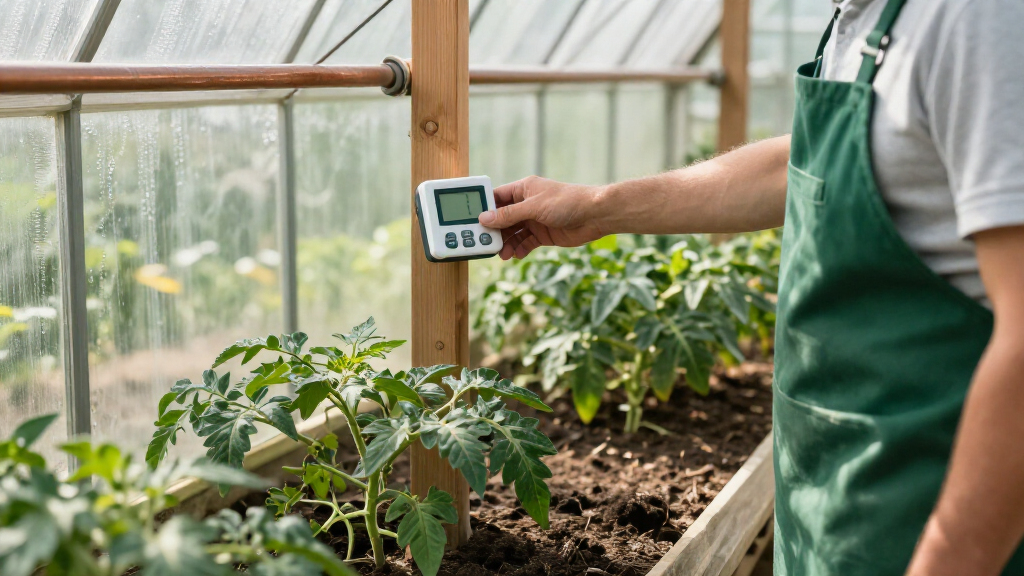
How We Picked
I compared these 14 controllers by the greenhouse tasks they can actually handle: whether they support heating, cooling, or both; stated electrical capacity; probe protection; and options for remote monitoring or humidity control. I also weighed day-to-day usability, including plug-in setup, display and control simplicity, memory features, and how much configuration a grower would need before connecting equipment. Product names and stated specifications guided this comparison; I do not treat them as proof of performance under every greenhouse condition.
The ranking favors versatile temperature control that suits a broad range of small greenhouse setups, followed by useful additions such as Wi-Fi, a waterproof probe, or higher stated capacity. Simpler outlet thermostats rank lower for buyers who need both heating and cooling, though they can be a sensible fit for a single-device setup. Specialty options earn a place for distinct needs, such as humidity management or remote access, but those additions do not automatically make them the best choice for every grower. Before buying, match the controller’s rating to the connected equipment and verify that its operating range and probe placement suit your greenhouse.
Factors to Consider When Choosing Best Greenhouse Temperature Controllers
Choosing a greenhouse controller starts with the equipment and growing conditions you need to manage, not the number of features on the box. These factors can help you avoid paying for controls you will not use or choosing a unit that cannot safely handle your setup.
Decide Whether You Need Heating, Cooling, or Both
List every device you expect the controller to switch: a heater, fan, cooling unit, or another appliance. A dual-stage controller can manage heating and cooling around separate temperature thresholds, which reduces the need for two independent thermostats. A single-outlet thermostat may be a better fit when you only need to run one heater or fan, but it can leave you without coordinated control when seasons change. Check whether the model has separate outlets or simply offers a choice between heating and cooling modes. Do not assume that two operating modes mean it can control two devices at once. Set a realistic temperature gap between heating and cooling so the equipment does not cycle against itself.
Match the Electrical Rating to Your Equipment
Compare the controller’s voltage and current limit with the rating on every appliance you plan to connect. A higher stated capacity, such as the DIGITEN DTC151’s listed 15A rating, may suit some larger loads better than a 10A model, but it does not make every heater compatible. Motors and other equipment can draw more current at startup than their steady operating figure suggests. If you plan to connect more than one device, check the combined load rather than judging each appliance separately. Never exceed the controller, outlet, or circuit rating, and ask a qualified electrician if the load or wiring is unclear. A controller should switch compatible equipment, not serve as a workaround for an undersized circuit.
Place the Probe Where It Measures Plant Conditions
The controller only responds to the temperature its probe detects, so placement can matter as much as the setpoint. Hang it near the plants you want to protect, away from direct heater output, sunlit walls, doors, and cold glazing. Those spots can produce readings that do not reflect the air around the crop. In a wet greenhouse, a waterproof probe can reduce concern about incidental moisture, but check which part of the controller is protected; a waterproof sensor does not make the controller body weatherproof. Avoid letting the probe rest against soil or a pot unless that is the temperature you intend to measure. If your greenhouse has distinct hot and cold zones, one probe may not represent both.
Choose Remote Monitoring Only If It Solves a Real Problem
Wi-Fi control is most useful when you cannot regularly visit the greenhouse and want to check conditions or settings from elsewhere. It adds setup and depends on a reliable connection, compatible software, and power at the greenhouse, so confirm those needs before choosing a connected model. Remote access also does not guarantee the controller will alert you in every failure scenario. A non-Wi-Fi controller can be easier to set up and may be all a nearby greenhouse needs. Consider whether you need remote adjustment, notifications, or just a readable display at the unit. If remote access is important, keep a backup plan for outages and equipment failure.
Treat Humidity as a Separate Control Need
Temperature control alone cannot manage condensation, fungal pressure, or moisture levels. A humidity controller can switch compatible equipment based on humidity, but it adds a sensor, settings, and another control loop to maintain. That can be useful for growers with crops sensitive to humidity swings, though it is not a replacement for ventilation or sensible watering. Before buying a combined temperature-and-humidity setup, decide which devices will respond to each reading and whether they can safely run at the same time. Avoid setting temperature and humidity targets without considering how ventilation affects both. If your main concern is heat, start with temperature control rather than adding complexity you will not use.
Check the Operating Range and Recovery Features
Compare a controller’s stated temperature range with the temperatures your greenhouse may reach, including cold periods and heat waves. A range that excludes your target conditions will limit control even if the unit offers a convenient display or app. Memory after a power interruption can also matter if you cannot reset the controller promptly, but check what settings it retains rather than assuming every model behaves the same way. Consider whether you can read and adjust the display comfortably where the controller will be mounted. For critical crops, use an independent thermometer to verify the probe reading and monitor the space during initial setup. That small check can reveal poor probe placement or a mismatch between the controller and your equipment before it causes a bigger problem.
Frequently Asked Questions
Can one temperature controller run both a greenhouse heater and an exhaust fan?
It can if the model supports separate heating and cooling outputs and both devices fall within its electrical limits. Dual-stage controllers such as the Inkbird ITC-308 are designed for heating-and-cooling control, while a basic thermostat outlet may only switch one connected device. Check whether the outlets are independently assigned and how the heating and cooling thresholds are set. Add a suitable temperature gap between those thresholds to limit rapid cycling. If the heater and fan exceed the controller’s ratings, use appropriately rated equipment and get qualified electrical advice rather than connecting them anyway.
Is a Wi-Fi controller worth choosing if my greenhouse is close to my house?
It depends on whether remote checks or adjustments would change how you manage the greenhouse. If you can see the controller easily and visit often, a non-Wi-Fi unit may offer a simpler setup with fewer connectivity dependencies. Wi-Fi can be more useful when the greenhouse is unattended for long periods or sits far from your home. Before choosing one, check that your signal reaches the location and that the app supports the monitoring you want. Keep in mind that an app does not replace a local temperature check or a backup plan for power and network interruptions.
Does a waterproof temperature probe make the whole controller safe to leave in a wet greenhouse?
No. A waterproof probe protects the sensor only to the extent specified by its maker; it does not establish that the display, plug, outlet, or controller housing can handle water. Keep electrical controls sheltered from spray, condensation, and standing water, and follow the product’s placement instructions. Route the probe cable so water cannot run along it into an outlet or control unit. If the greenhouse is frequently wet, consider the complete installation, including the outlet and circuit, rather than relying on the probe description alone. A qualified electrician can advise on safe placement in a damp environment.
How do I know whether a 10A or 15A controller is suitable for my heater?
Read the heater’s electrical label and compare its current draw with the controller’s stated limit, then check the outlet and circuit ratings as well. The DIGITEN DTC151 lists 15A, while several models in this roundup list 10A, but those figures do not confirm compatibility with a particular appliance. Account for startup draw and any other device connected to the same controller. Do not exceed the lowest applicable rating in the setup. If the appliance label is unclear or the load is near the limit, have an electrician check it before use.
Should I choose a temperature controller with a humidity controller for greenhouse use?
Choose combined temperature and humidity control when you have equipment that should respond to both readings and you are prepared to set up each control separately. The Inkbird ITC-308 with IHC-200 is the specific option here that adds humidity management, while the other listed temperature controllers focus on temperature. Humidity control may help with a crop-specific target, but it cannot replace airflow, ventilation, or good watering practices. A combined system also means more sensors, settings, and potential interactions between connected devices. If you only need to keep temperatures within a range, a simpler controller is likely the easier fit.
Conclusion
For most greenhouse growers who need both heating and cooling control, I’d start with the Inkbird ITC-308 as the best overall choice in this lineup. The standard plug-in models are the stronger value direction when remote access is unnecessary, while the Inkbird ITC-308 Wi-Fi or DEWENWILS smart controller makes more sense for buyers who need app-based monitoring. For beginners, a straightforward plug-in unit with clear controls is easier to set up than a Wi-Fi or humidity-control system. Choose the DIGITEN DTC151 if its listed 15A capacity suits your equipment, and consider the Inkbird ITC-308 with IHC-200 for a specific need to manage humidity as well as temperature. Whatever you choose, match the electrical rating to your load and place the probe where it reflects the conditions around your plants.
Fall yard work Picks

EGO POWER+ Cordless Electric Leaf Blower 530 CFM with Battery (LB5302)
As an affiliate, we earn on qualifying purchases.