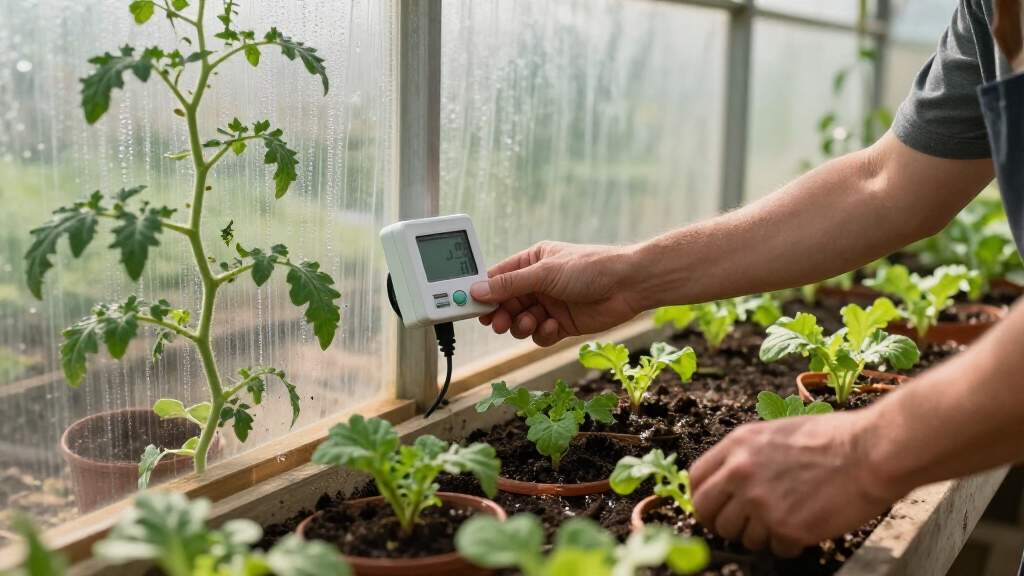

Greenhouse temperature controllers keep seedlings, tropical plants, and overwintering crops inside a safe temperature band by switching heaters and fans on and off automatically. After comparing 15 popular models, the Inkbird ITC-308 Digital Temperature Controller stands out as the best overall pick because it runs heating and cooling simultaneously from one unit, covers a wide temperature range, and handles up to 1100 W. If remote monitoring matters, the Inkbird WiFi ITC-308 adds app-based alerts for roughly the same ease of use, while the DEWENWILS 15A Temperature Controller Outlet wins on raw power handling with its 15-amp, -40°F to 210°F range. The main tradeoff in this category is between simple plug-in thermostats (cheap and easy, but single-function) and dual-outlet or WiFi models (more capable, but more setup). Read on for the full breakdown of all 15 controllers.

Get garden gear delivered free with Prime
- Fast, free delivery on millions of items
- Prime Video, Amazon Music and more included
- Member-only deals all year
Complete the kit


Key Takeaways
- Only the Inkbird ITC-308 family (including the WiFi variants and the ITC-306T) offers simultaneous heating and cooling control from a single unit — every DEWENWILS, WILLHI, BN-LINK, and VIVOSUN model here switches just one device type at a time.
- Load capacity splits the lineup sharply: the DEWENWILS models handle 15 A (roughly 1800 W), enough for serious greenhouse heaters, while BN-LINK and VIVOSUN models cap at 1000 W or less and suit heat mats and small heaters only.
- Several listings are near-duplicates — there are four ITC-308 variants and two nearly identical DEWENWILS outlets — so buyers should compare connectivity (WiFi vs. none) and memory backup rather than assuming each is a different product.
- The Inkbird ITC-306T’s dual heating outlets make it the only pick suited to running two heaters at once, which matters in larger or poorly insulated greenhouses where one heater can’t keep up.
- The VIVOSUN heat mat thermostat is the most range-limited pick here (roughly 40–108°F) — fine for propagation benches, but not a whole-greenhouse solution.
| BN-LINK Digital Reptile Thermostat Temperature Controller |  | Best Budget Pick for Heat-Only Setups | Temperature range: 40–108°F | Maximum load: 1000W, 8.3A | Voltage: 120VAC, 60Hz | VIEW LATEST PRICE | See Our Full Breakdown |
| Wi-Fi Temperature Controller for Greenhouses, 110–230V |  | Best for Remote Monitoring | Input voltage: 120V AC 60Hz or 230V AC 50Hz | Maximum power: 1200W at 120V; 2300W at 230V | Maximum current: 10A | VIEW LATEST PRICE | See Our Full Breakdown |
| Inkbird ITC-308 Digital Temperature Controller |  | Best Value for Dual Control | Model: ITC-308 | Voltage: 110V | Maximum power: 1200W | VIEW LATEST PRICE | See Our Full Breakdown |
| Inkbird WiFi ITC-308 Digital Temperature Controller Thermostat |  | Best Overall | Controller type: Push button | Connectivity: 2.4 GHz Wi-Fi | App compatibility: iOS and Android | VIEW LATEST PRICE | See Our Full Breakdown |
| Digital Temperature Controller for Greenhouses, 120–230V |  | Best for High-Power Installations | Input voltage: 120V AC, 60Hz or 230V AC, 50Hz | Maximum power: 1200W at 120V; 2300W at 230V | Maximum current: 10A | VIEW LATEST PRICE | See Our Full Breakdown |
| WILLHI WH2408 Digital Temperature Controller, 10 A, 1200 W |  | Best Analog-Feel Simplicity | Model: WH2408 | Maximum Power: 1200 W at 120 V | Probe Range: -58°F to 230°F (-50°C to 110°C) | VIEW LATEST PRICE | See Our Full Breakdown |
| Diymore Plug-In Digital Thermostat Controller |  | Best for Multi-Mode Flexibility | Controller Type: Hand control, plug-in | Temperature Range: -40°F to 248°F | Precision: ±1°F | VIEW LATEST PRICE | See Our Full Breakdown |
| VIVOSUN Digital Heat Mat Thermostat Controller |  | Best for Seed Starting and Propagation | Control Range: 40–108°F | Display Range: 32–210°F | Power: 1000 W | VIEW LATEST PRICE | See Our Full Breakdown |
| DEWENWILS 15A Temperature Controller Outlet, -40°F to 210°F |  | Best High-Capacity Workhorse | Current: 15 A | Maximum Heating Capacity: 1800 W | Voltage: 120 V | VIEW LATEST PRICE | See Our Full Breakdown |
| DEWENWILS Smart Temperature Controller, 15A Thermostat with Memory |  | Best Smart Pick | Maximum Current: 15 A | Temperature Range: -40°F to 210°F | Accuracy: 0.1°F | VIEW LATEST PRICE | See Our Full Breakdown |
| Inkbird ITC-308 WiFi Temperature Controller |  | Best for Remote Monitoring | Model: ITC-308 | Connectivity: 2.4 GHz Wi-Fi | App: InkbirdSmart (Android/iOS 13+) | VIEW LATEST PRICE | See Our Full Breakdown |
| DEWENWILS 15A Temperature Controller Outlet Thermostat Plug, -40°F to 210°F |  | Best High-Wattage Pick | Maximum Current: 15A | Maximum Heating Capacity: 1800 W | Temperature Range: -40°F to 210°F | VIEW LATEST PRICE | See Our Full Breakdown |
| Inkbird ITC-308 Digital Temperature Controller, 1100 W, 110 V |  | Best Plug-and-Play Starter | Brand: Inkbird | Model: ITC-308 | Maximum Output: 1100 W at 110 V | VIEW LATEST PRICE | See Our Full Breakdown |
| Inkbird ITC-308 Digital Temperature Controller Thermostat |  | Best Overall Classic | Display Units: °C or °F | Relays: Dual | Display: Measured and set temperatures | VIEW LATEST PRICE | See Our Full Breakdown |
| Inkbird ITC-306T Digital Temperature Controller with Dual Heating Outlets |  | Best for Winter Heating | Brand: Inkbird | Model: ITC-306T | Power: AC 110V | VIEW LATEST PRICE | See Our Full Breakdown |
| greenhouse temperature controller | Display |
|---|---|
| BN-LINK Digital Reptile Thermo | LED |
| Wi-Fi Temperature Controller f | Dual digital display |
| Inkbird ITC-308 Digital Temper | — |
| Inkbird WiFi ITC-308 Digital T | — |
| Digital Temperature Controller | Dual digital display |
| WILLHI WH2408 Digital Temperat | — |
| Diymore Plug-In Digital Thermo | — |
| VIVOSUN Digital Heat Mat Therm | — |
| DEWENWILS 15A Temperature Cont | Illuminated VA |
| DEWENWILS Smart Temperature Co | Backlit LCD |
| Inkbird ITC-308 WiFi Temperatu | — |
| DEWENWILS 15A Temperature Cont | VA display with self-illuminating font |
| Inkbird ITC-308 Digital Temper | — |
| Inkbird ITC-308 Digital Temper | Measured and set temperatures |
| Inkbird ITC-306T Digital Tempe | Dual LCD, °C/°F, 0.1° resolution |
More Details on Our Top Picks
BN-LINK Digital Reptile Thermostat Temperature Controller
BN-LINK’s plug-in thermostat is the simplest entry in this lineup, and that simplicity is exactly its appeal for small greenhouses that only need heat regulation. Unlike the Inkbird ITC-308, which manages both heating and cooling outlets, this unit is heating only — a real limitation if you run fans in summer, but a non-issue for seedling mats and propagation benches in cool months. The three-button interface is genuinely easy to program without a manual, which the app-driven Wi-Fi models in this guide can’t claim. With a 1000W ceiling, it comfortably handles heat mats and a small heater, though it falls short of the 1200W+ ratings on the Inkbird options. This pick makes the most sense for hobbyists who want plug-and-play warmth control without paying for cooling relays or app features they’ll never touch.
Pros:- Three-button programming that works without consulting a manual
- ETL-listed safety certification for peace of mind around moisture and wiring
- Handles seedling mats, heat lamps, and small heaters across a 40–108°F range
- LED display and status lights make setpoint confirmation quick
Cons:- Heating-only design leaves summer cooling completely unmanaged
- 1000W maximum load is the lowest in this lineup
Best for: Seed-starting hobbyists and small greenhouse owners who only need to regulate heat mats or a small heater in winter
Not ideal for: Year-round growers who also need to trigger fans or exhaust systems — this unit has no cooling function
- Temperature range:40–108°F
- Maximum load:1000W, 8.3A
- Voltage:120VAC, 60Hz
- Controller type:Push button
- Display:LED
- Safety listing:ETL listed
- Probe length:4.92 ft
Our verdict“Buy this if heat is your only greenhouse climate problem and you want the least expensive, least complicated fix.”
Wi-Fi Temperature Controller for Greenhouses, 110–230V
Where this controller separates itself from the Inkbird WiFi ITC-308 is dual-voltage flexibility: it accepts 120V or 230V input, pushing output to 2300W on the higher circuit — enough headroom for serious greenhouse heaters that would overload the Inkbird’s 1100W ceiling. The two-outlet design runs heating and cooling gear simultaneously, and the 180-second compressor delay protects exhaust and cooling equipment from rapid cycling, something the heat-only BN-LINK can’t address at all. The catch is onboarding: Wi-Fi mode must be activated with the device button before the app will connect, which adds friction compared with the plug-in models. Compared with similar app-controlled options, this one stands out for growers who want alarm notifications when temperatures drift while they’re away from the property.
Pros:- Remote app control with high and low temperature alarms
- Dual-voltage input supports up to 2300W on 230V circuits
- Two outlets run heating and cooling equipment independently
- Fire-resistant ABS housing suits humid greenhouse environments
Cons:- Wi-Fi must be manually enabled on the device before app pairing
- Maximum output depends on input voltage, which complicates load planning
Best for: Greenhouse owners who travel or work off-site and need high/low temperature alerts plus remote control over both heating and cooling equipment
Not ideal for: Anyone on a strict 110V circuit wanting maximum wattage — output drops to 1200W, erasing its power advantage over cheaper rivals
- Input voltage:120V AC 60Hz or 230V AC 50Hz
- Maximum power:1200W at 120V; 2300W at 230V
- Maximum current:10A
- Outlets:2
- Compressor delay:180 seconds
- Display:Dual digital display
- Housing material:Fire-resistant ABS
Our verdict“This is the pick for growers whose greenhouse sits out of sight and who need phone alerts before a frost or heat spike costs them a crop.”
Inkbird ITC-308 Digital Temperature Controller
The non-Wi-Fi ITC-308 is arguably the sweet spot of this roundup: it delivers both heating and cooling outlets with clearly marked receptacles at a price well below its connected sibling, the Inkbird WiFi ITC-308. You give up app access and scheduling, but if your greenhouse is steps from your back door, those features are conveniences rather than necessities. Compared with the BN-LINK, the jump from heat-only to full heating-and-cooling automation is what makes four-season growing realistic — plug a heater into one outlet and a fan into the other, and the ITC-308 holds your setpoint in both directions. The probe calibration feature is a quiet advantage over cheaper plug-in thermostats, letting you correct sensor drift instead of guessing. It’s better suited to growers who want reliable, unattended temperature regulation without the Wi-Fi premium.
Pros:- Separately marked heating and cooling outlets eliminate wiring confusion
- Probe calibration corrects sensor drift for accurate long-term control
- Celsius and Fahrenheit display options
- 1200W capacity beats the BN-LINK’s 1000W ceiling
Cons:- Requires you to supply your own heating and cooling equipment
- No remote monitoring — setpoints must be adjusted at the unit
Best for: Backyard greenhouse growers who need automatic heating and cooling control and don’t need remote app access
Not ideal for: Owners of remote or large greenhouses who can’t check the display in person — there’s no connectivity or remote alerting
- Model:ITC-308
- Voltage:110V
- Maximum power:1200W
- Temperature control:Heating and cooling
- Display units:Celsius or Fahrenheit
- Calibration:Adjustable
Our verdict“If you want two-way temperature control at the lowest sensible cost, this is the value benchmark every other option here is measured against.”
Inkbird WiFi ITC-308 Digital Temperature Controller Thermostat
This is the model I’d point most greenhouse growers toward first. It takes the proven dual-relay heating and cooling design of the standard Inkbird ITC-308 and adds the layer that matters most for climate control: remote monitoring through the INKBIRD app, with alarms for temperature limits and — a detail cheap controllers skip — sensor malfunction alerts. If a probe fails in January, you know immediately instead of discovering frozen seedlings a week later. The programmable scheduling lets you drop nighttime temperatures to save energy, something the manual ITC-308 cannot do. The tradeoffs are real but manageable: it’s limited to 2.4 GHz networks, which trips up households running mesh systems on 5 GHz only, and the 1100W output trails both the 1200W ITC-308 and the dual-voltage Wi-Fi controller’s ceiling. For most hobby greenhouses, that wattage gap rarely matters.
Pros:- Remote monitoring and control via iOS and Android app
- Dual relays manage heating and refrigeration equipment independently
- Sensor malfunction alarms catch probe failures before they cause damage
- Programmable scheduling supports energy-saving night setbacks
Cons:- 2.4 GHz-only Wi-Fi can conflict with modern mesh routers
- 1100W maximum output is the lowest among dual-outlet models here
Best for: Serious hobby greenhouse growers who want app-based monitoring, scheduled setpoints, and full heating-plus-cooling automation in one unit
Not ideal for: Growers running high-wattage heaters on a single circuit — the 1100W cap may force a second controller
- Controller type:Push button
- Connectivity:2.4 GHz Wi-Fi
- App compatibility:iOS and Android
- Voltage:110V
- Maximum output load:1100W at 110V
- Temperature control:Heating and cooling
- Additional features:Auto-scheduling, calibration, high/low temperature alarms
- Mounting type:Wall mount
Our verdict“The best all-around choice for growers who want their greenhouse climate supervised even when they’re not standing in it.”
Digital Temperature Controller for Greenhouses, 120–230V
This unit targets the grower whose equipment outgrows plug-in thermostics: like its Wi-Fi sibling from the same line, it accepts 120V or 230V input and reaches 2300W on a 230V circuit — nearly double the Inkbird ITC-308’s capacity. Where it differs from the app-controlled version is deliberate: no Wi-Fi, no pairing friction, just programmable high/low alarms and dual independent outlets doing heating and cooling duty. The flexible mounting — wall-mount or freestanding — makes it easier to position at eye level than dangling power-strip designs like the BN-LINK. The honest weakness is documentation: the stated temperature range and accuracy aren’t specified, so precision-sensitive growers (orchids, propagation) may prefer the ITC-308’s calibratable probe. For brute-force climate management over large greenhouse heaters and exhaust fans, though, this model is better suited than anything else in this batch.
Pros:- 2300W capacity on 230V circuits handles industrial-grade heating equipment
- Two independent receptacles separate heating and cooling loads
- Wall-mount or freestanding placement fits permanent installations
- 180-second compressor delay protects exhaust and cooling equipment
Cons:- No published temperature range or accuracy specification
- No remote monitoring or app connectivity of any kind
Best for: Owners of larger greenhouses running high-wattage heaters or 230V equipment who need serious switching capacity without app dependence
Not ideal for: Precision growers who need documented temperature accuracy specs or remote alerts — neither is offered here
- Input voltage:120V AC, 60Hz or 230V AC, 50Hz
- Maximum power:1200W at 120V; 2300W at 230V
- Maximum current:10A
- Outlets:2 independent receptacles
- Compressor delay:180 seconds
- Alarms:Programmable high and low temperature alarms
- Display:Dual digital display
- Mounting:Wall-mountable or freestanding
Our verdict“Choose this when wattage is the deciding factor and you’d rather have raw switching power than smart features.”
WILLHI WH2408 Digital Temperature Controller, 10 A, 1200 W
Most controllers in this lineup, like the Inkbird ITC-308, bury settings behind menus, but the WILLHI WH2408 takes the opposite approach with two-knob adjustment that makes dialing in heating or cooling setpoints nearly foolproof. The 0.1°F control resolution is finer than the Diymore’s ±1°F precision, which matters for growers chasing tight temperature bands around seedlings or propagation trays. A food-grade waterproof probe adds flexibility if you also ferment or incubate. The tradeoff is real, though: the shell is not waterproof and must stay dry, and WILLHI is explicit that this is not a safety device — connected heaters need their own thermal and overload protection. Compared with the higher-capacity DEWENWILS 15A unit, its 1200W ceiling limits it to smaller greenhouse heaters.
Pros:- Two-knob operation is faster to set than menu-driven rivals
- Fine 0.1°F control resolution for tight temperature bands
- Retains settings through power outages
- Food-grade waterproof probe works for greenhouse and non-greenhouse uses
Cons:- Controller shell is not waterproof and must be kept dry
- Not a safety device; attached equipment needs its own thermal and overload protection
- 1200W / 10A ceiling is lower than competing 15A plug-in models
Best for: Growers who want dead-simple dial-based control of a small heater or fan in a hobby greenhouse
Not ideal for: Anyone running heaters above 1200W or mounting equipment where the controller body could get wet
- Model:WH2408
- Maximum Power:1200 W at 120 V
- Probe Range:-58°F to 230°F (-50°C to 110°C)
- Control Resolution:0.1°F
- Modes:Heating and cooling
- Probe:Food-grade, waterproof
- Safety Features:Fire-retardant ABS shell, resettable fuse, ETL-certified power cord
Our verdict“This pick makes the most sense for small-greenhouse growers who value twist-and-go simplicity over app features and raw wattage.”
Diymore Plug-In Digital Thermostat Controller
Where the WILLHI WH2408 keeps things to heating and cooling, the Diymore Plug-In Thermostat layers on five control modes and timer functions up to 99 hours, giving growers who run fans, heaters, and cycles on schedules more room to automate. The 6-foot sensor cord beats the VIVOSUN heat-mat thermostat’s reach, making it easier to place the sensor at plant canopy height while keeping the controller near an outlet. Setup is fully plug-in — no wiring, same as the Inkbird ITC-308 — and settings survive outages. Be aware the ±1°F precision is coarser than the 0.1°F offered by either DEWENWILS model, and the 220V rating doesn’t match standard North American 120V outlets, so check your power before buying.
Pros:- Five control modes plus timing up to 99 hours
- Long 6-foot sensor cord allows flexible sensor placement
- Plug-in setup requires no wiring
- Settings retained through power outages
Cons:- ±1°F precision is coarser than 0.1°F rivals
- 220V voltage rating limits compatibility with North American outlets
Best for: Growers mixing temperature control with timed cycles, especially outside North America on 220V power
Not ideal for: North American buyers on 120V circuits or anyone needing sub-degree precision for sensitive crops
- Controller Type:Hand control, plug-in
- Temperature Range:-40°F to 248°F
- Precision:±1°F
- Maximum Wattage:1800 W
- Voltage:220 V
- Sensor Cord:6 feet
- Control Modes:5
- Timer Duration:Up to 99 hours
Our verdict“A solid fit for multi-purpose automation on 220V power, but 120V growers should lean toward the Inkbird or DEWENWILS options instead.”
VIVOSUN Digital Heat Mat Thermostat Controller
This is the specialist of the batch. While the DEWENWILS 15A outlet and Diymore models chase wide ranges for general greenhouse duty, the VIVOSUN Heat Mat Thermostat narrows its 40–108°F control band to exactly where germination and root-zone heating live — and that narrower range makes it harder to misconfigure a propagation setup. The included probe monitors root-zone temperature rather than air, which is what seedlings actually respond to. Three-button operation is approachable, and small touches like a hanging tab and angled outlet simplify bench setup. The limitations follow from the specialization: it’s heating only, capped at 1000W, and it works with North American outlets, so it can’t run cooling fans or serve international growers the way the dual-mode options here can.
Pros:- Narrow 40–108°F range matched to germination temperatures
- Root-zone probe placement for accurate seedling monitoring
- Simple three-button operation with °F/°C display
- Hanging tab and angled outlet aid bench and cord setup
Cons:- Heating only — no cooling mode like the WILLHI or Diymore
- 1000W capacity limits it to heat mats and small heaters
- Probe cable length is not specified, complicating layout planning
Best for: Seed starters and propagators who need precise root-zone heat control under propagation trays
Not ideal for: Growers needing cooling control, loads above 1000W, or use outside North America
- Control Range:40–108°F
- Display Range:32–210°F
- Power:1000 W
- Units:Fahrenheit and Celsius
- Sensor:Temperature probe included
- Compatibility:Heat mats; North American outlets
Our verdict“If your greenhouse goal is reliable germination, this focused tool beats general-purpose controllers; for whole-greenhouse climate control, look elsewhere in this list.”
DEWENWILS 15A Temperature Controller Outlet, -40°F to 210°F
For raw capacity, this DEWENWILS 15A outlet out-muscles most of the lineup: its 1800W / 15A rating clears the WILLHI’s 1200W and the VIVOSUN’s 1000W, letting it run a full-size greenhouse heater rather than a small propagation unit. The -40°F to 210°F range at 0.1°F precision covers unheated winter structures through summer vent fans, and practical features like temperature calibration, cyclic timing, and power memory give it more tuning depth than the Diymore’s simpler mode set. The illuminated VA display is a genuine convenience for early-morning checks in a dark greenhouse. Two caveats temper the appeal: the button interface is clunkier than the smart model’s app control, and the listed Wi-Fi connectivity is underdocumented, so buyers shouldn’t count on remote features.
Pros:- Full 15A / 1800W capacity for larger greenhouse heaters
- Wide -40°F to 210°F range with 0.1°F precision
- Temperature calibration and cyclic timing modes
- Illuminated display readable in the dark; power memory restores settings
Cons:- Button controls are less convenient than app or touchscreen alternatives
- Wi-Fi is listed but its actual functionality is unclear
Best for: Growers running larger heaters or high-draw fans who need full 1800W headroom and calibration
Not ideal for: Buyers who want dependable remote or app control — its smart sibling or the Inkbird WiFi ITC-308 handles that better
- Current:15 A
- Maximum Heating Capacity:1800 W
- Voltage:120 V
- Temperature Range:-40°F to 210°F
- Precision:0.1°F
- Control:Heating and cooling, button operation
- Display:Illuminated VA
- Features:Power memory, temperature calibration, cyclic timing, countdown modes
Our verdict“The strongest choice here for high-wattage equipment where reliability and range matter more than smart features.”
DEWENWILS Smart Temperature Controller, 15A Thermostat with Memory
This is where the DEWENWILS lineup gets genuinely useful for remote management: unlike the button-only 15A outlet model, this version adds app control, so I can frame it as the option for growers who want to check and adjust greenhouse temperatures from the house rather than walking out in January. Its six modes — heating, cooling, timer, and combinations — pair scheduling with climate control more directly than the Diymore’s five-mode scheme, and the 0.1°F accuracy and -40°F to 210°F range match the best specs in this batch. Power-outage memory means a blink doesn’t wipe your schedule. Compared with the Inkbird WiFi ITC-308, the tradeoff is setup friction: configuring set ranges and differential values takes more effort than a plug-and-dial unit like the WILLHI, and the 15A rating still caps what you can connect.
Pros:- App-based remote adjustment and scheduling
- Six modes combine heating, cooling, and timing flexibly
- 0.1°F accuracy with a wide -40°F to 210°F range
- Restores settings after power outages; backlit LCD for dark conditions
Cons:- Initial configuration of set ranges and differential values adds setup complexity
- 15A ceiling still limits very high-wattage heating equipment
Best for: Owners of detached or remote greenhouses who want to monitor and adjust climate from a phone
Not ideal for: Plug-and-play shoppers who dislike configuring ranges and differentials before first use
- Maximum Current:15 A
- Temperature Range:-40°F to 210°F
- Accuracy:0.1°F
- Control Modes:Cooling, Heating, Cooling + Timer, Heating + Timer, Timer, OFF
- Remote Control:App
- Display:Backlit LCD
Our verdict“The smart pick in this lineup for remote greenhouse management, provided you’re willing to work through the range and differential setup.”
Inkbird ITC-308 WiFi Temperature Controller
Growing operations don’t pause when you’re away, and this is where the WiFi version of the ITC-308 earns its place. It keeps the same dual-relay heating and cooling architecture as the standard Inkbird ITC-308, but adds remote monitoring through the InkbirdSmart app, so a greenhouse overheating at 2 PM while you’re at work becomes a push notification instead of a dead crop. The high and low temperature alarms carry over, and calibration is supported in both Celsius and Fahrenheit. Compared with the non-WiFi ITC-308 units in this lineup, the tradeoff is connectivity fragility: it only works on 2.4 GHz networks, which trips up newer mesh routers, and iOS users need version 13 or later. For growers who travel or manage a greenhouse from a distance, this pick makes the most sense despite those limits.
Pros:- Remote temperature monitoring and control through the InkbirdSmart app
- Dual relay outlets run heating and cooling devices at the same time
- High and low temperature alarms for early warning
- Plug-and-play setup with temperature calibration
Cons:- Only supports 2.4 GHz Wi-Fi, which fails on some modern mesh networks
- Requires iOS 13 or later, leaving older Apple devices behind
Best for: Hobby greenhouse growers who travel or work away from home and need real-time temperature alerts
Not ideal for: Growers on 5 GHz-only networks or older iOS devices, since the app connection requirements are strict
- Model:ITC-308
- Connectivity:2.4 GHz Wi-Fi
- App:InkbirdSmart (Android/iOS 13+)
- Relay Outputs:Dual; heating and cooling simultaneously
- Temperature Units:Celsius and Fahrenheit
- Alarms:High and low temperature limits
- Maximum Output Load:1100 W at 110 V
Our verdict“Buy this if leaving your greenhouse unattended for hours makes you nervous — the app alerts alone justify it over the standard model.”
DEWENWILS 15A Temperature Controller Outlet Thermostat Plug, -40°F to 210°F
Every Inkbird in this roundup tops out at 1100–1200 W, which is a real ceiling if your greenhouse runs a large electric heater. The DEWENWILS plug-in controller handles 15A / 1800 W, and its -40°F to 210°F range with 0.1°F precision covers everything from cold-frame protection in deep winter to propagation warming in summer. The self-illuminating VA display is easier to read in a dim greenhouse corner than the LCDs on the Inkbird ITC-306T, and power memory means settings survive an outage — a genuine advantage over units that reset. The tradeoff: unlike the WiFi Inkbird, there’s no remote monitoring, and it’s a single-outlet plug, so juggling heating and cooling devices together means buying two. This model is better suited to growers whose heater wattage, not features, drives the decision.
Pros:- Handles loads up to 15A / 1800 W, well above the Inkbird units
- Wide -40°F to 210°F range with 0.1°F adjustment precision
- Power memory preserves settings through outages
- Multiple timer modes add flexible scheduling options
Cons:- No remote monitoring or app connectivity
- Single outlet means no simultaneous heating and cooling control
Best for: Growers running high-wattage electric heaters above 1100 W in larger greenhouses
Not ideal for: Growers who want remote app monitoring or simultaneous heating and cooling from one unit
- Maximum Current:15A
- Maximum Heating Capacity:1800 W
- Temperature Range:-40°F to 210°F
- Temperature Precision:0.1°F
- Modes:Heating and cooling
- Display:VA display with self-illuminating font
- Features:Power memory, calibration, cyclic timing, countdown ON/OFF modes
Our verdict“If your heater’s wattage exceeds what an Inkbird can safely switch, this is the workhorse that closes that gap.”
Inkbird ITC-308 Digital Temperature Controller, 1100 W, 110 V
This version of the ITC-308 strips things down to the essentials: heating and cooling control from one box, a temperature probe, dual alarms, and — unusually at this tier — a built-in compressor delay that protects refrigeration equipment from short-cycling. That last feature matters if your greenhouse cooling runs through a mini-split or converted fridge. Compared with the classic Inkbird ITC-308 thermostat elsewhere in this roundup, it’s the simpler sibling: same 1100 W ceiling, same dual-function control, fewer adjustable parameters to learn. That simplicity is the point. Compared with the WiFi ITC-308, you give up app access but skip the network setup headaches entirely. The 1100 W limit is the main constraint — a single large heater will overload it, and it lacks the day/night programming of the ITC-306T.
Pros:- Controls both heating and cooling with one plug-in unit
- Built-in compressor delay protects refrigeration equipment
- High and low temperature alarms included
- Minimal setup — works straight from the box with probe included
Cons:- Maximum output limited to 1100 W at 110 V
- No remote monitoring or app connectivity
Best for: First-time greenhouse growers who want heating and cooling control working out of the box with no configuration rabbit holes
Not ideal for: Growers with heaters above 1100 W or anyone who wants remote alerts while away
- Brand:Inkbird
- Model:ITC-308
- Maximum Output:1100 W at 110 V
- Functions:Heating and cooling control
- Temperature Units:Celsius or Fahrenheit
- Alarms:High and low temperature alarms
- Compressor Protection:Built-in compressor delay
- Includes:Controller with probe and manual
Our verdict“The least intimidating way to get dual heating and cooling control in a greenhouse — just don’t plug in an oversized heater.”
Inkbird ITC-308 Digital Temperature Controller Thermostat
This is the reference design the other ITC-308 variants build on, and it remains the strongest all-around choice for a mid-size greenhouse. The dual relays run heating and refrigeration gear together, the display shows measured and set temperatures simultaneously — so you can confirm the probe is reading sanely at a glance — and the adjustable compressor delay outclasses the fixed delay on the simplified ITC-308, letting you tune protection to your specific cooling equipment. It also adds a sensor malfunction alarm, which neither the DEWENWILS nor the ITC-306T offers; when a probe fails in a greenhouse, that alarm is the difference between a fix and a crop loss. The catches are familiar: 1100 W maximum, and no app access unless you step up to the WiFi ITC-308. This pick makes the most sense for growers who want proven, adjustable control without paying for connectivity they may not use.
Pros:- Adjustable compressor delay can be tuned to specific cooling equipment
- Sensor malfunction alarm catches probe failures early
- Displays measured and set temperatures at the same time
- Controls heating and refrigeration equipment simultaneously
Cons:- Maximum output load limited to 1100 W at 110 V
- No remote monitoring — the WiFi ITC-308 covers that need at a higher price
Best for: Greenhouse growers who want reliable dual heating/cooling control with fine-tunable protection settings
Not ideal for: High-wattage heater setups or growers who need phone alerts while off-site
- Display Units:°C or °F
- Relays:Dual
- Display:Measured and set temperatures
- Alarms:High temp, low temp, sensor malfunction
- Maximum Output Load:1100 W at 110 V
- Compressor Delay:Adjustable
Our verdict“The most complete non-connected controller here — choose it when you want adjustability and alarm coverage rather than app features.”
Inkbird ITC-306T Digital Temperature Controller with Dual Heating Outlets
The ITC-306T makes no pretense of being a full climate controller — heating only, no cooling — and that focus buys real capability. Two heating outlets mean you can run a pair of smaller heaters instead of one big one, distributing warmth more evenly than a single-outlet unit like the DEWENWILS plug allows. Its standout feature is separate day and night temperature settings, matching how greenhouse heat demands swing with sunlight — something none of the ITC-308 variants offer. Adjustable hysteresis and calibration round out genuinely precise control, and the 6.56-foot probe immersion depth gives flexible placement. At 1200 W total it edges past the ITC-308’s ceiling but sits below the DEWENWILS 1800 W. Skip it entirely if your climate demands summer cooling; the ITC-308 thermostat is the better fit there.
Pros:- Two heating outlets let you run paired heaters for even warmth
- Separate day and night temperature settings match natural greenhouse cycles
- Adjustable hysteresis and calibration for precise control
- 1200 W output slightly exceeds the ITC-308’s limit
Cons:- Heating only — cannot control any cooling or ventilation equipment
- Total output still capped at 1200 W across both outlets
Best for: Cold-climate greenhouse growers who need dual-heater warmth with day/night temperature programs and no cooling
Not ideal for: Growers in warm regions who need cooling control alongside heating
- Brand:Inkbird
- Model:ITC-306T
- Power:AC 110V
- Maximum Output:1200 W
- Control Type:Heating only
- Outlets:2 heating outlets
- Temperature Range:Up to 99 °C
- Display:Dual LCD, °C/°F, 0.1° resolution
- Features:Day/night settings, calibration, adjustable hysteresis
Our verdict“A specialist winter tool: if your greenhouse problem is cold nights rather than hot days, its day/night programming beats the generalists.”

How We Picked
I evaluated each controller against the demands of real greenhouse use rather than indoor terrariums or home brewing. The criteria that mattered most: heating and cooling capability (can it run both a heater and a fan, or only one?), load capacity (a 1000 W limit rules out most greenhouse space heaters), temperature range and accuracy (greenhouses swing wide, so -40°F to 210°F coverage beats a narrow reptile-safe band), and usability (plug-in simplicity versus menu-driven setup).
I also weighed convenience features that change daily ownership: WiFi remote monitoring for growers who aren’t home during cold snaps, memory retention after power cuts, alarm functions, and sensor cable length. Products are ranked with dual-outlet, higher-amperage, better-supported models near the top, and single-purpose or range-limited units lower — not because they’re poorly built, but because they solve narrower problems. Where two listings are functionally the same product, I flag the differences so you can pick the right variant rather than paying twice for one feature.
Factors to Consider When Choosing Greenhouse Temperature Controllers
Before settling on a specific model, it helps to understand what actually separates a controller that protects your plants from one that merely switches a plug on and off. These are the factors that consistently determined which picks rose to the top.Heating and Cooling: One Outlet Is Rarely Enough
The most common mistake greenhouse buyers make is grabbing a single-outlet thermostat designed for reptile tanks or heat mats. A greenhouse needs both ends of the spectrum managed: a heater for frosty nights and a fan or vent opener for sunny afternoons, sometimes on the same day in spring. Dual-outlet controllers like the ITC-308 family eliminate the juggling act of two separate thermostats fighting each other. If you buy single-outlet units, you’ll need two of them, and they won’t coordinate — one might be heating while the other still thinks the greenhouse is cold. Budget for the dual-outlet approach unless you’re only controlling one device, such as a propagation mat.
Wattage and Amperage Headroom
Check the wattage rating of your heater before choosing anything, because undersizing here is both a failure point and a fire risk. A typical electric greenhouse heater draws 1500 W, which already exceeds the 1000 W limit on several budget picks in this lineup. The 15 A DEWENWILS models handle around 1800 W, giving comfortable headroom, while the Inkbird units at 1100–1200 W sit right at the edge for mid-size heaters. A good rule: leave at least 20% margin between your heater’s rated draw and the controller’s maximum. If your heater exceeds what any plug-in controller supports, use the controller to switch a relay or contactor instead of overloading it.
Temperature Range and Sensor Placement
Published range matters less than you’d think — what matters is whether the sensor reads accurately where your plants actually are. Greenhouses have steep temperature gradients: the air near the roof can be 10–15°F warmer than bench height on a sunny day. Look for a sensor cable long enough (6 feet or more) to reach plant canopy level, not the heater’s vicinity. Models with narrow bands like 40–108°F work for propagation but can’t display or respond to true freezing conditions. Also check whether the unit shows both current and target temperature — a small thing that makes daily monitoring far easier.
Remote Monitoring: When WiFi Earns Its Keep
WiFi connectivity sounds like a gimmick until the first night you’re away and a cold front hits. A connected controller lets you check greenhouse temperature from bed or work and sends alerts when readings drift out of range. That said, WiFi models depend on your greenhouse having reliable signal — metal-framed structures and distance from the router kill connections quickly, and a disconnected smart controller is no smarter than a dumb one. If your greenhouse has weak WiFi, spend the money on a good thermometer and alarm unit instead, or extend your network first. For growers with solid connectivity, the peace of mind of push alerts during frost season justifies the price difference.
Hysteresis, Memory, and Power-Cut Behavior
Hysteresis — the gap between the switch-on and switch-off temperatures — determines how often your heater cycles. A tight gap keeps temperature stable but wears equipment; a wide gap saves the heater but lets temperature swing more than tender seedlings like. Some models let you adjust this, others don’t, and it’s worth checking before buying. Equally important is what happens after a power cut: units without memory retention revert to defaults, which could mean your heater stays off until you notice. Memory backup, included in the DEWENWILS smart model, quietly becomes one of the most valuable features the first time a storm knocks out power overnight.
Matching the Controller to the Greenhouse Size
A small cold frame, a 6×8 hobby greenhouse, and a 20-foot polytunnel have entirely different control needs, and overbuying is as common as underbuying. For a propagation bench or seed-starting setup, a simple heat mat thermostat handles everything. A hobby greenhouse with one heater and one fan needs a dual-outlet controller and nothing more. Larger or draftier structures may need two heaters — this is where a dual heating-outlet model like the ITC-306T makes sense, or a standard controller switching a contactor. Don’t assume the most expensive option fits best; match capacity and outlet count to your actual equipment, then add features like WiFi only if they solve a problem you actually have.
Frequently Asked Questions
Can one temperature controller run both my greenhouse heater and fan?
Yes, but only if it has dual outlets designed for simultaneous heating and cooling — which is exactly what the Inkbird ITC-308 family provides. One outlet activates when temperature drops below your setpoint, the other when it rises above it, so a heater and exhaust fan coordinate through a single brain. Single-outlet models like the BN-LINK or DEWENWILS plug-in thermostats can only control one device, so you’d need two separate units that don’t communicate. That works, but you risk the two fighting each other if setpoints overlap. For any greenhouse with both heating and ventilation needs, dual-outlet control is the cleaner and usually cheaper route than buying two singles.
Is the WiFi version of the ITC-308 worth the extra cost over the standard model?
It depends entirely on your greenhouse’s connectivity and how often you’re away. The WiFi variants deliver the same core control as the standard ITC-308, so the premium buys remote temperature checks, push alerts, and the ability to adjust setpoints from your phone. During frost season, an alert that temperature is dropping faster than expected can genuinely save a crop. However, greenhouses are notoriously bad WiFi environments — metal frames, distance from the router, and condensation all interfere — and a smart controller stuck offline offers no advantage over the basic model. If your signal is weak, fix that first or stick with the standard version and a separate remote thermometer.
What happens to my settings if the power goes out?
Behavior varies by model, and it matters more than most buyers expect. Some units, like the DEWENWILS smart controller with memory, retain your setpoints and resume normal operation when power returns. Others reset to factory defaults or power on in an off state, which means your heater may not restart after an outage until you intervene manually. In winter, an unattended reset can be the difference between thriving plants and frozen ones. Check the product documentation for memory or restore behavior before buying, and regardless of the model, pair any controller with a max-min thermometer so you can spot temperature crashes you didn’t witness.
My greenhouse heater is 1500 W — which controllers here can handle it?
Only the 15-amp models in this lineup — the DEWENWILS outlets rated for roughly 1800 W — have genuine headroom for a 1500 W heater. The Inkbird ITC-308 units cap around 1100–1200 W and the BN-LINK at 1000 W, which means running a 1500 W heater through them risks tripping protection circuits at best and equipment damage at worst. If you already own a large heater, you have two options: use a 15 A controller directly, or use a lower-rated controller to switch a relay or contactor that carries the actual heater load. Undersizing this connection is the single most dangerous mistake in this category, so verify wattage before checkout, not after.
Can I use a reptile or heat mat thermostat like the VIVOSUN for whole-greenhouse control?
You can, but only in a small or highly specific setup, and I’d caution against stretching it further. Heat mat thermostats like the VIVOSUN are designed for propagation benches: they read a narrow temperature band, handle modest wattage, and control a single heating device. For a seedling mat or small germination chamber, they’re actually ideal — accurate, simple, and inexpensive for the job. For a walk-in greenhouse, they fall short on range, wattage, and the lack of cooling control, meaning sunny-day overheating goes unmanaged. Treat them as propagation specialists and buy a dual-outlet controller for the structure itself; trying to make one device do both jobs usually means doing neither well.
Conclusion
The right pick depends on what you’re actually controlling. For most greenhouse growers, the Inkbird ITC-308 is the best overall choice — dual heating/cooling outlets, a wide range, and enough capacity for typical hobby-greenhouse equipment. The DEWENWILS 15A Temperature Controller Outlet takes the best value for high-wattage setups, delivering full 1800 W capability where other budget picks max out. For growers who want remote monitoring and alerts, the Inkbird WiFi ITC-308 is the premium option that justifies its cost during frost season, provided your greenhouse has decent signal. Beginners running seed trays or a single heat mat should start with the VIVOSUN or BN-LINK thermostat — simple, plug-in, and forgiving. And for specific needs like running two heaters in a larger greenhouse, the Inkbird ITC-306T’s dual heating outlets fill a niche nothing else in this lineup covers. Match the controller to your equipment first, then add features from there.
Halloween Picks
halloween
As an affiliate, we earn on qualifying purchases.