

The best garden mulching tools depend on whether you need to shred fallen leaves or move and loosen garden-bed material. My best overall pick is the WORX Trivac WG509, a 3-in-1 blower, vacuum, and mulcher that combines cleanup and leaf reduction in one tool. For larger batches of collected leaves, the WORX WG430 is the dedicated electric mulcher, while the Garden Guru hand rake and soil tiller suits small beds and hands-on work. The main tradeoff is between powered tools that process leaves quickly and manual tools that offer simpler, quieter control but do not shred leaves. Read on for how these options differ and which one fits your yard.

Get garden gear delivered free with Prime
- Fast, free delivery on millions of items
- Prime Video, Amazon Music and more included
- Member-only deals all year
Complete the kit


Key Takeaways
- The two WORX electric tools serve different jobs: the WG509 vacuums and mulches leaves as part of cleanup, while the WG430 is a dedicated leaf mulcher for material you have already gathered.
- Three blower-vac-mulchers offer the broadest leaf-cleanup roles: the WORX WG509, GreenSweep, and Heywork combine blowing, vacuuming, and shredding, so compare their stated specifications and support before choosing among them.
- Manual tools are not substitutes for powered shredders: the Garden Guru rake and tiller and the three 10-tine pitchforks help with bed work or moving material, but they do not provide powered leaf reduction.
- Pitchfork selection comes down to handling fit: AugFir has a 50-inch handle, COSITA a 44-inch fiberglass handle, and Nohovu a 45-inch non-slip handle, making reach, grip, and storage more useful comparisons than tine count alone.
- A single-tool solution has limits: a blower-vac-mulcher can simplify seasonal leaf cleanup, but buyers who also turn compost or work garden beds may need a separate manual tool.
| GreenSweep 3-in-1 Electric Leaf Blower, Vacuum, and Mulcher |  | Best for Adjustable, Multi-Mode Cleanup | Brand: GreenSweep | Model: GS-LB1 | Power source: AC | VIEW LATEST PRICE | See Our Full Breakdown |
| Heywork 3-in-1 Corded Leaf Blower, Vacuum, and Mulcher |  | Best for Lightweight, High-Ratio Leaf Mulching | Brand: Heywork | Model: H9608 | Power source: AC | VIEW LATEST PRICE | See Our Full Breakdown |
| WORX Trivac WG509 3-in-1 Electric Leaf Blower, Vacuum, and Mulcher | 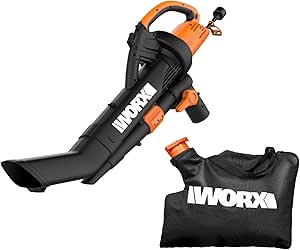 | Best Overall for Leaf Volume Reduction | Model: WG509 | Power source: Corded electric | Voltage: 120 V | VIEW LATEST PRICE | See Our Full Breakdown |
| Garden Guru Hand Rake and Soil Tiller with Ergonomic Handle |  | Best for Hand-Spreading Mulch in Beds | Brand: Garden Guru | Tool type: Hand rake and soil tiller | Tine count: 5 | VIEW LATEST PRICE | See Our Full Breakdown |
| AugFir 10-Tine Metal Pitchfork with 50-Inch Handle |  | Best for Turning Bulk Mulch and Compost | Model: 10MPF003 | Tine count: 10 | Length: 50 inches | VIEW LATEST PRICE | See Our Full Breakdown |
| COSITA 10-Tine Garden Pitchfork with Fiberglass Handle, 44-Inch |  | Best for Moving Loose Mulch | Tines: 10 | Head material: Carbon steel | Handle material: Fiberglass | VIEW LATEST PRICE | See Our Full Breakdown |
| WORX WG430 13 Amp Electric Leaf Mulcher |  | Best for High-Volume Leaf Mulching | Model: WG430 | Motor: 13 Amp | Processing rate: Up to 53 gallons per minute | VIEW LATEST PRICE | See Our Full Breakdown |
| Nohovu 10-Tine Gardening Pitchfork with Non-Slip Handle, 45-Inch |  | Best for Turning Compost and Manure | Tine count: 10 | Length: 45 inches | Dimensions: 45 x 14.7 x 3.5 inches | VIEW LATEST PRICE | See Our Full Breakdown |
| garden mulching tool | Model | Weight |
|---|---|---|
| GreenSweep 3-in-1 Electric Lea | GS-LB1 | — |
| Heywork 3-in-1 Corded Leaf Blo | H9608 | — |
| WORX Trivac WG509 3-in-1 Elect | WG509 | 9.3 lb |
| Garden Guru Hand Rake and Soil | — | — |
| AugFir 10-Tine Metal Pitchfork | 10MPF003 | 4.93 pounds |
| COSITA 10-Tine Garden Pitchfor | — | 4.84 pounds |
| WORX WG430 13 Amp Electric Lea | WG430 | 20 pounds |
| Nohovu 10-Tine Gardening Pitch | — | 6.1 pounds |
More Details on Our Top Picks
GreenSweep 3-in-1 Electric Leaf Blower, Vacuum, and Mulcher
The GreenSweep 3-in-1 suits gardeners who want one tool to blow leaves into piles, vacuum them up, and mulch them for easier disposal or composting. Its adjustable speed control gives more control across lighter clippings and heavier leaf piles, while the stated 10:1 mulching ratio reduces the volume going into its 10-gallon bag. Compared with the WORX Trivac WG509, GreenSweep offers a larger stated bag capacity but a lower mulch ratio, so it may mean fewer trips to empty without compressing leaves as much. One buying concern is the conflicting motor information: the title lists 10 A, while the description says 15 A. I’d favor it for routine yard cleanup, but shoppers who need verified power details or maximum leaf reduction should compare alternatives first.
Pros:- Blower, vacuum, and mulcher functions cover several stages of yard cleanup
- Adjustable speed supports different debris and cleanup tasks
- 10-gallon collection bag offers ample stated capacity
- Stated mulching ratio of up to 10:1 reduces debris volume
Cons:- Motor rating conflicts between the 10 A title and 15 A description
- AC power requires access to an outlet and limits reach
- Its stated 10:1 ratio is lower than the WORX Trivac WG509’s 18:1
Best for: Homeowners with a power outlet nearby who want adjustable control and a larger collection bag for routine leaf and clipping cleanup.
Not ideal for: Buyers who need cordless reach, a clearly specified motor rating, or a higher stated mulch ratio for large volumes of leaves.
- Brand:GreenSweep
- Model:GS-LB1
- Power source:AC
- Voltage:120 V
- Functions:Blow, vacuum, and mulch
- Mulching ratio:Up to 10:1
- Collection bag capacity:10 gallons
- Speed control:Adjustable
Our verdict“Choose the GreenSweep if adjustable three-mode cleanup and a larger stated bag matter more than a higher mulch ratio or unambiguous motor specs.”
Heywork 3-in-1 Corded Leaf Blower, Vacuum, and Mulcher
The Heywork H9608 pairs a relatively light 5.5-pound listed weight with a 15:1 mulching ratio, making it a practical fit for homeowners who want to vacuum and reduce leaf volume without handling a heavier machine. Its 450 CFM airflow and 158 MPH maximum air speed also let it work as a blower before switching to vacuum mode. The included 40 L bag, shoulder strap, and support wheels help with carrying and guiding it, though they don’t remove the limits of a corded tool. Compared with the WORX Trivac WG509, Heywork lists stronger airflow and a lighter weight, while WORX claims a higher 18:1 mulch ratio. Heywork is best for leaves, clippings, and light debris; I wouldn’t pick it for heavy, wet material or areas far from an outlet.
Pros:- Three functions handle blowing, vacuuming, and mulching
- Stated 15:1 ratio reduces leaf volume for disposal or composting
- Listed 5.5-pound weight is lighter than the WORX Trivac WG509’s 9.3 pounds
- Includes a 40 L bag, support wheels, and shoulder strap
Cons:- Corded power restricts working distance and requires outlet access
- Product is described as best suited to leaves, clippings, and light debris
- Its stated 15:1 mulch ratio is below the WORX Trivac WG509’s 18:1
Best for: Gardeners with small or medium yards who want a lightweight corded blower-vacuum-mulcher for leaves and grass clippings.
Not ideal for: People clearing heavy or wet debris, working far from outlets, or prioritizing the highest stated mulch ratio.
- Brand:Heywork
- Model:H9608
- Power source:AC
- Voltage:120 V
- Wattage:1800 W
- Airflow:450 CFM
- Maximum air speed:158 MPH
- Mulching ratio:15:1
- Collection bag capacity:40 L
Our verdict“Pick the Heywork for lighter handling and listed airflow in a corded tool, but choose the WORX Trivac WG509 if a higher stated mulch ratio matters more.”
WORX Trivac WG509 3-in-1 Electric Leaf Blower, Vacuum, and Mulcher
The WORX Trivac WG509 earns the overall spot for buyers focused on turning vacuumed leaves into a smaller, easier-to-handle load: its listed 18:1 mulch ratio is higher than the GreenSweep’s 10:1 and the Heywork’s 15:1. It also combines blowing, vacuuming, and mulching, with variable-speed control for adjusting to different cleanup tasks. The 42 L collection bag gives it more listed capacity than Heywork’s 40 L bag, though the difference is modest and both may need emptying during larger jobs. Its 12 A motor and corded design suit sustained work near an outlet, not untethered cleanup around a large property. At 9.3 pounds, it is also heavier than the Heywork. I’d choose it for leaf-focused yard care, while shoppers seeking lower listed weight should compare that alternative.
Pros:- Listed 18:1 mulch ratio is higher than the GreenSweep and Heywork ratios
- Blower, vacuum, and mulcher functions suit different cleanup stages
- Variable-speed control supports changes in debris and working conditions
- 42 L collection bag provides more stated capacity than Heywork’s 40 L bag
Cons:- Corded power can limit movement around the yard
- At 9.3 pounds, it is heavier than the Heywork’s listed 5.5 pounds
- The collection bag may need emptying during larger cleanup jobs
Best for: Homeowners with a nearby outlet who regularly vacuum and mulch fallen leaves and want a high stated reduction ratio.
Not ideal for: Buyers who need cordless mobility, a lighter listed tool, or a dedicated mulcher rather than a three-function blower-vacuum.
- Model:WG509
- Power source:Corded electric
- Voltage:120 V
- Motor:12 A
- Airflow capacity:350 CFM
- Maximum air speed:210 MPH
- Mulch ratio:18:1
- Collection bag capacity:42 L
- Weight:9.3 lb
Our verdict“Choose the WORX Trivac WG509 if reducing the volume of vacuumed leaves is your main goal and corded operation fits your yard.”
Garden Guru Hand Rake and Soil Tiller with Ergonomic Handle
The Garden Guru Hand Rake serves a different mulching job from the WORX Trivac WG509 and other powered options: it helps spread and work mulch into small beds and tight planting areas, rather than shredding leaves or processing large piles. Its five carbon steel tines can loosen and turn soil while moving mulch around plants, and the ergonomic grip is designed to reduce hand and wrist fatigue during close-up work. That makes it a better match for precise bed care than a long-handled pitchfork such as the AugFir 10-Tine, which is intended for bulkier tasks like turning compost. The tradeoff is its limited reach and manual pace. I’d choose it for detailed garden maintenance, not for covering broad beds quickly or producing mulch from yard waste.
Pros:- Five carbon steel tines loosen and turn soil while helping spread mulch
- Compact hand-tool format suits work around plants and small stems
- Ergonomic grip is designed to reduce hand and wrist fatigue
- Includes a lifetime warranty and a 90-day satisfaction guarantee
Cons:- Manual operation is slower than powered leaf-mulching tools for large areas
- Short-handled design offers less reach and leverage than the AugFir pitchfork
- Does not shred or reduce the volume of leaves into mulch
Best for: Gardeners who spread mulch by hand around established plants, loosen soil in small beds, and need a maneuverable tool for close work.
Not ideal for: People processing leaf piles, covering large garden areas quickly, or needing a long-handled tool for bulk compost and mulch.
- Brand:Garden Guru
- Tool type:Hand rake and soil tiller
- Tine count:5
- Tine material:Carbon steel
- Handle:Ergonomic grip
- Warranty:Lifetime warranty
- Satisfaction guarantee:90 days
- Model number:HANDRAKEC
Our verdict“Choose this hand rake for controlled mulch placement and soil care in small beds, not for making mulch or tackling broad areas.”
AugFir 10-Tine Metal Pitchfork with 50-Inch Handle
The AugFir 10-Tine Pitchfork is the lineup’s bulk-material option: its 50-inch handle and 10 reinforced, curved tines are suited to turning compost, moving loose mulch, and lifting hay. Unlike the Garden Guru hand rake, which gives better control around individual plants, AugFir offers longer reach and a larger working head for shifting material across a compost heap or garden bed. The anti-slip plastic grip and tool-free assembly make setup and handling more straightforward, while its 4.93-pound listed weight is a factor during repeated lifting. This is a manual tool, not a leaf shredder, so it won’t reduce debris volume like the WORX Trivac WG509. I’d choose it for moving and aerating loose organic material, but skip it for precision work in crowded beds.
Pros:- Ten reinforced, curved tines are designed to penetrate and lift loose material
- 50-inch handle provides more reach than the Garden Guru hand rake
- Anti-slip plastic grip is shaped for comfortable handling
- Assembles without tools using two hex bolts
Cons:- Manual fork does not shred leaves or reduce mulch volume like the WORX Trivac WG509
- Long handle and broad head are less suited to close work around delicate plants
- Listed weight of 4.93 pounds may add effort during repeated lifting
Best for: Gardeners and composters who need a long-handled fork for turning loose mulch, compost, hay, or soil.
Not ideal for: People who need to shred leaves, spread mulch precisely around delicate plants, or work in tight spaces suited to a hand rake.
- Model:10MPF003
- Tine count:10
- Length:50 inches
- Dimensions:50 × 15 × 1 inches
- Weight:4.93 pounds
- Material:Metal with a plastic handle
- Color:Yellow
- Assembly:Tool-free assembly with two hex bolts
Our verdict“Choose the AugFir for turning and moving bulk compost or loose mulch, but pick a hand rake for precision or a powered tool for leaf reduction.”
COSITA 10-Tine Garden Pitchfork with Fiberglass Handle, 44-Inch
The wide 10-tine head makes this pitchfork a practical choice for shifting loose mulch, leaves, and compost in fewer scoops than a narrow fork. Its 44-inch fiberglass handle adds reach and resists weather, while the D-grip gives you a controlled hold when lifting material. Unlike the WORX WG430, which mechanically chops dry leaves to shrink their volume, the COSITA is a manual tool for moving and turning material without power or a collection bag. It also weighs less than the Nohovu pitchfork, making it the easier of those two options to handle over repeated lifts. The tradeoff is still noticeable: at 4.84 pounds, it may tire users during long sessions, and it won’t shred leaves into finer mulch.
Pros:- Wide 10-tine head moves a substantial scoop of loose material
- Carbon steel head is designed for handling heavy loads
- Weather-resistant fiberglass handle with a D-grip
- Tool-free assembly simplifies setup
Cons:- At 4.84 pounds, it may feel tiring during prolonged use
- Moves material but does not shred or reduce leaf volume
- A wide head may be less convenient in tight beds or narrow spaces
Best for: Gardeners who regularly move loose mulch, compost, or leaves between piles and beds and want a wide manual fork.
Not ideal for: Anyone who wants to reduce bulky leaves into fine, compacted mulch or needs a lightweight tool for extended lifting.
- Tines:10
- Head material:Carbon steel
- Handle material:Fiberglass
- Handle length:44 inches
- Grip:D-grip
- Weight:4.84 pounds
Our verdict“Choose the COSITA if you need a broad, manual fork for moving loose garden material and don’t need powered leaf reduction.”
WORX WG430 13 Amp Electric Leaf Mulcher
For a yard that produces more leaves than a pitchfork can manage, the WORX WG430 is the lineup’s dedicated powered mulcher: it processes up to 53 gallons per minute and reduces leaf volume by up to 11:1. Its bladeless flex-a-line system turns dry leaves into smaller material without the manual lifting required by the COSITA or Nohovu pitchforks. Tool-free setup and disassembly help when the season ends, and the included replacement lines provide spares for the cutting system. Those advantages come with a narrower job description: it is designed for dry leaves and yard debris, not for turning wet compost or moving finished mulch. It also needs a collection bag underneath and a corded power source, so it is less flexible around the garden than a hand tool.
Pros:- Processes up to 53 gallons of leaves per minute
- Reduces leaf volume by up to 11:1
- Bladeless flex-a-line system has tool-free line replacement
- Tool-free assembly and disassembly support easier storage
Cons:- Designed for dry leaves and yard debris rather than wet or heavy material
- Requires a collection bag mounted underneath
- Corded operation limits placement compared with manual pitchforks
Best for: Homeowners with large seasonal piles of dry leaves who want powered volume reduction rather than manual hauling.
Not ideal for: Gardeners who mainly turn compost, handle wet leaves, or need a portable tool for moving mulch around beds.
- Model:WG430
- Motor:13 Amp
- Processing rate:Up to 53 gallons per minute
- Mulch ratio:Up to 11:1
- Cutting system:Bladeless flex-a-line
- Motor speed:8,500 rpm
- Cut diameter:13 inches
- Weight:20 pounds
- Included accessories:24 replacement lines and 1 bag support ring
Our verdict“Pick the WG430 for powered, high-volume reduction of dry leaves, but choose a pitchfork if your main task is moving or turning mulch.”
Nohovu 10-Tine Gardening Pitchfork with Non-Slip Handle, 45-Inch
The Nohovu is aimed at gardeners who need to penetrate and turn dense material, not simply scoop up a loose layer of leaves. Its 10 sharp, high-carbon steel tines and curved head are suited to working through hay, manure, and compost, while the reinforced fiberglass handle and non-slip D-shaped grip offer a secure hold during leverage-heavy work. Compared with the COSITA, it is one inch longer and emphasizes sharp penetration and a reinforced attachment, but its 6.1-pound weight makes it the heavier manual option. The WORX WG430 is a better fit for reducing dry leaf piles quickly; the Nohovu instead handles turning and moving material without power. Skip it if your priority is repeated light lifting or fine leaf shredding.
Pros:- Sharp 10-tine head is designed to penetrate material
- High-carbon steel head suits turning and lifting garden matter
- Reinforced fiberglass handle and head attachment
- Non-slip D-shaped grip and 45-inch length support leverage
Cons:- Weighs 6.1 pounds, heavier than the COSITA pitchfork
- Manual turning is slower than powered leaf reduction with the WORX WG430
- Does not shred or compress leaves into a smaller volume
Best for: Gardeners who regularly turn compacted compost or manure and prefer a long-handled fork with a secure grip.
Not ideal for: Users seeking a lighter fork for extended scooping, or anyone who wants a powered tool to shred large dry-leaf piles.
- Tine count:10
- Length:45 inches
- Dimensions:45 x 14.7 x 3.5 inches
- Weight:6.1 pounds
- Head material:High-carbon steel
- Handle material:Fiberglass
- Grip:Non-slip, D-shaped
Our verdict“Choose the Nohovu for turning dense compost and manure with a secure, long-handled grip, provided its heavier build suits your workload.”

How We Picked
I ranked these products by how directly they help with garden mulching, then by the range of tasks they can handle, usability, and the practical tradeoffs of powered versus manual work. A tool that actively shreds leaves earns a stronger place for leaf-mulching needs than a rake or pitchfork, which can prepare or move material but cannot reduce it into mulch. I also separated dedicated shredding from cleanup tools: a blower-vac-mulcher can gather and process leaves in one workflow, while a standalone mulcher is more focused on collected material.
Within similar tool types, I considered the information provided about configuration, handle length, grip, and intended function, without treating unlisted performance figures as proven. That puts the WORX WG509 first for its combined cleanup and mulching role, with the WORX WG430 as the more specialized choice for gathered leaves. Manual options rank lower for shredding itself, but remain relevant for bed preparation and material handling. Buyers should confirm current manufacturer details, compatibility, and included components before purchase.
Factors to Consider When Choosing Best Garden Mulching Tools
Before choosing, decide what you mean by mulching: shredding loose leaves, collecting yard debris, or handling and working organic material in beds. Those jobs call for different tools, and buying for the wrong task can leave you with a capable tool that does not solve your main problem.
Choose Between Leaf Shredding and Garden-Bed Work
Start by naming the material you want to process and what you want it to become. Electric leaf mulchers and blower-vac-mulchers reduce dry leaves, while rakes and pitchforks are for gathering, loosening, lifting, or shifting material. A pitchfork may help turn a compost pile or move bulky yard debris, but it will not shred leaves. A hand rake and tiller can help around beds where a large machine is awkward, though it calls for more repeated effort. A common mistake is to treat every tool containing “mulching” in its listing as interchangeable. If leaf reduction is the core job, prioritize a powered shredder; if you mainly manage beds and compost, prioritize reach, grip, and control.
Decide Whether You Need Cleanup Built In
A blower-vac-mulcher combines moving leaves, vacuuming them up, and processing them, which can reduce the number of steps in seasonal cleanup. A dedicated leaf mulcher is better matched to a workflow where leaves are already gathered and need processing. The combined format can be more versatile, but it also asks you to handle a multi-mode tool and manage its collection setup. Think about where leaves accumulate: open lawn, tight planting beds, paths, or a collection point. If your yard has several cleanup zones, multi-functionality may matter more than a dedicated machine’s focused role. If leaves are routinely collected in one area, a standalone mulcher may be the more direct fit.
Match Powered Capacity to Your Yard and Routine
Powered tools can reduce repetitive manual work, but they also bring cords, noise, storage needs, and equipment care. For a small area or occasional bed work, a hand tool may be easier to store and use without setup. For broad seasonal leaf cleanup, a powered option can reduce the physical labor of gathering and processing material. Check the product’s stated power source, operating instructions, and collection requirements rather than assuming all electric tools work the same way. A frequent buying error is choosing a tool around the biggest possible cleanup instead of the task done most often. If you expect wet, tangled, or mixed debris, verify that the manufacturer permits that material before feeding it into a shredder or vacuum.
Treat Handle Length and Grip as Fit Decisions
Manual tools are shaped by how they meet your body and the material, not just by tine count. A longer handle can provide reach and reduce how often you bend, but it may be harder to maneuver in a small bed or store in a compact shed. A shorter tool can feel more controlled in tight spaces while requiring a closer working posture. Grip texture and handle material also affect comfort, especially during longer sessions or when gloves are damp. Compare the AugFir, COSITA, and Nohovu handle details against your height, storage space, and typical task. If possible, check the maker’s dimensions and care instructions before deciding; a small difference in length can change how a tool feels in use.
Plan for Storage, Maintenance, and Seasonal Use
Garden tools often sit unused for long stretches, so storage and upkeep influence how practical a purchase becomes. Powered mulchers need their cords, openings, collection components, and cutting or shredding areas kept in line with manufacturer guidance. Manual tools need dry storage and periodic checks for loosened parts, corrosion, or handle damage. Consider whether you have a sheltered place for a long-handled fork or room for a bulkier electric tool. Another common mistake is overlooking what must be assembled or replaced, especially when the product listing does not make those details clear. Confirm warranty terms, replacement-part access, and cleaning instructions before choosing a tool you expect to keep for multiple seasons.
Frequently Asked Questions
Should I choose a blower-vac-mulcher or a dedicated electric leaf mulcher?
Choose a blower-vac-mulcher if you want to move and collect leaves as part of the same cleanup process. A dedicated electric mulcher makes more sense when leaves are already gathered and your main goal is processing them. The WORX WG509 represents the combined approach, while the WORX WG430 is the standalone mulching option in this roundup. Check how each product collects material and what setup it requires before deciding. If you need both workflows regularly, a single tool may not cover every task equally well.
Can a garden rake or pitchfork replace a leaf mulcher?
No: a rake or pitchfork can gather, shift, or loosen garden material, but it does not provide powered leaf shredding. Those manual tools can still support a mulching routine by moving leaves or working finished organic material into beds, depending on the tool and task. The Garden Guru tool is aimed at hand work in smaller spaces, while the pitchforks are better suited to lifting or turning bulkier material. If your goal is to reduce leaf volume, choose a powered mulcher or blower-vac-mulcher. You may need a manual tool as a complement rather than a replacement.
Is a 3-in-1 leaf tool a good choice for a small yard?
It can be, especially if you want one machine to blow, vacuum, and mulch leaves without storing separate powered tools. Its extra modes are useful only if you will use them, so a small yard with little leaf buildup may not justify the added setup and storage. Check whether a corded model suits the layout and whether you have a safe, practical route to reach the areas you clean. Tight beds and delicate plantings may still call for a hand rake. Pick the 3-in-1 format when its cleanup flexibility matches your routine, not just because it offers more functions.
How should I choose among the three 10-tine pitchforks?
Compare handle length, grip, material, and how you plan to store the tool rather than relying on the shared 10-tine count. The AugFir has a 50-inch handle, the COSITA has a 44-inch fiberglass handle, and the Nohovu has a 45-inch non-slip handle. A longer reach may suit lifting or turning material without bending as much, while a shorter handle can be easier to control and store. Check each listing for head construction, assembly details, and care guidance, since those details are not established by tine count alone. Choose the one whose dimensions and grip best fit your body and tasks.
What should I check before buying a corded electric mulching tool?
Check the product’s cord requirements, stated power specifications, collection method, and instructions for permitted debris before ordering. Make sure your outdoor outlets and work area can support the corded setup, and plan how you will avoid tangles or tripping hazards. Ask whether the tool is intended to vacuum leaves directly or process material gathered separately; those workflows differ. Read the manufacturer’s cleaning and maintenance directions, since debris buildup can affect safe operation. If your yard is far from an outlet or split across distant areas, the cord may be a bigger drawback than the tool’s mulching function is an advantage.
Conclusion
For most buyers seeking one powered tool for leaf cleanup and reduction, I recommend the WORX Trivac WG509 as best overall because it combines blowing, vacuuming, and mulching. The WORX WG430 is my best pick for focused leaf shredding when you collect material before processing it, while the GreenSweep and Heywork are alternatives for shoppers comparing 3-in-1 formats and their stated specifications. I would treat the Garden Guru hand rake and tiller as the beginner-friendly choice for small beds and straightforward manual work, not as a leaf shredder. For a manual tool focused on lifting or turning material, compare the AugFir, COSITA, and Nohovu by handle fit and grip; the COSITA’s fiberglass handle or Nohovu’s non-slip grip may suit specific preferences, while AugFir offers the longest stated handle. My best-value choice is the tool that covers your most frequent task without paying for modes or capacity you will not use, since the available product details do not support a reliable price-based value ranking. For large volumes of already gathered leaves, choose the dedicated WG430; for mixed cleanup, choose the WG509; for bed work, choose the manual tool that fits your reach and storage space.