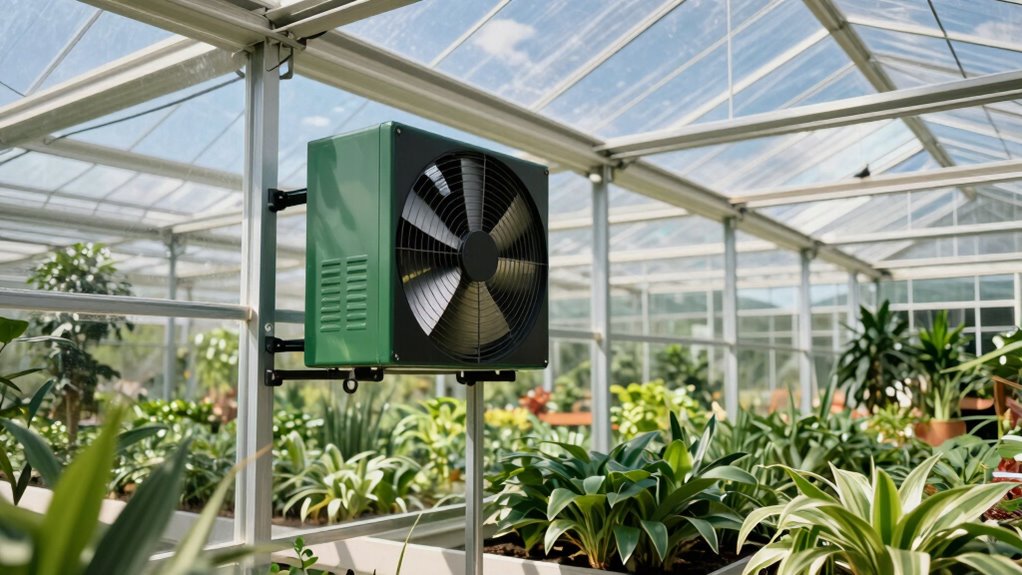

For a 20×30 greenhouse, my best overall pick is the iLIVING 20-Inch Wall Mounted Shutter Exhaust Fan, which pairs thermostat operation with variable speed control. The AC Infinity AIRLIFT T20 stands out for growers who want more environmental control, while the VEVOR 30-Inch offers a higher stated airflow option for setups that need more capacity. The main tradeoff is between airflow and controllability: a larger or faster fan may move more air, but proper sizing, intake area, noise, and control features matter just as much. A single fan’s listed CFM does not by itself confirm it can ventilate every 20×30 greenhouse adequately. Read on for how the 15 options differ and which buyer each one suits.

Get garden gear delivered free with Prime
- Fast, free delivery on millions of items
- Prime Video, Amazon Music and more included
- Member-only deals all year
Complete the kit


Key Takeaways
- The iLIVING 20-Inch thermostat-and-variable-speed model leads for balanced control, while fixed-speed fans are simpler but offer fewer ways to adjust ventilation.
- The 30-inch VEVOR lists 8,099 CFM, the largest stated airflow among these entries; its size makes wall opening dimensions and intake-air planning especially important.
- Controller features vary more than the 20-inch format suggests: the AIRLIFT T20 adds environmental control, while the AIRLIFT S20 focuses on 10-speed adjustment.
- Stated airflow spans 3,000 to 4,499 CFM among listed 20-inch options with published figures, so buyers should compare the specific model’s rating rather than assume all 20-inch fans perform alike.
- A 20×30 footprint alone cannot determine the right fan. Greenhouse height, climate, crop needs, shading, intake openings, and whether more than one fan is needed all affect the decision.


| greenhouse exhaust fan for 20×30 | Airflow | Voltage | Fan size |
|---|---|---|---|
| iLIVING 20-Inch Wall Mounted S | Up to 3,368 CFM | — | — |
| iPower 20 Inch Wall Mounted Sh | 3,368 CFM | — | — |
| Garvee 20 Inch EC Motor Shutte | 4,000 CFM | — | — |
| VEVOR 20 Inch Shutter Exhaust | 4,499 CFM | 120 V | 20 inches |
| VEVOR 24 inch Wall Mounted Exh | 4,800 CFM | 120 V | — |
| VEVOR 30 Inch Wall Mounted Shu | 8099 CFM | 120V | 30 inches |
| VEVOR 20 Inch Wall Mounted Exh | 2900 CFM | 120V | 20 inches |
| Cammoo 20 Inch Exhaust Fan wit | 4000 CFM | 120V | 20 inches |
| AC Infinity AIRLIFT T20 Shutte | 3425 CFM | 240V | 20 inches |
| VENTISOL 20 Inch Shutter Exhau | 3500 CFM | 120V | 20 inches |
| iLiving 30-Inch Wall Mounted S | 5,088 CFM | 120 volts | 30 inches |
| AC Infinity AIRLIFT S20 Shutte | 3,425 CFM | 240 volts | 20 inches |
| Amico 20" Shutter Exhaust Fan | 3,800 CFM | 120 volts | — |
| VEVOR 20” Wall Mounted Exhaus | — | 120 volts | — |
| Ken Brown 20 Inch Shutter Exha | 3,500 CFM | 120 volts | 20 inches |
More Details on Our Top Picks
iLIVING 20-Inch Wall Mounted Shutter Exhaust Fan with Thermostat and Variable Speed Control
For a 20×30 greenhouse, I favor this iLIVING when airflow control matters as much as moving air: its 3,368 CFM output and variable-speed control let growers adjust ventilation as conditions change. The thermostat adds automatic temperature response, while the shuttered wall-mount design closes the opening when the fan is off. Compared with the iPower 20-inch, this model offers variable speed rather than a single operating speed, giving more flexibility for cooler days or sensitive crops. Its galvanized-steel frame and thermally protected motor suit regular use, but the listed coverage figure of 5,000 square feet should not be read as proof that one fan will adequately ventilate every 20×30 greenhouse; crop load, climate, and intake openings matter. At full speed, noise may be noticeable, and installation can call for skilled help.
Pros:- Variable speed lets growers tune airflow rather than rely on one fixed setting.
- Thermostat control can respond to rising greenhouse temperatures.
- Automatic shutters close the opening when the fan is off.
- Galvanized-steel frame and thermally protected, permanently lubricated motor are suited to regular operation.
Cons:- The 3,368 CFM rating may be insufficient as the sole exhaust source in demanding 20×30 greenhouse conditions.
- Noise can reach a noticeable level at maximum speed.
- Wall installation may require professional assistance.
Best for: Greenhouse growers who want thermostat control plus variable airflow to adapt ventilation across changing temperatures.
Not ideal for: Buyers seeking a quiet fan for a space near living areas or a simple plug-in installation without wall-cutting or wiring work.
- Airflow:Up to 3,368 CFM
- Blade diameter:20 inches
- Controls:Variable speed, thermostat, button control
- Power:253 W; 115 V; 2.2 A
- Motor:1/5 HP direct drive; thermally protected; permanently lubricated
- Construction:Galvanized-steel frame; aluminum shutters and blades
- Mounting:Wall mount
- Dimensions and weight:5.75 × 23 × 23 inches; 26 lb
Our verdict“Choose this iLIVING for a 20×30 greenhouse when adjustable, thermostat-guided ventilation matters more than maximum listed airflow.”
iPower 20 Inch Wall Mounted Shutter Exhaust Fan with Temperature Controller, Aluminum, 3368 CFM, 1200 RPM, Silver
The iPower is a simpler alternative for a 20×30 greenhouse where the goal is temperature-triggered exhaust, not fine speed adjustment. It moves 3,368 CFM and has an eight-level temperature controller spanning 50°F to 120°F, while automatic shutters help block insects and dust when the fan is idle. Against the iLIVING 20-inch, its main compromise is clear: the iPower has a single speed, so it cannot trim airflow as conditions shift. That simplicity may suit growers who prefer a basic temperature setting, but the controller still calls for manual attention if greenhouse conditions or crop needs change. Aluminum blades and louvers offer corrosion resistance, and its 18.4-pound weight is lower than the iLIVING’s. A single 20-inch fan’s suitability for the full greenhouse depends on climate, intake ventilation, and growing conditions.
Pros:- Eight-level temperature setting covers a broad stated range.
- Aluminum blades and louvers resist corrosion.
- Automatic shutters help keep insects and dust out when the fan is off.
- At 18.4 pounds, it is lighter than the iLIVING 20-inch model.
Cons:- Single-speed operation offers less airflow control than the iLIVING 20-inch.
- Wall mounting limits placement options.
- Temperature settings may need manual monitoring as greenhouse conditions change.
Best for: Growers who want a wall-mounted fan with an adjustable temperature trigger but do not need variable speed.
Not ideal for: Those who need to reduce airflow for cool weather, seedlings, or delicate crops, or who need a ceiling- or portable-mounted fan.
- Airflow:3,368 CFM
- Fan diameter:20 inches
- Speed:1,200 RPM
- Temperature control:Eight levels; 50°F–120°F
- Power and voltage:125 W; 120 V
- Materials:Aluminum blades; steel frame
- Mounting and power:Wall mount; corded electric
- Weight:18.4 lb
Our verdict“Pick the iPower if a temperature controller and fixed-speed exhaust are enough for your greenhouse ventilation plan.”
Garvee 20 Inch EC Motor Shutter Exhaust Fan with Touchscreen Controller
Garvee stands apart for growers who want more than a thermostat switch: its touchscreen controller adjusts speed, temperature, and humidity, and can support up to three fans. The listed 4,000 CFM is higher than the iLIVING and iPower 20-inch models, while ten speeds offer a more gradual way to manage ventilation. That combination can help when a greenhouse needs more precise environmental control, though the listing does not establish how much airflow will reach every part of a 20×30 space. The brushless EC motor and aluminum shutters add practical appeal, but this is not the simplest option to set up: installation may take more technical skill, and its 70 dB rating is not especially quiet beside sensitive work or living areas. Compared with the VEVOR 24-inch, Garvee offers multi-fan control in a smaller listed size, rather than the highest stated airflow.
Pros:- Ten speed settings allow finer airflow adjustment than the single-speed iPower.
- Touchscreen controller includes temperature and humidity control.
- Controller can support up to three fans.
- Brushless motor and automatic aluminum shutters provide useful operating features.
Cons:- Installation may require more technical skill than a basic wall fan.
- Listed noise level is 70 dB, which may be noticeable.
- Its 4,000 CFM rating is below the VEVOR 24-inch model’s stated 4,800 CFM.
Best for: Greenhouse operators who want speed, temperature, and humidity adjustments from one controller, especially when linking multiple fans.
Not ideal for: Buyers who want basic, low-complexity ventilation or need a quiet fan for a noise-sensitive location.
- Airflow:4,000 CFM
- Size and speed:20 inches; 1,650 RPM
- Motor:Brushless EC motor
- Speed settings:10
- Controls:Touchscreen; speed, temperature, and humidity control; supports up to 3 fans
- Power:115 W; AC power
- Materials:Alloy-steel frame; aluminum shutters
- Dimensions and weight:23 × 23 × 8.9 inches; 16.5 lb
- Noise:70 dB
Our verdict“Choose Garvee when environmental controls and linking fans matter more than a simpler setup or maximum airflow.”
VEVOR 20 Inch Shutter Exhaust Fan Wall Mounted Automatic Louvers Silver, Steel Housing, Low Noise, AC Motor, 4499 CFM Ventilation for Attic, Garage, Workshop
For buyers prioritizing stated airflow over built-in automation, this VEVOR 20-inch model lists 4,499 CFM, more than the 3,368 CFM iLIVING and iPower options and the 4,000 CFM Garvee. Automatic louvers and a rain-protection shutter suit a wall opening exposed to outdoor conditions, while its steel housing is designed for robust use. The tradeoff is control: unlike the Garvee touchscreen model, this VEVOR’s listed control is push-button, and the description says a speed controller and power plug must be purchased separately. That extra equipment can add setup work and means the airflow is less ready to tune out of the box. Its 70 dB rating is also worth noting for a greenhouse attached to a home. The airflow figure is a useful comparison point, not a guarantee that one fan will cover every 20×30 layout.
Pros:- Highest listed airflow among the 20-inch models in this batch at 4,499 CFM.
- Rain-protection shutters suit wall installations exposed to weather.
- Steel housing supports a durable installation.
- Lighter than the 20-inch iLIVING model at 14.3 pounds.
Cons:- Speed controller and power plug are listed as separate purchases.
- Push-button control lacks the Garvee’s temperature and humidity automation.
- The 70 dB rating may be noticeable in a quiet greenhouse.
Best for: Growers who want a higher stated airflow rating and weather-protective shutters, and are comfortable sourcing controls and handling installation.
Not ideal for: Buyers who need temperature or humidity automation included, or want a complete speed-control setup without sourcing additional parts.
- Airflow:4,499 CFM
- Fan size:20 inches
- Motor:AC motor; 127 W
- Speed:1,500 RPM
- Voltage:120 V
- Housing and shutters:Steel housing; automatic rain-protection louvers
- Control:Push button; speed controller and power plug sold separately
- Dimensions and weight:23.03 × 23.03 × 8.54 inches; 14.3 lb
- Noise:70 dB
Our verdict“Choose this VEVOR if you want high listed airflow and weather protection, and are prepared to arrange speed control separately.”
VEVOR 24 inch Wall Mounted Exhaust Fan with Variable Speed and Smart Controller
The 24-inch VEVOR has the strongest listed airflow in this group at 4,800 CFM, making it the pick for growers who want more capacity than the 20-inch alternatives provide on paper. Its smart controller includes temperature and humidity triggers, and ten speed settings offer more adjustment than the fixed-speed iPower. That pairing is useful when greenhouse conditions swing, but a higher CFM rating alone cannot confirm that one fan is enough for a 20×30 structure; climate, crop density, intake area, and layout affect the result. The larger fan also needs a suitable wall opening, and at 22.7 pounds it requires secure mounting. Compared with the smaller Garvee, it lists more airflow but does not describe multi-fan controller support. Its 70 dB rating may also matter in a quiet setting.
Pros:- Highest stated airflow in this batch at 4,800 CFM.
- Ten speeds provide more adjustment than the single-speed iPower.
- Included controller and sensor support temperature and humidity triggers.
- Rain-resistant shutter and all-metal construction suit year-round wall mounting.
Cons:- The 24-inch size needs a larger wall opening than the 20-inch alternatives.
- At 22.7 pounds, it needs secure support during installation.
- Its 70 dB rating may be audible in a quiet greenhouse.
Best for: Growers with a suitable wall opening who want the highest stated airflow here plus programmable temperature and humidity response.
Not ideal for: Owners with limited wall space, lightweight greenhouse panels, or a need for quiet ventilation near living or working areas.
- Airflow:4,800 CFM
- Size:24 inches
- Motor and power:EC motor; 85 W
- Speed:920 RPM
- Speed settings:10
- Voltage:120 V
- Controls and included components:Programmable controller; temperature and humidity sensor; shutter fan; expansion bolts
- Material and mounting:Metal; wall mount
- Weight and noise:22.7 lb; 70 dB
Our verdict“Pick this VEVOR if your wall can accommodate a 24-inch fan and you want the group’s highest listed airflow with smart controls.”
VEVOR 30 Inch Wall Mounted Shutter Exhaust Fan with Automatic Louvers, 8099 CFM, Steel Housing, Low Noise, AC Motor
For a 20×30 greenhouse where rapid heat removal is the priority, this VEVOR stands apart from the 20-inch models: its stated 8099 CFM and 30-inch format move substantially more air than the VENTISOL 20-inch fan’s 3500 CFM. That extra capacity may suit heat-prone spaces, but airflow needs depend on crop, climate, and greenhouse setup, so it is not an automatic match for every 20×30 structure. Its automatic shutters help block rain and debris when the fan is off, while the steel housing favors a fixed installation over frequent repositioning. The tradeoff is a heavier, more involved install: at 42.1 pounds, it needs a suitable wall opening and sturdy support. I would also account for the separately purchased speed controller and power plug, plus the listed 76 dB noise level.
Pros:- Stated 8099 CFM capacity offers more airflow than the listed 20-inch alternatives.
- Automatic shutters help shield the opening from rain and debris when idle.
- Steel housing with zinc plating and powder coating is suited to a permanent installation.
- 120V supply is specified.
Cons:- Separate speed controller and power plug are required.
- At 42.1 pounds, mounting and wall preparation need careful planning.
- Listed 76 dB noise level may be unwelcome near work areas or neighboring spaces.
Best for: Growers with a heat-prone 20×30 greenhouse, a properly sized wall opening, and the electrical setup to support a high-capacity fan.
Not ideal for: Buyers seeking a plug-and-play installation, variable speed control out of the box, or a lighter, quieter fan for a small greenhouse.
- Fan size:30 inches
- Airflow:8099 CFM
- Motor power:185W
- Voltage:120V
- Motor speed:960 rpm
- Noise level:76 dB
- Housing material:Q235B carbon steel
- Dimensions:34.3 x 34.3 x 10 inches
- Weight:42.1 lb
Our verdict“Choose this VEVOR when a 20×30 greenhouse needs high stated airflow and you can handle the heavier installation and separate control hardware.”
VEVOR 20 Inch Wall Mounted Exhaust Fan with Variable Speed and Smart Controller
This 20-inch VEVOR is the control-focused choice for greenhouse owners who want temperature and humidity triggers without moving to a 240V system. Its smart controller and 10 speed settings offer more adjustment than the single-speed VENTISOL, making it easier to tailor ventilation as conditions change. The stated 2900 CFM, though, is lower than the VENTISOL’s 3500 CFM and the AC Infinity AIRLIFT T20’s 3425 CFM; for a 20×30 greenhouse, that difference could matter when heat loads are high. The all-metal build and rain guard suit a fixed wall installation, but the controller setup adds complexity compared with the VENTISOL’s included power cord. I’d favor it when automated control matters more than maximum listed airflow, and skip it if you want a simple, ready-to-connect fan.
Pros:- Temperature and humidity triggers can automate ventilation changes.
- 10 speed settings provide finer adjustment than the single-speed VENTISOL.
- 120V power specification fits common supply setups.
- All-metal construction and a rain guard support wall-mounted use.
Cons:- Stated 2900 CFM is below the VENTISOL and AC Infinity AIRLIFT T20 figures.
- Controller setup involves more components than a basic fan installation.
- At 16.4 pounds, it still needs secure mounting.
Best for: 20×30 greenhouse growers on 120V who want temperature- and humidity-triggered operation with multiple speed settings.
Not ideal for: Growers prioritizing the highest listed airflow or the simplest installation, since this model has lower stated CFM than several lineup alternatives and a more involved controller setup.
- Fan size:20 inches
- Airflow:2900 CFM
- Power:75W
- Voltage:120V
- Speed settings:10
- Noise level:75 dB
- Material:Alloy steel
- Dimensions:23.03 x 23.03 x 8.54 inches
- Weight:16.4 lb
Our verdict“Pick this VEVOR if automated temperature and humidity control on 120V matters more to you than leading airflow or basic plug-in simplicity.”
Cammoo 20 Inch Exhaust Fan with 4000 CFM, Temp, Humidity, and Speed Control
The Cammoo combines a high stated airflow for a 20-inch model with an EC motor rated at 70W and touchscreen environmental controls. Its 4000 CFM figure exceeds the VENTISOL’s 3500 CFM and AC Infinity AIRLIFT T20’s 3425 CFM on paper, while automatic temperature and humidity regulation can reduce the need for manual speed changes. For a 20×30 greenhouse, that blend suits buyers who want active control but are not ready for the larger VEVOR 30-inch fan. The 10 speed settings give more adjustment than the VENTISOL’s single speed; the cost is a more involved control setup and more components to configure. Product data lists indoor use, so I would not choose it for an exposed installation, and the supplied details do not state a numerical warranty term or dimensions.
Pros:- 4000 CFM is higher than the listed airflow of the VENTISOL and AIRLIFT T20.
- 70W EC motor is specified, with a brushless motor type listed.
- Temperature and humidity regulation plus 10 speeds provide flexible control.
- Automatic shutters help limit dust entering through the fan opening.
Cons:- Product data lists indoor use, limiting suitability for exposed outdoor locations.
- Touchscreen and sensor setup is more involved than the VENTISOL’s basic control.
- Dimensions and a specific warranty duration are not provided in the supplied specifications.
Best for: Greenhouse growers seeking a 20-inch fan with higher stated airflow, sensor-based automation, and a low-wattage EC motor for indoor wall mounting.
Not ideal for: Buyers needing outdoor-rated placement, a simple one-speed control, or clearly specified dimensions and warranty coverage before purchase.
- Fan size:20 inches
- Airflow:4000 CFM
- Motor type:Brushless EC
- Wattage:70W
- Voltage:120V
- Speed settings:10
- Blade material:Aluminum
- Control:Touchscreen
- Mounting:Wall mount
Our verdict“Choose the Cammoo for a sensor-controlled indoor greenhouse installation where its stated 4000 CFM and 70W EC motor are appealing.”
AC Infinity AIRLIFT T20 Shutter Exhaust Fan 20″ with Environment Controller
The AIRLIFT T20 is the lineup’s app-oriented option: WiFi control and an environment controller let growers adjust ventilation remotely instead of relying on the VENTISOL’s single-speed push-button setup. Its stated 3425 CFM is close to that VENTISOL figure but below the Cammoo’s 4000 CFM, so I’d choose it for connected control and its specified IP44-rated frame, not for the highest listed airflow. The listed 65 dBA noise level is lower than the VEVOR 20-inch model’s 75 dB, though noise figures may not be directly comparable across different specifications. One major fit issue for a 20×30 greenhouse is the 240V requirement: buyers need compatible power available before planning installation. At 33.5 pounds, it also calls for solid wall support.
Pros:- WiFi app control supports remote adjustment and monitoring.
- IP44-rated frame is specified for moisture and dust resistance.
- 3425 CFM offers substantial stated airflow in a 20-inch format.
- Listed 65 dBA noise level is below the VEVOR 20-inch model’s 75 dB figure.
Cons:- Requires 240V power, unlike the 120V VENTISOL and VEVOR 20-inch models.
- At 33.5 pounds, it needs sturdy mounting support.
- Stated 3425 CFM is lower than the Cammoo’s 4000 CFM.
Best for: Greenhouse owners with 240V power and sturdy wall framing who value WiFi access, environmental control, and a specified moisture- and dust-resistant frame.
Not ideal for: Buyers limited to 120V supply, seeking the highest listed airflow among 20-inch options, or unable to support a 33.5-pound wall-mounted fan.
- Fan size:20 inches
- Airflow:3425 CFM
- Voltage:240V
- Wattage:230W
- Noise level:65 dBA
- Speed settings:4
- Dimensions:23.0 x 23.0 x 11.2 inches
- Weight:33.5 lb
Our verdict“Choose the AIRLIFT T20 if your greenhouse has 240V power and remote app control matters more than maximum listed CFM.”
VENTISOL 20 Inch Shutter Exhaust Fan Wall Mounted, 3500 CFM, Black
For a 20×30 greenhouse owner who prefers simple operation, the VENTISOL is the clearest alternative to the sensor-heavy Cammoo and VEVOR models. It lists 3500 CFM, automatic aluminum shutters, and a pre-installed power cord, making installation more straightforward than the VEVOR 30-inch fan, which needs separate electrical accessories. The tradeoff is control: this is a single-speed fan, so it cannot respond automatically to temperature or humidity or offer the airflow tuning found on the Cammoo’s 10-speed controller. Its stated airflow sits between the AC Infinity AIRLIFT T20 and Cammoo figures, but it remains a 20-inch unit rather than a larger high-capacity option. I’d shortlist it for a basic wall-mounted exhaust point, while checking the electrical connection and wall opening before committing.
Pros:- Pre-installed power cord simplifies setup compared with the VEVOR 30-inch model’s separate accessories.
- Automatic aluminum shutters help protect against rain and debris when the fan is off.
- 3500 CFM is higher than the listed AIRLIFT T20 airflow.
- 120V supply and 9.7-pound weight may make mounting more manageable than heavier options.
Cons:- Single-speed operation offers no airflow adjustment.
- Lacks the temperature and humidity automation available on the Cammoo and VEVOR 20-inch fan.
- Product data lists indoor use, so exposed outdoor installation is not a fit.
Best for: Growers wanting a 20-inch, 120V wall fan with a pre-installed power cord and automatic shutters, without needing sensor-based control.
Not ideal for: Buyers who need variable speeds, temperature or humidity automation, or a fan for an exposed outdoor location.
- Fan size:20 inches
- Airflow:3500 CFM
- Wattage:120W
- Voltage:120V
- Speed settings:1
- Motor speed:1309 rpm
- Material:Aluminum
- Dimensions:8.86 x 24.43 x 24.43 inches
- Weight:9.7 lb
Our verdict“Pick the VENTISOL if you want a comparatively simple 120V fan with a pre-installed cord and can live without variable-speed or sensor control.”
iLiving 30-Inch Wall Mounted Shutter Exhaust Fan – Automatic Shutter, Single Speed, 5088 CFM, Silver
For a 20×30 greenhouse where strong exhaust capacity matters more than fine adjustment, this 30-inch iLiving offers 5,088 CFM and a larger fan format than the 20-inch options here. Its weather-resistant aluminum shutters close automatically when the fan stops, while the corrosion-resistant motor suits humid utility spaces better than a bare, unprotected setup. Against the AC Infinity AIRLIFT S20, it moves more listed air, but gives up the smaller model’s ten-speed control. That limitation matters in a greenhouse: one fixed speed can make it harder to balance heat removal with temperature stability or ventilation on cooler days. I’d choose it when the wall opening and electrical setup can accommodate a 30-inch fan and the priority is straightforward, high-volume exhaust—not adjustable climate control.
Pros:- Listed 5,088 CFM capacity exceeds the listed airflow of the 20-inch options in this batch.
- Aluminum automatic shutters help limit exposure to weather when the fan is off.
- Corrosion-resistant motor is suited to humid greenhouse and utility-space conditions.
- Fully assembled design can simplify installation compared with a kit requiring fan assembly.
Cons:- Single-speed operation gives little control over airflow during mild weather.
- The 30-inch size requires a larger opening and suitable wall framing.
- Listed indoor-use designation limits confidence for exposed outdoor installation.
Best for: Growers with a roomy, properly framed wall opening who want high fixed-speed exhaust for hot conditions in a 20×30 greenhouse.
Not ideal for: Growers who need thermostat-driven or variable-speed ventilation, or whose greenhouse has limited wall space for a 30-inch unit.
- Airflow:5,088 CFM
- Fan size:30 inches
- Power:345 watts
- Voltage:120 volts
- Speed:825 RPM
- Speeds:1
- Blades:5 aluminum blades
- Mounting:Wall mount
- Shutters:Automatic, weather-resistant aluminum
Our verdict“Choose this iLiving when a 20×30 greenhouse needs strong, uncomplicated exhaust and can spare the wall space, but skip it if you need adjustable airflow.”
AC Infinity AIRLIFT S20 Shutter Exhaust Fan 20″ with 10-Speed Controller
The AIRLIFT S20 is the strongest fit here for growers who want to tune ventilation rather than run a fixed-rate fan. Its 10-speed PWM controller lets you adjust exhaust as greenhouse temperatures and conditions change, while the EC motor is specified at 230 watts. Listed airflow is 3,425 CFM, below the larger iLiving 30-inch fan’s 5,088 CFM, so the trade is control and a 20-inch format for less maximum listed airflow. Compared with the single-speed Ken Brown, this AC Infinity offers much finer adjustment, but asks more of the buyer in mounting and controller setup. The 65 dBA rating also makes it a poor choice near quiet work or living areas. For a 20×30 greenhouse, I’d favor it when adjustable output matters more than headline capacity.
Pros:- Ten speed settings allow more nuanced airflow adjustment than the single-speed Ken Brown.
- EC motor and 230-watt specification provide a defined power draw alongside adjustable operation.
- Dual-ball bearings and moisture-resistant steel shutters suit regular utility-space use.
- 20-inch fan format is less demanding on wall space than the 30-inch iLiving.
Cons:- Listed 3,425 CFM is lower than the iLiving 30-inch fan’s listed 5,088 CFM.
- 65 dBA may be disruptive in a quiet greenhouse or nearby work area.
- Heavy construction may call for reinforced mounting support.
Best for: Greenhouse growers who want multiple airflow settings to respond to changing heat loads and can provide sturdy wall support.
Not ideal for: Buyers prioritizing the highest listed CFM, minimal noise, or the simplest fixed-speed installation.
- Airflow:3,425 CFM
- Fan size:20 inches
- Dimensions:23.0 x 23.0 x 11.2 inches
- Motor:EC motor
- Power:230 watts
- Voltage:240 volts
- Speeds:10
- Noise:65 dBA
- Mounting:Wall mount
Our verdict“Pick the AIRLIFT S20 if controllable ventilation is your priority; choose the larger iLiving instead if maximum listed airflow matters more.”
Amico 20″ Shutter Exhaust Fan with Thermostat, 3800 CFM, 70W EC Motor
The Amico’s main advantage for a greenhouse is its thermostat with eight-speed control: ventilation can respond to temperature changes without relying on a single fixed output. Its listed 3,800 CFM also sits above the AIRLIFT S20’s 3,425 CFM, while the stated 70W EC motor is a low power figure for buyers watching ongoing energy use. The specifications do not describe the thermostat’s exact settings or control behavior, so I would verify those details before treating it as a hands-off climate system. Its galvanized-steel construction and weatherproof shutters are useful in a humid growing space, though installation may be more involved than plugging in the corded Ken Brown. The 65 dB noise rating is also noticeable; this pick suits growers valuing temperature-responsive operation over quiet running.
Pros:- Thermostat and eight speed settings support temperature-responsive ventilation.
- Listed 3,800 CFM exceeds the AIRLIFT S20’s listed airflow.
- Specified 70W EC motor may suit buyers focused on limiting power use.
- Galvanized-steel body and weatherproof shutters are suited to demanding growing spaces.
Cons:- The available product data does not explain thermostat settings or operating behavior in detail.
- 65 dB noise may be intrusive in quiet spaces.
- Installation may require more technical work than the corded Ken Brown.
Best for: Growers seeking thermostat-led, multi-speed ventilation and a galvanized-steel shutter fan for a humid greenhouse.
Not ideal for: Buyers who need detailed controller specifications before purchase, want quiet operation, or prefer a simple plug-in setup.
- Airflow:3,800 CFM
- Motor:70W EC motor
- Voltage:120 volts
- Speeds:8
- Motor speed:1,564 RPM
- Noise:65 dB
- Dimensions:22.8 x 22.8 x 6.3 inches
- Construction:Galvanized steel with aluminum blades
- Control:Smart thermostat with speed control
Our verdict“Choose the Amico if thermostat-led airflow and its stated low-wattage EC motor appeal, but confirm controller details before planning greenhouse automation.”
VEVOR 20” Wall Mounted Exhaust Fan with Variable Speed Control, 3000 CFM, Automatic Shutter, Black
This VEVOR suits buyers who want a stepless speed control in a 20-inch wall fan, rather than choosing among the AIRLIFT S20’s ten preset speeds or accepting the Ken Brown’s single setting. That flexibility can help a grower dial back airflow when full exhaust is unnecessary. The listed capacity is 3,000 CFM, though the description claims up to 4,499 CFM; because those figures conflict, I would not size a 20×30 greenhouse around the higher number without clarification. Its automatic shutter helps keep rain and debris out when idle, and the 120-volt AC motor fits a common supply. The 70 dB noise rating is the lineup’s clearest drawback, and the steel housing adds a need for solid mounting. Consider it for controllability, not quiet operation or certainty about peak airflow.
Pros:- Stepless speed control avoids the fixed settings of the Ken Brown and the AIRLIFT S20’s ten-step increments.
- Automatic shutter helps block rain and debris while the fan is off.
- 120-volt AC motor works with a common supply specification.
- Steel construction provides a substantial wall-mounted housing.
Cons:- Product data conflicts: specs list 3,000 CFM while the description claims up to 4,499 CFM.
- 70 dB noise rating is higher than the Ken Brown’s listed 60 dB.
- At 15.2 pounds, it needs a mounting surface suited to its weight.
Best for: Growers who prefer continuous manual speed adjustment and can tolerate noticeable fan noise while validating airflow needs.
Not ideal for: Buyers who need a clearly documented maximum airflow figure or quiet operation near people or work areas.
- Listed airflow:3,000 CFM
- Description airflow claim:Up to 4,499 CFM
- Power:157 watts
- Voltage:120 volts
- Motor:AC
- Speed:1,480 RPM
- Noise:70 dB
- Weight:15.2 pounds
- Control:Stepless variable speed
Our verdict“Choose this VEVOR for stepless manual control only after confirming its actual airflow; skip it if quiet running or dependable capacity data is essential.”
Ken Brown 20 Inch Shutter Exhaust Fan with 1.65m Power Cord, High Speed 3500 CFM, Wall Mounted for Garages, Shops, Greenhouses, Attics
The Ken Brown is the straightforward choice for a grower who wants a 20-inch fan with a power cord included and no controller to configure. Its listed 3,500 CFM is close to the AIRLIFT S20’s 3,425 CFM, while its 60 dB noise specification is lower than the 65 dBA ratings listed for the AIRLIFT and Amico. The tradeoff is simple: the Ken Brown runs at one speed, so it cannot match the Amico’s thermostat-led adjustment or the VEVOR’s stepless control. Automatic shutters and corrosion-resistant aluminum fit greenhouse use, but the supplied data labels it for indoor use, so I would not treat it as an exposed-weather installation. It makes sense when basic exhaust and simpler wiring outrank fine control, but a 20×30 greenhouse may need a more adjustable option as conditions vary.
Pros:- Included 1.65-meter power cord supports a simpler connection than models requiring separate control hardware.
- Listed 3,500 CFM is close to the AIRLIFT S20’s 3,425 CFM.
- Listed 60 dB noise level is lower than the 65 dB or dBA specifications for the AIRLIFT and Amico.
- Corrosion-resistant aluminum and automatic shutters suit greenhouse ventilation.
Cons:- Single-speed operation limits adjustment as temperatures and ventilation needs change.
- Indoor-use designation does not establish suitability for exposed outdoor conditions.
- The listed 15 x 15-inch item dimensions may need clarification against the 20-inch fan size before planning the wall opening.
Best for: Growers who want a corded, single-speed wall fan for basic greenhouse exhaust without a separate speed controller.
Not ideal for: Growers seeking thermostat automation, variable airflow, or a fan explicitly specified for exposed outdoor use.
- Airflow:3,500 CFM
- Fan size:20 inches
- Power:130 watts
- Voltage:120 volts
- Speed:1,309 RPM
- Speeds:1
- Noise:60 dB
- Cord:1.65 meters
- Material:Aluminum
Our verdict“Pick the Ken Brown for uncomplicated corded exhaust at a listed airflow near the AIRLIFT S20’s, but choose a controlled model if greenhouse conditions vary widely.”

How We Picked
I ranked these fans for the particular demands of a 20×30 greenhouse, not by size or advertised airflow alone. I compared the stated CFM where supplied, fan diameter, motor and shutter design, control options, and the practical fit of a wall-mounted unit. I also considered whether a buyer can adjust output for changing conditions, how much installation planning the model may require, and the tradeoff between a simpler fixed-speed fan and a more involved controller.
The ranking favors options that combine useful airflow information with controllability and a plausible role in a greenhouse this size. Models with environmental controls or variable speeds rise for buyers who need to tune ventilation; high-capacity models suit situations where more air movement is needed, but their size and power demand require closer planning. Several listings do not provide enough comparable specifications to support a confident performance comparison, so I treat their claims cautiously rather than ranking them as proven equivalents. The order reflects buyer fit and available details, not firsthand testing.
Factors to Consider When Choosing Greenhouse Exhaust Fan For 20×30
Choosing a fan for a 20×30 greenhouse starts with the growing environment, not the product label. These points help turn the listed specifications into a ventilation plan and flag mismatches that a product comparison alone cannot resolve.
Size airflow for volume and growing conditions
A 20×30 floor measures 600 square feet, but floor area alone does not reveal the greenhouse’s air volume or heat load. Measure the inside height and account for roof shape, glazing, direct sun, and the temperatures your crops can tolerate. A tall greenhouse contains more air than a low tunnel with the same footprint, and a hot, exposed site may need more ventilation than a shaded one. Treat CFM as one input, not a guarantee that a fan will meet your target conditions. Compare the listing’s rated airflow with your greenhouse volume and seek a ventilation calculation suited to your crop and local climate. If the estimate points beyond one unit’s capacity, plan for multiple fans or a different ventilation design rather than assuming the largest listed model solves every case.
Plan the whole airflow path
An exhaust fan only moves air effectively when replacement air can enter the greenhouse. Check the intake area, louver arrangement, screens, and any obstructions before choosing a fan; undersized or blocked inlets can restrict airflow and increase strain. Positioning also affects whether air sweeps across the growing area or short-circuits from an inlet straight to the exhaust. A fan mounted high can remove accumulated hot air, but crop layout and greenhouse geometry still matter. Do not compare two CFM figures as if their installations were identical when wall openings and intake paths differ. Sketch the inlet and exhaust locations before cutting a wall so the fan’s capacity has a workable route through the space.
Choose controls for how often conditions change
Fixed-speed operation can suit a greenhouse with steady conditions and an owner who is comfortable switching the fan manually. Thermostats reduce routine intervention by starting ventilation when temperatures reach a set point, while variable-speed controls give more options for balancing cooling, noise, and airflow. Temperature and humidity controls can help when both readings affect the growing environment, but added control features also mean more settings to configure and maintain. Decide whether you want a simple response to heat or finer adjustment across changing weather and crop stages. A sophisticated controller cannot compensate for poor sensor placement or a fan that is undersized for the greenhouse. Match the control system to the time you can spend monitoring and adjusting it.
Check physical fit, power, and installation details
Fan diameter is not the same as the required wall opening, so confirm the manufacturer’s cutout dimensions, housing depth, mounting method, and clearance before purchase. This matters especially when comparing 20-inch units with 24- or 30-inch models: a larger fan may call for structural changes that outweigh its airflow advantage. Review the electrical supply, cord reach, controller placement, and any weather protection needed at the mounting location. Greenhouse humidity and condensation make installation conditions worth checking even when a fan is marketed for other buildings. Leave access for cleaning and service rather than placing the unit where shutters or blades are difficult to reach. If the installation involves new wiring or structural work, plan for qualified help.
Balance capacity against noise and running habits
A high-capacity fan can move more air, but operating at full output may not suit every greenhouse or nearby living area. Variable-speed models offer a way to run more gently when conditions allow, while single-speed units favor simpler operation over fine tuning. Consider how often the fan will run, whether it will operate overnight, and how sound carries through the greenhouse structure. Motor type and published noise details can help, but installation and mounting can also affect perceived sound. Avoid paying for controller features you will not use, yet do not choose a basic model if frequent manual changes would be inconvenient. The better tradeoff depends on whether your priority is maximum extraction, quieter routine operation, or straightforward ownership.
Decide whether one fan is enough
One exhaust fan may be adequate for some 20×30 greenhouses, but the answer depends on height, climate, crop sensitivity, and the air exchange target. A single large fan concentrates extraction at one wall; multiple smaller fans may spread airflow or provide staged operation, though they add wiring and installation work. Backup capacity may matter for heat-sensitive crops during hot spells or when equipment failure would cause losses. Also plan for intake openings sized to support the combined exhaust capacity. Do not buy extra fans based only on a footprint rule of thumb: first estimate the greenhouse’s ventilation demand and check how air will cross the full growing area. When the consequences of under-ventilation are serious, consult a greenhouse ventilation professional rather than relying on a product’s headline CFM.
Frequently Asked Questions
Is a 20-inch exhaust fan enough for a 20×30 greenhouse?
It may be enough for some setups, but the footprint by itself cannot settle the question. Greenhouse height, local heat, sun exposure, crop requirements, and available intake area all affect the airflow needed. The listed 20-inch models also vary in their stated CFM, so do not assume the diameter makes them interchangeable. Estimate the greenhouse’s air volume and ventilation demand, then compare that with the specific fan’s rated airflow. If the calculation or growing conditions call for more capacity, consider multiple fans or a larger unit.
Should I choose one 30-inch fan or two smaller fans?
A 30-inch fan can provide a high stated airflow in a single wall opening; the VEVOR 30-inch listing, for example, gives 8,099 CFM. Two smaller fans may allow airflow to be distributed or operated in stages, but they require additional openings, electrical planning, and adequate intake area. The best choice depends on the greenhouse layout, the ventilation target, and whether a large cutout fits the structure. Compare installed airflow needs rather than adding advertised CFM without checking the rest of the system. If placement or structure limits your options, have the layout reviewed before buying.
Do I need a thermostat or a variable-speed controller?
A thermostat is useful when you want ventilation to respond automatically to temperature without frequent manual switching. Variable speed is more useful when you need to tune airflow for changing weather, noise, or crop conditions. Some models combine control features, while others focus on speed adjustment or straightforward single-speed operation. More controls add flexibility but may take time to set up and do not replace correct fan sizing. Choose based on how much the greenhouse conditions vary and how often you can monitor them.
Will a high-CFM fan work well if my greenhouse has small intake vents?
Not necessarily: the exhaust fan needs enough replacement air to move its rated airflow through the greenhouse. Small or obstructed inlets can restrict performance and may create uneven ventilation. Before selecting a high-CFM model, estimate whether the intake openings can support the exhaust capacity and whether air will reach the full growing area. Screens, louvers, and other barriers can affect the usable opening. Improving intake area or changing fan placement may matter as much as selecting a larger fan.
How should I choose between the AC Infinity AIRLIFT T20 and S20?
The AIRLIFT T20 is the more relevant direction if environmental control is your priority; the AIRLIFT S20 is identified with a 10-speed controller for buyers focused on adjustable fan speed. Check the exact included control functions and compatibility details for the model you are considering, since the names alone do not establish identical capabilities. Then compare the control you will actually use with your greenhouse’s temperature and humidity needs. Either way, controller flexibility does not confirm that the fan’s airflow is sufficient for a 20×30 structure. Size the ventilation system first, then choose the control style that suits your routine.
Conclusion
For the broadest mix of practical control and greenhouse use, I would start with the iLIVING 20-Inch thermostat-and-variable-speed model as the best overall pick. The VEVOR 20-Inch 3000 CFM model is a straightforward value-oriented option for buyers whose needs fit its stated capacity, while the AC Infinity AIRLIFT T20 is my premium-leaning choice for growers who want environmental controls. Beginners who prefer automatic temperature response can start with the iLIVING thermostat model rather than a unit that depends on frequent manual adjustments. For a setup seeking the highest stated airflow, look at the VEVOR 30-Inch, but confirm the wall opening, intake area, and ventilation calculation before choosing it. My recommendation is conditional on your greenhouse’s height and climate: compare the actual airflow requirement with the selected model, and plan the inlet path as carefully as the exhaust.
Fall Picks
fall essentials
As an affiliate, we earn on qualifying purchases.