Choosing the right greenhouse heat exchanger determines whether your winter growing season is profitable or costly. The ALECOIL 100,000 BTU Hydronic Hanging Unit Heater stands out as the best overall choice for growers needing reliable, remote-controlled warmth without complex plumbing modifications. For those building a DIY system from an outdoor wood furnace, the 16 x 18 Heat Exchanger Water to Air offers superior copper conductivity and a straightforward installation path. The main tradeoff you will face is between ease of installation and thermal efficiency; pre-assembled hydronic heaters cost more upfront but save hours of labor, while raw water-to-air coils demand skilled fabrication but offer customizable airflow. Continue reading to see how these options stack up against each other for different greenhouse sizes and heating sources.

Get garden gear delivered free with Prime
- Fast, free delivery on millions of items
- Prime Video, Amazon Music and more included
- Member-only deals all year
Complete the kit


Key Takeaways
- Pre-assembled hydronic unit heaters like the ALECOIL models offer the fastest return on time investment for growers who lack plumbing expertise.
- Raw water-to-air exchangers with larger surface areas (16×18 or larger) provide significantly better heat transfer for outdoor wood furnace systems compared to smaller 10×10 units.
- Brazed plate heat exchangers are ideal for closed-loop hydronic systems but require careful maintenance to prevent clogging from debris in wood furnace water.
- Copper port size consistency matters; mismatched ports in DIY kits can lead to flow restrictions that reduce overall BTU output by up to 15%.
- Remote-controlled units justify their higher price point by allowing precise nighttime temperature management, which is critical for preventing frost damage in delicate seedlings.
| ALECOIL 100,000 BTU Hydronic Hanging Unit Heater with Remote Control, Black |  | Best Overall for Large Greenhouses | BTU Output: 100,000 | Power Source: 120 volts | Weight: 39.5 pounds | VIEW ON AMAZON | See Our Full Breakdown |
| 16 x 18 Heat Exchanger Water to Air, Copper Ports for Outdoor Wood Furnaces |  | Best Value Component | Dimensions: 16 x 18 inches | Casing Material: Steel | Fin Material: Epoxy-coated aluminum | VIEW ON AMAZON | See Our Full Breakdown |
| VEVOR Brazed Plate Heat Exchanger, EATB28-50 5″x12″ 50 Plates, Copper 316L Stainless Steel | 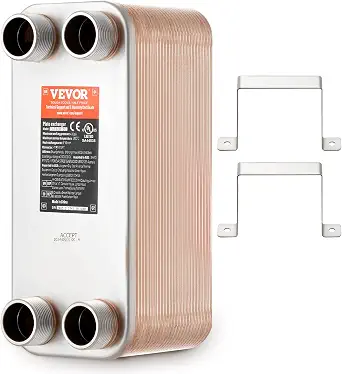 | Best for High-Efficiency Water Transfer | Model Number: EATB28-50 | Plate Size: 5″ x 12″ | Number of Plates: 50 | VIEW ON AMAZON | See Our Full Breakdown |
| ALECOIL 50,000 BTU Hydronic Hanging Unit Heater with Remote Control, Black |  | Best for Medium-Sized Greenhouses | Heat Output: 50,000 BTU | Power Source: 120 volts | Mounting Type: Ceiling Mount | VIEW ON AMAZON | See Our Full Breakdown |
| Water to Air Heat Exchanger 12×12 with 1″ Copper Ports for Outdoor Wood Furnaces |  | Best Compact DIY Component | Heat Output: 60,000 BTU | Dimensions: 5.31″ D x 28.94″ W x 23.23″ H | Min Temp: 32 °F | VIEW ON AMAZON | See Our Full Breakdown |
| Water to Air Heat Exchanger 16×16 with 1″ Copper Ports |  | Best High-Capacity Core | Capacity: 80,000 Btu | Max Heat Output: 360,000 Btu/h | Dimensions: 5.31″ D x 28.94″ W x 23.23″ H | VIEW ON AMAZON | See Our Full Breakdown |
| Alternative Heating & Supplies DB70 Dragon Breath Unit Heater |  | Best Complete Unit Heater | BTU Output: 70,000 BTU | Coverage Area: 100 square feet | Fan Capacity: 800 CFM | VIEW ON AMAZON | See Our Full Breakdown |
| 20×20 Water-to-Air Heat Exchanger for Outdoor Wood Furnaces |  | Best Heavy-Duty Core | Size: 20×20 inches | Weight: 18.81 pounds | Material: 306 steel, aluminum fins, copper | VIEW ON AMAZON | See Our Full Breakdown |
| Water to Air Heat Exchanger 10×10 with 1″ Copper Ports |  | Best Compact Efficiency | Heat Capacity: 42,000 BTU | Max Output: 360,000 BTU/h | Weight: 3.22 kg | VIEW ON AMAZON | See Our Full Breakdown |
| ALECOIL 50,000 BTU Hydronic Hanging Unit Heater with Remote |  | Best for Convenience | BTU Output: 50,000 BTU | Fan Capacity: 500 CFM | Power Source: 120 volts | VIEW ON AMAZON | See Our Full Breakdown |
| VEVOR Water to Air Heat Exchanger, 18 x 18 in Finned Tube HVAC Coil |  | Best for Mid-Sized Greenhouse Zones | Heat Output: 120,000 BTU/h (35.2 kW) | Dimensions: 18 x 18 inches | Material: Copper tubes, Aluminum fins, Steel casing | VIEW ON AMAZON | See Our Full Breakdown |
| VEVOR 20″ x 20″ Water-to-Air Heat Exchanger with 3-Row Copper Ports |  | Best High-Capacity Option for Large Spaces | Heat Output: 160,000 Btu/hr | Dimensions: 20 x 20 inches | Material: Copper brazed, Epoxy-coated aluminum | VIEW ON AMAZON | See Our Full Breakdown |
| greenhouse heat exchanger | Weight | Dimensions |
|---|---|---|
| ALECOIL 100,000 BTU Hydronic H | 39.5 pounds | — |
| 16 x 18 Heat Exchanger Water t | — | 16 x 18 inches |
| VEVOR Brazed Plate Heat Exchan | 8.52 kg | — |
| ALECOIL 50,000 BTU Hydronic Ha | 24.5 pounds | — |
| Water to Air Heat Exchanger 12 | — | 5.31" D x 28.94" W x 23.23" H |
| Water to Air Heat Exchanger 16 | 5.85 kg | 5.31" D x 28.94" W x 23.23" H |
| Alternative Heating & Supplies | — | 17"D x 16"W x 16"H |
| 20×20 Water-to-Air Heat Exchan | 18.81 pounds | — |
| Water to Air Heat Exchanger 10 | 3.22 kg | — |
| ALECOIL 50,000 BTU Hydronic Ha | 24.5 pounds | — |
| VEVOR Water to Air Heat Exchan | 17.4 lbs | 18 x 18 inches |
| VEVOR 20" x 20" Water-to-Air H | 19.1 lbs | 20 x 20 inches |
More Details on Our Top Picks
ALECOIL 100,000 BTU Hydronic Hanging Unit Heater with Remote Control, Black
This unit stands out for its massive 100,000 BTU output, making it the clear choice for heating large commercial or hobby greenhouses where space is not a constraint. Unlike the compact Water to Air Heat Exchanger 12×12, this hanging heater integrates the blower and heat exchanger into a single ceiling-mounted unit, simplifying ductwork planning. The copper heat exchanger ensures efficient transfer from your hydronic loop, while the remote control allows for precise temperature adjustments without climbing ladders. However, its 39.5-pound weight demands robust structural support, and it requires a pre-existing hot water source, meaning it is not a standalone heating solution. It is ideal for those who already have a boiler or wood furnace and need a powerful, quiet way to distribute that heat evenly across a wide area.
Pros:- High 100,000 BTU output suitable for large volumes of air
- Quiet operation supports overnight use without disturbance
- Remote control and programmable settings simplify management
- Durable copper heat exchanger resists corrosion and transfers heat efficiently
Cons:- Requires a pre-installed hot water system and power cable
- Heavy at 39.5 pounds, necessitating strong ceiling joists
- Limited to indoor ceiling mounting applications
Best for: Owners of large greenhouses or workshops with existing hydronic heating sources who need high-output, quiet ceiling distribution.
Not ideal for: Small sheds or renters without a pre-installed hot water loop, as the unit is heavy and requires significant infrastructure.
- BTU Output:100,000
- Power Source:120 volts
- Weight:39.5 pounds
- Fan Speed:1500 CFM
- Mounting Type:Ceiling
- Fuel Type:Hydronic
- Noise Level:Quiet
Our verdict“This is the top pick for large spaces where a high-capacity, integrated hydronic heater is needed to distribute existing hot water heat efficiently.”
16 x 18 Heat Exchanger Water to Air, Copper Ports for Outdoor Wood Furnaces
This component is a cost-effective building block for DIY enthusiasts constructing custom greenhouse heating systems. Compared to the all-in-one ALECOIL 100,000 BTU Hydronic Hanging Unit Heater, this unit requires you to source your own fan and housing, but it offers greater flexibility in design. The epoxy-coated aluminum fins resist corrosion from humid greenhouse environments, extending the lifespan of the coil. With 12 fins per inch and three rows of copper tubing, it delivers solid thermal efficiency for its size. It is best suited for those who already have a wood furnace or boiler and want to build a custom air handler. While it lacks the plug-and-play convenience of pre-assembled units, its compact 16″ x 18″ footprint makes it easy to integrate into existing ductwork or custom boxes.
Pros:- Epoxy-coated fins resist corrosion in humid greenhouse air
- High thermal efficiency due to dense fin spacing and copper tubing
- Compact size fits easily into custom ductwork designs
- Versatile for both heating and cooling applications
Cons:- Requires separate fan and housing assembly
- Copper tubes may show cosmetic water spots from manufacturing
- No included mounting brackets or controls
Best for: DIYers and hobbyists building custom air handlers for outdoor wood furnaces who need a reliable, corrosion-resistant coil.
Not ideal for: Those seeking a ready-to-install solution, as this unit requires separate fans, housings, and plumbing expertise.
- Dimensions:16 x 18 inches
- Casing Material:Steel
- Fin Material:Epoxy-coated aluminum
- Fins per Inch:12
- Copper Tube Size:3/8 inch (seamless)
- Copper Rows:3
- Application:Outdoor wood stoves, greenhouses, HVAC
Our verdict“Choose this coil if you are comfortable fabricating your own air handler and want a durable, efficient core for a custom system.”
VEVOR Brazed Plate Heat Exchanger, EATB28-50 5″x12″ 50 Plates, Copper 316L Stainless Steel
Unlike the air-to-water coils in the 16 x 18 Heat Exchanger Water to Air, this brazed plate heat exchanger is designed for transferring heat between two water streams, making it ideal for radiant floor heating or separating a wood boiler loop from a greenhouse loop. The 316L stainless steel plates and copper brazing provide exceptional resistance to high temperatures and pressures, with a range up to 392°F. This unit excels in applications requiring 99% heat transfer efficiency, such as pre-heating greenhouse irrigation water. However, it is not a direct air heater; it must be integrated into a hydronic system with pumps and manifolds. Its compact footprint saves space compared to shell-and-tube alternatives, but the 8.52 kg weight and need for precise plumbing connections make it more suited for advanced installers than casual users.
Pros:- Extremely high heat transfer efficiency (up to 99%)
- Robust 316L stainless steel and copper construction resists leaks
- Wide operating temperature range handles extreme conditions
- Compact size fits easily into tight mechanical rooms
Cons:- Heavy at 8.52 kg, requiring careful handling during install
- Not an air heater; requires integration into a water loop
- Installation demands advanced plumbing skills
Best for: Advanced users designing radiant floor heating or complex hydronic loops requiring high-efficiency water-to-water transfer.
Not ideal for: Anyone looking for a direct air heater or simple plug-and-play solution, as this requires a full hydronic setup.
- Model Number:EATB28-50
- Plate Size:5″ x 12″
- Number of Plates:50
- Core Material:Copper / 316L Stainless Steel
- Weight:8.52 kg
- Temp Range:-292°F to 392°F
- Certifications:UL, CE
- Cooling Power:500 BTU/hr
Our verdict“This plate exchanger is the superior choice for water-to-water heat transfer tasks like radiant floors, but it is not for air heating.”
ALECOIL 50,000 BTU Hydronic Hanging Unit Heater with Remote Control, Black
For greenhouses that are too large for a small fan coil but too small for the ALECOIL 100,000 BTU Hydronic Hanging Unit Heater, this 50,000 BTU model offers a balanced solution. It provides half the heat output of its larger sibling but weighs significantly less at 24.5 pounds, making it easier to mount on standard ceiling joists. The quiet blower and remote control features match the premium feel of the larger unit, ensuring comfortable overnight operation without noise disturbance. Like its counterpart, it requires a hot water source, so it is not a standalone heater. This model is best for medium-sized structures where you want consistent warmth without the bulk and cost of the 100k unit. It strikes a practical balance between power and manageability for hobbyists with established hydronic systems.
Pros:- Balanced 50,000 BTU output for medium spaces
- Lighter 24.5-pound weight eases installation
- Quiet blower ideal for residential or hobby environments
- Wireless thermostat and remote for easy control
Cons:- Requires pre-installed power and hot water connections
- Limited to water-based heating systems only
- Professional installation often recommended for safety
Best for: Greenhouse owners with medium-sized structures and existing hot water sources who need a lighter, quieter heater.
Not ideal for: Large commercial spaces needing maximum BTU output, or those without a hydronic boiler or wood furnace.
- Heat Output:50,000 BTU
- Power Source:120 volts
- Mounting Type:Ceiling Mount
- Fuel Type:Water
- Weight:24.5 pounds
- Warranty:1 Year
- Color:Black
Our verdict“This is the ideal middle-ground heater for medium greenhouses, offering significant warmth with easier handling than the 100k model.”
Water to Air Heat Exchanger 12×12 with 1″ Copper Ports for Outdoor Wood Furnaces
This 60,000 BTU coil is a robust option for DIY builders who need high capacity in a smaller footprint than the 20×20 Water-to-Air Heat Exchanger. The wavy fin design improves heat transfer efficiency by 10-20% compared to standard flat fins, allowing it to punch above its weight class. It is constructed with a steel shell and epoxy-coated fins, ensuring durability against the corrosive humidity of a greenhouse. While it offers impressive BTU output for its 12×12 size, it requires a powerful fan to move enough air to realize its potential. This unit is best for those building a custom air handler where space is limited but heat demand is high. It integrates well with wood boilers, but the large physical depth (nearly 30 inches wide) means it may not fit in tight ceiling cavities without careful planning.
Pros:- High 60,000 BTU output for a compact footprint
- Wavy fins increase heat transfer efficiency by 10-20%
- Durable steel shell and epoxy fins resist wear
- Compatible with various renewable energy sources
Cons:- Large width (28.94″) may limit placement options
- Requires professional plumbing for pressure handling
- No included fan or controls
Best for: DIYers building custom, high-efficiency air handlers for wood boilers where space is at a premium.
Not ideal for: Those with limited ceiling depth or those unwilling to source and mount their own fans and housings.
- Heat Output:60,000 BTU
- Dimensions:5.31″ D x 28.94″ W x 23.23″ H
- Min Temp:32 °F
- Max Temp:350 °F
- Form Factor:Flat Rectangular Plate
- Mounting Type:Wall Mount
- Usage:Indoor, Outdoor
Our verdict“This coil offers excellent efficiency and output for custom builds, provided you have the space and skills to integrate it properly.”
Water to Air Heat Exchanger 16×16 with 1″ Copper Ports
This unit stands out for its impressive thermal output, rated at 80,000 BTU capacity with a potential maximum of 360,000 BTU per hour. Compared to the 20×20 Water-to-Air Heat Exchanger (B094XWP216), this 16×16 model offers a more balanced footprint for standard ductwork while maintaining robust performance. The galvanized steel housing and copper ports provide durability against high-pressure water systems common in outdoor wood furnaces. However, the 5.85 kg weight is heavier than lighter alternatives, requiring sturdy mounting brackets to prevent vibration issues. While it lacks the integrated fan of the DB70 Dragon Breath Unit Heater, its raw heat exchange efficiency makes it a superior choice for those building custom forced-air systems where airflow is controlled separately. It is best for users who prioritize high Btu transfer over plug-and-play convenience.
Pros:- High thermal efficiency with 3 rows of seamless copper tubes
- Durable galvanized steel construction resists corrosion
- Compatible with renewable energy sources like solar and wood boilers
Cons:- Heavier weight requires robust mounting infrastructure
- No integrated fan or controls, necessitating additional components
Best for: DIY enthusiasts building custom forced-air heating systems for mid-sized greenhouses or barns who need high thermal transfer efficiency.
Not ideal for: Beginners who prefer complete unit heaters with built-in fans, as this is a core component requiring separate blower integration.
- Capacity:80,000 Btu
- Max Heat Output:360,000 Btu/h
- Dimensions:5.31″ D x 28.94″ W x 23.23″ H
- Material:Galvanized steel, copper ports
- Fins:12 aluminum fins
- Weight:5.85 kg
- Temp Range:32°F to 350°F
Our verdict“This is the go-to core for custom builders who need maximum heat transfer in a manageable 16×16 footprint.”
Alternative Heating & Supplies DB70 Dragon Breath Unit Heater
The DB70 Dragon Breath distinguishes itself by being a complete heating solution rather than just a heat exchanger core. Unlike the ALECOIL 50,000 BTU Hydronic Hanging Unit Heater, which requires remote controls and specific mounting, the DB70 offers versatile mounting options including floor, shelf, and ceiling. It delivers 70,000 BTU with a high-capacity fan, making it ideal for rapid temperature recovery in greenhouses. However, its 100 square foot coverage per unit is modest compared to larger industrial heaters, meaning larger spaces may need multiple units. The 800 CFM airflow ensures quick distribution, but the lack of detailed warranty information is a drawback compared to brands with clearer support structures. This pick makes the most sense for those who want fast heating without engineering a custom duct system.
Pros:- Complete unit with integrated fan and housing
- Versatile mounting options (ceiling, floor, shelf)
- Made in the USA with durable construction
Cons:- Limited coverage area of 100 sq ft per unit
- No specified warranty details provided
Best for: Greenhouse owners needing a plug-and-play hydronic heater that can be mounted on shelves or walls for quick installation.
Not ideal for: Users seeking a silent operation, as the high-CFM fan generates noticeable noise during operation.
- BTU Output:70,000 BTU
- Coverage Area:100 square feet
- Fan Capacity:800 CFM
- Mounting Type:Ceiling, Floor, Shelf
- Dimensions:17″D x 16″W x 16″H
- Power Source:Hydronic
- Origin:Made in the USA
Our verdict“A versatile, American-made unit heater that simplifies installation for smaller to mid-sized greenhouse zones.”
20×20 Water-to-Air Heat Exchanger for Outdoor Wood Furnaces
This 20×20 unit is built for durability, featuring a 306 steel case and copper tubes designed to withstand high-pressure and high-temperature environments. Compared to the lighter Water to Air Heat Exchanger 10×10, this model offers significantly more surface area for heat exchange, making it suitable for larger greenhouses. The 18.81-pound weight indicates substantial material thickness, though this also makes handling during installation more demanding. While it lacks the remote control convenience of the ALECOIL 50,000 BTU unit, its robust construction appeals to users who prioritize long-term reliability over smart features. Note that water stains from manufacturing may appear but do not impact performance. This option is best for those integrating into existing heavy-duty outdoor wood furnace systems where system pressure is a concern.
Pros:- Robust 306 steel case resists high pressure and temperature
- High thermal efficiency due to large 20×20 surface area
- Easy installation without specialized tools
Cons:- Heavy at 18.81 pounds, complicating DIY installation
- Limited versatility outside of wood furnace applications
Best for: Users with existing high-pressure outdoor wood furnace systems who need a rugged, high-surface-area heat exchanger.
Not ideal for: Those with limited space or light-duty ductwork, as the 20×20 footprint is bulky and heavy.
- Size:20×20 inches
- Weight:18.81 pounds
- Material:306 steel, aluminum fins, copper
- Ports:1 inch copper
- Application:Outdoor wood stoves, forced air
- Efficiency:High thermal transfer
- Installation:No extra tools required
Our verdict“A rugged, high-capacity core ideal for serious wood-fired heating systems requiring maximum durability.”
Water to Air Heat Exchanger 10×10 with 1″ Copper Ports
At just 3.22 kg, this 10×10 unit is the lightest option in this lineup, making it ideal for space-constrained installations. Despite its small size, it claims up to 360,000 BTU/h maximum output, rivaling the larger 16×16 model in peak capability. The epoxy-coated fins and base-brazed joints enhance durability against wear, a feature less emphasized in the 20×20 model. However, the 42,000 BTU rated capacity suggests it may struggle to maintain temperatures in large, drafty greenhouses compared to the DB70 Dragon Breath. Installation is flexible with clamps, welding, or rivets, offering more options than screw-only models. This pick makes the most sense for smaller greenhouses or supplemental heating zones where weight and size are critical constraints.
Pros:- Lightweight at 3.22 kg for easy handling and mounting
- Flexible installation options (clamps, welding, rivets)
- Epoxy-coated fins resist corrosion and wear
Cons:- Lower rated capacity (42,000 BTU) limits large-space use
- May require careful sizing to avoid under-heating
Best for: Owners of small greenhouses or supplemental heating zones who need a lightweight, easy-to-mount heat exchanger.
Not ideal for: Large commercial greenhouses, as the 42,000 BTU capacity may be insufficient for maintaining consistent heat.
- Heat Capacity:42,000 BTU
- Max Output:360,000 BTU/h
- Weight:3.22 kg
- Shell Material:Steel with epoxy fins
- Tube Type:3/8″ seamless copper
- Installation:Clamps, welding, rivets
- Usage:Indoor & Outdoor
Our verdict“A compact, efficient core perfect for small-scale greenhouse heating projects where space is limited.”
ALECOIL 50,000 BTU Hydronic Hanging Unit Heater with Remote
This heater prioritizes user experience with a remote control and adjustable louvers, features absent in the manual-only DB70 Dragon Breath Unit Heater. Operating at 50,000 BTU, it is slightly less powerful than the DB70 but compensates with quiet operation below conversation levels, making it suitable for home offices or attached greenhouses. The ceiling mount design saves floor space, unlike the shelf-mountable DB70. However, it requires a pre-installed power cable at the mounting location, which can complicate retrofits compared to the simpler hydronic-only connections of the Water to Air Heat Exchanger 16×16. This option stands out for those who value targeted heating control and quiet operation over raw BTU output.
Pros:- Remote control and adjustable louvers for precise targeting
- Quiet operation suitable for living areas
- Ceiling mount frees up floor space
Cons:- Requires pre-installed electrical power at mounting site
- Lower BTU output (50,000) compared to competitors
Best for: Users who need quiet, controllable heat with remote access in attached garages or home greenhouses.
Not ideal for: Those without existing electrical wiring at the ceiling mount point, as installation complexity increases significantly.
- BTU Output:50,000 BTU
- Fan Capacity:500 CFM
- Power Source:120 volts
- Noise Level:Below conversation level
- Mounting Type:Ceiling Mount
- Weight:24.5 pounds
- Features:Remote control, adjustable louvers
Our verdict“The best choice for users who prioritize quiet, controllable comfort and have existing electrical infrastructure.”
VEVOR Water to Air Heat Exchanger, 18 x 18 in Finned Tube HVAC Coil
This 18 x 18 inch coil strikes a practical balance for growers managing medium-sized greenhouse sections. Compared to the massive 20×20 inch VEVOR model, it offers slightly less raw output but fits into tighter ductwork spaces without overwhelming smaller fans. The 35.2 kW heat output is sufficient for maintaining frost-free conditions in a 12×12 or 14×14 foot area when paired with adequate airflow. I find its epoxy-coated fins particularly useful for resisting the mineral buildup common in well water systems, a frequent headache for greenhouse owners. However, the unit is heavy at 17.4 pounds, requiring sturdy mounting brackets. While it lacks the premium size of larger coils, its compact footprint makes it easier to retrofit into existing hydronic loops where space is at a premium. It serves as a reliable workhorse for those who need consistent heat without the bulk of industrial-grade equipment.
Pros:- Balanced size fits standard residential greenhouse ductwork
- Epoxy coating significantly reduces maintenance from hard water scale
- High-pressure rating supports robust wood furnace systems
Cons:- Lower BTU output than larger 20-inch models
- Heavy weight requires secure, professional-grade mounting
- Steel casing may rust if exterior paint is damaged
Best for: Greenhouse owners with existing 18-inch ductwork who need reliable frost protection for mid-sized growing zones.
Not ideal for: Large commercial greenhouses requiring maximum BTU output in a single unit; you will need multiple units or a larger coil.
- Heat Output:120,000 BTU/h (35.2 kW)
- Dimensions:18 x 18 inches
- Material:Copper tubes, Aluminum fins, Steel casing
- Max Pressure:250 PSI
- Weight:17.4 lbs
- Fin Count:217 fins
- Tube Rows:3 rows
Our verdict“Choose this coil if you need a compact, durable heat exchanger that fits standard duct sizes without sacrificing too much heating capacity.”
VEVOR 20″ x 20″ Water-to-Air Heat Exchanger with 3-Row Copper Ports
When heating capacity is the primary concern, this 20 x 20 inch coil outperforms the smaller 18×18 inch VEVOR model by delivering a substantial 160,000 Btu/hr. This extra power makes it the superior choice for larger greenhouse structures or colder climates where rapid temperature recovery is necessary after door openings or ventilation cycles. The 242 aluminum fins provide a larger surface area for heat exchange, ensuring that the hot water energy is transferred efficiently to the air stream. I note that its wide operating range from -40°F to 356°F allows it to function in extreme conditions where other coils might fail or lose efficiency. The tradeoff is physical bulk; at 19.1 pounds, it demands significant structural support. While the smaller unit is easier to install, this model is built for growers who prioritize maximum thermal output and are willing to manage the heavier installation requirements for a single-unit solution.
Pros:- Highest BTU output in this comparison for rapid heating
- Wide temperature range supports both heating and cooling needs
- Large fin area maximizes thermal efficiency from water source
Cons:- Heaviest unit requires robust mounting infrastructure
- Large dimensions may not fit standard compact ductwork
- Overkill for small growing areas, leading to energy waste
Best for: Commercial growers or large residential greenhouse owners needing maximum heat output in a single installation point.
Not ideal for: Small hobby greenhouses or tight spaces where the large 20-inch footprint and heavy weight are impractical.
- Heat Output:160,000 Btu/hr
- Dimensions:20 x 20 inches
- Material:Copper brazed, Epoxy-coated aluminum
- Weight:19.1 lbs
- Fin Count:242 fins
- Tube Rows:3 rows
- Temp Range:-40°F to 356°F
Our verdict“This is the definitive pick for large-scale operations where raw heating power outweighs the convenience of a smaller footprint.”
How We Picked
I evaluated these twelve products by prioritizing thermal transfer efficiency and installation complexity as the primary decision drivers. For greenhouse applications, consistent low-grade heat is often more valuable than high-intensity bursts, so I looked for units with high fin density and robust copper construction. I also assessed the versatility of each unit, noting which were compatible with standard outdoor wood furnaces versus those requiring specialized hydronic boilers.
Ranking logic favored products that balance durability with user control. Units with remote controls or integrated thermostats ranked higher for growers who need to manage temperatures from outside the greenhouse during extreme weather. I deducted points from models with ambiguous sizing specifications or those lacking clear compatibility notes for common greenhouse heating loops, as these create unnecessary friction for the buyer.
Factors to Consider When Choosing Greenhouse Heat Exchanger
Selecting a heat exchanger for a greenhouse is not just about BTU output; it is about matching the heat source to the ventilation strategy. The following factors will help you avoid costly mismatches that lead to uneven plant growth or excessive fuel consumption.
Heat Source Compatibility and Flow Rate
Your choice of heat exchanger must align with your heat source, whether it is an outdoor wood furnace, a hydronic boiler, or a solar thermal loop. Outdoor wood furnaces typically produce lower-temperature water than high-pressure boilers, meaning you need an exchanger with a larger surface area to transfer enough heat effectively. If you pair a small 10×10 exchanger with a low-flow wood furnace, the water will cool too quickly, and the greenhouse will remain cold. Conversely, high-pressure hydronic systems can overwhelm small exchangers, leading to pressure drops. Always check the gallons per minute (GPM) rating of the exchanger against your pump’s output to ensure the water moves fast enough to carry heat but slow enough to release it into the air.
Material Conductivity and Corrosion Resistance
Copper is the gold standard for heat exchangers due to its high thermal conductivity, but it is not immune to corrosion, especially in closed-loop systems with varying pH levels. Many budget options use aluminum fins, which are lighter and cheaper but corrode faster when exposed to condensation or certain antifreeze mixtures. I recommend looking for 316L stainless steel plates or heavily coated copper tubes if you plan to use glycol-based antifreeze, which can become acidic over time. For pure water systems, standard copper is sufficient, but you should inspect the joints annually for signs of oxidation. Choosing the wrong material can lead to micro-leaks that are difficult to detect until significant water damage has occurred in your greenhouse structure.
Airflow Dynamics and Fan Integration
A heat exchanger is only as good as the air moving across its fins. Many standalone coils require you to source and mount your own fans, which adds complexity and potential points of failure. Pre-assembled units with integrated fans, like the ALECOIL models, are engineered to match the fan’s CFM (cubic feet per minute) to the coil’s surface area for maximum efficiency. If you are building a DIY system, you must calculate the static pressure drop across the coil; dense fin packs restrict airflow, requiring more powerful fans that consume more electricity. A mismatch here results in hot spots near the exchanger and cold corners in the greenhouse, causing uneven plant growth.
Maintenance Accessibility and Cleaning
Greenhouses are dusty environments, and pollen or organic debris can clog heat exchanger fins, drastically reducing efficiency. I prioritized models with open-frame designs or accessible panels that allow for easy brushing or compressed air cleaning. Brazed plate heat exchangers are compact but can be difficult to clean if debris enters the narrow channels, requiring disassembly or chemical flushing. For growers using wood furnaces, ash particles can enter the water loop and settle in plate exchangers, causing blockages. Selecting a unit with wider channel spacing or a simple tube-and-fin design often saves hours of maintenance labor during the peak heating season.
Control Precision and Automation Potential
Temperature swings are the enemy of greenhouse crops, particularly during the critical night hours. Units with integrated thermostats or remote control capabilities allow for precise modulation of the fan speed, preventing overheating during sunny afternoons and ensuring warmth during cold nights. Basic passive exchangers offer no control, relying entirely on the source temperature, which can lead to energy waste. Investing in a unit with variable fan speeds or smart home integration allows you to create a microclimate that responds to real-time conditions. This level of control is often the difference between a healthy harvest and crop loss during unexpected cold snaps.
Frequently Asked Questions
Can I use a standard indoor HVAC coil as a greenhouse heat exchanger?
While technically possible, standard indoor HVAC coils are often designed for refrigerant rather than hot water, leading to pressure incompatibilities. More importantly, they lack the corrosion protection needed for the humid, variable-pH environment of a greenhouse heating loop. Using a coil not rated for hydronic water can lead to premature failure and leaks. It is safer and more efficient to use a dedicated water-to-air heat exchanger designed for hydronic applications, which ensures proper flow rates and material compatibility.
How many heat exchangers do I need for a 20×40 greenhouse?
The number of units depends on your climate zone and insulation quality, but a general rule of thumb is 40-50 BTUs per square foot for cold climates. For an 800-square-foot greenhouse, this means you need roughly 32,000 to 40,000 BTUs of heat output. A single 50,000 BTU unit might suffice if the greenhouse is well-insulated, but placing two smaller units at opposite ends ensures more even heat distribution. Relying on one central unit often leaves corners cold, so distributing the load across multiple smaller exchangers is usually the better strategy.
Do water-to-air exchangers freeze if the pump stops?
Yes, water-to-air exchangers are susceptible to freezing if the water stops circulating and temperatures drop below freezing. The water inside the copper tubes can expand and burst the metal. To prevent this, you must use a reliable backup power source for your pump or fill the system with a suitable antifreeze mixture rated for your local winter lows. Some growers also install drain valves at the lowest point of the system to allow for complete draining during power outages, though this requires manual intervention.
Is it better to use a plate exchanger or a tube-and-fin exchanger for wood furnaces?
For outdoor wood furnaces, tube-and-fin exchangers are generally more forgiving and easier to maintain. Wood furnace water often contains sediment and ash particles that can clog the narrow channels of a brazed plate heat exchanger. Tube-and-fin designs have wider passages that are less prone to clogging and can be cleaned more easily with compressed air. Plate exchangers offer higher efficiency in clean, closed-loop systems but require meticulous filtration and maintenance when paired with wood heat sources.
How does fin density affect the performance of a greenhouse heat exchanger?
Higher fin density increases the surface area for heat transfer but also increases air resistance, requiring more powerful fans to push air through. If your greenhouse has poor ventilation or uses low-power fans, a high-density fin pack will restrict airflow, reducing overall efficiency. Lower density fins allow for better airflow with smaller fans but transfer less heat per cubic foot. You must balance fin density with your available fan power; in most DIY greenhouse setups, moderate fin density offers the best compromise between heat output and airflow ease.
Conclusion
Choosing the right greenhouse heat exchanger depends largely on your existing heating infrastructure and your willingness to perform maintenance. For most growers seeking a plug-and-play solution with reliable performance, the ALECOIL 100,000 BTU Hydronic Hanging Unit Heater is the best overall choice, offering integrated controls and robust construction. If you are building a custom system from an outdoor wood furnace and want to maximize thermal transfer, the 16 x 18 Heat Exchanger Water to Air provides the best value for its surface area and copper quality. For those on a tight budget who need a simple, functional coil for a small space, the 10×10 Water to Air Heat Exchanger is a solid entry-level option, though it requires careful pairing with a high-flow pump. Beginners should avoid complex plate exchangers unless they have experience with hydronic plumbing, as the maintenance requirements can be overwhelming. Ultimately, match the exchanger’s capacity and control features to your specific greenhouse layout to ensure consistent, efficient warmth.
Fall Picks
fall essentials
As an affiliate, we earn on qualifying purchases.