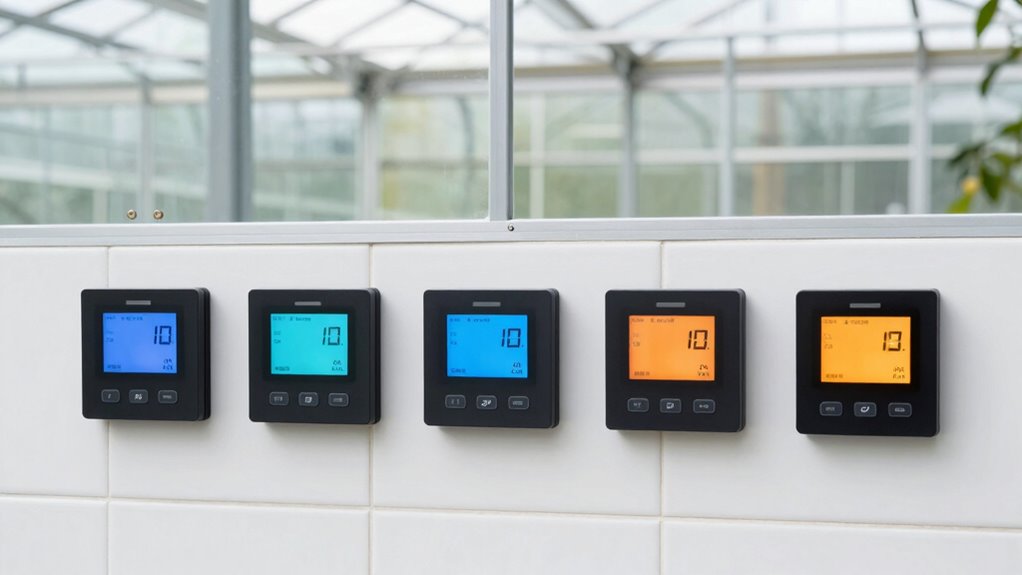

A greenhouse thermostat controller switches connected equipment on or off to help keep temperatures within a chosen range. My best overall pick is the Inkbird WiFi ITC-308 for its Wi-Fi control and heating-and-cooling functionality, while the BN-LINK Dual Thermostat Outlet is a straightforward choice for running separate heat and cooling devices. The Diymore Digital Thermostat Controller stands out for its broad stated temperature range and 1800W rating. The main tradeoffs are remote access versus simple plug-in operation, and broad temperature coverage versus controls intended for narrower seedling or heat-mat ranges. Read on for the full comparison and guidance on matching a controller to your greenhouse equipment.

Get garden gear delivered free with Prime
- Fast, free delivery on millions of items
- Prime Video, Amazon Music and more included
- Member-only deals all year
Complete the kit


Key Takeaways
- The Inkbird WiFi ITC-308 leads for all-around control: Wi-Fi access and heating-and-cooling functionality give it a wider role than the basic plug-in models.
- Dual outlets matter when both heating and cooling are part of the plan: the BN-LINK dual thermostat outlet is a more direct fit for separate appliances than a controller intended for a single heat mat.
- Broad temperature ranges and high power ratings are not the same as greenhouse suitability: the Diymore and several 15A plug-in models cover general-purpose use, but buyers still need to match the controller to the connected load.
- Seed-starting controllers target a narrower job: the VIVOSUN and BN-LINK reptile thermostat models have a 40–108°F range and 1000W rating, which may suit heat mats better than whole-greenhouse equipment.
- Connectivity and environmental protection split the lineup: Wi-Fi and smart-control models offer remote features, while the DIGITEN is specifically described as waterproof; neither feature replaces checking sensor placement and electrical fit.
| Inkbird WiFi ITC-308 Digital Temperature Controller Thermostat |  | Best Overall for Remote Monitoring | Connectivity: 2.4 GHz Wi-Fi; iOS and Android app | Control type: Heating and cooling; dual relay outputs | Maximum output: 1,100 W at 110 V | VIEW ON AMAZON | See Our Full Breakdown |
| Diymore Digital Thermostat Controller – Plug-in Temperature Controller for RVs, Reptile Terrariums, and Greenhouses (1800W, -40°F to 248°F) |  | Best for Beginners | Control type: Push-button | Display: LED | Listed voltage: 220 V | VIEW ON AMAZON | See Our Full Breakdown |
| BN-LINK Temperature Controller Dual Thermostat Outlet for Heating Cooling |  | Best for High-Load Dual-Stage Control | Control type: Separate heating and cooling outlets | Voltage: 125 V AC, 60 Hz | Resistive load: 15 A / 1,875 W | VIEW ON AMAZON | See Our Full Breakdown |
| Wifi Temperature Controller, Thermostat for Greenhouse 110~230V |  | Best for Dual-Voltage Greenhouses | Input voltage: 120 V AC, 60 Hz or 230 V AC, 50 Hz | Output at 120 V: 10 A / 1,200 W maximum total | Output at 230 V: 10 A / 2,300 W maximum total | VIEW ON AMAZON | See Our Full Breakdown |
| DEWENWILS Smart Temperature Controller, 15A Smart Thermostat with Memory |  | Best for Flexible App Modes and Outage Recovery | Connectivity: Wi-Fi app control | Control modes: Six: cooling with timer, heating with timer, cooling, heating, timer, and off | Temperature range: -40°F to 210°F | VIEW ON AMAZON | See Our Full Breakdown |
| DEWENWILS Temperature Controller Outlet 15A Thermostat Plug, -40~210°F |  | Best for Flexible Scheduling | Temperature range: -40°F to 210°F | Temperature precision: 0.1°F | Control modes: Heating and cooling | VIEW ON AMAZON | See Our Full Breakdown |
| DIGITEN Waterproof Digital Temperature Controller for Aquarium, Greenhouse & Outdoor Heating – 10A Heat Mat Thermostat Controller |  | Best for Weather-Exposed Greenhouses | Temperature range: -40°F to 248°F | Sensor: Waterproof probe | Display: Illuminated LED | VIEW ON AMAZON | See Our Full Breakdown |
| BN-LINK Digital Cooling Thermostat Temperature Controller Outlet Switch |  | Best Cooling-Only Controller | Temperature range: 40°F to 108°F | Control mode: Cooling only | Maximum load: 8.3A, 1000W | VIEW ON AMAZON | See Our Full Breakdown |
| Inkbird ITC-308 Digital Temperature Controller Thermostat |  | Best for Separate Heating and Cooling | Control outputs: Dual relay for refrigeration and heating equipment | Maximum output: 1100W at 110V | Temperature display: Measured temperature and set temperature shown together | VIEW ON AMAZON | See Our Full Breakdown |
| DEWENWILS Temperature Controller Outlet, 15A Thermostat Outlet, -40~210°F |  | Best Heavy-Duty Plug-In Controller | Temperature range: -40°F to 210°F | Maximum output: 15A, 1800W | Voltage: 120V | VIEW ON AMAZON | See Our Full Breakdown |
| WH2408 Temperature Controller 10A 1200W (Pack of 1) |  | Best Wide-Range Plug Controller | Maximum load: 10A, 1200W at 120V | Probe measurement range: -58°F to 230°F (-50°C to 110°C) | Controller ambient range: -4°F to 140°F (-20°C to 60°C) | VIEW ON AMAZON | See Our Full Breakdown |
| VIVOSUN Digital Heat Mat Thermostat Controller, 40–108 ºF 1000W for Reptiles, Seedlings, Germination, Incubation and Fermentation |  | Best for Simple Seedling-Mat Control | Control range: 40°F to 108°F | Display range: 32°F to 210°F | Maximum load: 1000W | VIEW ON AMAZON | See Our Full Breakdown |
| BN-LINK Reptile Thermostat Temperature Controller, Digital Heat Mat Thermostat for Seed Starting, Plant Germination, Greenhouse, Incubator, Brooder, Brewing, Reptiles Tank, 40-108°F, 1000W, ETL Listed |  | Best for Clear Status at a Grow Bench | Control range: 40°F to 108°F | Maximum load: 8.3A, 1000W | Voltage and frequency: 120VAC, 60Hz | VIEW ON AMAZON | See Our Full Breakdown |
| Digital Temperature Controller Outlet, 15A/1800W Heavy Duty Thermostat Plug, VA LCD Display, Heating/Cooling Control, -40°F~210°F, 4 Timer Modes, for Greenhouse Incubator Homebrew W01TC06 |  | Best for Higher Loads and Timer Options | Maximum current: 15A | Maximum power: 1800W | Temperature range: -40°F to 210°F | VIEW ON AMAZON | See Our Full Breakdown |
| BTC211 Temperature Controller 1650W 15A |  | Best for Coordinated Heating and Cooling | Maximum load: 1650W | Maximum current: 15A | Voltage: 110V | VIEW ON AMAZON | See Our Full Breakdown |
| greenhouse thermostat controller | Display |
|---|---|
| Inkbird WiFi ITC-308 Digital T | Digital |
| Diymore Digital Thermostat Con | LED |
| BN-LINK Temperature Controller | Dual digital display; Fahrenheit or Celsius |
| Wifi Temperature Controller | Dual digital display |
| DEWENWILS Smart Temperature Co | Backlit LCD with white text on a black background |
| DEWENWILS Temperature Controll | Self-illuminating VA display |
| DIGITEN Waterproof Digital Tem | Illuminated LED |
| BN-LINK Digital Cooling Thermo | — |
| Inkbird ITC-308 Digital Temper | — |
| DEWENWILS Temperature Controll | VA display |
| WH2408 Temperature Controller | — |
| VIVOSUN Digital Heat Mat Therm | — |
| BN-LINK Reptile Thermostat Tem | — |
| Digital Temperature Controller | VA LCD |
| BTC211 Temperature Controller | Dual windows for real-time and set temperatures |
More Details on Our Top Picks
Inkbird WiFi ITC-308 Digital Temperature Controller Thermostat
The Inkbird WiFi ITC-308 is my strongest all-around pick for growers who want to check greenhouse temperature away from the site. Its app connection supports remote monitoring and adjustment, while separate heating and cooling relays let it manage a heater and a cooling device as conditions change. High- and low-temperature alarms also give it an advantage over the simpler Diymore controller, which is focused on local controls. The tradeoff is its 1,100-watt maximum at 110 volts: that may rule it out for higher-load equipment, so check the appliance rating before connecting it. It also depends on 2.4 GHz Wi-Fi for app access, making it less suitable for a greenhouse without a dependable network.
Pros:- Remote monitoring and temperature adjustment through an iOS or Android app
- Separate relay outputs for heating and cooling equipment
- High- and low-temperature alerts, including a sensor malfunction alarm
- Plug-and-play setup with Celsius or Fahrenheit display and temperature calibration
Cons:- Maximum output is limited to 1,100 watts at 110 volts
- Remote app features depend on a 2.4 GHz Wi-Fi connection
Best for: Greenhouse growers with reliable 2.4 GHz Wi-Fi who want app-based temperature checks, alerts, and heating-and-cooling control.
Not ideal for: Growers using equipment above 1,100 watts at 110 volts or greenhouses without a dependable 2.4 GHz Wi-Fi connection.
- Connectivity:2.4 GHz Wi-Fi; iOS and Android app
- Control type:Heating and cooling; dual relay outputs
- Maximum output:1,100 W at 110 V
- Power source:Corded electric
- Display:Digital
- Temperature units:Celsius or Fahrenheit
- Alerts:High- and low-temperature alarms; sensor malfunction alarm
- Mounting:Wall mount
Our verdict“Choose the Inkbird if remote access and two-way heating-and-cooling control matter more than a higher power limit.”
Diymore Digital Thermostat Controller – Plug-in Temperature Controller for RVs, Reptile Terrariums, and Greenhouses (1800W, -40°F to 248°F)
The Diymore makes sense for a grower who wants straightforward plug-in temperature control without app setup or wiring. Its button-operated LED display and stated ±1°F precision keep the basic task simple, while heating and cooling control gives it more flexibility than a heat-only thermostat. Compared with the Wi-Fi-enabled Inkbird ITC-308, this model gives up remote monitoring and phone alerts, but adds a longer stated temperature span and a six-foot sensor cord. Its advertised 1,800-watt capacity is appealing for equipment with a larger draw; however, the product information also lists 220 volts, so buyers should verify that the controller matches their greenhouse supply and connected appliance. The broad temperature range may matter less for routine plant growing than its uncomplicated local operation.
Pros:- Simple push-button setup with a bright LED display
- Heating and cooling control for different greenhouse equipment
- Six-foot sensor cord offers flexible probe placement
- Power-outage memory and timer modes, with timers up to 99 hours
Cons:- No Wi-Fi or remote app access, unlike the Inkbird ITC-308
- Product information lists 220 volts, so supply compatibility needs checking
- The stated 1,800-watt capacity should be checked against the connected appliance and circuit
Best for: New greenhouse owners who want a simple plug-in controller with a long sensor lead and do not need app monitoring.
Not ideal for: Growers who need remote alerts or who cannot verify that the listed 220-volt specification matches their power supply.
- Control type:Push-button
- Display:LED
- Listed voltage:220 V
- Maximum wattage:1,800 W
- Temperature range:-40°F to 248°F
- Stated precision:±1°F
- Sensor cord:6 ft
- Timer:Up to 99 hours
- Control modes:Five modes; heating and cooling control
Our verdict“Pick the Diymore for hands-on, beginner-friendly control if its listed voltage and load ratings match your setup.”
BN-LINK Temperature Controller Dual Thermostat Outlet for Heating Cooling
For a greenhouse with both a heater and an exhaust fan or cooling unit, the BN-LINK’s independent heating and cooling outlets are its clearest advantage. The dual display shows current and target temperatures together, so checking the control state takes less button work than on a basic single-display setup. Its 15A/1,875W resistive-load rating also exceeds the Inkbird ITC-308’s stated 1,100-watt limit, though the BN-LINK specifies different, lower limits for tungsten loads and motor-related ratings. A waterproof metal probe, audible high- and low-temperature alarms, and compressor delay add useful protections. Unlike the Wi-Fi Inkbird, it has no stated remote app control, and it is for indoor use only; skip it for exposed outdoor installations.
Pros:- Independent outlets can control heating and cooling equipment
- Higher stated resistive-load capacity than the Inkbird ITC-308
- Waterproof metal probe with a wide measurement range
- Compressor delay and audible high- and low-temperature alarms
Cons:- No Wi-Fi or app-based remote monitoring is specified
- Indoor use only
- Load limits vary by equipment type and are lower for tungsten loads than for resistive loads
Best for: Greenhouse growers who need separate heating and cooling outlets, a probe suited to damp environments, and higher resistive-load capacity.
Not ideal for: Growers who need app monitoring, outdoor installation, or who have equipment whose load exceeds the controller’s specific rating for that load type.
- Control type:Separate heating and cooling outlets
- Voltage:125 V AC, 60 Hz
- Resistive load:15 A / 1,875 W
- Tungsten load:10 A / 1,250 W
- Probe measurement range:-58°F to 230°F
- Control range:-40°F to 176°F
- Display:Dual digital display; Fahrenheit or Celsius
- Additional features:Compressor delay, overload protection, high- and low-temperature audible alarms
- Use limitation:Indoor use only
Our verdict“Choose this BN-LINK model for indoor greenhouse setups that need dual-stage outlets and higher resistive-load capacity, not app access.”
Wifi Temperature Controller, Thermostat for Greenhouse 110~230V
This Wi-Fi controller stands out for growers whose equipment or supply calls for a choice between 120 V and 230 V. It supports remote app adjustments, temperature checks, and alerts, while its two outlets can run heating and cooling devices as separate temperature needs arise. That makes it a more flexible fit for mixed equipment than the Diymore, which is locally controlled. The 180-second compressor delay is a useful feature when the cooling outlet runs a refrigerator or freezer, and the dual display keeps current and target readings visible at a glance. The main tradeoff is that the output limit changes with input voltage—10 A, up to 1,200 W at 120 V or 2,300 W at 230 V. Check the rating for each connected device, and note that app operation depends on Wi-Fi.
Pros:- Supports 120 V and 230 V input with corresponding output ratings
- App access for remote temperature adjustments, monitoring, and alerts
- Two independent receptacles for heating and cooling equipment
- Compressor delay and a dual digital display
Cons:- Maximum output depends on input voltage and is limited to 10 A
- Remote functions depend on a working Wi-Fi connection
- Buyers must check the connected appliances against the different 120 V and 230 V ratings
Best for: Greenhouse owners using 120 V or 230 V equipment who want app-based access and separate heating and cooling outlets.
Not ideal for: Buyers who want a controller that works without Wi-Fi or whose connected equipment exceeds its voltage-specific output limit.
- Input voltage:120 V AC, 60 Hz or 230 V AC, 50 Hz
- Output at 120 V:10 A / 1,200 W maximum total
- Output at 230 V:10 A / 2,300 W maximum total
- Connectivity:Wi-Fi with app control
- Outlets:Two receptacles for heating and cooling
- Compressor delay:180 seconds
- Display:Dual digital display
- Temperature units:Celsius or Fahrenheit
- Alarms:Programmable high- and low-temperature audible alarms
Our verdict“Choose this model if you need Wi-Fi control across a 120 V or 230 V setup and can match the load to its voltage-specific limit.”
DEWENWILS Smart Temperature Controller, 15A Smart Thermostat with Memory
The DEWENWILS is a good match for growers who want app access but also need more control over how a heater or cooler runs. Its six modes include heating or cooling with timers, standalone heating or cooling, timer-only operation, and off; that range is broader than the simpler plug-in approach of the Diymore. It also restores saved settings after a power outage, a practical advantage for a greenhouse where a brief interruption should not require manual reprogramming. The LCD shows temperature and operating mode, and the stated 0.1°F accuracy supports fine adjustments. Compared with the Inkbird ITC-308, the DEWENWILS lists more operating modes, but its provided product details do not state a maximum wattage or voltage. I would verify equipment compatibility before connecting a substantial load.
Pros:- Six control modes combine temperature control, timers, and an off setting
- Power-outage memory restores previous settings
- App control supports remote monitoring and adjustment
- Backlit LCD and stated 0.1°F accuracy
Cons:- The supplied product details do not specify voltage or maximum wattage
- App functions depend on Wi-Fi
- A 0.1°F accuracy claim does not by itself establish the controller’s performance in a greenhouse
Best for: Growers who want app control, timer options, and automatic restoration of settings after a power interruption.
Not ideal for: Buyers who need a clearly stated voltage or maximum load rating before choosing a controller for high-draw greenhouse equipment.
- Connectivity:Wi-Fi app control
- Control modes:Six: cooling with timer, heating with timer, cooling, heating, timer, and off
- Temperature range:-40°F to 210°F
- Stated accuracy:0.1°F
- Power-outage memory:Restores previous settings after power resumes
- Display:Backlit LCD with white text on a black background
- Applications listed:Greenhouses, reptile enclosures, incubators, fermentation chambers, and aquariums
Our verdict“Choose the DEWENWILS for app-based scheduling and outage recovery after confirming its electrical ratings suit your equipment.”
DEWENWILS Temperature Controller Outlet 15A Thermostat Plug, -40~210°F
The DEWENWILS Temperature Controller Outlet combines heating and cooling control with a broad temperature span, making it more adaptable than the cooling-only BN-LINK Digital Cooling Thermostat. Its four timing modes—including cyclic and countdown options—can help coordinate equipment schedules, while power memory restores the previous settings after an outage. The self-illuminating VA display is a practical plus when checking readings in a dim greenhouse. I’d choose this version for a setup where temperature adjustment and timed operation matter as much as output capacity. The tradeoff is that it controls equipment through a single outlet, rather than offering the Inkbird ITC-308’s two separate heating and refrigeration relays. Its broad range also doesn’t replace careful sensor placement or greenhouse airflow management.
Pros:- Heating and cooling modes suit changing greenhouse needs.
- Four timing modes add scheduling flexibility.
- Power memory restores settings after an interruption.
- 15A, 1800W stated capacity supports higher-load equipment than smaller controllers.
Cons:- A single controlled outlet cannot operate separate heating and cooling devices independently.
- No waterproof rating or outdoor enclosure protection is specified.
- Its features overlap closely with the other DEWENWILS controller in this group, making model-level differences hard to establish.
Best for: Greenhouse growers who want one plug-in controller for heating or cooling, plus flexible countdown or cyclic timing.
Not ideal for: Growers who need separate heating and cooling devices controlled at the same time; a dual-relay controller such as the Inkbird ITC-308 is a better fit.
- Temperature range:-40°F to 210°F
- Temperature precision:0.1°F
- Control modes:Heating and cooling
- Maximum output:15A; up to 1800W heating capacity
- Display:Self-illuminating VA display
- Timing:Cyclic timing, countdown ON, countdown OFF, and countdown ON/OFF
- Additional functions:Power memory and temperature calibration
Our verdict“I’d pick it for a greenhouse that needs broad-range temperature control and built-in timing, but not for dual-device control or exposed outdoor mounting.”
DIGITEN Waterproof Digital Temperature Controller for Aquarium, Greenhouse & Outdoor Heating – 10A Heat Mat Thermostat Controller
The DIGITEN Waterproof Digital Temperature Controller is the clearest choice here for a greenhouse where the controller may encounter damp conditions: its housing is rated IP65, and the maker recommends hanging it for better protection. That makes it more suited to an exposed location than either DEWENWILS plug-in controller, which has no waterproof rating listed. The probe supports a wide -40°F to 248°F range, and high- and low-temperature alarms can alert growers when readings move beyond set limits. I’d favor it when moisture protection and alerts matter more than maximum load. Its 10A rating is below the DEWENWILS units’ 15A capacity, and the description doesn’t specify a heating-and-cooling dual-relay setup.
Pros:- IP65 housing is suited to damp or outdoor locations when mounted as recommended.
- Wide sensor range covers cold protection and high-temperature monitoring.
- High- and low-temperature alarms add warning capability.
- Illuminated display and hanging design support easier viewing and cord organization.
Cons:- 10A capacity is lower than the 15A DEWENWILS controllers.
- No separate dual heating-and-cooling relay arrangement is specified.
- A waterproof housing does not establish that every connected plug or electrical connection is weatherproof.
Best for: Growers mounting a controller in a humid or rain-prone greenhouse area who want a waterproof housing, sensor probe, and temperature alarms.
Not ideal for: Users powering equipment above its stated 10A rating or seeking the 15A capacity and timing modes of the DEWENWILS controllers.
- Temperature range:-40°F to 248°F
- Sensor:Waterproof probe
- Display:Illuminated LED
- Alarms:High- and low-temperature alarms
- Additional control:Customizable compressor delay
- Warranty:12 months
Our verdict“I’d choose this for a damp greenhouse mounting spot where alerts and enclosure protection matter more than a higher load rating.”
BN-LINK Digital Cooling Thermostat Temperature Controller Outlet Switch
The BN-LINK Digital Cooling Thermostat makes sense when a greenhouse needs ventilation triggered by rising temperatures, not a controller for both a heater and fan. Its cooling-only operation is a real limit, but it also keeps setup focused for an exhaust fan or swamp cooler. The 40–108°F control range covers common warm-weather ventilation targets, and the sensor probe has nearly five feet of reach. Compared with the Inkbird ITC-308, this BN-LINK offers a simpler single-purpose setup but lacks the Inkbird’s dual relays and alarm functions. I’d select it for straightforward fan control, particularly where ETL listing and a hanging tab are useful. The 8.3A, 1000W ceiling rules out higher-load equipment, and it cannot activate a heater when temperatures fall.
Pros:- Cooling-only setup suits ventilation without extra mode configuration.
- Probe provides nearly five feet of reach for sensor placement.
- LED status lights and display are designed for visibility in darkness.
- ETL-listed and rated for 120VAC, 60Hz operation.
Cons:- Cooling devices only; it cannot switch on a heater.
- Maximum load is 8.3A and 1000W, below the 15A DEWENWILS options.
- 40–108°F range is narrower than the DIGITEN and DEWENWILS controllers.
Best for: Greenhouse owners who need a simple temperature-triggered exhaust fan, ventilation fan, or swamp cooler controller.
Not ideal for: Growers who need heating control, broader temperature settings, or equipment exceeding 8.3A or 1000W.
- Temperature range:40°F to 108°F
- Control mode:Cooling only
- Maximum load:8.3A, 1000W
- Power cord length:3.94 ft
- Probe length:4.92 ft
- Display and indicators:Digital display with cooling and power LED indicators
- Safety listing:ETL listed
Our verdict“I’d choose this for a greenhouse fan controlled by temperature, but skip it if the same controller must manage heating or higher-powered equipment.”
Inkbird ITC-308 Digital Temperature Controller Thermostat
The Inkbird ITC-308 stands apart from the single-outlet DEWENWILS controllers by using dual relays for heating and refrigeration equipment. In a greenhouse, that can let one controller switch a heater as temperatures fall and cooling equipment as they rise, rather than choosing only one mode at a time. Its dual display shows the measured and target temperatures together, which makes setpoint checks direct, and high/low alarms can flag unusual readings or sensor trouble. I’d choose it when coordinated temperature control matters more than the DEWENWILS units’ higher stated 1800W capacity. The Inkbird’s maximum output is 1100W at 110V, so equipment load needs checking before purchase. The provided details also don’t list a temperature range or waterproof rating.
Pros:- Dual relays can control heating and refrigeration equipment.
- Measured and set temperatures appear at the same time.
- High- and low-temperature alarms include sensor malfunction alerts.
- Adjustable compressor delay can protect connected refrigeration equipment.
Cons:- Maximum output of 1100W at 110V is below the DEWENWILS models’ stated 1800W capacity.
- No waterproof rating is specified in the provided product details.
- Temperature control range is not listed in the provided details.
Best for: Greenhouse growers who want one controller to operate separate heating and cooling equipment as temperatures change.
Not ideal for: Owners of equipment drawing more than 1100W at 110V or those needing a specified waterproof housing for damp mounting locations.
- Control outputs:Dual relay for refrigeration and heating equipment
- Maximum output:1100W at 110V
- Temperature display:Measured temperature and set temperature shown together
- Units:Celsius or Fahrenheit
- Alarms:High- and low-temperature alarms; sensor malfunction alert
- Compressor setting:Customizable compressor delay
Our verdict“I’d choose the ITC-308 when a greenhouse needs separate heating and cooling control, provided both devices fit its stated load limit.”
DEWENWILS Temperature Controller Outlet, 15A Thermostat Outlet, -40~210°F
The DEWENWILS Temperature Controller Outlet is a strong match for growers who need a broad temperature range and a stated 15A, 1800W capacity in a plug-in controller. It offers heating and cooling modes, temperature calibration, power memory, and a self-illuminating VA display. Compared with the BN-LINK Digital Cooling Thermostat, it supports both heating and cooling and a substantially higher stated load, though the BN-LINK may be the simpler fit for fan-only use. This model’s listed 120V supply and push-button controls give buyers useful electrical and operation details. I’d place it ahead of the other DEWENWILS listing for buyers who want those listed specifications, but the two descriptions overlap heavily. It still lacks a waterproof rating and separate dual relays.
Pros:- 15A, 1800W stated capacity suits higher-load equipment than the BN-LINK cooling controller.
- Heating and cooling modes cover more use cases than a cooling-only switch.
- Power memory and temperature calibration provide useful control adjustments.
- Self-illuminating VA display is suited to dim spaces.
Cons:- No waterproof rating is provided for damp or rain-exposed placement.
- A single outlet is not the same as independent dual-relay control.
- Its feature set closely matches the other DEWENWILS listing, with few clear distinctions in the provided details.
Best for: Greenhouse growers running a higher-load heater or cooling device who want broad-range control, memory, and temperature calibration.
Not ideal for: Growers who need a waterproof controller or separate relays for independent heating and cooling equipment.
- Temperature range:-40°F to 210°F
- Maximum output:15A, 1800W
- Voltage:120V
- Control modes:Heating and cooling
- Display:VA display
- Controller:Push-button control
- Additional functions:Power memory and temperature calibration
- Timing modes:Cyclic timing and countdown ON/OFF modes
Our verdict“I’d pick this DEWENWILS for higher-load plug-in temperature control with memory, but not for wet mounting or separate heater-and-cooler relays.”
WH2408 Temperature Controller 10A 1200W (Pack of 1)
I’d choose the WILLHI WH2408 when greenhouse conditions call for a controller that can handle more than seedling-mat temperatures. Its -58°F to 230°F probe range and heating/cooling modes give it broader use than the VIVOSUN Digital Heat Mat Thermostat, which is limited to heating and a 40–108°F control range. Two adjustment knobs also make basic setup more direct than a button-menu controller. The memory function retains settings after a power outage, reducing the chance of having to reprogram it. Its tradeoff is a 10A, 1200W limit, below the capacity of the WILAWELS 15A/1800W model. The probe is waterproof, but the controller body is not, so I’d keep the unit sheltered and use separate thermal and overload protection for connected equipment.
Pros:- Heating and cooling modes broaden its use beyond heat mats.
- Probe measures across a wide -58°F to 230°F range.
- Two knobs offer straightforward on/off temperature adjustment.
- Retains settings after power loss.
Cons:- 10A and 1200W capacity is lower than the 15A/1800W WILAWELS controller.
- Controller housing is not waterproof, even though the probe is.
- Product notes say it is a control device, not a safety device.
Best for: Greenhouse growers who want simple knob controls, a wide probe range, and both heating and cooling control for moderate-load equipment.
Not ideal for: Growers running equipment above 1200W or placing the controller body where it may get wet.
- Maximum load:10A, 1200W at 120V
- Probe measurement range:-58°F to 230°F (-50°C to 110°C)
- Controller ambient range:-4°F to 140°F (-20°C to 60°C)
- Control modes:Heating and cooling
- Control resolution:0.1°F
- Probe:Waterproof, food-grade probe; tip approximately 1-1/2 inches long
- Settings retention:Retains settings during power outages
- Housing:Fire-retardant ABS; controller body is not waterproof
Our verdict“Choose the WH2408 for flexible heating and cooling with simple controls, provided your load stays within 1200W and the controller remains dry.”
VIVOSUN Digital Heat Mat Thermostat Controller, 40–108 ºF 1000W for Reptiles, Seedlings, Germination, Incubation and Fermentation
For a greenhouse setup built around a seedling heat mat, I’d favor the VIVOSUN Digital Heat Mat Thermostat over a more feature-heavy plug controller. Its 40–108°F control range suits root-zone warming, and its three-button setup keeps adjustments simple. The angled socket and hanging tab help keep cords organized when the controller is mounted near a tray or rack. Compared with the BN-LINK Reptile Thermostat, VIVOSUN emphasizes tidy placement and straightforward operation rather than clearly advertised ETL listing, indicator lights, and specified cord lengths. Its narrow temperature range is also a real limitation: it is a heat-only option, unlike the WILLHI WH2408, which supports heating and cooling over a much wider range. I’d reserve this pick for propagation rather than whole-greenhouse climate control.
Pros:- Three-button setup makes temperature changes uncomplicated.
- 40–108°F range fits common seedling and root-zone warming tasks.
- Angled socket helps reduce cord tangling.
- Hanging tab and wall-mount option support flexible placement.
Cons:- Heating-only control cannot operate a cooling device.
- 40–108°F control range is much narrower than the WH2408’s probe range.
- The supplied description does not specify cord or probe length.
Best for: Home propagators and beginner growers controlling one compatible heat mat beneath seed trays or rooting media.
Not ideal for: Growers who need cooling control, a broad operating range, or a controller for whole-greenhouse heating equipment.
- Control range:40°F to 108°F
- Display range:32°F to 210°F
- Maximum load:1000W
- Control type:Heating thermostat
- Operation:Three-button controls
- Temperature probe:Included
- Mounting:Hanging tab and wall mount
- Outlet:Compatible with North American outlets
Our verdict“Pick VIVOSUN for uncomplicated heat-mat control at a propagation bench, not for managing a greenhouse’s full climate.”
BN-LINK Reptile Thermostat Temperature Controller, Digital Heat Mat Thermostat for Seed Starting, Plant Germination, Greenhouse, Incubator, Brooder, Brewing, Reptiles Tank, 40-108°F, 1000W, ETL Listed
The BN-LINK is a practical choice when I want to see at a glance whether a heat mat is powered and heating. Its bright LED display and separate indicator lights make status easier to check in a dim greenhouse than on the VIVOSUN controller, whose listed strengths focus more on mounting and cord management. Both have a 40–108°F range and 1000W capacity, so neither is suited to broad climate control; the BN-LINK is explicitly heating-only. Its specified 3.94-foot power cord and 4.92-foot probe offer useful reach from an outlet to a tray, while the ETL listing adds a stated safety certification. I’d choose it over the VIVOSUN for visible operating feedback, but skip it if the greenhouse needs cooling control or higher-load equipment.
Pros:- LED display and status lights make operation easy to check in low light.
- Three-button controls simplify temperature setting and unit selection.
- ETL listed, with a stated 1000W maximum load.
- Specified power-cord and probe lengths help with placement planning.
Cons:- Heating-only operation cannot switch a cooling device.
- 40–108°F range is less versatile than the WH2408’s broad probe range.
- 1000W capacity may not suit larger greenhouse heaters.
Best for: Seed starters and hobby greenhouse growers who want a heat-mat controller with visible heating and power status and a specified probe lead.
Not ideal for: Growers who need cooling control, temperature control outside 40–108°F, or loads above 1000W.
- Control range:40°F to 108°F
- Maximum load:8.3A, 1000W
- Voltage and frequency:120VAC, 60Hz
- Control type:Heating only
- Power cord:3.94 ft, three-prong
- Temperature probe:4.92 ft
- Display and indicators:LED display with heating and power indicator lights
- Certification:ETL listed
Our verdict“Choose BN-LINK for visible, certified heat-mat control near seed trays, but look elsewhere for cooling or higher-load greenhouse equipment.”
Digital Temperature Controller Outlet, 15A/1800W Heavy Duty Thermostat Plug, VA LCD Display, Heating/Cooling Control, -40°F~210°F, 4 Timer Modes, for Greenhouse Incubator Homebrew W01TC06
The WILAWELS W01TC06 stands out for growers whose thermostat plug needs more capacity and scheduling flexibility than a basic heat-mat controller. Its listed 15A/1800W rating exceeds the WH2408’s 10A/1200W limit, while heating and cooling modes make it useful for switching between a greenhouse heater and a cooling device. The -40°F to 210°F range is also much broader than the VIVOSUN’s heat-mat-focused 40–108°F range. Four timer modes add control choices beyond temperature switching, though the supplied information does not explain how each timer mode behaves; I’d check the manual before relying on a schedule. This model’s LCD and higher rating make it a more capable plug controller, but its listing gives less detail about probe construction and safety protections than some alternatives.
Pros:- 15A/1800W rating is higher than the WH2408’s stated capacity.
- Heating and cooling control covers more greenhouse tasks than heat-only models.
- Broad listed temperature range suits varied applications.
- Four timer modes offer options beyond temperature-triggered switching.
Cons:- The supplied description does not explain the four timer modes.
- Probe details and safety certification are not specified in the provided product information.
- More features may be unnecessary for growers who only need to control one seedling mat.
Best for: Greenhouse growers using compatible equipment up to 1800W who want heating and cooling control plus timer modes.
Not ideal for: Buyers who need well-documented probe details, an explicitly stated safety certification, or only a simple low-temperature heat-mat controller.
- Maximum current:15A
- Maximum power:1800W
- Temperature range:-40°F to 210°F
- Control modes:Heating and cooling
- Timer modes:4
- Display:VA LCD
- Color:White
- Model:W01TC06
Our verdict“Choose the W01TC06 for higher-load heating or cooling and timer options, after confirming the timer behavior and probe details meet your setup’s needs.”
BTC211 Temperature Controller 1650W 15A
When a greenhouse needs a heater and a cooling device coordinated around one temperature target, the BTC211 offers a feature the heat-only VIVOSUN and BN-LINK controllers lack: dual relay outputs for heating and cooling equipment. Its two display windows show current and set temperatures together, so I can check the target without switching screens. High- and low-temperature alarms, calibration, and compressor-delay protection add useful controls for equipment that cycles or needs a pause between starts. Compared with the WILAWELS W01TC06, the BTC211 lists its dual-display readout and compressor delay more clearly, while the WILAWELS advertises four timer modes and a higher 1800W rating. The BTC211’s stated 1650W maximum is lower, and its description specifies a 110V supply, so I’d confirm compatibility before connecting equipment.
Pros:- Dual relay outputs support connected heating and cooling equipment.
- Two display windows show actual and set temperatures at once.
- High- and low-temperature alarms flag overshoots.
- Compressor delay and temperature calibration add useful control options.
Cons:- 1650W maximum is below the WILAWELS W01TC06’s listed 1800W.
- The product description specifies 110V, so compatibility needs checking for other supply setups.
- More setup choices may be unnecessary for a single heat mat.
Best for: Greenhouse growers with separate heating and cooling devices who want dual-relay control, alarms, and a visible current-versus-target readout.
Not ideal for: Buyers whose equipment exceeds 1650W or who need a controller with clearly documented higher-voltage compatibility.
- Maximum load:1650W
- Maximum current:15A
- Voltage:110V
- Outputs:Dual relay outputs
- Temperature modes:Heating and cooling
- Probe range:-58°F to 230°F (-50°C to 110°C)
- Probe:3m (9.8 ft) waterproof sensor
- Display:Dual windows for real-time and set temperatures
- Protection and adjustments:High/low temperature alarms, compressor delay, and temperature calibration
Our verdict“Pick the BTC211 when one controller needs to coordinate heating and cooling with alarms and compressor-delay protection.”

How We Picked
I compared the 15 listed controllers by the jobs greenhouse growers are likely to ask them to do: regulate heating, manage cooling, run a heat mat, or provide remote access. I gave more weight to clear control capabilities, useful operating ranges, stated power limits, and ease of matching a unit to common greenhouse equipment than to features that do not affect temperature control. Models with heat-and-cool operation or Wi-Fi earned a stronger position for broader greenhouse use, while focused heat-mat units fit better in narrower roles.
The order also reflects how much a buyer must verify before purchase. I favored products whose named functions and ratings make their intended role easier to identify, then placed specialized or less clearly differentiated options lower. Power capacity, sensor conditions, and outlet compatibility remain buyer checks for every model; product names alone do not establish that a controller is suitable for a particular heater, fan, or greenhouse environment.
Factors to Consider When Choosing Greenhouse Thermostat Controller
I’d start by matching the controller to the equipment and growing task, rather than choosing by connectivity or a long temperature range alone. These broader checks can prevent common mismatches that a product feature list may not make obvious.
Match the controller to the equipment load
Write down the voltage, wattage, and current draw for every heater, fan, or cooling device you plan to connect. A controller’s stated maximum is a limit, not a promise that every appliance below that number is suitable for continuous operation. For equipment with multiple devices, check whether the controller’s rating applies per outlet or to the total connected load. Avoid assuming that two outlets double the allowable capacity. Leave room between your actual load and the controller’s limit, and follow the maker’s electrical instructions.
Decide whether you need heating, cooling, or both
A heater-only setup has different control needs from a greenhouse that uses both heat and ventilation or cooling equipment. A dual-function controller can reduce the need to manage separate temperature switches, but check how it handles each outlet and its setpoints. With separate controllers, placement and settings need to work together so they do not trigger conflicting actions. A cooling outlet also does not automatically mean the attached fan or cooler is suitable for greenhouse use. Choose the control arrangement around your actual equipment and seasonal routine.
Choose a temperature range for the crop task
Seed germination, propagation, and whole-greenhouse air control may call for different temperature targets. A narrow-range heat-mat controller can be a sensible match for trays, yet may not cover the wider range needed for a greenhouse air sensor. Conversely, a controller with a broad stated range does not make temperature readings more accurate by itself. Check both the controller’s usable range and the range where your crops or equipment need control. If your plans change by season, a wider range can offer flexibility, provided the sensor and connected device suit the job.
Think through sensor location and greenhouse conditions
The sensor measures conditions at its location, so mounting it beside a heater, in direct sun, or against a cold surface can skew the reading. Place it where it represents the air or growing zone you want to regulate, and avoid letting it touch a heating mat unless the controller is intended for that use. Moisture, condensation, and outdoor exposure can affect electronics even when a product name calls out waterproofing. Check which parts are protected and what placement the instructions allow. A well-positioned sensor may matter more to stable control than adding remote features.
Pay for remote control only when it changes your routine
Wi-Fi or smart functions can help when you need to check a greenhouse away from home or manage settings without visiting the controller. They add little value if the greenhouse is nearby and the device’s local controls cover your needs. Before choosing a connected model, check whether it depends on a network or app for core functions, and what happens if that connection is unavailable. Memory can be useful after a power interruption, but confirm which settings it retains. For a simple single-heater setup, straightforward operation may be easier to maintain than extra connectivity.
Frequently Asked Questions
Can one thermostat controller run both a greenhouse heater and a fan?
Only if the controller supports the control arrangement you need and its outlets and ratings match both devices. A dual-outlet model may provide separate heating and cooling control, while a single-outlet unit may be intended for one connected load. Check whether each outlet has an independent temperature setting and whether the total electrical load stays within the stated limit. Also confirm that the fan is suitable for the environment and control method. If the product details do not make these points clear, do not assume the second outlet behaves as a separate thermostat.
Is a Wi-Fi thermostat worth choosing for a small greenhouse?
Wi-Fi is most useful when you need to check or adjust conditions while away from the greenhouse. For a small structure beside your home, local controls may handle routine changes without network dependence. Think about whether remote access solves a recurring problem, such as responding to temperature changes while you are out. Check what the controller can do if the internet or app is unavailable, and whether alerts are included rather than assumed. If remote access would not change your response, a simpler plug-in controller may be the more practical fit.
Can I use a 40–108°F heat-mat thermostat to control greenhouse air temperature?
It may be possible if the target temperature falls within its range and the sensor is designed and positioned to measure greenhouse air. These models are commonly framed around heat mats and propagation tasks, so their control format may not suit a large heater or a separate cooling device. Check the power rating against the equipment and confirm whether the controller supports the kind of load you intend to connect. Place the sensor away from direct heater output and sunlight to avoid misleading readings. For whole-structure control, a broader-range controller with appropriate heating or cooling functions may be a better match.
How much controller capacity should I leave beyond my heater’s rating?
There is no single margin that suits every appliance, because electrical loads and controller instructions vary. Compare the heater’s electrical label with the controller’s voltage, current, and wattage limits, and follow any limits for continuous use stated by the manufacturers. If you plan to connect more than one device, calculate the combined load rather than checking each appliance alone. Do not treat a high wattage label as proof that the outlet, plug, or greenhouse wiring can handle the setup. When the ratings or wiring are unclear, ask a qualified electrician before connecting the equipment.
Where should I place the thermostat sensor in a greenhouse?
Place the sensor in the part of the greenhouse whose temperature you want to control, rather than next to a heater, doorway, or sunlit surface. Keep it at a representative height for the plants or growing area, and allow air to circulate around it. A sensor close to a heat source can switch the controller off before the rest of the greenhouse warms. For heat-mat use, follow the controller’s instructions for whether the probe belongs on the mat, in the growing medium, or in nearby air. Recheck readings after installation as the greenhouse’s sunlight and ventilation patterns change.
Conclusion
For the widest mix of greenhouse tasks, I’d choose the Inkbird WiFi ITC-308 as best overall for its named Wi-Fi and heating-and-cooling functions. The Diymore Digital Thermostat Controller is my best value pick for buyers who want a broad stated temperature range and 1800W capacity without making remote control the priority. For a connected setup with memory, the DEWENWILS Smart Temperature Controller is the premium-style option; check its specific app and control details before buying. New growers who want separate heat and cooling outlets can start with the BN-LINK Dual Thermostat Outlet, while seed starters should look at the VIVOSUN or BN-LINK 40–108°F heat-mat controllers. If moisture exposure is your particular concern, the DIGITEN waterproof controller is the specialized option, subject to checking its protection limits and load rating against your setup.