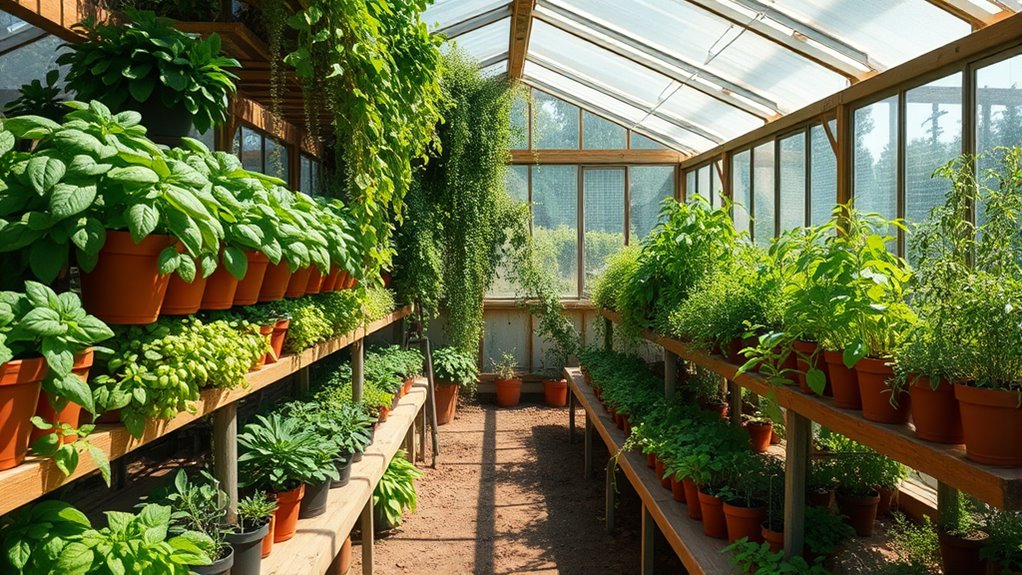
For herb greenhouse plans, I’d start with 6×12 DIY Greenhouse Plans as the best overall pick: its blueprints, material lists, and cut lists give builders a practical path from layout to construction. The Year-Round Solar Greenhouse stands out for growers focused on energy-conscious four-season use, while Greenhouse Gardening for Beginners offers broader support for readers who need growing guidance along with build advice. The main tradeoffs are plan detail versus flexibility, a compact footprint versus room to expand, and construction instructions versus advice on keeping herbs productive. Read on for the full breakdown and help matching each option to your space, skills, and growing goals.

Get garden gear delivered free with Prime
- Fast, free delivery on millions of items
- Prime Video, Amazon Music and more included
- Member-only deals all year
Complete the kit


Key Takeaways
- 6×12 DIY Greenhouse Plans offers the most concrete build aids in this group, including blueprints, material lists, and cut lists; its fixed footprint is less adaptable than general design books.
- The Year-Round Solar Greenhouse is the clearest fit for energy-conscious, year-round growing, but its specialized design focus may be more than a seasonal herb grower needs.
- Beginner-focused books such as Greenhouse Gardening for Beginners and Greenhouse Gardening Handbook for Beginners give more attention to growing knowledge than build-specific cut lists.
- DIY Barn Style Greenhouse suits readers drawn to a practical backyard structure, while How to Build Your Own Greenhouse leaves more room to tailor a design to a particular site.
- The comparison separates plans into three needs: detailed construction guidance, broad beginner education, and specialized design or flexibility; matching the book to the task matters more than choosing the broadest title.
| DIY Barn Style Greenhouse: Step-by-Step Building Plans for a Practical Backyard Greenhouse |  | Best for a Barn-Style Build | Resource type: Building-plan book | Greenhouse style: Barn style | Intended setting: Backyard | VIEW ON AMAZON | See Our Full Breakdown |
| Greenhouse Gardening for Beginners: Build Your Own Greenhouse and Grow Organic Vegetables, Fruits, Herbs, and Flowers Year-Round |  | Best for Beginner Growers | Resource type: Beginner greenhouse gardening guide | Build focus: Building a personal greenhouse | Crops covered: Vegetables, fruits, herbs, and flowers | VIEW ON AMAZON | See Our Full Breakdown |
| The Year-Round Solar Greenhouse: How to Design and Build a Net-Zero Energy Greenhouse |  | Best for Energy-Conscious Herb Growing | Resource type: Greenhouse design and construction book | Design focus: Solar greenhouse | Energy goal: Net-zero energy | VIEW ON AMAZON | See Our Full Breakdown |
| 6×12 DIY Greenhouse Plans: A Step-by-Step Guide to Building a Backyard Greenhouse with 3D Illustrations, Blueprints, Material Lists, and Cut Lists |  | Best for Detailed Construction Planning | Greenhouse size: 6 ft x 12 ft | Format: Digital guide (PDF/eBook) | Instructions: Step-by-step | VIEW ON AMAZON | See Our Full Breakdown |
| Greenhouse Gardening Handbook for Beginners |  | Best for Practical Growing Basics | Resource type: Beginner greenhouse gardening handbook | Plan focus: Budget-friendly building plans | Climate guidance: Simple climate-control tips | VIEW ON AMAZON | See Our Full Breakdown |
| Greenhouse Gardening: How to Build a Greenhouse and Grow Vegetables, Herbs and Fruit All Year-Round |  | Best for Year-Round Herb Growing | Format: Book | Series: Urban Homesteading | Primary subject: Greenhouse construction and gardening | VIEW ON AMAZON | See Our Full Breakdown |
| Portable Greenhouse or Garden Shed – $1500 |  | Best for a Portable DIY Structure | Product type: Building guide | Project options: Portable greenhouse or garden shed | Build time described: A few hours | VIEW ON AMAZON | See Our Full Breakdown |
| Building Your Own Greenhouse (Greenhouse Basics) |  | Best for Greenhouse-Building Beginners | Format: Book | Series: Greenhouse Basics | Primary subject: Greenhouse design and construction | VIEW ON AMAZON | See Our Full Breakdown |
| How to Build Your Own Greenhouse: Designs and Plans to Meet Your Growing Needs |  | Best for Customizable Build Plans | Format: Book | Primary subject: Building a greenhouse | Plan content: Designs and plans | VIEW ON AMAZON | See Our Full Breakdown |
More Details on Our Top Picks
DIY Barn Style Greenhouse: Step-by-Step Building Plans for a Practical Backyard Greenhouse
I’d choose this guide when the shape and practical backyard use of the greenhouse matter more than a tightly specified cut plan. Its step-by-step barn-style approach gives DIY builders a clear project direction, while the design is framed for everyday gardening rather than energy independence. Compared with 6×12 DIY Greenhouse Plans, it offers no stated dimensions, material list, or cut list, so I’d expect to do more planning and sourcing before construction. That flexibility can suit builders adapting a structure to their yard, but it also leaves more decisions to the reader. The main tradeoff is skill: the description calls for basic carpentry ability, and the missing material list makes this a weaker fit for someone who wants to buy lumber from a ready-made checklist.
Pros:- Step-by-step construction guidance
- Practical barn-style design for backyard gardening
- A project format suited to hands-on DIY builders
Cons:- No specific material list is provided
- Basic carpentry skills are required
- No greenhouse dimensions or cut-list details are specified
Best for: DIY gardeners who want a barn-style backyard greenhouse and are comfortable planning materials around their own site.
Not ideal for: First-time builders who need exact dimensions, a complete shopping list, or cut-by-cut guidance before starting.
- Resource type:Building-plan book
- Greenhouse style:Barn style
- Intended setting:Backyard
- Primary use:Gardening
- Instructions:Step-by-step building plans
- Skill guidance:Suitable for DIY enthusiasts; basic carpentry skills required
Our verdict“Pick this guide if you want a practical barn-style build and can fill in the material-planning details yourself.”
Greenhouse Gardening for Beginners: Build Your Own Greenhouse and Grow Organic Vegetables, Fruits, Herbs, and Flowers Year-Round
This guide is the most directly beginner-oriented choice here for someone who wants to connect a greenhouse build with a broader growing plan. It covers vegetables, fruits, herbs, and flowers, and its bonus ideas for extending the season add useful growing context beyond the structure itself. Compared with Greenhouse Gardening Handbook for Beginners, this title puts more explicit emphasis on building a personal greenhouse and year-round cultivation; the handbook, by contrast, calls out climate control and pest management. The tradeoff is limited construction detail in the supplied description: there are no stated material specifications, so readers must source tools and materials separately. I’d favor it for new gardeners who need a broad starting point, not builders who want a precise blueprint or a herb-only design.
Pros:- Beginner-friendly, step-by-step approach
- Covers herbs alongside vegetables, fruits, and flowers
- Includes bonus plans and ideas for extending the growing season
- Connects greenhouse building with year-round organic growing
Cons:- No specific greenhouse materials or product details are provided
- Readers need to obtain their own tools and construction materials
- The broad crop coverage may offer less focused herb-growing guidance
Best for: New gardeners planning their first greenhouse who want introductory build guidance alongside ideas for growing herbs and other crops across seasons.
Not ideal for: DIY builders seeking exact dimensions, a defined materials list, or construction plans tailored specifically to herbs.
- Resource type:Beginner greenhouse gardening guide
- Build focus:Building a personal greenhouse
- Crops covered:Vegetables, fruits, herbs, and flowers
- Growing approach:Organic gardening
- Seasonal focus:Year-round cultivation
- Additional content:Bonus plans and ideas for extending the growing season
- Materials information:No specific materials listed
Our verdict“Choose this as a broad first guide if you want beginner build direction and year-round growing ideas rather than a detailed construction blueprint.”
The Year-Round Solar Greenhouse: How to Design and Build a Net-Zero Energy Greenhouse
I’d rank this first for growers whose herb greenhouse plans need to account for energy use as well as construction. Its focus on solar design and net-zero energy sets it apart from the more general beginner guides, including Greenhouse Gardening for Beginners, which emphasizes a personal greenhouse and a range of crops without a stated net-zero goal. That distinction matters for year-round herb growing, where a design intended to manage energy can shape site, layout, and building choices. The tradeoff is that the supplied details do not identify dimensions, a materials list, or a specific beginner pathway. Its sustainable design focus may also involve more planning than the straightforward backyard framing of DIY Barn Style Greenhouse. I’d pick it for readers ready to weigh long-term energy performance, not those seeking the simplest build checklist.
Pros:- Dedicated focus on solar greenhouse design
- Addresses net-zero energy goals
- Covers year-round greenhouse use
- Includes practical construction and sustainable-practice guidance
Cons:- No specific dimensions or material list are stated
- The energy-focused design may call for more planning than a basic backyard build
- The supplied description does not specify how much guidance is aimed at first-time builders
Best for: Greenhouse planners who want to grow herbs through the year and are willing to prioritize solar design and energy efficiency.
Not ideal for: Beginners who need a simple, dimensioned backyard plan with a complete material and cut list.
- Resource type:Greenhouse design and construction book
- Design focus:Solar greenhouse
- Energy goal:Net-zero energy
- Use:Year-round greenhouse growing
- Topics:Design, construction, and sustainable practices
- Dimensions:Not specified in the supplied product data
- Materials list:Not specified in the supplied product data
Our verdict“Choose this guide if energy-conscious, year-round herb production matters more to you than a simple, ready-to-follow materials checklist.”
6×12 DIY Greenhouse Plans: A Step-by-Step Guide to Building a Backyard Greenhouse with 3D Illustrations, Blueprints, Material Lists, and Cut Lists
For a buyer who wants a defined footprint and fewer unanswered build questions, this is the strongest construction-planning option in the group. The 6-by-12-foot layout, blueprints, 3D illustrations, material list, and cut list give a builder a more concrete route from plan to purchasing than DIY Barn Style Greenhouse, which has no stated material list or dimensions. That specificity can make it easier to estimate whether the structure fits a backyard and organize a build around herb beds or shelving. The tradeoff is reduced flexibility: a fixed footprint may not suit every site, and this is a digital guide, not a greenhouse kit. It also assumes the reader can handle DIY construction, so I’d place it ahead of broader beginner books for plan detail, but not for hands-off simplicity.
Pros:- Defined 6-by-12-foot greenhouse footprint
- Includes blueprints and 3D illustrations
- Material and cut lists support more organized purchasing
- Step-by-step instructions guide the construction process
Cons:- Requires DIY construction skills
- Fixed dimensions may not fit every backyard
- Digital guide only; no physical greenhouse parts are included
Best for: DIY builders who have room for a 6-by-12-foot structure and want blueprints, material planning, and cut lists before purchasing supplies.
Not ideal for: Gardeners with a small or irregular site, or buyers who want a prebuilt greenhouse or a plan without construction work.
- Greenhouse size:6 ft x 12 ft
- Format:Digital guide (PDF/eBook)
- Instructions:Step-by-step
- Illustrations:3D illustrations
- Plans:Blueprints
- Materials support:Material list
- Cutting support:Cut lists
- Physical components:Not included
Our verdict“Choose this when its fixed footprint suits your yard and you want the most explicit construction and materials planning in this group.”
Greenhouse Gardening Handbook for Beginners
This handbook makes the most sense for beginners who care as much about keeping a greenhouse workable as they do about building one. The description pairs budget-conscious plans with climate-control tips, organic pest management, and time-saving methods—useful topics for keeping herbs healthy once the structure is in place. Compared with Greenhouse Gardening for Beginners, it places clearer emphasis on day-to-day management and pest control, while that guide more explicitly covers building a personal greenhouse and a broad mix of crops. Neither supplied description offers a defined size or materials list, but that gap is especially limiting here because the building plans lack stated technical detail. I’d treat this as a practical growing handbook rather than a blueprint source, and skip it if exact dimensions or construction specifications are your main need.
Pros:- Budget-conscious building-plan approach
- Includes simple climate-control tips
- Covers organic pest management
- Offers time-saving greenhouse gardening techniques
Cons:- No greenhouse size is specified
- Materials and technical construction details are not provided
- The description does not establish how detailed the building plans are
Best for: First-time greenhouse gardeners seeking accessible climate, organic pest-control, and routine-growing guidance alongside budget-minded plan ideas.
Not ideal for: Builders who need a measured herb greenhouse design, specific materials, or precise construction instructions.
- Resource type:Beginner greenhouse gardening handbook
- Plan focus:Budget-friendly building plans
- Climate guidance:Simple climate-control tips
- Pest management:Organic pest management solutions
- Growing approach:Year-round greenhouse gardening
- Additional guidance:Time-saving techniques
- Greenhouse size:Not specified in the supplied product data
- Materials:Not specified in the supplied product data
Our verdict“Pick this for beginner-friendly greenhouse care and budget-minded ideas, but choose a blueprint-focused guide if you need exact build specifications.”
Greenhouse Gardening: How to Build a Greenhouse and Grow Vegetables, Herbs and Fruit All Year-Round
For herb growers who want construction guidance alongside advice on what to grow, this book connects greenhouse building with year-round cultivation. Its coverage of vegetables, herbs, and fruit gives it a broader growing focus than Building Your Own Greenhouse (Greenhouse Basics), which centers on construction fundamentals. That range can help urban homesteaders plan a greenhouse that serves more than one crop or season, rather than treating the structure as the whole project. The tradeoff is that the supplied details do not identify specific blueprints, material lists, or greenhouse dimensions, so buyers seeking a build-ready plan may prefer How to Build Your Own Greenhouse: Designs and Plans to Meet Your Growing Needs. I’d pick this for readers who want growing guidance as well as a greenhouse starting point.
Pros:- Combines greenhouse construction guidance with crop-growing advice
- Covers herbs as well as vegetables and fruit
- Addresses growing throughout the year
- A fit for urban homesteading and mixed-crop planning
Cons:- The supplied product details do not confirm blueprints or material lists
- Its broad crop coverage may offer less herb-specific detail than a focused growing guide
Best for: Urban homesteaders who want one guide to cover greenhouse construction and year-round herbs alongside vegetables and fruit.
Not ideal for: DIY builders who need confirmed blueprints, cut lists, or precise dimensions before buying materials.
- Format:Book
- Series:Urban Homesteading
- Primary subject:Greenhouse construction and gardening
- Crops covered:Vegetables, herbs, and fruit
- Growing focus:Year-round cultivation
- Intended audience:Urban homesteaders
- ASIN:1731461275
Our verdict“Choose this if year-round herb cultivation matters as much as learning how to build the greenhouse itself.”
Portable Greenhouse or Garden Shed – $1500
This guide has a narrower, more hands-on promise than Greenhouse Gardening: How to Build a Greenhouse and Grow Vegetables, Herbs and Fruit All Year-Round: it focuses on building a portable greenhouse or garden shed, with a stated build time of a few hours and no kit. That makes it appealing to gardeners who want a flexible structure rather than a broad manual on crop care. The listing describes the project as a cost-effective solution, but supplies no dimensions, materials list, or construction method, so I would not treat the stated $1500 in the title as a complete budget guarantee. Assembly still takes time and effort, and the portable design may not suit someone planning a permanent, highly specified herb-growing space. I’d shortlist it for DIYers who value flexibility and can verify the plan’s details before starting.
Pros:- Offers a portable greenhouse or garden shed project
- Describes a build that can be completed in a few hours
- Does not require purchasing a kit
- Presents an alternative to a fixed greenhouse design
Cons:- Product details do not specify dimensions or construction materials
- Requires hands-on assembly time and effort
- The listed project budget is not supported by a supplied cost breakdown
Best for: DIY gardeners who want instructions for a portable greenhouse or shed and are prepared to check project details before buying materials.
Not ideal for: Growers who need confirmed dimensions, a complete materials list, or a permanent greenhouse plan tailored to herb production.
- Product type:Building guide
- Project options:Portable greenhouse or garden shed
- Build time described:A few hours
- Kit required:No
- Project budget stated in title:$1500
- Construction approach:DIY assembly
- ASIN:B0FTVJ23F6
Our verdict“Pick this for a flexible DIY structure, but confirm the plan’s dimensions and materials before committing to the build.”
Building Your Own Greenhouse (Greenhouse Basics)
For a first-time builder who wants to understand the basics of greenhouse design and construction, this book offers a fundamentals-first approach. Its practical tips and design ideas can help readers get oriented before choosing a structure for herbs. Compared with How to Build Your Own Greenhouse: Designs and Plans to Meet Your Growing Needs, however, the available description is less plan-led: it does not confirm detailed blueprints or included construction drawings. That distinction matters if a buyer wants to move directly from reading to cutting materials. The absence of detailed technical specifications also means readers may need another source for dimensions and build decisions. I’d choose this as an introductory guide, not as a stand-alone blueprint package; herb growers who already know the basics may get more from a book with explicit designs.
Pros:- Introduces fundamental greenhouse design and construction principles
- Includes practical building tips
- Offers design ideas for planning a growing space
- Suited to readers starting without much greenhouse-building knowledge
Cons:- The supplied description does not confirm included plans or blueprints
- Detailed technical specifications are not provided
- May not give experienced builders enough plan-level direction
Best for: First-time greenhouse builders who want practical introductory guidance before settling on a design for herbs.
Not ideal for: DIYers who need ready-to-use blueprints, detailed technical specifications, or a materials list.
- Format:Book
- Series:Greenhouse Basics
- Primary subject:Greenhouse design and construction
- Guidance level:Fundamental
- Includes practical tips:Yes, according to the product description
- Design ideas:Included
- ASIN:0811727750
Our verdict“Choose this for a beginner-friendly foundation, not when you need a complete construction plan for an herb greenhouse.”
How to Build Your Own Greenhouse: Designs and Plans to Meet Your Growing Needs
This is the most directly plan-oriented choice in this group: its description highlights greenhouse designs and plans intended to suit different growing needs. That makes it a stronger match for DIY herb growers who want to shape the structure around their available space than Building Your Own Greenhouse (Greenhouse Basics), whose listed emphasis is introductory guidance and design ideas. The description also points to multiple greenhouse styles and sizes, giving readers a basis for comparing possible builds. The tradeoff is that it does not name specific dimensions, materials lists, or herb-growing methods, so the word “plans” alone does not confirm every detail a builder may need. I’d favor this for readers choosing a custom structure, while those seeking year-round crop advice may prefer Greenhouse Gardening: How to Build a Greenhouse and Grow Vegetables, Herbs and Fruit All Year-Round.
Pros:- Product description emphasizes greenhouse designs and plans
- Addresses multiple greenhouse styles and sizes
- A practical fit for DIY enthusiasts
- Supports planning a structure around different growing needs
Cons:- Specific dimensions and materials lists are not identified in the supplied details
- The description does not confirm herb-specific cultivation guidance
- May require supplementary information before construction begins
Best for: DIY herb growers comparing greenhouse styles and sizes to fit a particular garden space or growing setup.
Not ideal for: Readers who need confirmed cut lists, precise dimensions, or year-round herb-care instruction in the same book.
- Format:Book
- Primary subject:Building a greenhouse
- Plan content:Designs and plans
- Design range:Various greenhouse styles and sizes
- Intended use:Customizing a growing space
- Intended audience:DIY enthusiasts
- ASIN:158017647X
Our verdict“Choose this if adaptable greenhouse plans matter more than beginner lessons or detailed year-round growing advice.”
How We Picked
I compared these nine titles as resources for planning a greenhouse that can support herbs, rather than treating every greenhouse book as an interchangeable set of plans. I gave more weight to clear construction aids—such as blueprints, material lists, cut lists, and step-by-step directions—when ranking options for readers ready to build. I also looked at whether a title helps beginners understand greenhouse growing, whether it addresses year-round operation or energy use, and how much room it appears to leave for adapting the design to a site.
The order reflects practical fit for an herb grower: specific build documentation and a usable backyard scale rank highly, while broad handbooks rank better for readers who need instruction before choosing a structure. Specialized solar guidance earns a distinct role, but not every buyer needs that level of design focus. Since titles alone do not establish exact construction details, costs, climate suitability, or herb-specific performance, I avoid treating those as proven features and recommend checking the contents and scope before committing.
Factors to Consider When Choosing Herb Greenhouse Plans
Before choosing a book, decide what job you need it to do: give you a build-ready plan, teach you greenhouse growing, or help you develop a design around your site. These resources vary widely in how much they commit to one structure and how much they leave for you to work out.
Choose Build Instructions or Growing Instruction First
A detailed construction plan and a growing handbook solve different problems, even when both mention herbs. If you already understand ventilation, watering, and seasonal care, prioritize drawings, dimensions, and a complete materials list. If you are new to greenhouse growing, a book that covers plant care may prevent a structure from being built before you know how you will manage it. A common mistake is buying a general gardening guide expecting a contractor-ready plan. Check the contents for actual diagrams, cut lists, and assembly steps, not just a promise to explain greenhouse building. If you need both kinds of help, expect to pair a construction-focused title with a separate growing resource.
Match the Footprint to Herbs and Your Site
Herbs can grow in beds, pots, or shelves, so the usable growing area matters more than the outside dimensions alone. Think through access paths, door clearance, and room to tend plants before choosing a plan size. A fixed 6×12 layout offers a defined starting point, but it may not suit a narrow yard or a space with awkward access. Smaller structures can be easier to place yet leave less room for airflow and future additions. Measure the site, note nearby walls and trees, and check local rules before settling on a footprint. Avoid planning only for the first season; include space for tools and plants at mature size.
Plan for Ventilation and Temperature Control
A greenhouse can heat up quickly, and many culinary herbs do poorly when conditions remain hot, humid, or stagnant. Look for plans that explain how air enters and exits, where vents sit, and how the structure can be shaded or opened. In cool weather, heat retention matters, but sealing the greenhouse too tightly can create moisture and disease problems. The right balance depends on local climate and whether the structure will be used through winter or mainly to extend spring and fall. A common planning error is treating glazing or insulation as the whole climate strategy. Before building, decide how you will manage hot days, cold nights, and periods when you cannot manually adjust the structure.
Check Materials and Construction Detail
Two plans with similar footprints can demand very different tools, skills, and sourcing. A material list and cut list help you estimate work and spot missing components before construction begins; general design advice may leave those calculations to you. Check whether the plan identifies framing, covering, fasteners, and the foundation or anchoring approach. If you are adapting dimensions, remember that changing spans or roof angles can affect strength and material use. Do not assume a book includes engineering guidance for heavy snow, strong wind, or unusual site conditions. When local weather is severe, seek plans or professional advice suited to those loads rather than improvising from a generic design.
Decide Whether Year-Round Growing Is Worth the Added Complexity
Growing herbs through winter may call for more than a greenhouse shell: light, heat storage, insulation, and ventilation all affect the design. Solar-focused guidance can help buyers who want to reduce reliance on conventional heating, but passive solar performance depends on orientation, glazing, climate, and available sun. A seasonal structure may be simpler to build and maintain if fresh herbs are only needed from spring through fall. Estimate your intended growing calendar before choosing a specialized design. One frequent mistake is equating “year-round” with low-maintenance; cold-season growing still requires planning and monitoring. Pay for more specialized guidance when winter production is a firm goal, not just a possibility.
Leave Room for Local Rules and Future Changes
Published plans cannot account for every property, local code, or site condition. Verify setback rules, permit requirements, drainage, utility access, and any restrictions on outbuildings before buying materials. Consider whether you may want to add shelving, a potting bench, irrigation, or extra ventilation later, since those choices influence layout and door placement. A flexible design guide can help when the site is unusual, while a defined plan can reduce decisions on a straightforward build. Be cautious about changing structural dimensions without understanding the effect on stability. Choosing a design with clear scope and room for planned upgrades can save rework later.
Frequently Asked Questions
Which option is the best starting point if I want a build-ready herb greenhouse?
I’d begin with 6×12 DIY Greenhouse Plans if its footprint suits your yard, because the title specifies blueprints, material lists, and cut lists alongside step-by-step guidance. Those tools can make it easier to plan purchases and organize construction than a broad greenhouse handbook. The tradeoff is that a defined size may not fit every site or growing layout. Check the plan contents for foundation, ventilation, and climate details before deciding it covers your needs. If you need a design adapted to an unusual space, compare it with a more flexible design-focused book.
Do I need a year-round greenhouse plan to grow herbs?
No: many growers can raise herbs seasonally or extend the growing season without designing for winter production. A year-round structure adds planning around cold, light, heat retention, and ventilation, so it can demand more work than a simple backyard greenhouse. The Year-Round Solar Greenhouse is the most directly aligned choice here if winter growing and energy-conscious design are central goals. For herbs used mainly in warmer months, a simpler build plan may be a better match. Decide how many months you expect to harvest before choosing a more specialized design.
Should I choose a beginner greenhouse book or a plans-focused title?
Choose based on the part of the project you find least familiar. A beginner book is useful when you need guidance on greenhouse growing and plant care, while a plans-focused title is a stronger starting point when you already know what you want to build. Greenhouse Gardening for Beginners combines a build-and-grow premise, while Greenhouse Gardening Handbook for Beginners signals a broader instructional role. Neither title alone guarantees the exact level of construction detail you need, so inspect the contents before buying. If both building and growing are new to you, plan to use more than one resource.
What should I check before adapting a greenhouse plan to my yard?
Start with site dimensions, access, drainage, sun exposure, and local rules for outbuildings. Then check whether changes to width, roof shape, or framing would affect the structure; resizing a plan is not always a simple matter of adding material. Confirm that the design addresses ventilation and the weather loads common in your area. A flexible title such as How to Build Your Own Greenhouse: Designs and Plans to Meet Your Growing Needs may suit a site that needs more tailoring, but you still need to verify the technical scope. For significant structural changes, seek locally appropriate plans or qualified advice.
Is a greenhouse shed plan a good choice for growing herbs?
It can be, if the structure gives plants enough usable light, ventilation, and room for tending—not just storage capacity. A shed-oriented design may suit someone who wants one space for gardening tasks and growing, but that combination can create compromises in layout and climate control. The listed Portable Greenhouse or Garden Shed is distinct from the book-length guides, so review its format and construction detail carefully before treating it as a complete plan. Check whether it explains anchoring, airflow, and the growing area rather than focusing mainly on the shed concept. If herbs are the priority, choose a structure whose plant-care conditions are clear.
Conclusion
For most readers ready to build, I recommend 6×12 DIY Greenhouse Plans as the best overall because its listed blueprints, material lists, and cut lists make the construction scope clearer. Best value in practical guidance goes to DIY Barn Style Greenhouse for a reader seeking a focused backyard build, though anyone needing detailed cut documentation should compare its contents with the 6×12 guide. For a best premium, specialized direction, choose The Year-Round Solar Greenhouse when energy-conscious winter growing is a real goal. Beginners should start with Greenhouse Gardening for Beginners if they need both build and growing context, or the Greenhouse Gardening Handbook for Beginners if a broader learning resource matters more than a fixed plan. For a site that needs a tailored design, consider How to Build Your Own Greenhouse: Designs and Plans to Meet Your Growing Needs; for a straightforward backyard structure, compare it with Building Your Own Greenhouse and the barn-style guide. Match the book to the work you need help with, then verify its plan detail against your site and climate.
Fall yard work Picks
leaf blowers
As an affiliate, we earn on qualifying purchases.