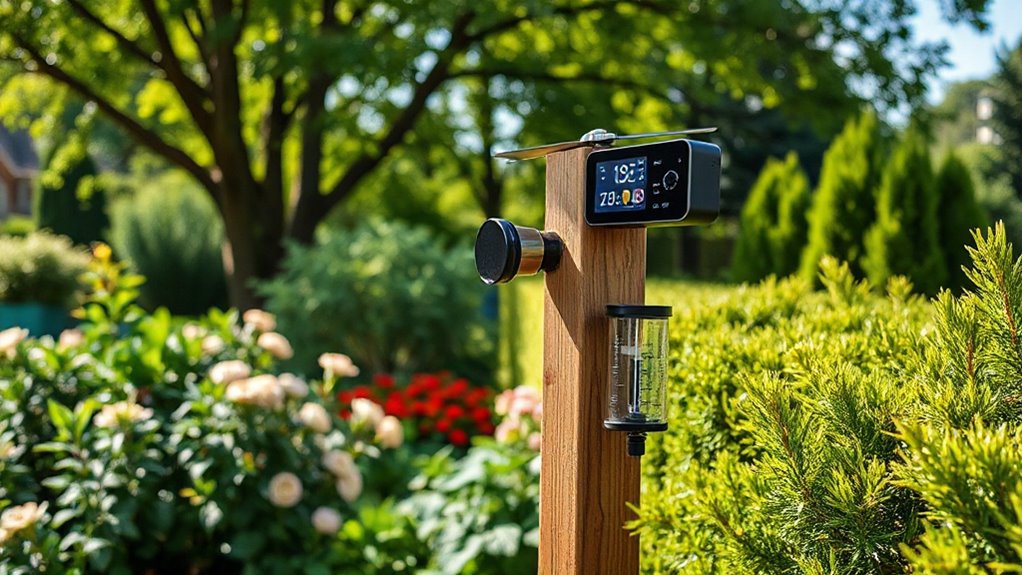

A home weather station for gardeners can help you track rainfall, wind, temperature, and humidity where your plants actually grow. My best overall pick is the Ambient Weather WS-2000, which balances broad monitoring with smart connectivity; the WS-5000 is the standout for buyers who want a more advanced sensor setup, while the Newentor is a simpler choice for basic indoor and outdoor temperature checks. The main tradeoff is between garden-relevant sensor coverage and ease of setup: rain and wind readings add useful context, but they require thoughtful placement and more upkeep than a basic thermometer. Wi-Fi can make readings easier to check remotely, though it may add setup and network dependencies. Read on for the full comparison and help matching a station to your garden.

Get garden gear delivered free — and shop member deals
- Fast, free delivery on millions of items
- Access to Prime Big Deal Days deals on October 6–7
- Prime Video, Amazon Music and more included
Complete the kit


Key Takeaways
The Ambient Weather WS-2000 is my best overall pick because it brings broad weather monitoring and smart connectivity together without the specialized ultrasonic approach of the WS-5000.
The WS-5000 stands apart for buyers prioritizing advanced wind measurement; its ultrasonic design avoids moving wind cups, but it may be more station than a small garden needs.
Wi-Fi separates remote-monitoring options from display-first models. The WS-2000, WS-2902, WS-1965, and several Sainlogic models suit gardeners who want readings beyond the home console.
Rain and wind data are more useful for garden decisions than a long feature list alone. Stations with rain gauges and wind readings can help explain watering needs and exposure, provided sensors are installed in an appropriate spot.
Simple temperature-focused stations still have a role. The Newentor, DreamSky, and several AcuRite options may suit gardeners who mainly want local indoor and outdoor temperature rather than a connected monitoring system.
| Weather Station Wireless 12-in-1 with Color Display, Rain Gauge, Wind Speed, Barometer, Forecast, and Alarm Clock for Home, Garden, Farm | 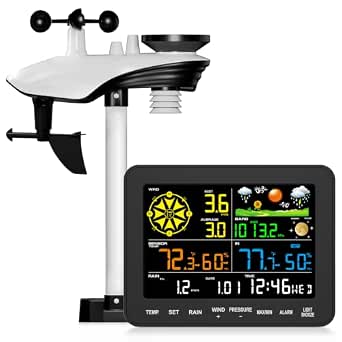 | Best for All-in-One Garden Monitoring | Display: 6.5-inch full-color HD | Power: Battery powered | Connectivity: Wireless | VIEW ON AMAZON | See Our Full Breakdown |
| Sainlogic 443FT Wireless Weather Station WiFi with Indoor Outdoor Sensor |  | Best for Data-Focused Gardeners | Sensor chip: Swiss sensor chip | Temperature precision: ±0.2°C | Humidity precision: ±1.8% | VIEW ON AMAZON | See Our Full Breakdown |
| Newentor Weather Station Wireless Indoor Outdoor Thermometer, Black, 1 Sensor |  | Best for Monitoring Multiple Garden Zones | Display: Color LCD | Included sensors: 1 remote sensor | Maximum supported sensors: 3 | VIEW ON AMAZON | See Our Full Breakdown |
| AcuRite Wireless Home Weather Station with Color Display, Indoor Outdoor Thermometer and Temperature Sensor |  | Best for Simple, At-a-Glance Forecasts | Display: Color LCD | Power: Outlet powered; requires 2 AA batteries | Connectivity: 433 MHz wireless | VIEW ON AMAZON | See Our Full Breakdown |
| Ambient Weather WS-2000 Smart Weather Station | 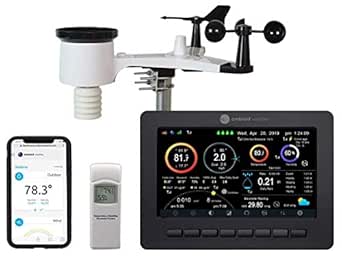 | Best for Full-Site Outdoor Measurements | Display: High definition | Power: 5V DC adapter for console; 3 AAA batteries for sensor array | Measurements: Wind speed and direction, temperature, humidity, rainfall, UV, and solar radiation | VIEW ON AMAZON | See Our Full Breakdown |
| Ambient Weather WS-5000 Ultrasonic Smart Weather Station |  | Best for Detailed Garden Monitoring | Sensor technology: Ultrasonic | Update interval: Every five seconds | Connectivity: Radio frequency; Alexa and Google Home compatible | VIEW ON AMAZON | See Our Full Breakdown |
| DreamSky Wireless Indoor Outdoor Weather Station with Atomic Clock and Large Color Display |  | Best for Beginners | Display: Large color LCD with adjustable backlight | Readings: Indoor and outdoor temperature and humidity; weather forecast | Clock: WWVB atomic clock with automatic daylight saving time | VIEW ON AMAZON | See Our Full Breakdown |
| Ambient Weather WS-2902 Wi-Fi Smart Weather Station |  | Best for Remote Garden Monitoring | Connectivity: Wi-Fi, 2.4 GHz | Measurements: Wind, temperature, humidity, rainfall, UV, and solar radiation | Display: LCD color display | VIEW ON AMAZON | See Our Full Breakdown |
| Sainlogic Smart Weather Station with WiFi and Rain Gauge |  | Best for Garden Data History | Connectivity: 5G/2.4G Wi-Fi and Bluetooth | Wireless range: Up to 443 feet | Data storage: Up to two years | VIEW ON AMAZON | See Our Full Breakdown |
| Sainlogic Wireless Home Weather Station with Rain Gauge and Wind Speed, Indoor/Outdoor Temperature and Humidity, Forecast, Moon Phase, Alarm Clock |  | Best for Beginners Who Want a Full Dashboard | Display: 7.5-inch color display with manual three-level backlight | Readings: Indoor/outdoor temperature and humidity, barometric pressure, wind speed, rainfall | Additional measurements: Dew point, feels-like temperature, and moon phase | VIEW ON AMAZON | See Our Full Breakdown |
| AcuRite Iris (01512MCB) Indoor/Outdoor Wireless Weather Station, Color Screen |  | Best for a Familiar, All-in-One Garden Dashboard | Display: Color LCD | Measurements: Indoor and outdoor temperature, humidity, wind speed, rainfall, and barometric pressure | Temperature accuracy: ±1.11°C | VIEW ON AMAZON | See Our Full Breakdown |
| Wireless Weather Station with 12-in-1 Home Weather Monitoring and 7.5″ HD Color Display |  | Best for a Large, Easy-to-Read Local Display | Display size: 7.5 inches | Display type: Color display | Temperature range: -40°C to 60°C | VIEW ON AMAZON | See Our Full Breakdown |
| Wireless Indoor Outdoor Weather Station 12-in-1 with Rain Gauge, Wind Speed, Barometer, Temperature, Humidity, Color Display, Forecaster, Alarm |  | Best Compact Pick for Garden Counters | Display: 6.5-inch HD LCD with adjustable backlight | Outdoor temperature range: -40°C to 60°C | Indoor temperature range: 0°C to 60°C | VIEW ON AMAZON | See Our Full Breakdown |
| Smart WiFi Weather Station with Rain Gauge, Indoor & Outdoor |  | Best for Remote Garden Monitoring | Display: 7.5-inch HD VA | Connectivity: 2.4GHz Wi-Fi | Maximum transmission range: 328 feet | VIEW ON AMAZON | See Our Full Breakdown |
| Ambient Weather WS-1965 Wi-Fi Weather Station |  | Best for Smart-Home Alerts and Sharing | Measurements: Temperature, humidity, barometric pressure, wind speed, wind direction, and rainfall | Temperature accuracy: ±1.11°C | Upper temperature range: 149°F | VIEW ON AMAZON | See Our Full Breakdown |
| home weather station for gardener | Display | Power | Connectivity | Temperature accuracy |
|---|---|---|---|---|
| Weather Station Wireless 12-in | 6.5-inch full-color HD | Battery powered | Wireless | — |
| Sainlogic 443FT Wireless Weath | — | — | — | — |
| Newentor Weather Station Wirel | Color LCD | DC adapter for always-on screen; battery backup with 15-second eco mode | — | ±1.8°F |
| AcuRite Wireless Home Weather | Color LCD | Outlet powered; requires 2 AA batteries | 433 MHz wireless | ±1.1°C |
| Ambient Weather WS-2000 Smart | High definition | 5V DC adapter for console; 3 AAA batteries for sensor array | Wi-Fi | ±2°F |
| Ambient Weather WS-5000 Ultras | TFT full-color LCD | Solar-powered; five AA batteries required | Radio frequency; Alexa and Google Home compatible | ±2 °F |
| DreamSky Wireless Indoor Outdo | Large color LCD with adjustable backlight | Corded electric; three AA batteries required for backup | — | ±1 °C |
| Ambient Weather WS-2902 Wi-Fi | LCD color display | Solar powered; three AAA batteries required | Wi-Fi, 2.4 GHz | ±1 °C |
| Sainlogic Smart Weather Statio | LCD with adjustable brightness | Battery powered; three AAA batteries required | 5G/2.4G Wi-Fi and Bluetooth | Specifications list 0.2 °C and ±1 °C |
| Sainlogic Wireless Home Weathe | 7.5-inch color display with manual three-level backlight | — | — | — |
| AcuRite Iris | Color LCD | Corded electric; 10 AA batteries required | — | ±1.11°C |
| Wireless Weather Station with | — | Three AA batteries required | Wireless; operates without internet | — |
| Wireless Indoor Outdoor Weathe | 6.5-inch HD LCD with adjustable backlight | Battery | — | — |
| Smart WiFi Weather Station wit | 7.5-inch HD VA | Solar powered or three AA batteries | 2.4GHz Wi-Fi | — |
| Ambient Weather WS-1965 Wi-Fi | Color LCD | Battery powered | Wi-Fi | ±1.11°C |
More Details on Our Top Picks
Weather Station Wireless 12-in-1 with Color Display, Rain Gauge, Wind Speed, Barometer, Forecast, and Alarm Clock for Home, Garden, Farm
For gardeners who want rain, wind, temperature, and humidity in one place, this 12-in-1 station prioritizes broad local coverage over app-based tracking. Its 6.5-inch color display puts several readings within easy view, while rainfall accuracy is specified as ±1 mm for light rain and ±7% for heavy rain—a useful distinction when deciding whether a bed needs supplemental watering. Compared with the Newentor, which focuses on indoor/outdoor readings and can support extra sensors, this model is better suited to watching conditions at one main garden site. The tradeoff is a battery-powered setup, so ongoing battery replacement may be part of ownership. Its bulky design can also be awkward in a small room, and the supplied information does not establish remote app access for checking conditions away from home.
Pros:- Combines rainfall, wind speed, temperature, and humidity readings in one station.
- 6.5-inch full-color HD display with adjustable backlight.
- Rainfall accuracy is specified separately for light and heavy rain.
- Wireless outdoor sensors avoid a wired connection to the display.
Cons:- Battery-powered operation may mean regular battery replacement.
- App or remote-access features are not clearly specified.
- The display may take up too much space in a small home.
Best for: Home gardeners and small-scale growers who want rain, wind, temperature, and humidity readings together at a central display.
Not ideal for: Gardeners who need remote phone access or want to monitor several separate growing zones; app capabilities are not specified, and the product information describes one wireless system.
- Display:6.5-inch full-color HD
- Power:Battery powered
- Connectivity:Wireless
- Temperature range:-40°C to 60°C
- Humidity range:10% to 99%
- Barometric pressure range:300–1100 hPa
- Rainfall accuracy:±1 mm for light rain; ±7% for heavy rain
- Material:ABS
Our verdict“Choose this station if you want a broad set of garden-weather readings on one display and do not need confirmed remote access.”
Sainlogic 443FT Wireless Weather Station WiFi with Indoor Outdoor Sensor
Gardeners who keep records across planting seasons may value this Sainlogic for its 24-month data storage and export options, rather than just a quick glance at today’s conditions. Its stated temperature precision of ±0.2°C and humidity precision of ±1.8% suit growers who track small changes around a greenhouse or sensitive plants. The 443-foot wireless range also offers more placement flexibility than the Newentor, whose product details emphasize additional sensors rather than a long stated range. Wi-Fi works on both 2.4G and 5G, with Bluetooth setup, but app configuration may take more effort than a simpler display-focused station such as the AcuRite. Export is limited to 30 days per file, so long-term storage does not mean every record can be downloaded in one batch. Its supplied description also focuses on temperature, humidity, and rain data, not a complete wind-and-solar monitoring package.
Pros:- Stores up to 24 months of data for reviewing seasonal patterns.
- Specified temperature precision of ±0.2°C and humidity precision of ±1.8%.
- Wireless sensor range is listed up to 443 feet.
- Supports 2.4G and 5G Wi-Fi, Bluetooth setup, and data export.
Cons:- Mobile-app setup may be complicated for buyers who prefer a simple console.
- Each data export file is limited to 30 days.
- The provided product details do not specify wind or solar radiation measurements.
Best for: Gardeners who keep weather logs for greenhouse management, irrigation decisions, or comparing conditions across growing seasons.
Not ideal for: Buyers who want a straightforward, screen-first station or a clearly specified wind and solar radiation package; app setup and the listed measurements may not fit those needs.
- Sensor chip:Swiss sensor chip
- Temperature precision:±0.2°C
- Humidity precision:±1.8%
- Wireless range:Up to 443 feet
- Wi-Fi compatibility:2.4G and 5G
- Rain measurement accuracy:±1 mm under 15 mm; ±7% over 15 mm
- Data storage:24 months
- Data export:Up to 30 days per file
Our verdict“Pick this Sainlogic if precise readings and long-term records matter more to your gardening routine than the simplest setup.”
Newentor Weather Station Wireless Indoor Outdoor Thermometer, Black, 1 Sensor
The Newentor makes the most sense for gardeners who want to compare a porch, greenhouse, or sheltered seedling area with indoor conditions. It includes one remote sensor and supports up to three, so buyers can expand zone monitoring later; by comparison, the AcuRite listing centers on a single outdoor sensor and a 12-hour forecast. Its color LCD, barometric-pressure-based forecast, and customizable alerts can help keep temperature changes visible without opening an app. That approach is simpler than the Wi-Fi and logging focus of the Sainlogic 443FT, though it offers less emphasis on precision data exports. The main limitation is measurement scope: the supplied details do not list a rain gauge or wind readings, both of which can matter for watering and plant protection. Only one sensor is included, and setup may take patience.
Pros:- Supports up to three remote sensors for monitoring separate zones.
- Displays indoor and outdoor temperature, humidity, forecast, and barometric pressure.
- Customizable alerts can flag changing conditions.
- Includes an atomic clock, dual alarms, and adjustable backlight.
Cons:- Only one remote sensor is included, so additional zones require more sensors.
- Rainfall and wind measurement are not listed in the supplied specifications.
- Setup may be complex for buyers seeking a quick, uncomplicated start.
Best for: Gardeners who want to compare temperatures and humidity in up to three indoor or outdoor growing areas.
Not ideal for: Growers who need measured rainfall, wind speed, or long-term cloud data logging; those capabilities are not specified for this station.
- Display:Color LCD
- Included sensors:1 remote sensor
- Maximum supported sensors:3
- Temperature accuracy:±1.8°F
- Upper temperature range:122°F
- Power:DC adapter for always-on screen; battery backup with 15-second eco mode
- Dimensions:1.18 × 8.03 × 5.12 inches
- Sensor technology:Radio wave and barometric pressure sensor
Our verdict“Choose the Newentor if monitoring several garden microclimates matters more than tracking rainfall or wind.”
AcuRite Wireless Home Weather Station with Color Display, Indoor Outdoor Thermometer and Temperature Sensor
AcuRite is the straightforward choice here for gardeners who want a local forecast and basic temperature and humidity readings without making Wi-Fi data management the center of the setup. Its self-calibrating 12-hour forecast gives a quick weather cue, while adjustable display dimming helps keep the console readable in different rooms. Compared with the Ambient Weather WS-2000, it is much less focused on measuring wind, UV, solar radiation, and rainfall; those omissions make it easier to treat as a home forecast station, but less useful for detailed field decisions. The stated temperature accuracy is ±1.1°C, and the sensor range is described as potentially limited. Power also takes planning: the console uses an outlet and two AA batteries, while the indoor temperature sensor needs a separate power source. Gardeners who need measured rain totals should choose a station with a specified rain gauge instead.
Pros:- Self-calibrating forecast looks 12 hours ahead.
- Color LCD display has adjustable dimming.
- Shows indoor and outdoor temperature, humidity, barometric pressure, and moon phase.
- Wireless sensor connection supports a simple installation.
Cons:- No rainfall measurement is listed for tracking garden water intake.
- Requires outlet power plus two AA batteries, and the indoor temperature sensor needs separate power.
- Wireless sensor range may be limited for larger properties.
Best for: Casual gardeners who want indoor/outdoor temperature, humidity, and a short-range local forecast displayed without a data-heavy workflow.
Not ideal for: Gardeners managing irrigation from measured rainfall or tracking wind, UV, and solar exposure; those readings are not specified here.
- Display:Color LCD
- Power:Outlet powered; requires 2 AA batteries
- Connectivity:433 MHz wireless
- Temperature accuracy:±1.1°C
- Upper temperature range:70°C
- Additional features:Self-calibrating technology
- Dimensions:1.6 × 4.5 × 6.6 inches
- Materials:Glass, metal, and plastic
Our verdict“Choose the AcuRite for an easy household forecast and basic garden-adjacent readings, not for detailed outdoor measurement.”
Ambient Weather WS-2000 Smart Weather Station
For gardeners making decisions from more than temperature and rain, the WS-2000 has the broadest specified outdoor measurement set in this group: wind speed and direction, rainfall, UV, and solar radiation, alongside temperature and humidity. That makes it a stronger fit for evaluating exposure, wind stress, and changing conditions around a yard than the Newentor or AcuRite, whose listed features center on indoor/outdoor readings and forecasts. Wi-Fi adds remote data access, and the console accepts imperial or metric units. The tradeoff is a more involved setup: its wireless sensor array uses three AAA batteries that are not included, and the product notes that configuration can be complex. Its high-definition display is also described as small for detailed viewing. Compared with the data-focused Sainlogic, the WS-2000 offers more listed environmental measurements, while Sainlogic gives clearer long-term storage and precision figures.
Pros:- Measures wind speed and direction, temperature, humidity, rainfall, UV, and solar radiation.
- Wi-Fi supports remote data access.
- Wireless sensor array avoids a wired outdoor connection.
- Supports imperial and metric units.
Cons:- Sensor array requires three AAA batteries, which are not included.
- Setup may be complex for buyers unfamiliar with connected weather equipment.
- Display may feel small when reviewing multiple readings.
Best for: Gardeners with a yard or growing area who want wind, rain, UV, and solar readings plus Wi-Fi access to local conditions.
Not ideal for: Buyers who want a compact, simple console or prioritize specified precision and long-term data export over a broad set of outdoor measurements.
- Display:High definition
- Power:5V DC adapter for console; 3 AAA batteries for sensor array
- Measurements:Wind speed and direction, temperature, humidity, rainfall, UV, and solar radiation
- Connectivity:Wi-Fi
- Temperature accuracy:±2°F
- Sensor technology:RFID
- Frequency:915 MHz
- Units:Imperial and metric
Our verdict“Choose the WS-2000 if your garden decisions depend on a wide range of outdoor readings and Wi-Fi access.”
Ambient Weather WS-5000 Ultrasonic Smart Weather Station
I’d choose the WS-5000 when garden decisions call for frequent updates and a broad view of local conditions. Its ultrasonic sensor array reports every five seconds, and the included rain cup and thermo-hygrometer-barometer help track rainfall and ambient conditions alongside the display. Solar power and Alexa and Google Home compatibility add convenience for gardeners who want data beyond the console. Compared with the Ambient Weather WS-2902, this model’s standout distinction is ultrasonic sensing; the WS-2902 is the clearer fit for buyers prioritizing Wi-Fi access and a listed set of UV and solar-radiation measurements. The WS-5000 still offers wireless connectivity, but its specifications don’t identify Wi-Fi, and setup may take more effort than a basic station. Its five required AA batteries also add upkeep.
Pros:- Updates weather readings every five seconds for close tracking of changing garden conditions.
- Ultrasonic sensor array and included rain cup support broad outdoor monitoring.
- Solar-powered sensor setup reduces reliance on conventional power for the outdoor array.
- Compatible with Alexa and Google Home, with a full-color TFT LCD console.
Cons:- Requires five AA batteries, adding replacement upkeep.
- Wireless connectivity is listed, but Wi-Fi is not specified, limiting clarity for buyers seeking app-based remote access.
- Setup may feel involved for gardeners who only need basic temperature and rainfall readings.
Best for: Gardeners who want frequent local readings, a full-color console, and smart-home voice compatibility for monitoring conditions around a well-equipped home garden.
Not ideal for: Gardeners who need clearly specified Wi-Fi remote access, UV and solar-radiation readings, or a low-maintenance starter station; the WS-2902 better matches those stated data and connectivity needs.
- Sensor technology:Ultrasonic
- Update interval:Every five seconds
- Connectivity:Radio frequency; Alexa and Google Home compatible
- Display:TFT full-color LCD
- Power:Solar-powered; five AA batteries required
- Temperature accuracy:±2 °F
- Included components:Ultrasonic sensor array, rain cup, indoor/outdoor thermo-hygrometer-barometer, wireless sensor array, solar panel
Our verdict“Choose the WS-5000 for frequent, sensor-rich garden monitoring and smart-home compatibility, but pick the WS-2902 if Wi-Fi access and UV data matter more.”
DreamSky Wireless Indoor Outdoor Weather Station with Atomic Clock and Large Color Display
The DreamSky is the approachable choice here for gardeners who mainly want an easy-to-read indoor console and a quick check of outdoor temperature and humidity. Its large adjustable-backlight display, atomic clock, and customizable temperature alerts make routine checks straightforward, while max/min records can help flag swings that affect seedlings or sensitive plants. Compared with the Sainlogic Wireless Home Weather Station, DreamSky has a simpler monitoring focus: Sainlogic lists rainfall, wind, pressure, dew point, and other garden-relevant readings, while DreamSky concentrates on temperature, humidity, and forecasts. That simplicity is also its limitation. Only one outdoor sensor is included, and the listed features don’t provide a rain gauge or wind readings, so it won’t answer how much water fell or whether wind exposure is a problem. Battery backup requires three AA batteries, not included.
Pros:- Large color display has an adjustable backlight for easier reading in different room conditions.
- WWVB atomic clock automatically adjusts for daylight saving time.
- Customizable temperature alerts and max/min records help flag temperature changes.
- Supports multiple outdoor sensors for monitoring additional locations.
Cons:- Only one outdoor sensor is included, so additional monitoring points require extra sensors.
- No rain gauge or wind measurement is listed for garden-specific tracking.
- Three AA batteries for backup are not included.
Best for: New gardeners who want a readable console for indoor and outdoor temperature, humidity, forecast information, and temperature alerts without a broad set of weather instruments.
Not ideal for: Gardeners tracking rainfall, wind, or several separate growing areas; the Sainlogic Wireless Home Weather Station lists a wider range of outdoor measurements.
- Display:Large color LCD with adjustable backlight
- Readings:Indoor and outdoor temperature and humidity; weather forecast
- Clock:WWVB atomic clock with automatic daylight saving time
- Alerts and records:Customizable temperature alerts; max/min temperature and humidity records
- Outdoor sensors:One included; supports multiple sensors
- Temperature accuracy:±1 °C
- Power:Corded electric; three AA batteries required for backup
Our verdict“Pick DreamSky for clear, simple temperature and humidity checks, but choose the Sainlogic wireless model if rainfall and wind data are part of your gardening routine.”
Ambient Weather WS-2902 Wi-Fi Smart Weather Station
For gardeners who want to check conditions away from home, the WS-2902 makes the strongest case in this group: it combines Wi-Fi, remote monitoring, customizable alerts, and readings for rainfall, wind, UV, and solar radiation alongside temperature and humidity. Those measurements can help explain whether a dry bed needs watering or whether intense sun and wind are stressing plants. Compared with the WS-5000, the WS-2902 spells out Wi-Fi and a broader named set of garden-relevant measurements, while the WS-5000 offers five-second updates and an ultrasonic sensor array. The WS-2902 is solar powered, but it still requires three AAA batteries, and its setup may take patience. Its feature breadth may also be more than casual gardeners need; those seeking a simple local display can avoid the extra connectivity and configuration.
Pros:- Wi-Fi supports remote monitoring and customizable alerts.
- Measures rainfall, wind, temperature, humidity, UV, and solar radiation.
- Solar-powered station supports outdoor operation.
- Compatible with Alexa and Google Home.
Cons:- Setup may be complex for buyers unfamiliar with connecting weather devices to Wi-Fi.
- Requires three AAA batteries, which need replacement over time.
- Its broad feature set may add unnecessary complexity for gardeners who only need basic readings.
Best for: Gardeners who want to check rainfall, wind, UV, and solar-radiation conditions remotely and receive alerts through a Wi-Fi-connected setup.
Not ideal for: Casual gardeners who only need nearby temperature and humidity readings, or buyers who prefer a straightforward station without Wi-Fi configuration.
- Connectivity:Wi-Fi, 2.4 GHz
- Measurements:Wind, temperature, humidity, rainfall, UV, and solar radiation
- Display:LCD color display
- Power:Solar powered; three AAA batteries required
- Temperature accuracy:±1 °C
- Alerts:Customizable alerts
- Smart-home compatibility:Alexa and Google Home
- Warranty:One year
Our verdict“Choose the WS-2902 for Wi-Fi access and a broad set of garden-condition readings, while the WS-5000 is a better match for buyers who prioritize its ultrasonic array and rapid updates.”
Sainlogic Smart Weather Station with WiFi and Rain Gauge
The Sainlogic Smart Weather Station suits gardeners who want more than today’s readings: it stores up to two years of weather data and offers historical analysis through a mobile app. That record can help compare rainfall and temperature patterns across growing seasons, while the stated 443-foot wireless range gives more flexibility for sensor placement on a larger property. It also provides a rain gauge and indoor/outdoor temperature and humidity readings. Compared with the Ambient Weather WS-2902, Sainlogic emphasizes stored history and long-range placement; the WS-2902 explicitly lists wind, UV, and solar-radiation measurements, making it a stronger choice for those specific exposures. Sainlogic’s battery details deserve attention: the listing says battery life is 24 hours, which could mean frequent power management, and setup offers many configuration options. Its stated temperature accuracy also varies between 0.2 °C and ±1 °C across the supplied specifications.
Pros:- Stores up to two years of weather data for seasonal comparisons.
- Mobile app provides historical analysis and remote access.
- Wireless range is listed up to 443 feet for flexible sensor placement.
- Includes a rain gauge and indoor/outdoor temperature and humidity monitoring.
Cons:- Listed battery life is only 24 hours, which may require frequent power management.
- Temperature accuracy specifications conflict: the data lists both 0.2 °C and ±1 °C.
- Extensive configuration options may make setup less approachable.
Best for: Gardeners with a larger property who want app-based historical records to compare local weather and rainfall patterns over multiple seasons.
Not ideal for: Gardeners who need clearly specified wind, UV, or solar-radiation readings, or who want unambiguous battery-life and accuracy specifications before buying.
- Connectivity:5G/2.4G Wi-Fi and Bluetooth
- Wireless range:Up to 443 feet
- Data storage:Up to two years
- Readings:Indoor/outdoor temperature and humidity; rainfall
- Temperature accuracy:Specifications list 0.2 °C and ±1 °C
- Display:LCD with adjustable brightness
- Power:Battery powered; three AAA batteries required
- Listed battery life:24 hours
Our verdict“Choose Sainlogic for long-range placement and multi-season app records, but favor the WS-2902 if wind, UV, and solar-radiation readings are priorities.”
Sainlogic Wireless Home Weather Station with Rain Gauge and Wind Speed, Indoor/Outdoor Temperature and Humidity, Forecast, Moon Phase, Alarm Clock
This Sainlogic is a strong fit for gardeners who want a large, local weather dashboard without relying on an app. Its 7.5-inch color display brings together rainfall, wind speed, temperature, humidity, and barometric pressure, while dew point and feels-like readings add context when planning outdoor work. The listed rain-gauge accuracy gives buyers a clearer basis for tracking rainfall than the DreamSky station, which focuses on temperature and humidity but does not list a rain gauge. Compared with the Wi-Fi-enabled Ambient Weather WS-2902, this model trades remote access and named UV/solar-radiation measurements for a direct console and straightforward wireless sensor connection. That makes it less useful for checking conditions away from home. It also runs on three AA batteries, not included, and manual setup may take some patience despite its beginner-friendly dashboard.
Pros:- Large 7.5-inch color display presents a broad set of readings in one place.
- Rain gauge has stated accuracy of ±1 mm below 15 mm and ±7% from 15–9999 mm.
- Includes wind speed, barometric pressure, dew point, and feels-like temperature.
- Wireless sensors allow monitoring without a wired outdoor connection.
Cons:- No Wi-Fi connectivity or internet-based remote access is listed.
- Requires three AA batteries, which are not included.
- Manual setup may challenge buyers expecting a fully automatic installation.
Best for: Gardeners who want a large console for local rainfall, wind, temperature, humidity, and pressure readings without needing app-based remote access.
Not ideal for: Gardeners who need phone access while away, want UV or solar-radiation readings, or prefer a station that avoids manual setup.
- Display:7.5-inch color display with manual three-level backlight
- Readings:Indoor/outdoor temperature and humidity, barometric pressure, wind speed, rainfall
- Additional measurements:Dew point, feels-like temperature, and moon phase
- Indoor temperature range:0 °C to 60 °C
- Outdoor temperature range:-40 °C to 60 °C
- Humidity range:10%–99%
- Rain-gauge accuracy:±1 mm below 15 mm; ±7% from 15–9999 mm
- Connectivity and power:Radio-frequency wireless; three AA batteries required
Our verdict“Pick this Sainlogic for a readable, feature-rich console at home, but choose the WS-2902 if remote Wi-Fi access or UV and solar-radiation data matter.”
AcuRite Iris (01512MCB) Indoor/Outdoor Wireless Weather Station, Color Screen
The AcuRite Iris makes sense for gardeners who want wind, rainfall, temperature, humidity, and pressure together on a dedicated indoor screen, without relying on internet access. Its large color LCD also combines readings with a clock and forecast, making it a more complete household dashboard than the compact Wireless Indoor Outdoor Weather Station 12-in-1. For garden decisions, the range of measurements can help you check local conditions rather than relying only on a general forecast. The tradeoff is setup and power: this model calls for 10 AA batteries, and its forecast may take time to calibrate. Compared with the Smart WiFi Weather Station, it lacks phone-based remote monitoring, but suits buyers who prefer local readings and do not need an app.
Pros:- Tracks temperature, humidity, wind speed, rainfall, and barometric pressure
- Large color LCD includes clock and forecast information
- Wireless sensors allow flexible placement
- Pre-calibrated forecasting technology can build a local outlook over time
Cons:- Requires 10 AA batteries, which are not included
- Setup may take more effort than simpler indoor-outdoor stations
- Forecast reliability may improve only after the station has had time to calibrate
Best for: Gardeners who want a dedicated, readable indoor display for several local weather measurements without depending on Wi-Fi.
Not ideal for: Buyers who want app access, minimal battery changes, or the simplest possible setup.
- Display:Color LCD
- Measurements:Indoor and outdoor temperature, humidity, wind speed, rainfall, and barometric pressure
- Temperature accuracy:±1.11°C
- Upper temperature range:120°F
- Sensor technology:Radio frequency
- Power:Corded electric; 10 AA batteries required
- Battery life:1000 hours
- Dimensions:2.63 × 8.13 × 6.75 inches
Our verdict“Choose the AcuRite Iris if you want broad local readings on a dedicated screen and can accept a more involved setup and battery needs.”
Wireless Weather Station with 12-in-1 Home Weather Monitoring and 7.5″ HD Color Display
When garden checks happen from across the room, the 7.5-inch color display is the main reason to choose this 12-in-1 station. It presents a wide set of local readings, including temperature, humidity, wind, rainfall, and pressure, while its stated rain-gauge accuracy gives gardeners useful context for recent precipitation. Unlike the Smart WiFi Weather Station with Rain Gauge, this model is described as working without internet, so it keeps the experience focused on the console rather than remote app access. That simplicity has a limit: its wireless range is local, and the listed battery life is just 24 hours, a substantial drawback for anyone expecting long stretches between changes. It is a stronger fit for screen-first buyers than for gardeners who need remote monitoring or low-maintenance power.
Pros:- Large 7.5-inch color display with adjustable brightness
- Combines temperature, humidity, wind, rainfall, and barometric pressure readings
- Rain-gauge accuracy is specified for both lower and higher rainfall totals
- Works without an internet connection
Cons:- Listed battery life is only 24 hours
- Local wireless monitoring does not provide internet-based remote access
- Requires three AA batteries
Best for: Gardeners who want a large, high-contrast console at home and prefer local readings over phone or cloud access.
Not ideal for: People who need dependable remote access or a station that can run for long periods without battery replacement.
- Display size:7.5 inches
- Display type:Color display
- Temperature range:-40°C to 60°C
- Humidity range:10% to 99%
- Barometric pressure range:300–1100 hPa
- Rain-gauge accuracy:±1 mm under 15 mm; ±7% from 15–9999 mm
- Power:Three AA batteries required
- Connectivity:Wireless; operates without internet
- Listed battery life:24 hours
Our verdict“Pick this model for a large at-home weather display, but skip it if remote access or long battery life is a priority.”
Wireless Indoor Outdoor Weather Station 12-in-1 with Rain Gauge, Wind Speed, Barometer, Temperature, Humidity, Color Display, Forecaster, Alarm
This 12-in-1 station is the compact-screen choice in this group: its 6.5-inch display and stated dimensions suit a crowded counter or smaller room better than the 7.5-inch Wireless Weather Station with 12-in-1 Home Weather Monitoring. Gardeners still get the measurements that matter for day-to-day checks, including rainfall, wind, temperature, humidity, and pressure. The rain-gauge accuracy figures are useful on paper, though the description does not provide the same expansive screen area as the larger-display alternative. An adjustable backlight can help with readability, but the display may still feel small to people who want to read readings from a distance. Battery operation avoids dependence on a wall outlet, while bringing ongoing battery replacement and a somewhat technical setup into the bargain.
Pros:- Smaller 6.5-inch display suits limited counter space
- Rain-gauge accuracy is specified across a broad measurement range
- Adjustable backlight helps adapt the screen to room conditions
- Monitors wind, rainfall, temperature, humidity, pressure, and moon phase
Cons:- Display may be difficult to read for people with visual impairments
- Battery operation may require frequent replacements
- Setup may feel technical to first-time weather-station owners
Best for: Gardeners with limited indoor space who want rain and wind readings on a smaller dedicated display.
Not ideal for: Buyers who need large, distant-readable numbers or prefer a straightforward setup with less technical configuration.
- Display:6.5-inch HD LCD with adjustable backlight
- Outdoor temperature range:-40°C to 60°C
- Indoor temperature range:0°C to 60°C
- Barometer range:300–1100 hPa
- Rain-gauge accuracy:±1 mm up to 15 mm; ±7% from 15–9999 mm
- Power:Battery
- Materials:ABS
- Dimensions:1 × 6.7 × 5.2 inches
Our verdict“Choose this compact 12-in-1 if space matters more than a large screen and you are comfortable with battery-powered setup.”
Smart WiFi Weather Station with Rain Gauge, Indoor & Outdoor
The Smart WiFi Weather Station stands apart from the local-display models by sending weather information to a smartphone app. That is useful when you want to check garden conditions away from home, while its 7.5-inch HD VA screen still provides a substantial console for quick indoor checks. Solar power can reduce battery dependence, and support for up to three additional sensors offers a way to monitor more locations than the compact 12-in-1 Wireless Indoor Outdoor Weather Station. The tradeoff is that remote features rely on the right connection: Wi-Fi is limited to 2.4GHz, and Wi-Fi cannot operate when the station runs solely on batteries. Gardeners seeking a no-network setup should favor the Wireless Weather Station with 12-in-1 Home Weather Monitoring instead.
Pros:- Smartphone app supports remote weather monitoring
- Large 7.5-inch HD VA display has adjustable brightness
- Supports up to three additional sensors for expanded coverage
- Solar power option can reduce reliance on batteries
Cons:- Wi-Fi is limited to 2.4GHz and may require specific network settings
- Wi-Fi does not work when powered solely by batteries
- Three AA batteries are not included
Best for: Gardeners who want to check conditions remotely and may add sensors for separate growing areas.
Not ideal for: Buyers without a compatible 2.4GHz Wi-Fi network or those who expect app access while powering the unit only by batteries.
- Display:7.5-inch HD VA
- Connectivity:2.4GHz Wi-Fi
- Maximum transmission range:328 feet
- Additional sensor support:Up to 3 sensors
- Power:Solar powered or three AA batteries
- Additional readings:UV index, air pressure, wind speed and direction, and rainfall
- Materials:ABS
Our verdict“Choose this station if remote app access and sensor expansion matter more than a simple, internet-free setup.”
Ambient Weather WS-1965 Wi-Fi Weather Station
The Ambient Weather WS-1965 is the choice here for gardeners who want weather data to connect with a broader digital routine. It measures rainfall, wind direction and speed, temperature, humidity, and pressure, while Wi-Fi alerts and smart-home integration can make changing conditions easier to track away from the console. Community sharing through the Ambient Weather Network adds a layer that the AcuRite Iris does not offer. The station’s all-in-one sensor array keeps the included hardware focused, but its feature set depends on Wi-Fi and internet access; it is less suitable than the offline Wireless Weather Station with 12-in-1 Home Weather Monitoring for a network-free garden. The supplied description also flags occasional connectivity issues, so buyers should weigh remote convenience against dependence on a stable connection.
Pros:- Tracks rainfall, wind speed and direction, temperature, humidity, and barometric pressure
- Wi-Fi enables remote monitoring and customizable alerts
- Integrates with Alexa and Google Home
- Supports sharing through the Ambient Weather Network
Cons:- Remote features require Wi-Fi and an internet connection
- Connectivity issues are reported in the supplied product information
- The stated 1.85 kg weight and dimensions may make placement less convenient in small spaces
Best for: Gardeners who want remote alerts, smart-home integration, and the option to share local weather data.
Not ideal for: People who need an offline-first station or do not want weather monitoring tied to Wi-Fi and internet service.
- Measurements:Temperature, humidity, barometric pressure, wind speed, wind direction, and rainfall
- Temperature accuracy:±1.11°C
- Upper temperature range:149°F
- Connectivity:Wi-Fi
- Sensor technology:Multi-parameter sensor array
- Frequency:915 MHz
- Display:Color LCD
- Power:Battery powered
- Included components:All-in-one sensor array and color LCD display
Our verdict“Choose the WS-1965 if connected alerts and data sharing suit your gardening routine, but favor an offline model if you want fewer network dependencies.”
How We Picked
I ranked these stations by how well their stated capabilities support real garden decisions: tracking rainfall, temperature, humidity, wind, and changing conditions near plants. I gave more weight to useful outdoor measurements and accessible readings than to feature counts alone. Connectivity mattered for gardeners who want to check conditions away from the console, while straightforward displays and simpler sensor setups counted in favor of beginner-friendly picks.
The order also reflects tradeoffs in setup, flexibility, and intended use. Broadly equipped smart stations lead because they can serve more garden tasks, while specialized or simpler models rank higher for buyers with a clear need, such as advanced wind tracking or basic temperature checks. Product names and listed features do not establish measurement accuracy or long-term durability, so I avoid treating unverified performance claims as fact; buyers should confirm sensor placement requirements, compatibility, and current specifications before choosing.
Factors to Consider When Choosing Home Weather Station For Gardeners
Choosing a station for gardening is less about collecting the most readings and more about matching measurements to the decisions you make outdoors. I would start with the garden’s exposure, the information you need, and how you plan to check it—not with the number of features on the box.
Choose Measurements That Change What You Do
Rainfall, temperature, humidity, and wind answer different garden questions. A rain gauge can help you judge whether a recent shower reached your beds, while temperature readings can flag cold conditions and wind data can explain drying or plant stress. A station that lists many measurements may still leave out the one you need most, so match the specification list to your routine. If you water by soil feel and only want frost-related alerts, a simpler temperature-focused unit may be sufficient. For a larger or exposed plot, rain and wind readings may justify a more capable station. Avoid paying for a feature simply because it sounds advanced if you have no plan to use its readings.
Plan Sensor Placement Before You Buy
A weather station reports conditions at its sensor, not across every bed in the garden. Buildings, fences, trees, paving, and irrigation can influence readings, particularly for wind and rain. Before selecting a model, identify a location with suitable exposure and enough room to mount the outdoor sensor as its instructions require. A sheltered position may reflect conditions around a patio rather than the open vegetable plot, while a spot under branches can distort rainfall collection. Large gardens with distinct microclimates may need more than one measurement point; a single station cannot represent every corner. Check mounting needs and sensor range in advance rather than assuming the console location determines outdoor coverage.
Decide Whether Wi-Fi Is Worth the Setup
Wi-Fi is useful when you want to check conditions away from the station or view readings through a connected service. It can also add steps: network setup, app or account requirements, and dependence on a working connection may shape daily use. A display-first station can be the better fit if the console will stay in the kitchen or greenhouse and you mainly want a quick local reading. Before choosing a connected model, confirm what its app or service supports and whether the station needs a particular network band or ongoing account access. Do not assume that the word “smart” means every reading is available remotely. For a garden where connectivity is unreliable, a clear console can be more dependable for day-to-day checks.
Treat Sensor Range as a Site-Specific Question
Wireless range claims are usually measured under favorable conditions, while real gardens contain walls, sheds, trees, and other obstacles. The effective distance from outdoor sensor to console may be shorter at your property. Think through the route between the proposed mounting spot and the display, including exterior walls and any changes in elevation. If you want the console indoors but the sensor at the far end of a plot, range deserves more attention than the display size. Check whether the manufacturer offers compatible repeaters or additional sensors before relying on expansion later. A closer sensor location that still captures representative garden conditions may be a better answer than stretching a signal to the limit.
Account for Maintenance and Seasonal Exposure
Outdoor sensors face rain, wind, dust, insects, and seasonal temperature swings, so routine checks are part of ownership. Rain gauges may need clearing, and batteries or power arrangements can affect how often you visit the equipment. A station with moving parts may call for different care than an ultrasonic wind sensor, though neither design removes the need to inspect outdoor equipment. Consider whether you can reach the mounting point safely to clean or service it. Also check the stated operating conditions and replacement-part availability rather than assuming every sensor will suit harsh exposure. A station that is easy to maintain is more likely to keep providing useful garden records over time.
Pay for Coverage, Not Feature Count
More sensors and connected tools can make sense when you manage several beds, grow weather-sensitive plants, or want a detailed record of local conditions. For a small garden, a simpler station may answer the questions that guide watering and frost protection with less setup. Compare the cost of the whole system you need, including any extra sensors, mounting hardware, batteries, and connectivity requirements. A premium model is most defensible when its particular measurement method or monitoring features solve a problem the simpler choices do not. If you are new to home weather tracking, begin with a station whose readings you can interpret and use. Extra data only helps when it leads to a clearer decision.
Frequently Asked Questions
Do I need a Wi-Fi weather station to make better garden decisions?
No. Wi-Fi helps if you want to check readings remotely or keep a connected record, but a local console can be enough for a gardener who checks conditions at home. A rain gauge and outdoor temperature reading may be more useful than connectivity if your main decisions involve watering or cold protection. Connected stations can depend on network setup, apps, or online services, so check what remains available if the connection drops. Choose Wi-Fi for access and recordkeeping, not as a substitute for the measurements your garden needs.
Can one weather station represent conditions across a large garden?
Usually, one station represents conditions at its sensor location rather than every bed on a property. A sunny raised bed, a shaded greenhouse, and an exposed lawn can have noticeably different conditions. Place the outdoor sensor where it gives a useful reference for your main growing area, following the manufacturer’s guidance. If you manage distinct microclimates, consider whether compatible extra sensors are available or use separate observations for the other areas. Avoid treating a single reading as a precise description of the whole garden.
Should I choose an ultrasonic wind sensor over a station with moving cups?
An ultrasonic design, such as the one listed for the Ambient Weather WS-5000, measures wind without rotating cups. That can appeal if you prefer a different sensor mechanism or want an advanced station focused on wind monitoring. It does not automatically make the model the right choice for every garden; the station’s overall features, placement, and setup still matter. For a small, sheltered garden where wind is not a major concern, a simpler model with useful temperature or rainfall readings may be a better fit. Compare the specific measurement needs and maintenance instructions before deciding.
Will the wireless sensor work at the far end of my property?
It depends on the distance and what lies between the sensor and console. Walls, sheds, trees, and other obstructions can reduce effective range, even when the stated range looks ample. Measure the likely sensor-to-console route and check the manufacturer’s range guidance and any conditions attached to it. If possible, plan a sensor location that captures relevant garden conditions without pushing the signal to its limit. Verify support for additional sensors or repeaters before buying if you expect to expand the system.
Which type of station makes the most sense for a beginner gardener?
A beginner may get more from a clear display and a small set of readings they can use than from a system with many sensors and connected features. If you mainly want to monitor outdoor temperature, options such as the Newentor or DreamSky fit a simpler role in this lineup. If rainfall and wind are already part of your garden decisions, look for those measurements rather than choosing by simplicity alone. Check how the station presents readings and what setup the outdoor sensor needs before buying. A manageable first station can also help you learn which additional data would be useful later.
Conclusion
For most gardeners seeking broad monitoring with smart access, I recommend the Ambient Weather WS-2000 as the best overall. The best premium choice is the WS-5000 for buyers drawn to its ultrasonic wind-sensing approach and broader monitoring ambitions; its extra capability is harder to justify for a small, sheltered garden. For best value, I would shortlist the Sainlogic Wi-Fi or rain-gauge models after confirming the exact features and connectivity requirements that matter to you, since the lineup does not provide enough verified information to name a price-based winner. Beginners who mainly need local temperature readings can start with the Newentor or DreamSky rather than taking on a connected system. For remote monitoring, compare the WS-2902, WS-1965, and Wi-Fi-enabled Sainlogic options by app and sensor requirements; for wind-focused needs, look closely at the WS-5000. Choose based on the readings your garden decisions depend on, then verify placement, range, and upkeep before ordering.
Fall yard work Picks
leaf blowers
As an affiliate, we earn on qualifying purchases.