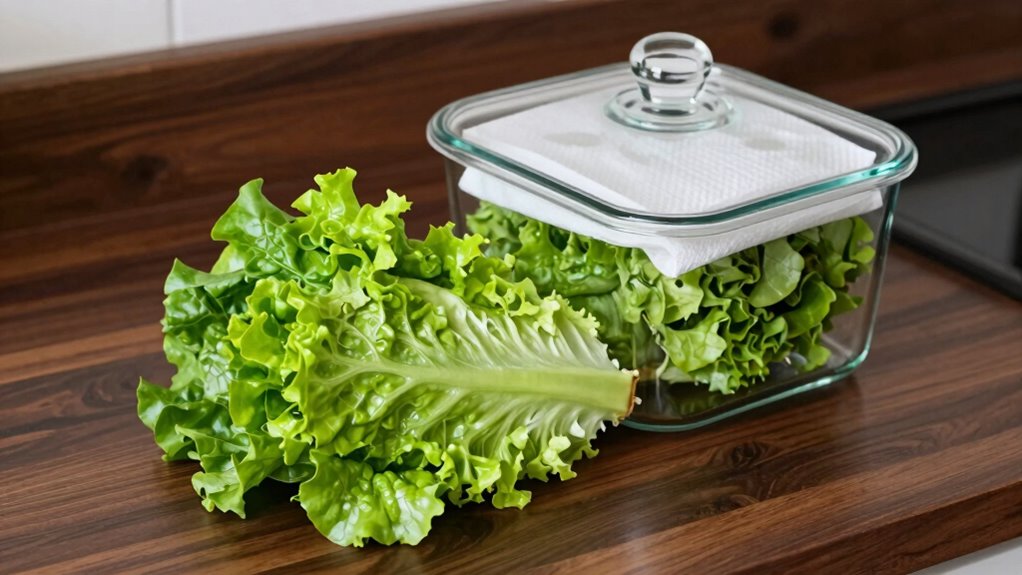

To keep greens fresh longer and stop sliminess, dry them thoroughly after washing with a salad spinner or paper towels. Wrap the greens loosely in a damp paper towel to maintain moisture without trapping excess water. Store them in a breathable container or perforated bag in the fridge’s crisper drawer to allow airflow. Ensuring proper moisture control and avoiding overcrowding helps prevent sliminess. Keep going to discover more simple tricks to extend your greens’ freshness.
Open a free Amazon Business account
Business pricing, bulk buying and tax-exempt orders.
As an affiliate, we earn on qualifying purchases.
Key Takeaways
- Dry greens thoroughly after washing to prevent excess moisture that causes sliminess.
- Store greens in breathable containers or perforated bags to allow airflow and reduce humidity buildup.
- Line storage containers with paper towels to absorb moisture and keep greens crisp.
- Keep greens loosely packed and avoid overfilling to promote proper ventilation.
- Wrap greens in a damp paper towel for hydration without trapping excess moisture.
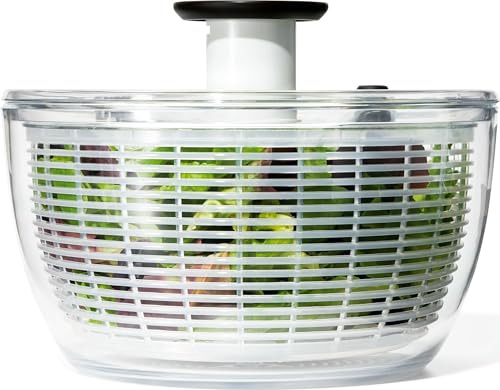
OXO Good Grips Salad Spinner | Lettuce Spinner | Fruit Washer | Fruit Washing Bowl with Strainer | Vegetable Cleaner | Salad Cleaner | Lettuce Washer | 6.22 Quart Capacity
- One-Touch Pump for Easy Drying: One-handed operation for maximum efficiency
- Patented Brake for Immediate Stop: Stops basket instantly with simple press
- Non-Skid Base for Stability: Keeps spinner firmly in place during use
As an affiliate, we earn on qualifying purchases.
As an affiliate, we earn on qualifying purchases.
Why Do Greens Turn Slimy and How Can I Prevent It?
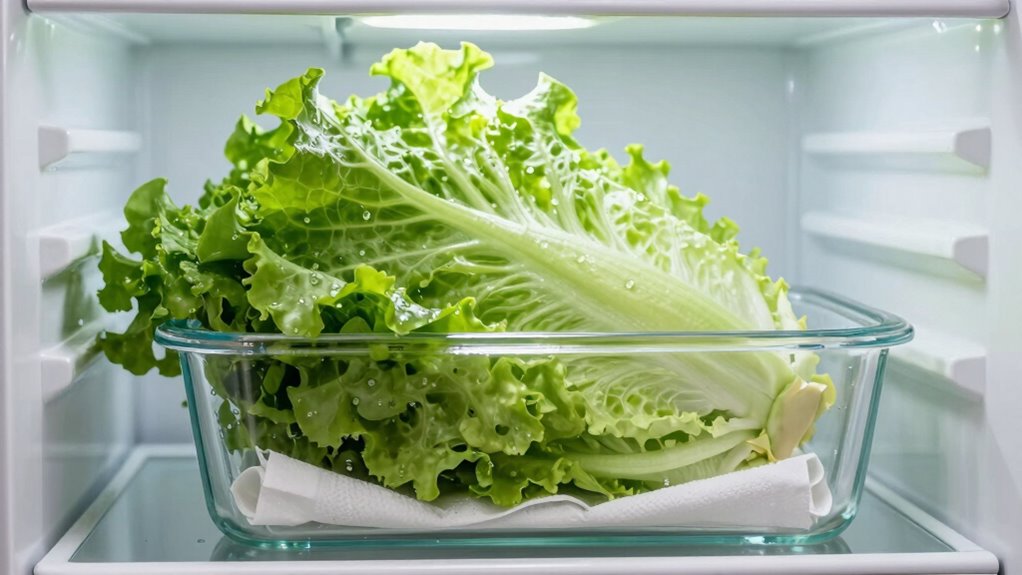
Greens turn slimy when bacteria and mold start to grow on their surfaces, especially if they’re stored in damp or warm conditions. This sliminess results from the breakdown of the leafy texture, which becomes mushy and unappealing. As bacteria thrive, they cause nutrient loss, reducing the greens’ nutritional value. You might notice a sticky or slimy film developing, signaling that your greens are going bad. To prevent this, keep excess moisture away by rinsing greens thoroughly, then drying them completely before storage. Avoid storing greens in plastic bags that trap humidity. Instead, use breathable containers or wrap them with paper towels to absorb moisture. Proper storage helps maintain their crispness, retains nutrients, and keeps your greens fresh longer. Additionally, using proper storage techniques can significantly extend their freshness.
How to Store Greens to Keep Them Crisp and Fresh Longer

To keep your greens crisp and fresh longer, proper storage techniques are essential. Start by removing any excess moisture, as excess water accelerates spoilage. Use paper towels to gently pat greens dry and then wrap them loosely in a damp cloth or place them in a perforated bag to maintain ideal humidity. Hydration tips include filling a container with a small amount of water at the bottom and resting greens upright, which helps preserve their crunch. Freshness hacks also involve storing greens in the crisper drawer of your fridge, where temperature and humidity are controlled. Avoid overcrowding, which can cause bruising and spoilage. Additionally, using air purifiers in your home can improve indoor air quality, reducing pollutants that might accelerate spoilage of perishable produce. With these simple steps, you’ll extend the life of your greens, keeping them crisp, fresh, and ready to enjoy.
Easy Steps to Prepare Greens for Maximum Freshness

Before storing your greens, take a few simple steps to prepare them for maximum freshness. Start by gently rinsing the greens to remove dirt and debris, then pat them dry with a clean towel or use a salad spinner. Proper herb preservation begins with removing any wilted or damaged leaves to prevent spoilage. To maintain leaf hydration, wrap the greens loosely in a damp paper towel—this keeps them crisp without excess moisture that can cause sliminess. Avoid tightly packing the greens, as airflow helps prevent spoilage. If you’ve harvested herbs, trim their stems and place them in water or wrap them loosely in a damp cloth. These easy steps ensure your greens stay fresh, flavorful, and ready to enjoy longer.
Best Containers for Keeping Greens Fresh in Your Fridge
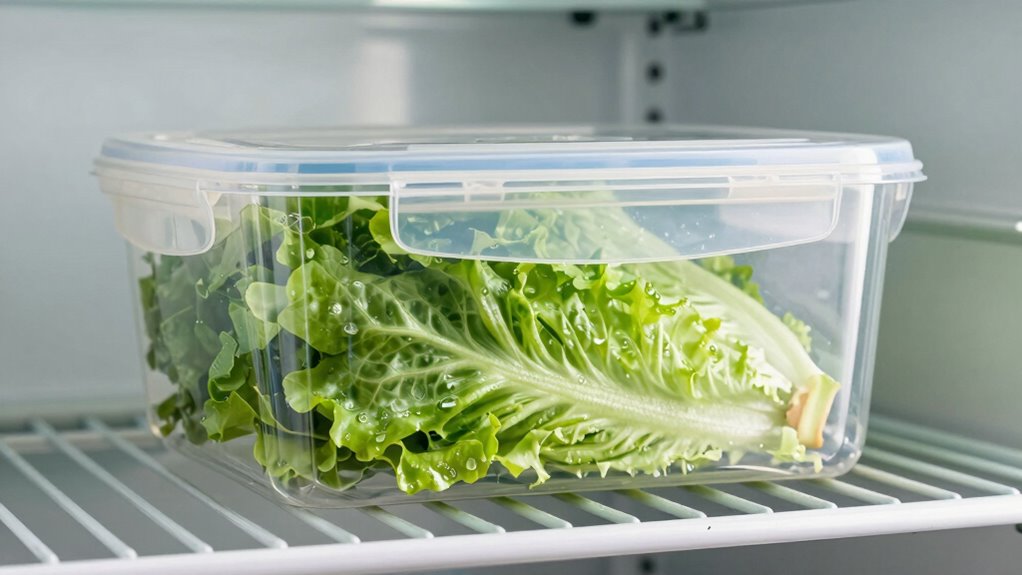
Choosing the right container is key to keeping your greens fresh longer. Proper container options help maintain hydration tips that prevent wilting and sliminess. Airtight plastic or glass containers with breathable vents allow airflow while sealing in moisture, balancing hydration and freshness. Use perforated containers or those with adjustable lids to manage moisture levels effectively. Avoid overcrowding, which can cause greens to spoil faster. For added hydration, consider lining containers with a paper towel to absorb excess moisture and keep greens crisp. Keep in mind, the goal is to slow down spoilage without trapping too much humidity. Selecting containers designed for produce storage ensures your greens stay fresh, vibrant, and ready to enjoy longer than in standard storage options. Additionally, choosing electric bikes for transportation can help reduce your carbon footprint and promote sustainable living.
How Paper Towels and Airflow Help Prevent Sliminess
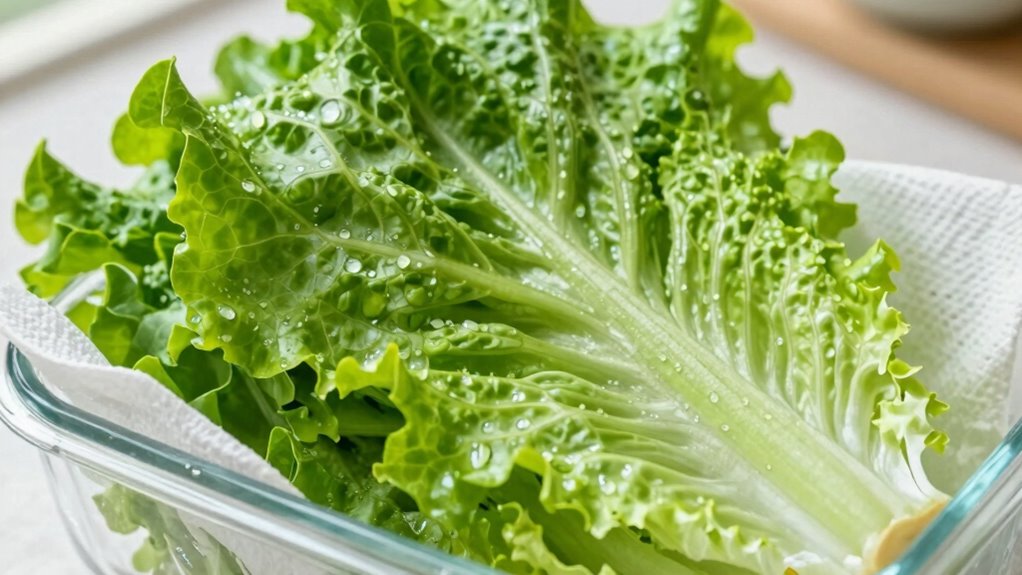
Using paper towels helps absorb excess moisture that causes greens to become slimy. Ensuring proper airflow around your greens prevents trapped humidity that accelerates spoilage. Together, these methods keep your greens fresh and crisp for longer.
Absorbing Excess Moisture
Have you ever noticed how quickly greens can become slimy in the fridge? Excess moisture is a major culprit, causing wilting symptoms and nutrient loss. To combat this, use paper towels to absorb moisture from your greens before storing them. Here are four tips to help:
- Gently pat greens dry after washing.
- Place a clean paper towel in the storage container or bag.
- Replace the paper towel if it becomes damp.
- Make certain good airflow around storage containers to prevent moisture buildup.
- Ensuring proper storage conditions can significantly extend the freshness of your greens.
Promoting Proper Airflow
Ever wonder why greens stay fresher longer when stored properly? Promoting proper airflow is key. Using leaf packaging allows air to circulate around your greens, preventing moisture buildup. Placing paper towels inside the bag absorbs excess humidity, helping humidity control and reducing sliminess. To visualize this, consider the following:
| Leaf Packaging | Paper Towels |
|---|---|
| Provides ventilation | Absorbs excess moisture |
| Prevents trapped humidity | Keeps greens dry |
| Ensures airflow around greens | Stops slimy buildup |
Additionally, maintaining proper storage conditions aligns with Food Preservation principles to extend freshness.
Common Mistakes That Make Greens Spoil Faster (And How to Avoid Them)
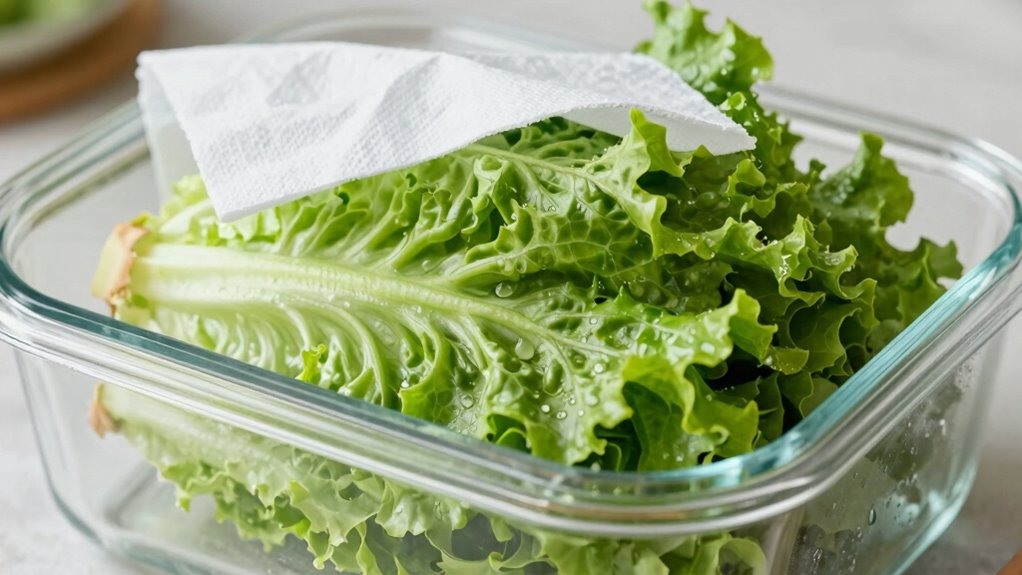
One of the biggest mistakes that speeds up greens’ spoilage is storing them improperly. If you don’t handle leaf washing correctly or add salad dressing too early, greens can spoil faster. To avoid this:
Proper storage and handling prevent greens from spoiling quickly.
- Don’t wash greens until just before use; excess moisture encourages sliminess.
- Always dry greens thoroughly after washing to prevent excess moisture.
- Keep greens away from salad dressing until right before serving, as the dressing can accelerate spoilage.
- Store greens in a breathable container or paper towel-lined bag to maintain airflow and absorb moisture.
- Be mindful of storage methods, as improper techniques can significantly reduce the shelf life of your greens.
Extra Tips for Keeping Greens Fresh and Reducing Waste
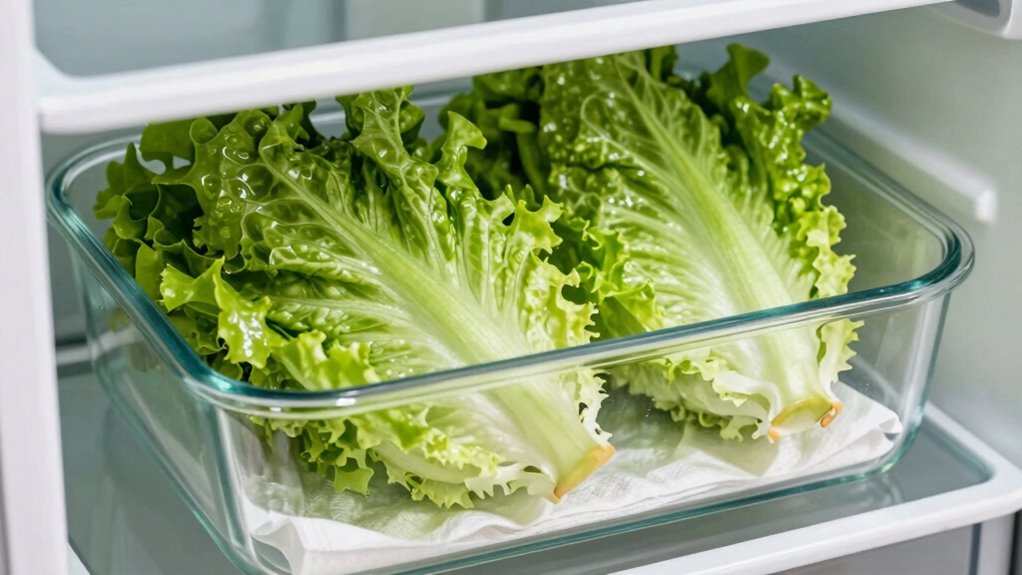
To keep greens fresh longer and minimize waste, focus on proper storage techniques and mindful handling. Wrap your greens loosely in paper towels to absorb excess moisture, then place them in a breathable container or perforated bag. Consider leaf wrapping—gently layering greens with paper towels to prevent wilting and sliminess. Before storing, give your greens a quick vinegar rinse to remove dirt and bacteria, which can prolong freshness. After rinsing, ensure they’re thoroughly dried to avoid excess moisture that causes spoilage. Keep greens away from ethylene-producing fruits like apples, as this accelerates spoilage. Regularly check your greens and remove any wilted or slimy leaves. Incorporating smart storage techniques, such as using connected humidity sensors, can further help maintain optimal freshness, reduce waste, and extend the shelf life of your greens. These simple precautions help maintain crispness, reduce waste, and extend the shelf life of your greens.
Why Are My Greens Still Slimy Despite Proper Storage?

If your greens stay slimy despite proper storage, excess moisture might be the culprit. Poor ventilation can speed up decay, making greens spoil faster. Additionally, overripe greens naturally become slimy, even if they’re stored correctly.
Excess Moisture Causes Sliminess
Even when you store greens properly, excess moisture can still cause them to become slimy. Moisture trapped in packaging or lingering on leaves encourages bacterial growth, leading to that unwelcome sliminess. To prevent this, focus on hydration techniques that remove excess water without drying out your greens. Packaging innovations like breathable containers help regulate moisture levels. Keep these tips in mind:
- Gently wash greens and thoroughly dry them using a salad spinner or paper towels.
- Store greens in perforated containers to allow airflow.
- Avoid packing greens tightly, which traps moisture.
- Use moisture-absorbing paper towels inside storage containers to absorb excess water.
- Consider reversible motors in ceiling fans to help circulate air and reduce humidity in your kitchen or storage area.
These steps ensure your greens stay crisp and fresh longer, preventing sliminess caused by excess moisture.
Poor Ventilation Accelerates Decay
When greens don’t have adequate airflow, bacteria and mold can thrive, speeding up decay and making them slimy despite proper storage. Poor ventilation traps moisture around your greens, creating a damp environment perfect for decay. To keep them fresh, follow hydration tips like wrapping greens in breathable paper towels and storing them in a vented container. Avoid tightly sealing your greens, which can trap humidity and promote sliminess. Additionally, keep greens away from direct sunlight exposure, as heat accelerates spoilage. Make certain air circulates freely inside your storage area, and check regularly for excess moisture or condensation. Proper ventilation not only prevents sliminess but also extends the freshness of your greens, keeping them crisp and flavorful longer. adequate airflow is essential for maintaining produce freshness and preventing spoilage.
Overripe Greens Turn Slimy
Proper storage techniques can keep greens fresh longer, but sometimes they still turn slimy despite following all the recommended tips. Overripe greens often become slimy because they’ve begun to decay, similar to how fruit ripening accelerates spoilage. Additionally, if your greens were stored near root vegetables or other produce releasing ethylene gas, it speeds up their deterioration. Here are four reasons why greens turn slimy despite proper storage:
- Excess moisture triggers microbial growth, causing sliminess.
- Overripe greens have already started breaking down internally.
- Inadequate ventilation traps ethylene gas, accelerating decay.
- Proximity to ripening fruit or root vegetables speeds up spoilage.
- Improper storage conditions may also increase microbial growth, leading to sliminess.
Understanding these factors helps you adjust storage to prevent sliminess, even for greens that seem perfectly stored.
Frequently Asked Questions
Can Freezing Greens Extend Their Shelf Life Without Ruining Texture?
Freezing greens can extend their shelf life, but it often affects texture. To preserve freshness, use proper freezing techniques like blanching before freezing to stop enzyme activity. This helps maintain flavor and nutritional value, though the greens may become softer. For best results, freeze in airtight containers or freezer bags, removing excess air. While the texture might change slightly, freezing is a good way to keep greens fresh longer without spoilage.
What’s the Ideal Humidity Level for Storing Leafy Greens?
You should aim for a humidity level of around 95% when storing leafy greens. To achieve this, guarantee moisture control by keeping greens dry before storage and use a container with proper ventilation to prevent excess humidity buildup. Too much moisture causes sliminess, while too little can wilt the leaves. Regularly check your greens and adjust ventilation as needed to maintain ideal humidity, keeping your greens fresh longer.
Do Different Types of Greens Require Different Storage Methods?
Yes, different greens absolutely demand different storage methods—think of it as tailoring a suit for each leaf! Variety considerations matter greatly; some greens like kale thrive in ventilated containers, while delicate lettuce prefers airtight ones. Use storage container options wisely, keeping sturdy greens in breathable containers and fragile ones in moisture-controlled environments. By customizing your approach, you’ll make your greens stay crisp and fresh, no matter their type.
How Do Preservatives Affect the Freshness of Stored Greens?
Chemical preservatives can extend the freshness of stored greens by slowing down spoilage, but they might also affect flavor and safety if overused. Natural alternatives, like vinegar or lemon juice sprays, help preserve greens without chemicals, keeping them crisp and fresh longer. You should weigh the benefits of chemical preservatives against natural options to choose what’s best for your health and greens’ longevity.
Is It Better to Wash Greens Before or After Storing Them?
It’s better to wash greens after storing them, as 70% of spoilage comes from excess moisture. Pre-washing can introduce moisture, leading to sliminess and faster decay. To control moisture, store greens unwashed in a breathable bag or container, then rinse and dry them thoroughly before use. This method keeps greens crisp longer and prevents slimy textures, maximizing freshness and shelf life.
Conclusion
Now that you know the secrets to stopping slimy greens, you can confidently control clutter and prevent perishability. By following simple steps, storing smartly, and staying vigilant, you’ll savor crisp, clean greens longer. Say goodbye to soggy, slimy salads and hello to fresh, flavorful feasts. With these techniques, you’ll turn your fridge into a fortress of freshness, fostering fabulous, fuss-free feasts every time. Fight spoilage with finesse and enjoy greens that stay glorious!
Back to school Picks
back to school
As an affiliate, we earn on qualifying purchases.