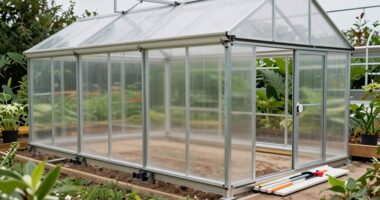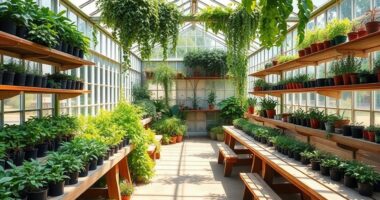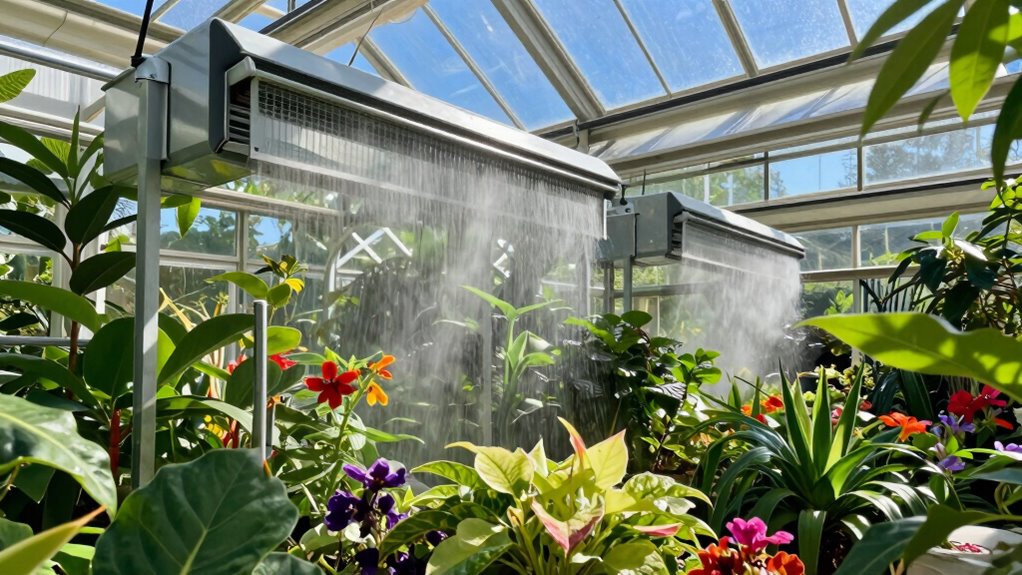

To keep your greenhouse cool in hot weather, focus on shading and ventilation. Use shade cloths or reflective panels to block excessive heat, especially during the hottest parts of the day. Combine these with proper airflow to remove hot air and bring in cooler conditions. Maintaining a balance between shading and ventilation protects your plants from overheating and promotes healthy growth. If you want to discover more proven cooling strategies, keep exploring how to optimize your greenhouse environment.

Get garden gear delivered free — and shop member deals
- Fast, free delivery on millions of items
- Access to Prime Big Deal Days deals on October 6–7
- Prime Video, Amazon Music and more included
Key Takeaways
- Combining shading with ventilation provides the most effective temperature regulation.
- Strategically placed shade cloths reduce heat gain during peak sunlight hours.
- Reflective exterior surfaces help lower greenhouse interior temperatures.
- Selecting sustainable, cost-effective shading materials enhances long-term cooling efficiency.
- Regularly adjusting shading and ventilation ensures optimal conditions for plant health.
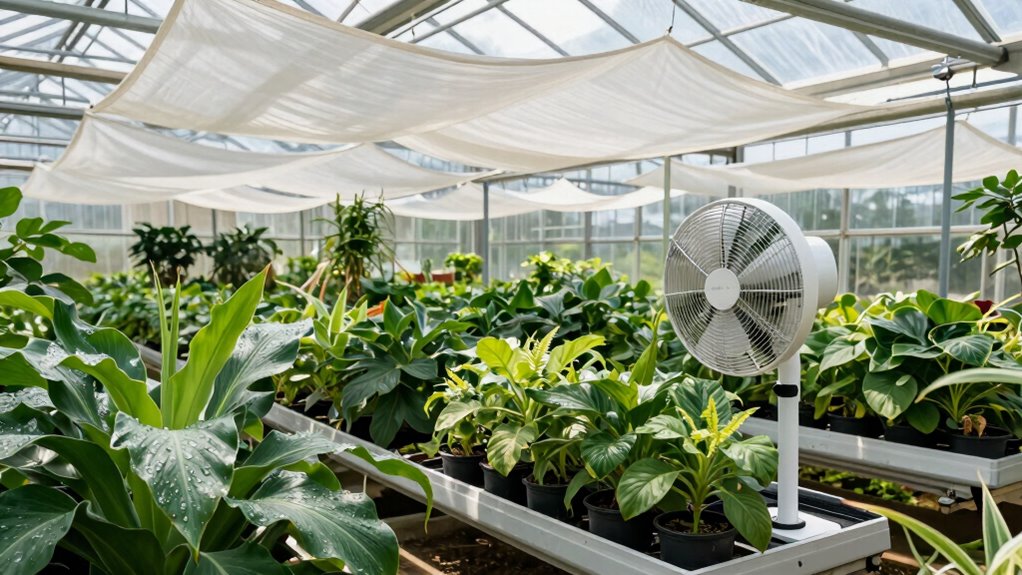
When the sun’s rays are strongest, they can dramatically raise the internal temperature, so shading helps block excessive heat gain. Use shade cloths or screens that are specifically designed for greenhouse use—they’re effective yet breathable, allowing light to filter through while reducing the temperature. You can also strategically position shading materials during the hottest parts of the day and remove them when the sun’s intensity diminishes. Think about placing shade cloths over the roof or the sides of your greenhouse, depending on where the sunlight hits most intensely. Reflective paints or panels on the exterior surfaces serve as additional shading options—these reflect sunlight away before it reaches the glass or plastic, keeping the interior cooler. Proper shading techniques are especially important because climate control in your greenhouse directly impacts plant health and growth during hot weather. You’ll find that combining ventilation strategies with shading techniques provides an all-encompassing approach to cooling your greenhouse. Ventilation ensures continuous airflow and temperature regulation, while shading reduces the heat load entering the space. Together, they prevent overheating, maintain a stable environment, and promote healthy plant growth during hot weather. Additionally, considering environmental sustainability when selecting shading materials can help reduce your overall ecological footprint. Incorporating energy-efficient shading options can further enhance the sustainability of your greenhouse management practices. Optimizing shade placement based on your specific setup can significantly improve cooling effectiveness. It’s also beneficial to evaluate the cost-effectiveness of different shading methods to ensure long-term benefits. Remember, each greenhouse’s design and location influence which methods work best, so it’s smart to evaluate your specific setup and adjust accordingly. With proper planning and implementation of these cooling choices, you’ll create an environment where your plants thrive, even when outdoor temperatures reach their peak.
As an affiliate, we earn on qualifying purchases.
Frequently Asked Questions
How Do Cooling Methods Affect Plant Growth Rates?
Cooling methods markedly influence plant growth rates by regulating plant humidity and improving air circulation. When you use fans or vents, they help reduce excess humidity that can promote mold and pests, while also increasing air movement around plants. This creates a healthier environment, allowing plants to breathe easier and access nutrients efficiently. Better air circulation and controlled humidity levels promote faster growth and stronger, more resilient plants in hot-weather greenhouses.
What Are the Long-Term Costs of Different Cooling Options?
You’ll find that long-term costs vary based on the cooling options you choose. Conducting a cost analysis helps you weigh initial investments against ongoing expenses, like energy bills and equipment maintenance. Mechanical systems like fans or evaporative coolers may require regular maintenance, increasing costs over time. Natural ventilation options tend to have lower maintenance needs, but might be less effective during extreme heat, influencing your overall long-term expenses.
Can Cooling Systems Be Automated for Optimal Performance?
Yes, cooling systems can be automated for ideal performance. With automated ventilation and smart climate control, you can finely tune temperatures, humidity, and airflow, ensuring your greenhouse stays in the perfect condition. This technology tracks environmental changes in real-time, swiftly adjusting fans, vents, and misting systems. As a result, you save time, reduce energy waste, and promote healthier plant growth, all while maintaining a consistent, controlled climate effortlessly.
How Do External Weather Conditions Influence Cooling Effectiveness?
External weather conditions, especially weather patterns and external temperatures, greatly influence your greenhouse’s cooling effectiveness. When external temperatures rise, your cooling systems need to work harder to maintain ideal conditions. Sudden weather shifts or prolonged heatwaves can reduce cooling efficiency, so you should monitor weather forecasts closely. Adjust your cooling strategies accordingly, and consider automated systems to respond quickly to external temperature changes, ensuring your plants stay healthy despite outside conditions.
Are There Eco-Friendly Cooling Alternatives for Greenhouses?
Are eco-friendly cooling options worth considering? Absolutely. You can use natural ventilation to promote airflow and reduce heat buildup without relying on energy-intensive systems. Additionally, solar shading helps block excess sunlight, keeping temperatures down naturally. These methods not only cut energy consumption but also minimize environmental impact, making your greenhouse more sustainable. Wouldn’t you prefer a greener approach that works in harmony with nature?
Conclusion
When the heat rises, your choices matter. You can ventilate to refresh, shade to protect, or cool to preserve. Each decision impacts your plants’ health, your energy use, and your greenhouse’s success. By prioritizing the right cooling methods, you create a sanctuary for growth, a refuge from the heat, and a space where your plants thrive. Make thoughtful choices, embrace the power of cooling, and watch your greenhouse flourish despite the scorching days.
Fall Picks
fall essentials
As an affiliate, we earn on qualifying purchases.