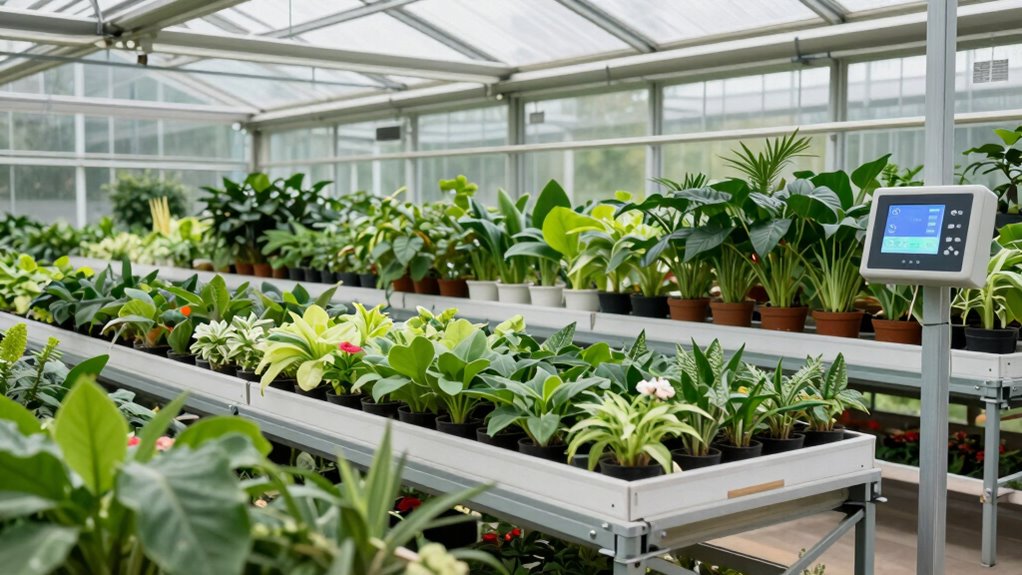

To save energy and reduce stress in your greenhouse, focus on integrated habits like using automated climate control systems that respond to real-time sensor data. Maintain stable temperature, humidity, and airflow with proper ventilation and shading, adjusting automatically to conditions. Manage water precisely with moisture sensors and targeted irrigation to avoid waste. These strategies help keep conditions consistent, lower energy costs, and extend equipment life. Keep exploring how these practices can transform your greenhouse environment.

Get garden gear delivered free — and shop member deals
- Fast, free delivery on millions of items
- Access to Prime Big Deal Days deals on October 6–7
- Prime Video, Amazon Music and more included
Key Takeaways
- Use automated systems responding to sensor data to maintain stable temperature, humidity, and airflow.
- Implement real-time monitoring to adjust ventilation and shading, preventing overheating and humidity issues.
- Employ precise water management techniques like drip irrigation and moisture sensors to conserve resources.
- Regularly update environmental controls based on data to optimize plant health and energy efficiency.
- Maintain consistent conditions to reduce manual adjustments, decrease energy waste, and lower plant stress.
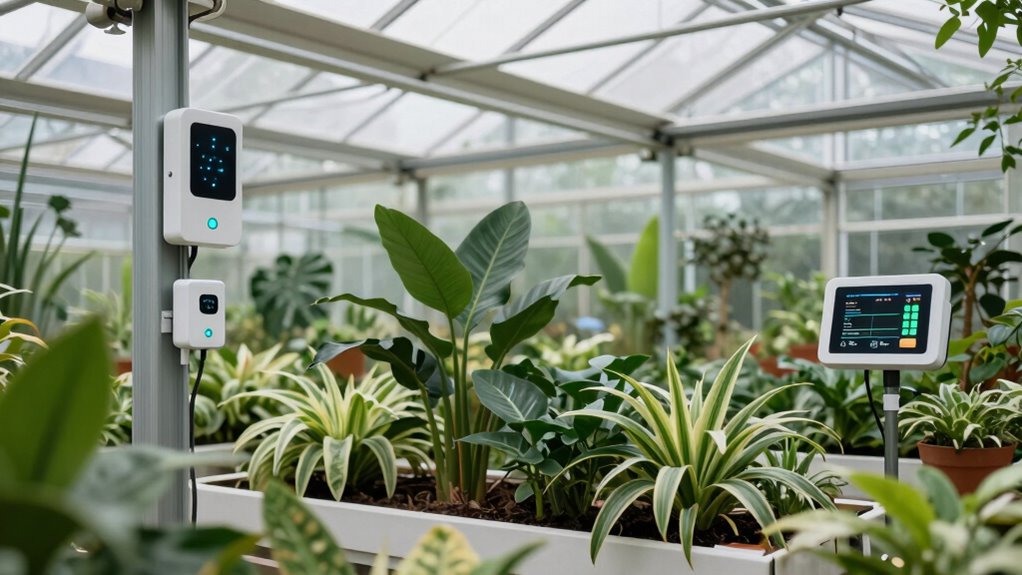
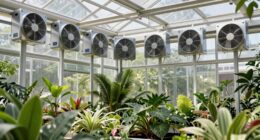
Have you ever wondered how consistent greenhouse conditions lead to healthier plants and better yields? It all starts with good control habits that focus on climate regulation and water management. When you monitor and adjust your greenhouse environment carefully, you create an ideal setting that supports plant growth without wasting energy or stressing your plants. Climate regulation involves maintaining stable temperature, humidity, and airflow—key factors that influence plant health. Instead of letting conditions fluctuate wildly, you can set up automated systems that respond to sensor data, keeping everything within target ranges. This reduces the need for constant manual adjustments, saving you time and energy. Proper climate regulation not only promotes healthier plants but also prevents issues like mold or drought stress, which can arise from improper humidity or temperature levels. Incorporating automated control systems can further streamline this process and enhance overall efficiency. Using data-driven climate control strategies allows for more precise adjustments and consistency over time. Regularly updating your environmental monitoring practices ensures that your system adapts to changing conditions, optimizing plant health and resource use. Employing sensor technology to track environmental variables provides real-time insights, helping you make informed decisions quickly. Additionally, maintaining proper ventilation and shading can prevent overheating and excessive humidity, further stabilizing conditions within your greenhouse.
Water management is equally essential for maximizing efficiency and plant health. Overwatering wastes energy in pumping and increases the risk of root diseases, while underwatering stunts growth. To get it right, consider installing drip irrigation or capillary mats that deliver water precisely where it’s needed. Using moisture sensors allows you to monitor soil or substrate moisture levels in real time, so you avoid unnecessary watering cycles. This precise water management helps conserve resources and reduces energy consumption associated with pumping, filtering, or heating water. Additionally, good water management supports climate regulation by preventing excessive humidity that could lead to mold or fungal problems. You’ll find that when water is supplied efficiently and consistently, plants establish stronger root systems and exhibit more vigorous growth.
Incorporating these habits into your daily routine means paying close attention to the feedback from your climate and water sensors. Adjust your ventilation and shading systems based on real-time data, rather than guesswork, to keep conditions stable. When you automate climate and water control, you lessen the stress on your plants and yourself. Consistent conditions mean less energy is wasted on heating or cooling unnecessary zones, and water is used judiciously, which cuts costs and environmental impact. These habits also extend equipment lifespan and reduce maintenance needs, making your greenhouse more sustainable. Overall, by prioritizing careful climate regulation and water management, you create a resilient environment that supports healthy, high-yielding plants while saving energy and reducing stress for everyone involved.
automated greenhouse climate control system
As an affiliate, we earn on qualifying purchases.
As an affiliate, we earn on qualifying purchases.
Frequently Asked Questions
How Often Should Greenhouse Control Systems Be Inspected for Optimal Performance?
You should inspect your greenhouse control systems at least once a month for peak performance. During these inspections, check sensor calibration to guarantee accurate readings, and verify that software updates are installed to keep the system running smoothly. Regularly testing and maintaining your controls prevents issues, saves energy, and reduces stress. Consistent inspections help catch problems early, ensuring your greenhouse operates efficiently and effectively year-round.
What Are Common Signs of Malfunction in Greenhouse Control Habits?
Your greenhouse control system may be malfunctioning if you notice inconsistent temperature or humidity readings—like a compass spinning aimlessly. Check for sensor calibration issues, as inaccurate sensors can cause false alarms. Also, watch for frequent manual overrides, which signal that automatic controls aren’t reliable. If these signs appear, inspect sensors, recalibrate if needed, and guarantee your automation system functions smoothly to maintain ideal conditions.
Can Automated Controls Adapt to Seasonal Climate Changes Effectively?
Yes, automated controls can effectively adapt to seasonal climate changes if you regularly perform control system calibration. By fine-tuning sensors and settings, your control system responds accurately to temperature, humidity, and light variations throughout the year. This guarantees ideal conditions for your plants, reducing energy waste and stress. Consistent calibration helps your system recognize seasonal patterns, making adjustments seamless and more efficient, keeping your greenhouse productive year-round.
Are There Specific Habits to Prevent Equipment Failure During Extreme Weather?
To prevent equipment failure during extreme weather, you should follow weatherproofing protocols, such as sealing gaps and protecting vulnerable parts, to safeguard your greenhouse. Regularly inspect and maintain your systems to identify potential issues early. Also, implement emergency shutdown protocols to quickly turn off equipment during severe conditions, minimizing damage. These habits guarantee your equipment stays safe and operational, even under harsh weather, reducing stress and costly repairs.
How Do Greenhouse Control Habits Impact Plant Health Long-Term?
Like a steady captain steering through calm waters, your greenhouse control habits directly influence long-term plant health. By managing temperature, humidity, and light, you reduce plant stress and promote consistent growth. These habits prevent setbacks and guarantee resilient plants, much like a well-tended garden thrives over time. Maintaining these practices creates a stable environment, fostering healthy development and maximizing yields, proving that good habits are crucial for sustained plant vitality.
Conclusion
Think of your greenhouse as a delicate garden clock, where each habit you adopt is a tiny gear turning smoothly to keep everything in harmony. When you control habits wisely, you’re the steady hand guiding it through seasons, saving energy and reducing stress like a gentle gardener tending to each bloom. By nurturing these habits daily, you guarantee your greenhouse thrives beautifully—like a well-tuned symphony where every note is perfectly played.
Fall yard work Picks
leaf blowers
As an affiliate, we earn on qualifying purchases.