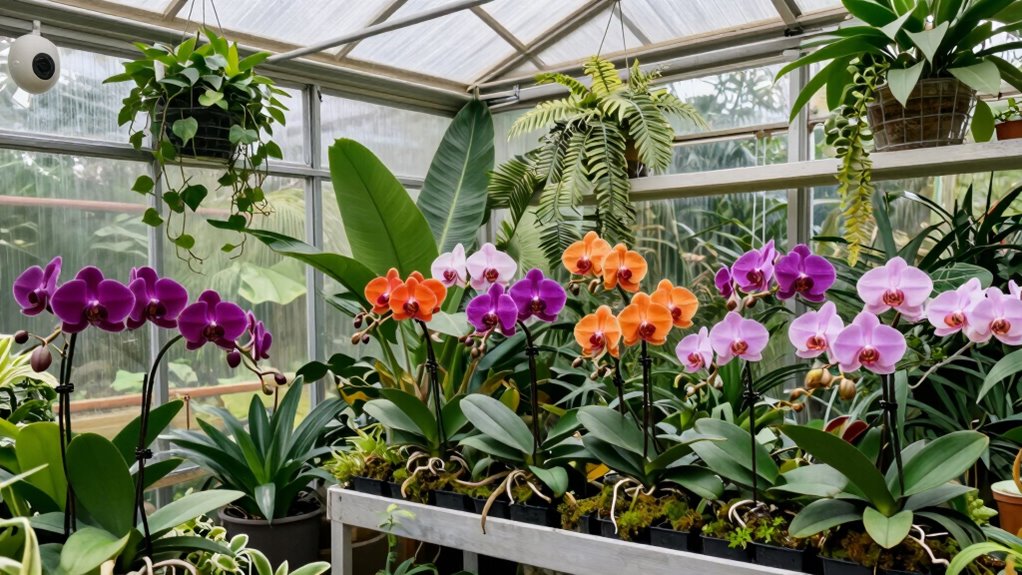
A good greenhouse setup for orchids and tropical plants involves maintaining precise control of lighting, humidity, and temperature to foster healthy growth. Use adjustable shading and energy-efficient LED lights to guarantee even illumination, and keep humidity levels between 60-80% for ideal conditions. Proper ventilation with fans and vents prevents disease and ensures good airflow. Additionally, incorporating a hydroponic system and microclimate controls will help you create a resilient space that supports vibrant blooms. Stay with us to discover more details.
Listen free for 30 days with Audible
Thousands of audiobooks and originals — cancel anytime.
As an affiliate, we earn on qualifying purchases.
Key Takeaways
- Ensure optimal lighting with adjustable shading and supplemental LED grow lights for even coverage.
- Maintain precise environmental conditions using automated monitoring for temperature, humidity, and pH levels.
- Use hydroponic systems to control nutrients, prevent pests, and keep moisture levels consistent.
- Incorporate proper ventilation and humidity controls to prevent fungal diseases and promote healthy growth.
- Design the greenhouse with light-transmitting, insulated materials and adaptable layout for space and light optimization.
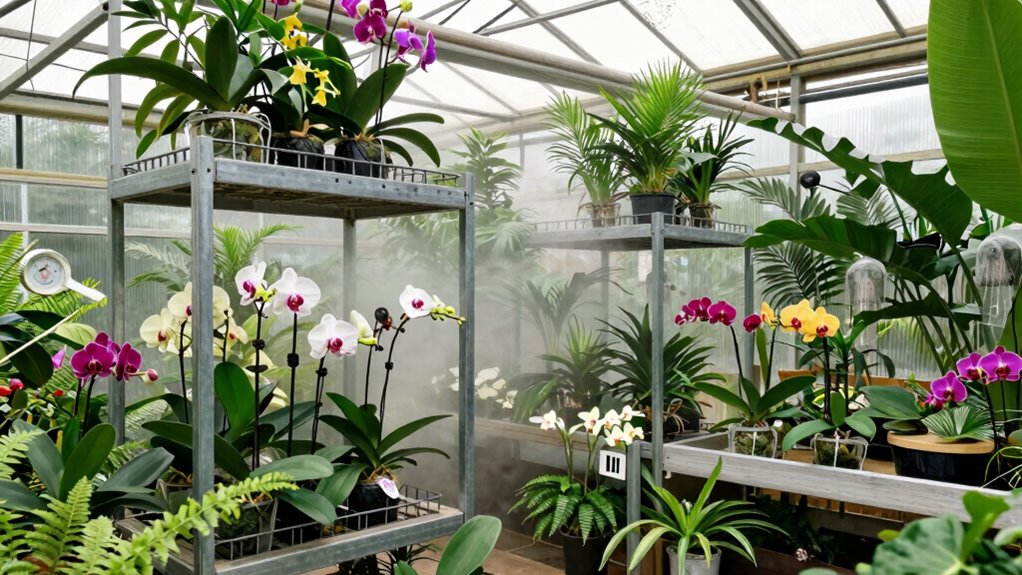
Setting up a greenhouse for orchids and tropical plants requires careful planning to create the ideal environment for their growth. One of your top priorities should be establishing effective hydroponic systems, which allow you to control nutrient delivery precisely. It’s vital to select a system that suits your plant types—deep water culture or nutrient film technique are popular options—and make sure you can easily adjust nutrient concentrations. This setup minimizes soil-borne pests and offers consistent moisture levels, which are essential for delicate orchids and tropical species. You’ll also want to monitor pH levels regularly, as these plants thrive in slightly acidic conditions, and hydroponic systems make that process straightforward. Ensuring proper nutrient management is crucial for optimal plant health in such systems. Additionally, integrating automated monitoring tools can help maintain optimal conditions, reducing the need for constant manual adjustments.
Lighting optimization is another critical factor. Orchids and tropical plants need a balance of light—bright but indirect sunlight is ideal to prevent leaf scorch and stress. In your greenhouse, incorporate adjustable shading options like shade cloths or blinds that you can modify throughout the day to match the sun’s intensity. Supplement natural light with artificial grow lights if your greenhouse lacks sufficient sunlight or during shorter winter days. LED grow lights are energy-efficient and can be tailored to emit the specific spectrum that encourages healthy growth and flowering. Position these lights strategically to ensure even coverage, avoiding hot spots or shadows that could impair plant development. Proper lighting doesn’t just promote photosynthesis; it influences flowering cycles and overall plant health, making it a key element of your setup. A well-designed greenhouse environment can further enhance plant growth and resilience. Creating a microclimate within your greenhouse can also help optimize growing conditions and protect your plants from external weather fluctuations.
In addition to hydroponic systems and lighting, consider ventilation and humidity control. Orchids and tropical plants prefer high humidity levels—around 60-80%—so installing humidifiers or misters can keep the environment consistently moist without oversaturating the air. Good airflow also prevents fungal diseases and helps regulate temperature, which should be maintained between 75-85°F during the day. Use fans and vents to facilitate air exchange and avoid stagnant conditions that can harm your plants. Adequate greenhouse design can further enhance environmental stability by optimizing insulation and light transmission, creating a more resilient growing space.
Lastly, pay attention to the greenhouse’s overall design. Use materials that maximize light transmission while providing insulation to maintain stable temperatures. Position your plant shelves and containers to optimize space and ensure all plants receive adequate light and airflow. With careful planning around hydroponic systems and lighting optimization, you’ll create an environment where orchids and tropical plants can thrive, flourish, and reward you with vibrant blooms.
orchid greenhouse LED grow lights
As an affiliate, we earn on qualifying purchases.
As an affiliate, we earn on qualifying purchases.
Frequently Asked Questions
How Often Should I Water My Orchids in the Greenhouse?
You should water your orchids when the top inch of their medium feels dry, typically once a week. Keep humidity levels high, around 50-70%, and guarantee good air circulation to prevent fungal issues. Regular watering encourages healthy roots and blooms, but avoid overwatering, which can cause root rot. Adjust based on your greenhouse’s temperature and humidity, always checking moisture levels to keep your orchids thriving.
What Are the Best Fertilizers for Tropical Plants?
You need the absolute best fertilizers for tropical plants—think of them as supercharged fuel! Use a balanced mix with proper soil amendments to boost growth and maintain the perfect pH balance, ensuring your plants thrive. Look for water-soluble fertilizers rich in nitrogen, phosphorus, and potassium. Regular feeding with these nutrients helps your tropical plants stay lush, vibrant, and healthy, turning your greenhouse into a tropical paradise!
How Do I Control Pests in a Greenhouse Environment?
To control pests in your greenhouse, start with pest identification to know what you’re dealing with. Use natural repellents like neem oil or insecticidal soap to deter pests without harming your plants. Regularly inspect your orchids and tropical plants for signs of infestation, removing affected leaves promptly. Maintaining proper humidity, ventilation, and cleanliness also helps prevent pest problems. Combining these strategies keeps your greenhouse healthy and pest-free.
What Lighting Conditions Are Ideal for Orchids?
Think of your orchids basking in a gentle, dappled sunlight or under the glow of artificial lighting that mimics dawn’s early rays. They thrive in bright, indirect natural sunlight, avoiding harsh direct rays that scorch their delicate leaves. When natural sunlight isn’t enough, supplement with soft, full-spectrum artificial lighting to replicate their ideal conditions. This balance helps your orchids flourish, showcasing their vibrant blooms in a symphony of light.
How Can I Prevent Mold and Fungi in My Greenhouse?
To prevent mold and fungi in your greenhouse, you should improve air circulation and control humidity levels. Guarantee good airflow with fans or vents, which helps keep moisture from settling on plants. Maintain humidity at appropriate levels for your orchids and tropical plants, avoiding excessive moisture. Regularly clean your greenhouse and remove dead plant material, and monitor conditions closely to prevent mold and fungi from taking hold.
Conclusion
So, you’ve now mastered the art of creating a perfect greenhouse for your orchids and tropical plants—who knew it was just a matter of temperature, humidity, and a little patience? Remember, if your plants start throwing a tropical tantrum, it’s probably your fault. But don’t worry, with a little tinkering, your greenhouse will soon be the envy of every botanist and backyard enthusiast alike—because nothing says “I’ve made it” quite like a lush, thriving jungle in your own backyard.
NFL season / tailgating Picks
team gear
As an affiliate, we earn on qualifying purchases.