TL;DR

Get garden gear delivered free with Prime
- Fast, free delivery on millions of items
- Prime Video, Amazon Music and more included
- Member-only deals all year
Interest in smart water management for gardening is surging, driven by technological advances and environmental awareness. While adoption is increasing, widespread implementation details remain uncertain. This trend could significantly impact sustainable gardening practices.
Smart water management technology is increasingly being integrated into gardening practices, enabling users to monitor and control water use with precision. This shift is driven by advances in sensor technology, automation, and data analytics, and is gaining momentum among homeowners, landscapers, and urban farmers. The development matters because it offers a sustainable solution to water conservation amid climate change and rising utility costs, potentially transforming traditional gardening methods.
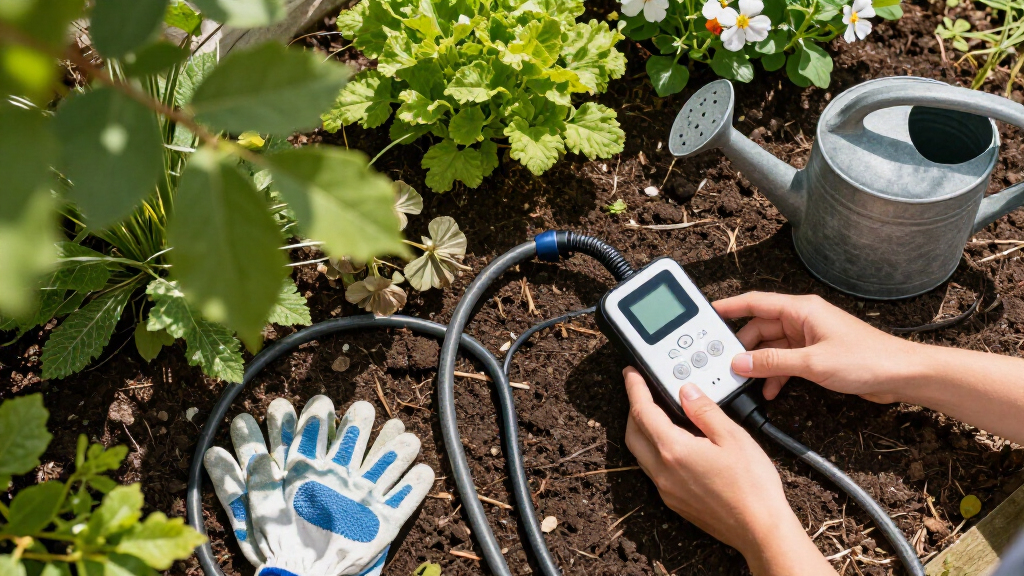
Recent trends indicate a sharp rise in the adoption of smart water management systems in gardening. These systems typically include soil moisture sensors, weather data integration, automated irrigation controllers, and mobile apps that allow users to adjust watering schedules remotely. Industry reports suggest that sales of such systems have increased significantly in the past year, though comprehensive market data remains limited.
Experts say that these technologies help reduce water waste by providing real-time data on soil conditions, thus enabling more precise watering. For example, a homeowner using a smart irrigation system can avoid overwatering during rainy periods or heatwaves, conserving water and lowering utility bills. Several startups and established companies are now offering affordable, user-friendly solutions tailored for residential gardens, urban farms, and even large-scale landscaping projects.
While the technology is advancing rapidly, widespread adoption is still developing. Some users report challenges with installation complexity, initial costs, and data privacy concerns. Additionally, the integration of these systems with existing garden infrastructure varies, and not all regions have the necessary internet connectivity or regulatory support to facilitate broad adoption.
Environmental and Economic Benefits of Smart Water Use
The rise of smart water management in gardening could have substantial environmental benefits by reducing water consumption, which is critical in regions facing drought and water shortages. Economically, homeowners and businesses can save money through lower water bills and reduced maintenance costs. Moreover, healthier plants resulting from optimized watering can lead to improved crop yields for urban farmers and better aesthetic outcomes for landscaped areas.
Experts emphasize that widespread adoption could contribute to more sustainable urban environments, especially as climate change intensifies water scarcity issues globally. However, the actual impact depends on the rate of adoption and the accessibility of these technologies across different socioeconomic groups.
smart irrigation system for garden
As an affiliate, we earn on qualifying purchases.
As an affiliate, we earn on qualifying purchases.
Growing Interest in Water-Conserving Gardening Technologies
Over the past few years, there has been increasing coverage of sustainable gardening practices, driven by environmental concerns and technological innovation. The current surge in interest appears to be a trend signal, with search interest and media coverage rising sharply in early 2024. Industry analysts note that this spike is likely linked to broader awareness of climate change and water resource management, although specific triggers for the current surge remain unconfirmed.
Historically, water-efficient gardening has included rainwater harvesting and drip irrigation, but recent technological developments have introduced smart systems that automate and optimize water use. These innovations are now gaining traction among urban dwellers, professional landscapers, and community gardening projects.
It is important to note that while adoption is increasing, comprehensive market data and long-term studies on impact are still limited, and some claims about system efficacy and cost savings are preliminary.
Unconfirmed Factors and Adoption Barriers
It remains uncertain how quickly these systems will become mainstream, as factors such as cost, user education, infrastructure, and regional policies influence adoption rates. The long-term environmental and economic impacts are still under study, and claims about water savings or cost reductions are preliminary. The influence of market players and potential regulatory changes also adds to the uncertainty.
Expected Developments in Smart Water Gardening Tech
Future developments are expected to include more affordable, user-friendly systems and greater integration with smart home devices. Industry analysts anticipate ongoing research into the long-term benefits and potential challenges of these technologies. Additionally, policymakers may introduce incentives or regulations to promote adoption, influencing market trends.
Monitoring these developments over the next 12 to 24 months will be essential to understanding their impact on sustainable gardening and water conservation efforts.
Key Questions
What are smart water management systems for gardening?
They are integrated systems that use sensors, weather data, and automation to optimize watering schedules, reducing water waste and improving plant health.
Are smart water systems expensive to install?
Costs vary depending on the system’s complexity, but many affordable options are now available for residential use. Initial investment may be offset by savings on water bills.
Can these systems work in all climates?
Most systems are adaptable to different climates, but effectiveness depends on regional weather patterns and infrastructure. Some features may require internet connectivity and regional support.
Will widespread adoption significantly reduce water usage?
Experts believe that if adopted broadly, these systems could contribute to substantial water conservation, especially in drought-prone areas, but definitive data is still emerging.
What are the barriers to adopting smart water management in gardening?
Barriers include initial costs, installation complexity, data privacy concerns, and regional infrastructure limitations. Overcoming these will be key to broader adoption.
Source: rss
Fall yard work Picks
leaf blowers
As an affiliate, we earn on qualifying purchases.