You need to keep your greenhouse tools, like pruning shears, trowels, watering cans, and seed trays, exceptionally clean to prevent spreading pests and diseases. Dirty tools can carry fungi, bacteria, and pests that harm your plants and compromise soil health. Regularly disinfect and sterilize these tools after each use, especially before switching plant varieties. Proper cleaning routines help protect your greenhouse and guarantee healthier plants—continue to explore how to keep your tools spotless and your plants thriving.
Key Takeaways
- Pruning shears and scissors should be disinfected after each use to prevent disease spread.
- Watering cans and sprayers require regular cleaning to avoid pathogen transmission.
- Soil sterilizers and tools used for soil preparation must be thoroughly sanitized before reuse.
- Hand tools like trowels and transplanters should be cleaned daily to prevent pest infestation.
- Seed trays and propagation equipment need consistent sterilization to maintain healthy plant growth.
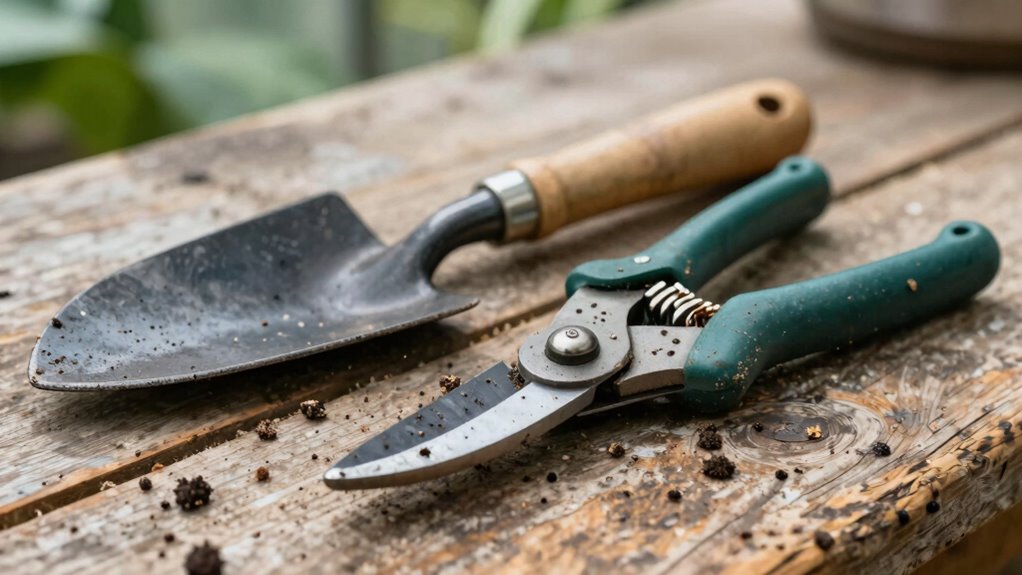
Maintaining cleanliness in your greenhouse tools is more crucial than many growers realize, as dirty tools can spread diseases and pests to healthy plants. When you neglect to clean your tools properly, you risk contaminating soil and introducing harmful pathogens that can devastate your crops. Soil sterilization becomes much more effective when your tools are clean, preventing the transfer of soil-borne diseases from one planting to another. Using contaminated tools can undermine your pest control methods, making it harder to keep pests at bay. For example, pests like fungi, bacteria, and insects can hitch a ride on dirty pruning shears or trowels, quickly spreading to multiple plants and creating a larger infestation.
Dirty tools can spread pests and diseases, undermining your greenhouse’s health and soil sterilization efforts.
You need to be diligent about cleaning your tools after every use, especially when switching between different plant varieties or working in different sections of your greenhouse. Simple steps like wiping down blades with alcohol or a disinfectant solution can kill off lingering pathogens. For more thorough sterilization, soaking tools in a diluted bleach solution or using commercial sterilizers can ensure that no pests or diseases survive on the surfaces. This is especially important before soil sterilization, as contaminated tools can reintroduce pests or pathogens into sterilized soil, negating your efforts entirely. Regular sanitation routines also reduce the risk of cross-contamination, which is vital for maintaining healthy crops. Incorporating proper sanitation practices into your routine can further enhance your greenhouse’s overall health. Additionally, proper storage of cleaned tools can prevent recontamination and ensure they are ready for their next use. Ensuring your tools are stored in a clean and dry environment helps maintain their sanitation and prolongs their lifespan.
Your pest control methods are only as effective as your sanitation routines allow. Regularly cleaning and disinfecting tools prevents the spread of pests like aphids, mites, and fungal spores that can cling to your equipment. If you’re dealing with a pest outbreak, pay extra attention to sterilizing tools used in affected areas. You don’t want to inadvertently spread pests from one plant to another, especially when handling plants at different stages of growth or health. Proper sanitation also extends to watering cans, pruning shears, and seed trays—anything that comes into contact with your plants. Maintaining a clean environment is essential for sustainable pest management.
In addition to cleaning your tools, it’s wise to establish a routine schedule for soil sterilization. This process kills off soil-borne pests and diseases, making your environment less hospitable to harmful organisms. Combining soil sterilization with clean tools creates a double layer of protection that keeps your greenhouse healthier and more productive. Remember, pests and pathogens are often persistent, and a proactive approach—regular cleaning, sterilization, and pest control measures—can save you time, money, and frustration in the long run. Keeping your tools clean isn’t just good practice; it’s a crucial part of maintaining a thriving, pest-free greenhouse. Regular sanitation routines also help prevent the buildup of harmful pathogens and pests, ensuring a healthier environment for your plants. Incorporating biodiversity-friendly practices can further support a resilient ecosystem within your greenhouse, reducing reliance on chemical controls.

Felco 420 Trimming Scissors – 6.1" Garden Clippers with Fine Tip & Non-Stick Blade | Pruning Shears for Gardening | Garden Scissors for Plant with Stainless Steel Blade, Built-In Ruler
- Ergonomic Handles with Finger Rests: Designed for comfortable grip and reduced tension
- Built-In Measurement Tool: Ruler integrated on the blade for precision
- Stainless Steel Non-Stick Blade: Durable, easy-to-clean cutting surface
As an affiliate, we earn on qualifying purchases.
As an affiliate, we earn on qualifying purchases.
Frequently Asked Questions
How Often Should I Disinfect Greenhouse Tools?
You should sanitize your greenhouse tools after each use to prevent soil sterilization issues and pest prevention. Regular cleaning minimizes the risk of spreading diseases or pests between plants. For best results, use a disinfectant solution, especially when moving between different plant beds or species. This routine helps maintain a healthy environment, reduces contamination, and guarantees your greenhouse remains productive and pest-free.
What Cleaning Products Are Safest for Delicate Tools?
Think of your delicate tools as fragile glass—they need gentle care. To guarantee chemical safety and proper tool maintenance, opt for mild, biodegradable cleaning products like diluted dish soap or white vinegar. These are safe, effective, and won’t corrode or damage your tools. Avoid harsh chemicals, which can weaken or tarnish delicate surfaces. Regular cleaning with gentle solutions keeps your tools in top shape, ready for your next gardening adventure.
Can Dirty Tools Cause Plant Diseases?
Yes, dirty tools can spread plant diseases by transferring soilborne pathogens from one plant to another. When you don’t clean your tools properly, you risk cross contamination, which can cause infections and weaken your plants. To prevent this, always disinfect your tools after each use, especially when switching between plants or working with infected ones. Proper cleaning helps protect your greenhouse’s health and keeps your plants thriving.
Are There Eco-Friendly Cleaning Methods for Tools?
Ever imagined cleaning your tools with eco-friendly options? You can! Biodegradable detergents and natural disinfectants make great, sustainable choices. They effectively sterilize tools without harming the environment or introducing harsh chemicals to your plants. By choosing these, you keep your tools clean and promote healthy growth. Isn’t it rewarding to care for your greenhouse while protecting nature? Switching to eco-friendly cleaners is a simple step towards greener gardening practices.
Should Tools Be Cleaned After Each Use or Weekly?
You should clean your tools after each use to maintain proper tool maintenance and prevent the spread of diseases. Regular cleaning guarantees your tools stay in good shape and reduces the risk of contamination. When storing tools, make sure they’re dry and clean, which helps prolong their lifespan. Weekly cleaning is helpful if you use tools infrequently, but immediate cleaning after use is best for ongoing tool health and effective tool storage.
Conclusion
Keep your greenhouse tools spotless, like a mirror reflecting health back onto your plants. When you wipe away dirt and grime, you’re clearing a path for vibrant growth and disease prevention. Imagine each tool as a guardian, its cleanliness shielding your crops from unseen threats. Staying vigilant with cleaning isn’t just maintenance; it’s nurturing a thriving, lush oasis. A little effort now guarantees your greenhouse blooms with life, bright and resilient, season after season.